SENG 130 Engineering Software Systems Introduction Rev 2
- Slides: 14
SENG 130 Engineering Software Systems Introduction Rev. 2. 1 © 2007 Scott Miller, University of Victoria. 1 9/30/2020
Administrivia l l l Instructor: Scott Miller Office: ECS 609 Phone #: 472 -5714 Lab (Where I am most of the time): ELW B 325 Phone #: 721 -8773 Office Hours: T 2: 30 pm-3: 30 pm, W 12: 301: 30 or by appointment E-mail: smiller@csc. uvic. ca * I check e-mail regularly © 2007 Scott Miller, University of Victoria. 2 9/30/2020
Administrivia l Course website: http: //www. engr. uvic. ca/~seng 130/ – All relevant announcements, materials and official information will be listed on this page – Check regularly for news, TUTORIALS, marks – Schedule listed will be followed. This includes required readings. © 2007 Scott Miller, University of Victoria. 3 9/30/2020
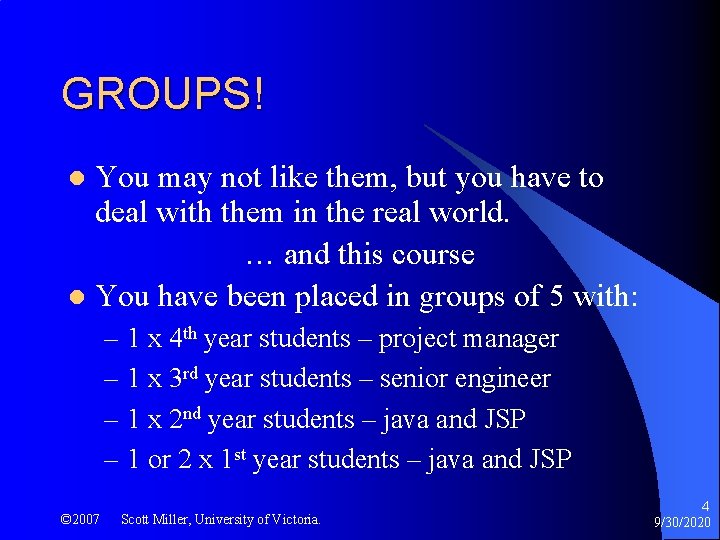
GROUPS! You may not like them, but you have to deal with them in the real world. … and this course l You have been placed in groups of 5 with: l – 1 x 4 th year students – project manager – 1 x 3 rd year students – senior engineer – 1 x 2 nd year students – java and JSP – 1 or 2 x 1 st year students – java and JSP © 2007 Scott Miller, University of Victoria. 4 9/30/2020
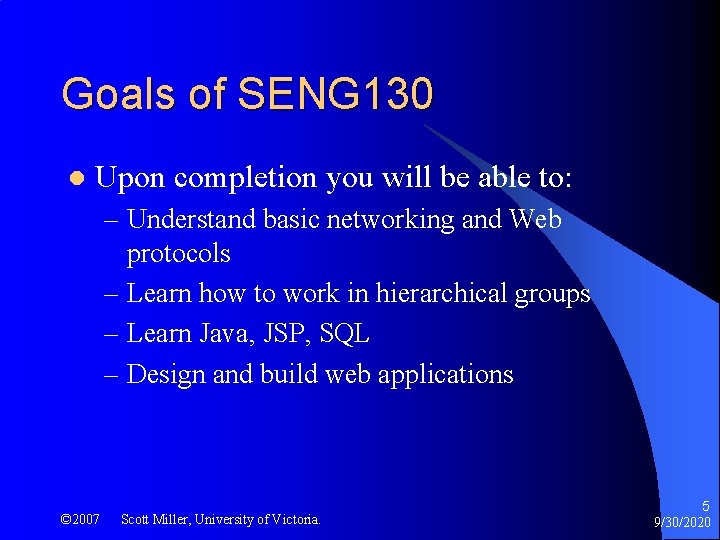
Goals of SENG 130 l Upon completion you will be able to: – Understand basic networking and Web protocols – Learn how to work in hierarchical groups – Learn Java, JSP, SQL – Design and build web applications © 2007 Scott Miller, University of Victoria. 5 9/30/2020
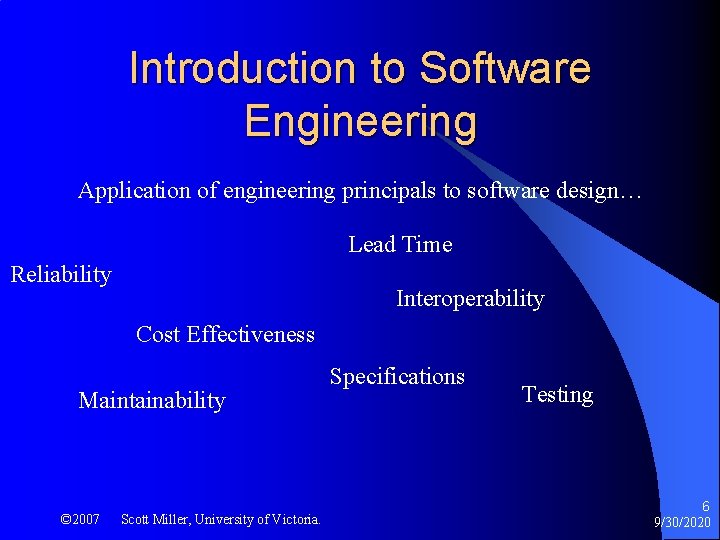
Introduction to Software Engineering Application of engineering principals to software design… Lead Time Reliability Interoperability Cost Effectiveness Maintainability © 2007 Scott Miller, University of Victoria. Specifications Testing 6 9/30/2020
Introduction to Software Engineering © 2007 Scott Miller, University of Victoria. 7 9/30/2020
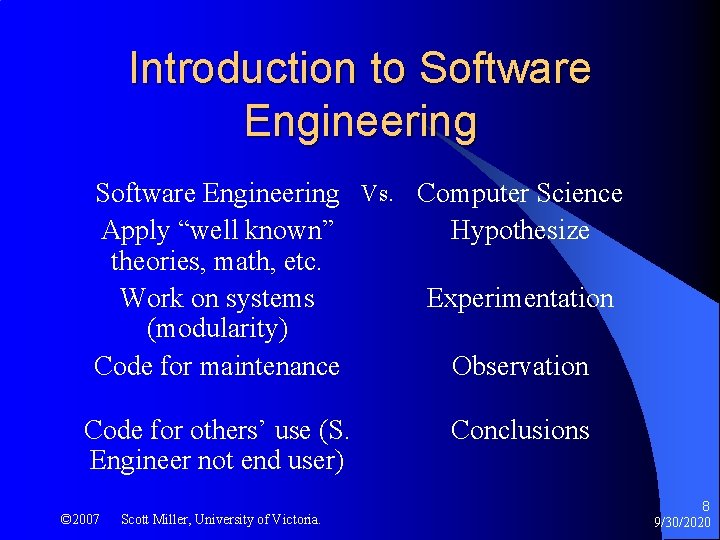
Introduction to Software Engineering Vs. Computer Science Apply “well known” Hypothesize theories, math, etc. Work on systems Experimentation (modularity) Code for maintenance Observation Code for others’ use (S. Engineer not end user) © 2007 Scott Miller, University of Victoria. Conclusions 8 9/30/2020
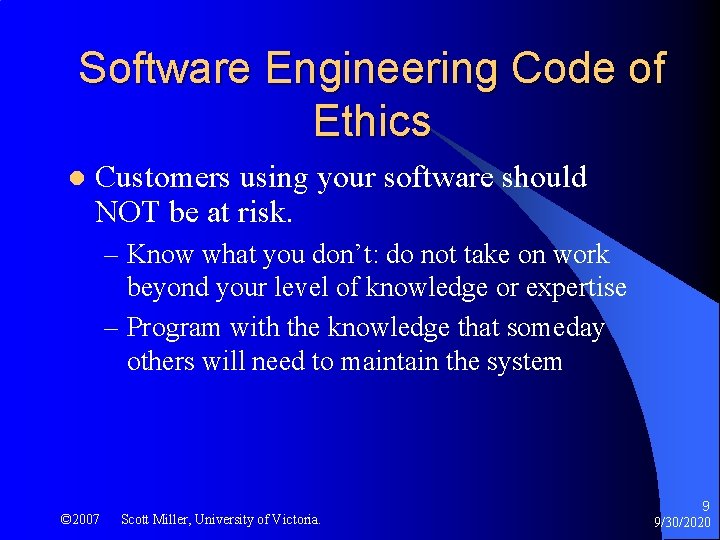
Software Engineering Code of Ethics l Customers using your software should NOT be at risk. – Know what you don’t: do not take on work beyond your level of knowledge or expertise – Program with the knowledge that someday others will need to maintain the system © 2007 Scott Miller, University of Victoria. 9 9/30/2020
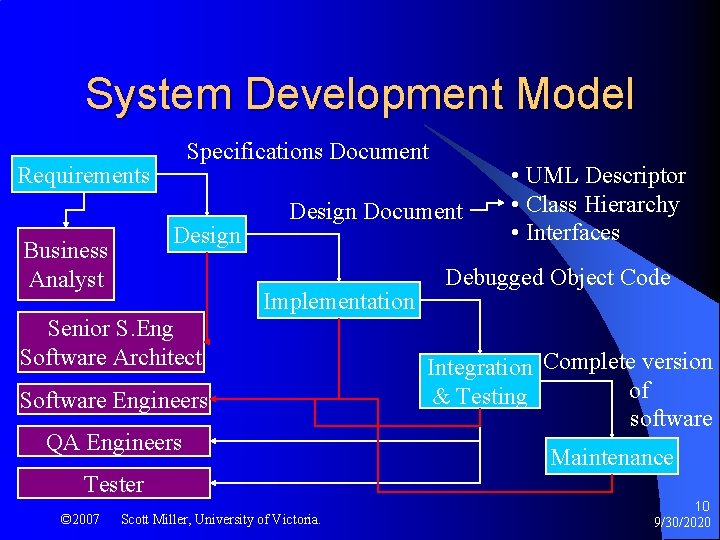
System Development Model Specifications Document Requirements Design Business Analyst Design Document Implementation Senior S. Eng Software Architect Software Engineers QA Engineers • UML Descriptor • Class Hierarchy • Interfaces Debugged Object Code Integration Complete version of & Testing software Maintenance Tester © 2007 Scott Miller, University of Victoria. 10 9/30/2020
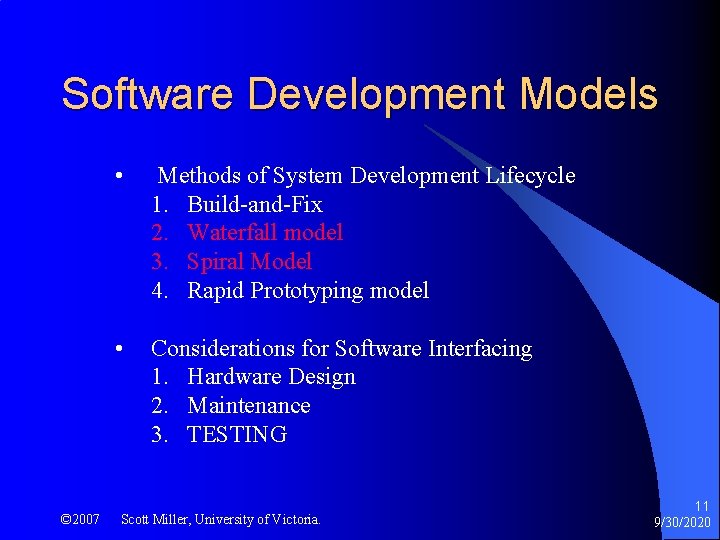
Software Development Models © 2007 • Methods of System Development Lifecycle 1. Build-and-Fix 2. Waterfall model 3. Spiral Model 4. Rapid Prototyping model • Considerations for Software Interfacing 1. Hardware Design 2. Maintenance 3. TESTING Scott Miller, University of Victoria. 11 9/30/2020
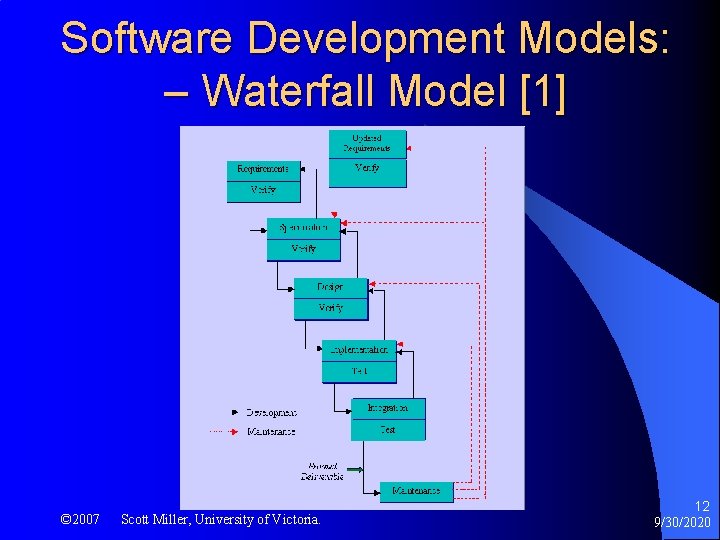
Software Development Models: – Waterfall Model [1] © 2007 Scott Miller, University of Victoria. 12 9/30/2020
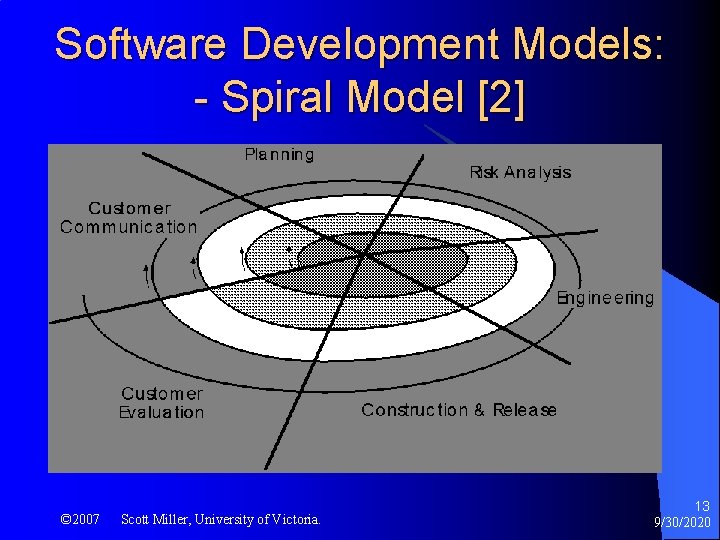
Software Development Models: - Spiral Model [2] © 2007 Scott Miller, University of Victoria. 13 9/30/2020
Reading for Next Class l Good idea to start familiarizing self with Net. Beans, UNIX, Java. l NEXT CLASS: SYSTEMS © 2007 Scott Miller, University of Victoria. 14 9/30/2020