Sectionalism Dividing America Sectionalism Primary loyalty to a
- Slides: 11
Sectionalism Dividing America
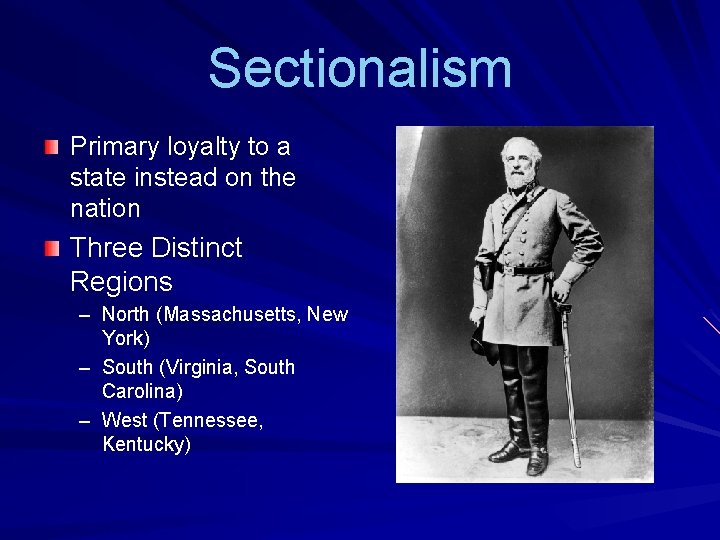
Sectionalism Primary loyalty to a state instead on the nation Three Distinct Regions – North (Massachusetts, New York) – South (Virginia, South Carolina) – West (Tennessee, Kentucky)
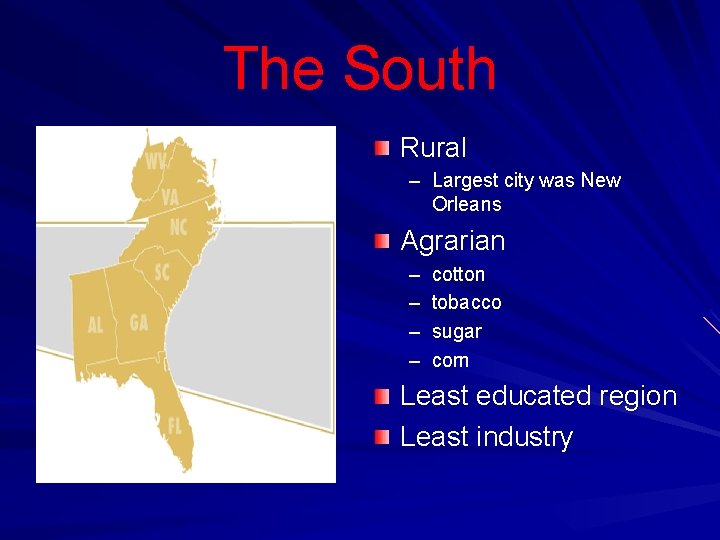
The South Rural – Largest city was New Orleans Agrarian – – cotton tobacco sugar corn Least educated region Least industry
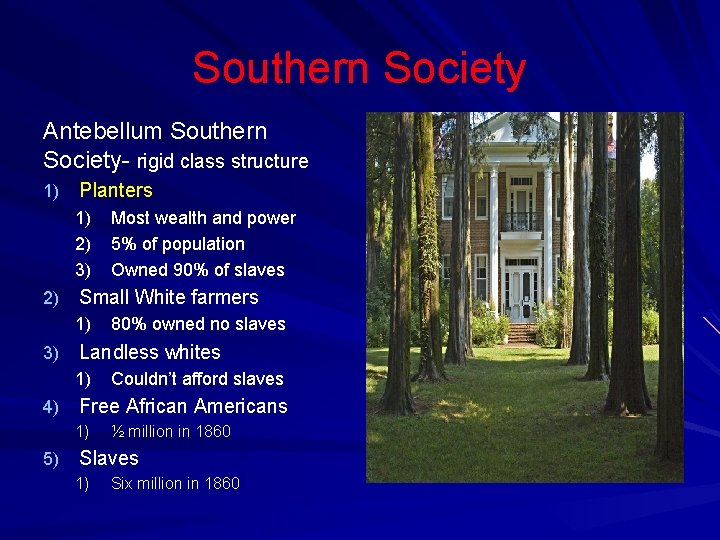
Southern Society Antebellum Southern Society- rigid class structure 1) Planters 1) 2) 3) 2) Small White farmers 1) 3) Couldn’t afford slaves Free African Americans 1) 5) 80% owned no slaves Landless whites 1) 4) Most wealth and power 5% of population Owned 90% of slaves ½ million in 1860 Slaves 1) Six million in 1860
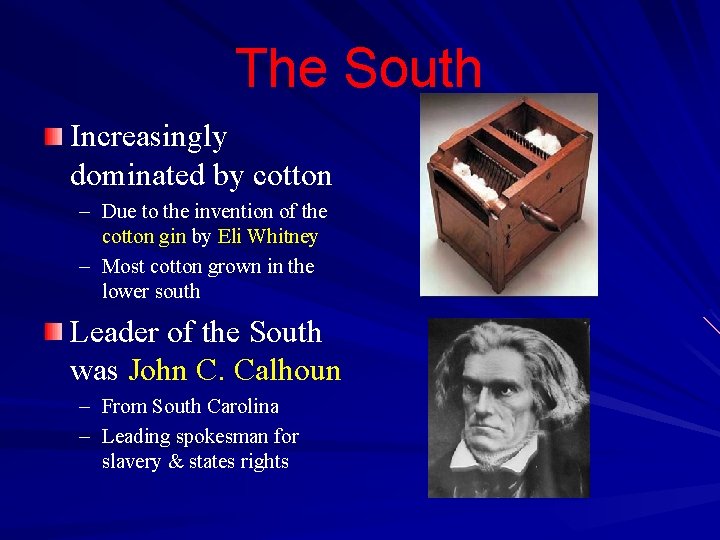
The South Increasingly dominated by cotton – Due to the invention of the cotton gin by Eli Whitney – Most cotton grown in the lower south Leader of the South was John C. Calhoun – From South Carolina – Leading spokesman for slavery & states rights
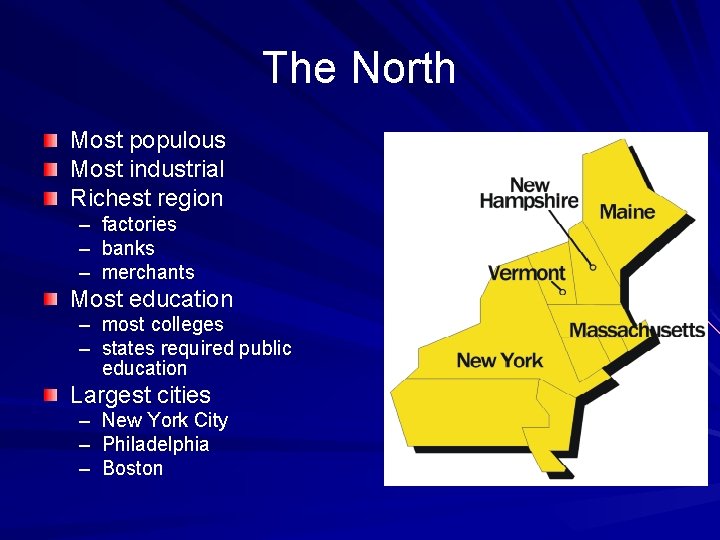
The North Most populous Most industrial Richest region – factories – banks – merchants Most education – – most colleges states required public education Largest cities – – – New York City Philadelphia Boston
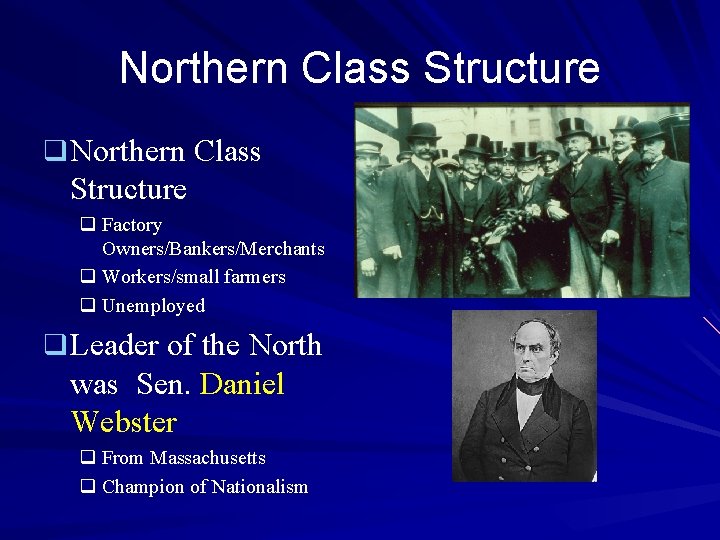
Northern Class Structure q Factory Owners/Bankers/Merchants q Workers/small farmers q Unemployed q Leader of the North was Sen. Daniel Webster q From Massachusetts q Champion of Nationalism
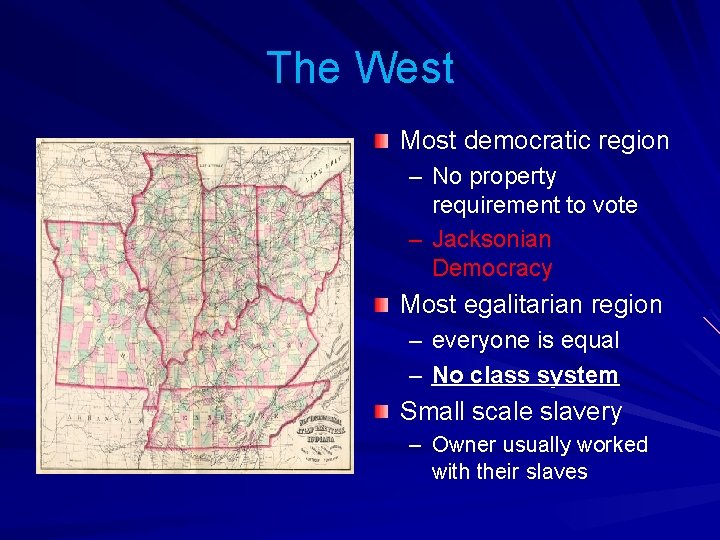
The West Most democratic region – No property requirement to vote – Jacksonian Democracy Most egalitarian region – everyone is equal – No class system Small scale slavery – Owner usually worked with their slaves
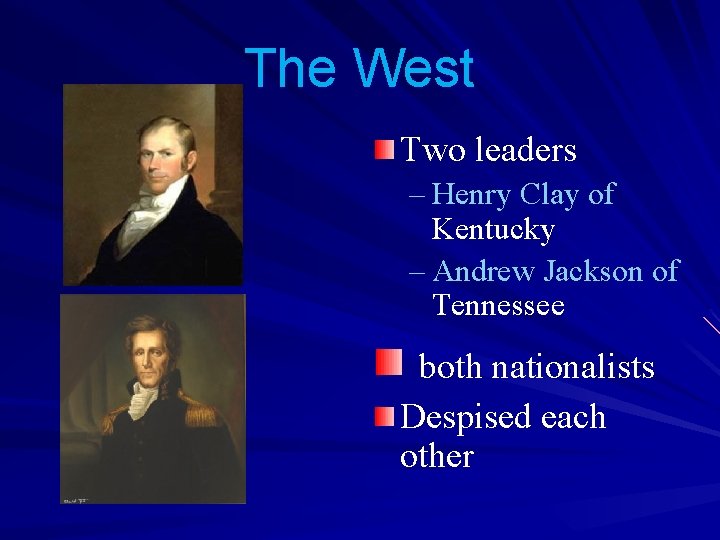
The West Two leaders – Henry Clay of Kentucky – Andrew Jackson of Tennessee both nationalists Despised each other
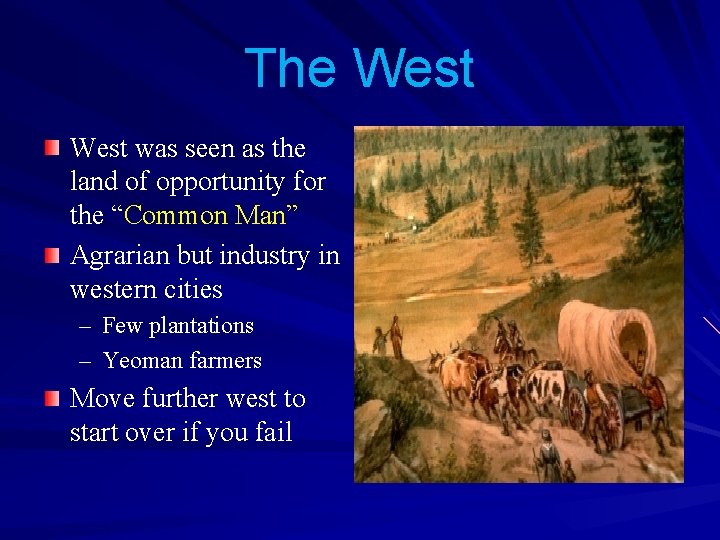
The West was seen as the land of opportunity for the “Common Man” Agrarian but industry in western cities – Few plantations – Yeoman farmers Move further west to start over if you fail
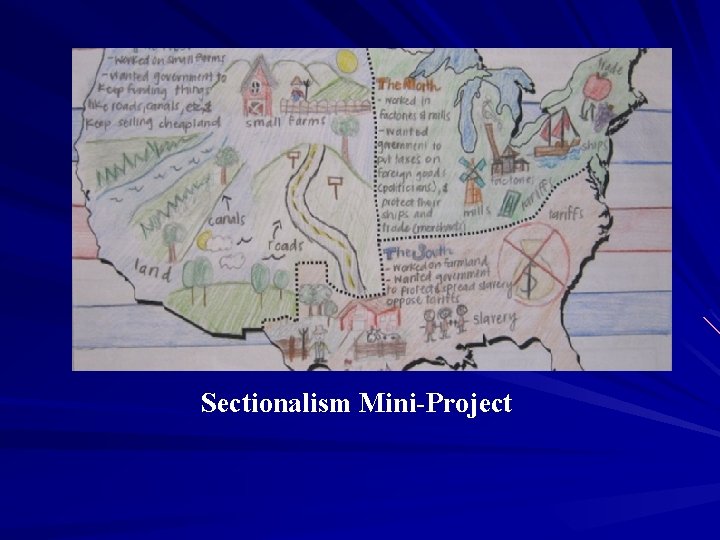
Sectionalism Mini-Project