Seahorses Jienne AlHaideri Seema Patel Chithra Rajasekaran David
- Slides: 18
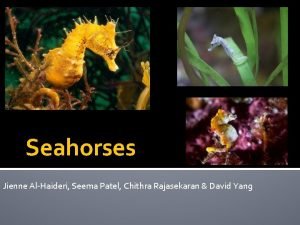
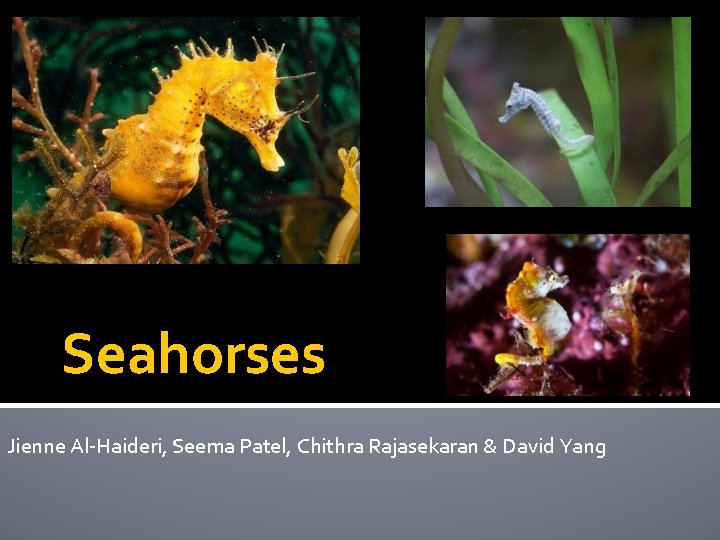
Seahorses Jienne Al-Haideri, Seema Patel, Chithra Rajasekaran & David Yang
Agenda 1. Introduction 2. Overview of Seahorses a. Morphology and Behavior i. brood pouches, snout, body, tail, dorsal fins ii. feeding, Sexual dimorphism 3. Conservation Concerns 4. Future Directions 5. Summary & Conclusions 6. Q & A
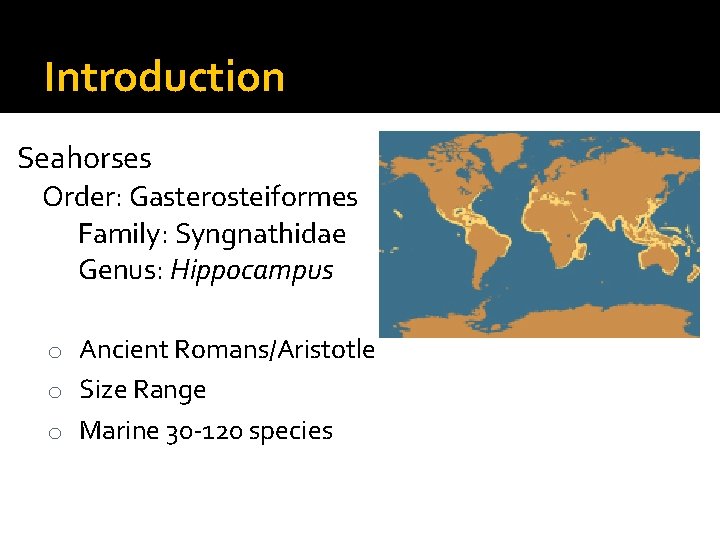
Introduction Seahorses Order: Gasterosteiformes Family: Syngnathidae Genus: Hippocampus o Ancient Romans/Aristotle o Size Range o Marine 30 -120 species
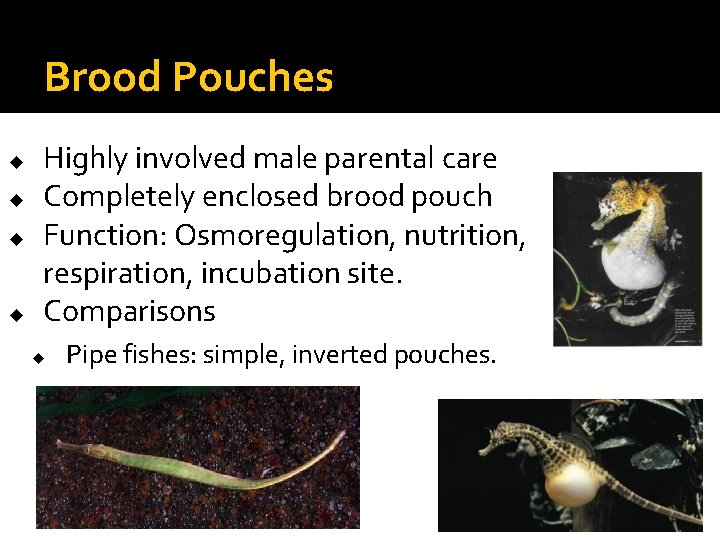
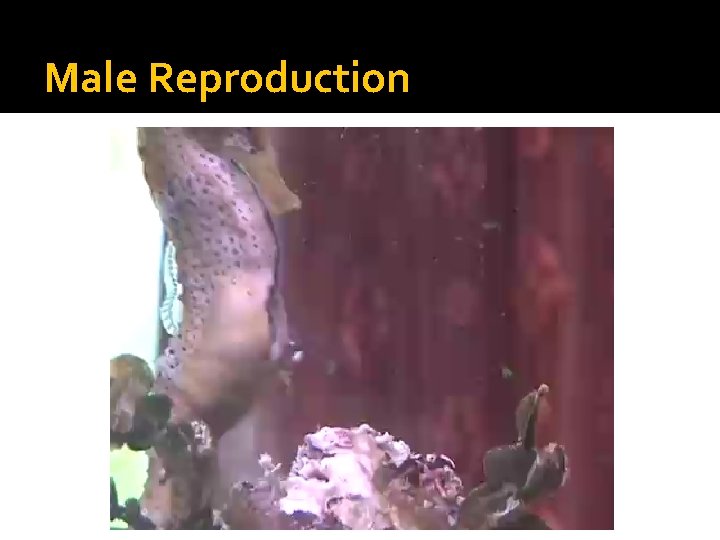
Brood Pouches u u Highly involved male parental care Completely enclosed brood pouch Function: Osmoregulation, nutrition, respiration, incubation site. Comparisons u Pipe fishes: simple, inverted pouches.
Male Reproduction
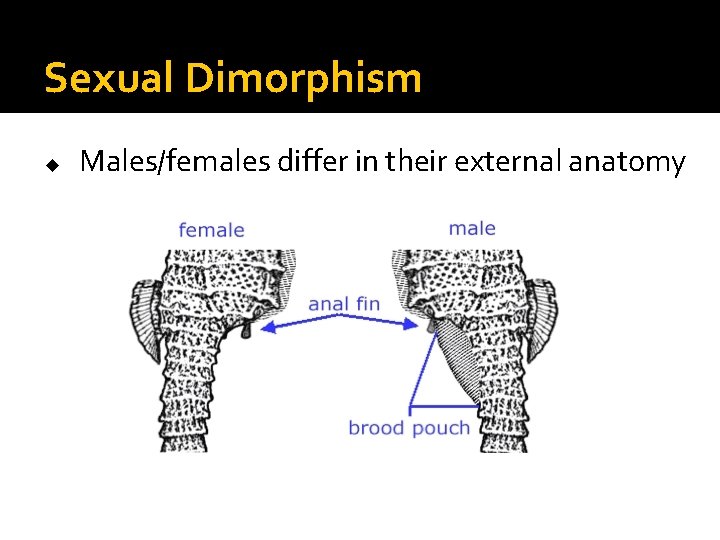
Sexual Dimorphism u Males/females differ in their external anatomy
u u Monogamous (mate for life; unlike most fish) Dimorphism evolved from sexual selective pressures Ex: longer trunks in females accommodate developing ovaries longer tails in males aid in courtship (tail grabbing) and gestation (brood pouches) Note: Seahorses still maintain traditional sex roles
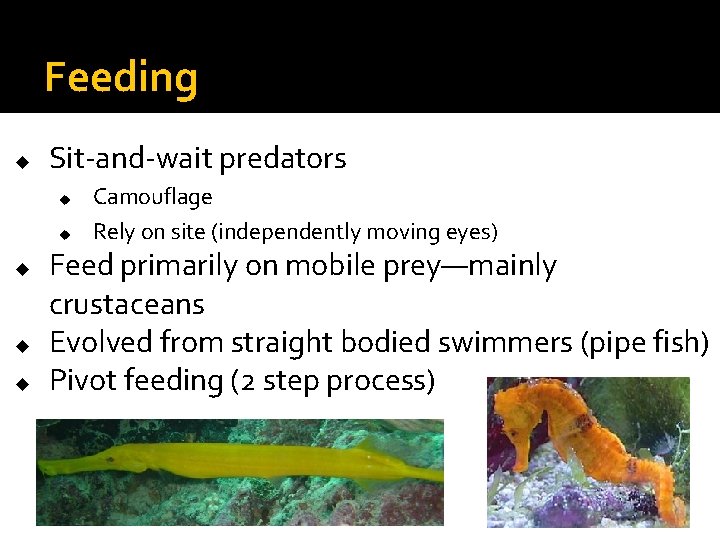
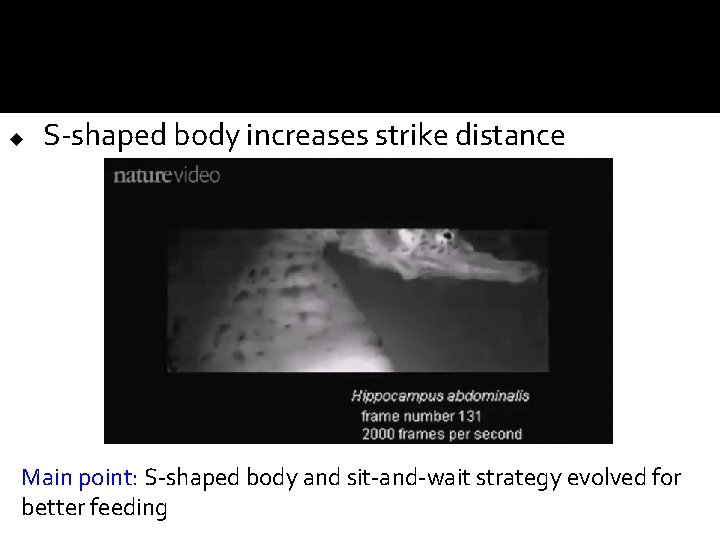
Feeding u Sit-and-wait predators u u u Camouflage Rely on site (independently moving eyes) Feed primarily on mobile prey—mainly crustaceans Evolved from straight bodied swimmers (pipe fish) Pivot feeding (2 step process)
u S-shaped body increases strike distance Main point: S-shaped body and sit-and-wait strategy evolved for better feeding
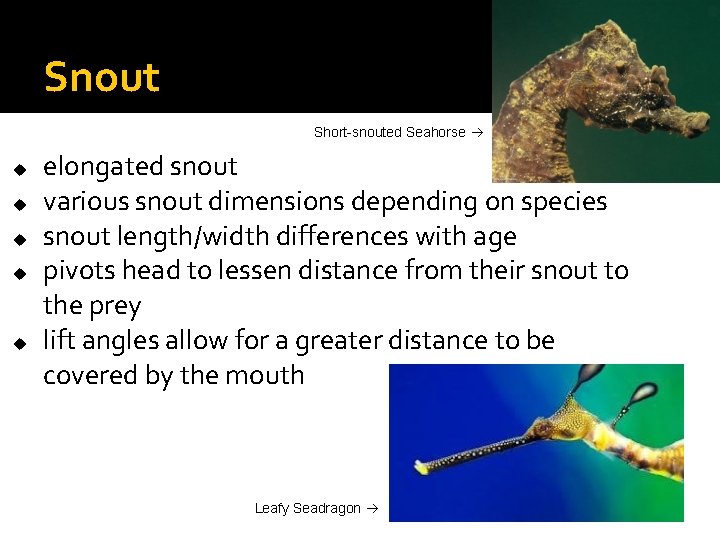
Snout Short-snouted Seahorse u u u elongated snout various snout dimensions depending on species snout length/width differences with age pivots head to lessen distance from their snout to the prey lift angles allow for a greater distance to be covered by the mouth Leafy Seadragon
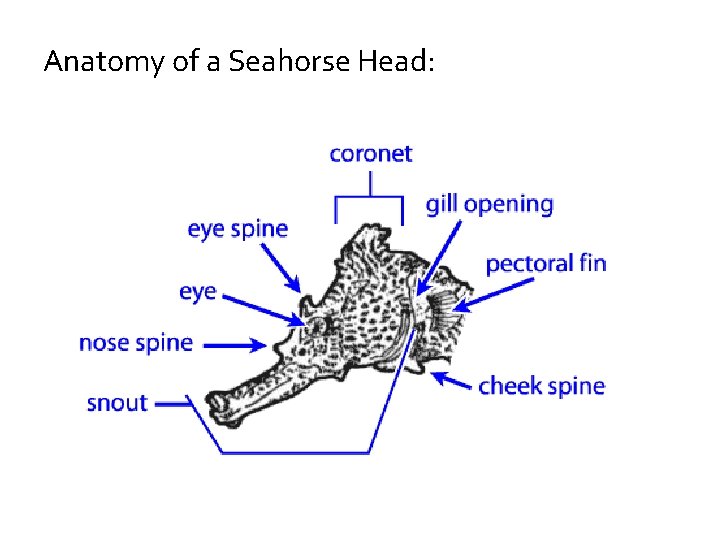
Anatomy of a Seahorse Head:
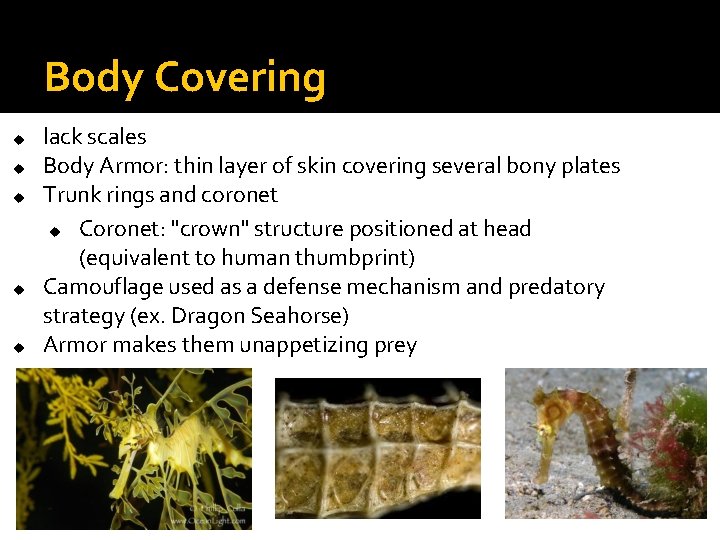
Body Covering u u u lack scales Body Armor: thin layer of skin covering several bony plates Trunk rings and coronet u Coronet: "crown" structure positioned at head (equivalent to human thumbprint) Camouflage used as a defense mechanism and predatory strategy (ex. Dragon Seahorse) Armor makes them unappetizing prey
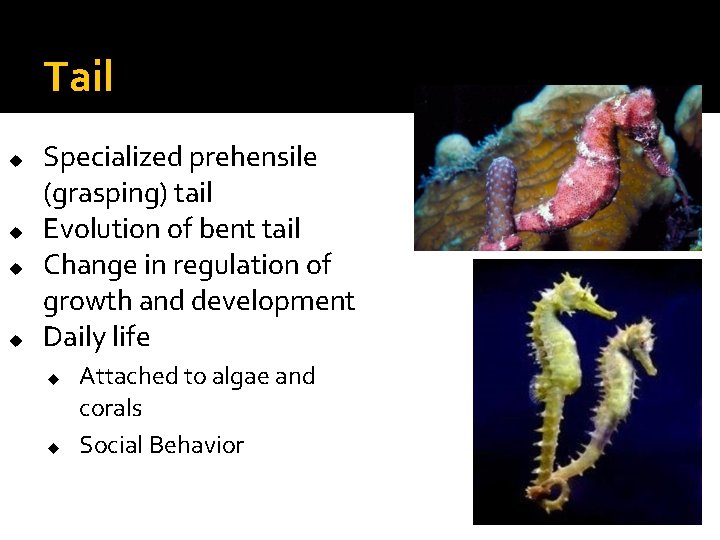
Tail u u Specialized prehensile (grasping) tail Evolution of bent tail Change in regulation of growth and development Daily life u u Attached to algae and corals Social Behavior
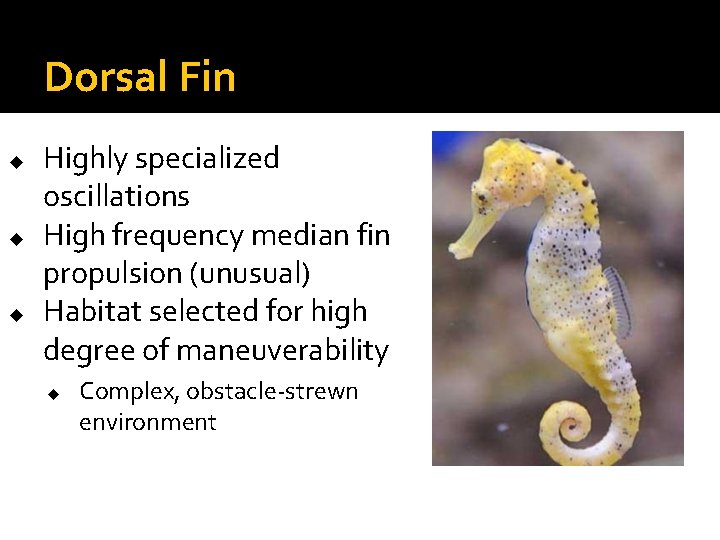
Dorsal Fin u u u Highly specialized oscillations High frequency median fin propulsion (unusual) Habitat selected for high degree of maneuverability u Complex, obstacle-strewn environment
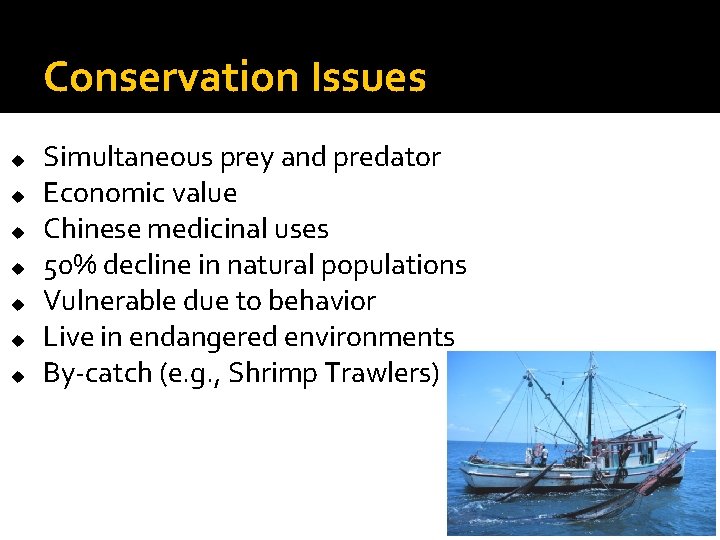
Conservation Issues u u u u Simultaneous prey and predator Economic value Chinese medicinal uses 50% decline in natural populations Vulnerable due to behavior Live in endangered environments By-catch (e. g. , Shrimp Trawlers)
Future Research and Directions u u u Evolutionary history is still controversial Mystery of bending tail evolution Phylogenetic relationships are poorly understood Difficult to culture seahorses due to lack of information/data Indicator species?
Summary u Anthropogenic pressures need to be lifted u u u Exceptionally unique u u Overexploitation in target fisheries Threats from habitat degradation Unique reproduction (male pregnancy) Drastically changed the fish body plan Vertical swimming style They need protection! u u Dramatic declines worldwide Biggest predator is man
Questions?