
Existing arrangements for East of England Respiratory Programme
- Slides: 8
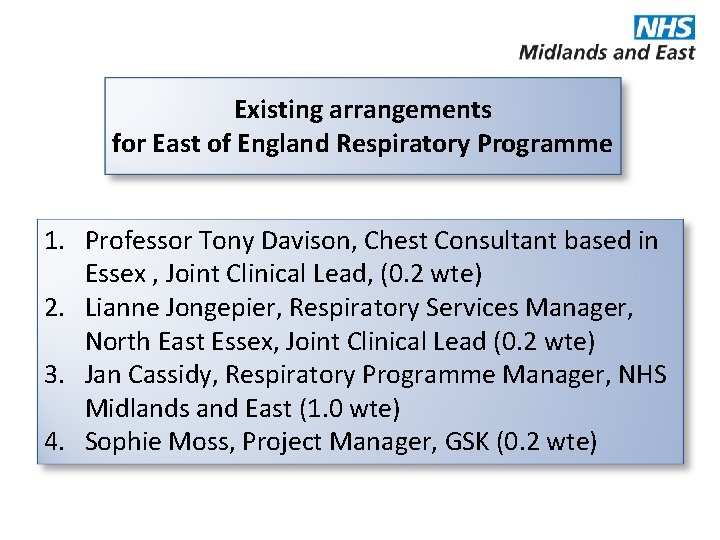
Existing arrangements for East of England Respiratory Programme 1. Professor Tony Davison, Chest Consultant based in Essex , Joint Clinical Lead, (0. 2 wte) 2. Lianne Jongepier, Respiratory Services Manager, North East Essex, Joint Clinical Lead (0. 2 wte) 3. Jan Cassidy, Respiratory Programme Manager, NHS Midlands and East (1. 0 wte) 4. Sophie Moss, Project Manager, GSK (0. 2 wte)
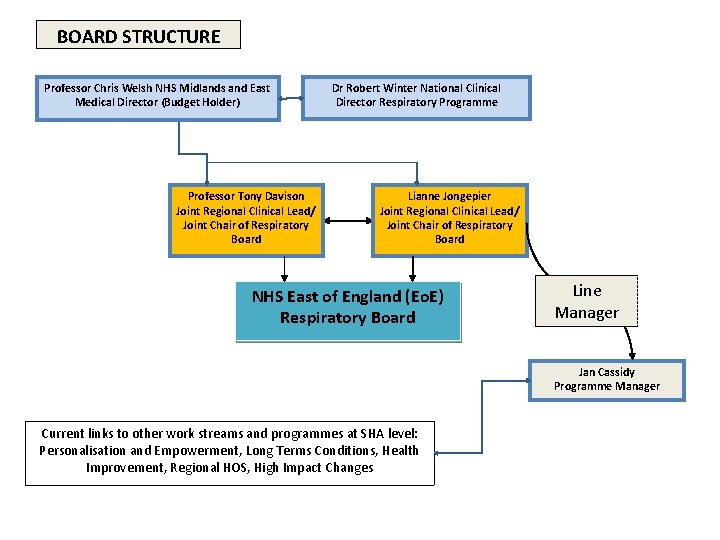
BOARD STRUCTURE Professor Chris Welsh NHS Midlands and East Medical Director (Budget Holder) Professor Tony Davison Joint Regional Clinical Lead/ Joint Chair of Respiratory Board Dr Robert Winter National Clinical Director Respiratory Programme Lianne Jongepier Joint Regional Clinical Lead/ Joint Chair of Respiratory Board NHS East of England (Eo. E) Respiratory Board Line Manager Jan Cassidy Programme Manager Current links to other work streams and programmes at SHA level: Personalisation and Empowerment, Long Terms Conditions, Health Improvement, Regional HOS, High Impact Changes
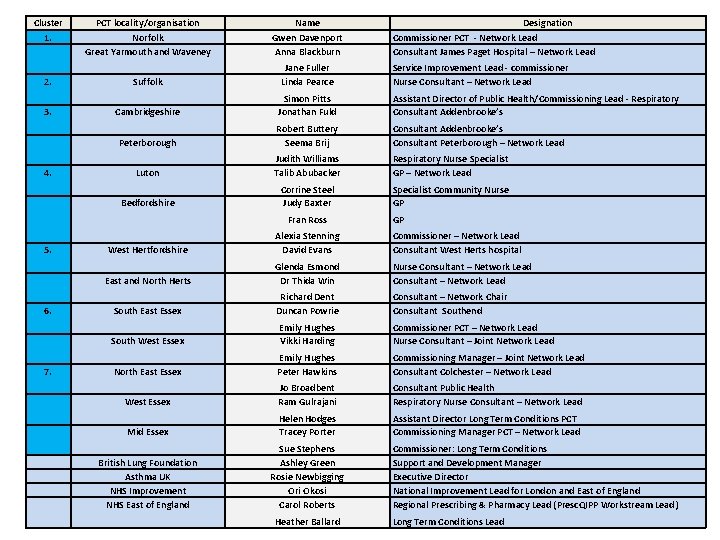
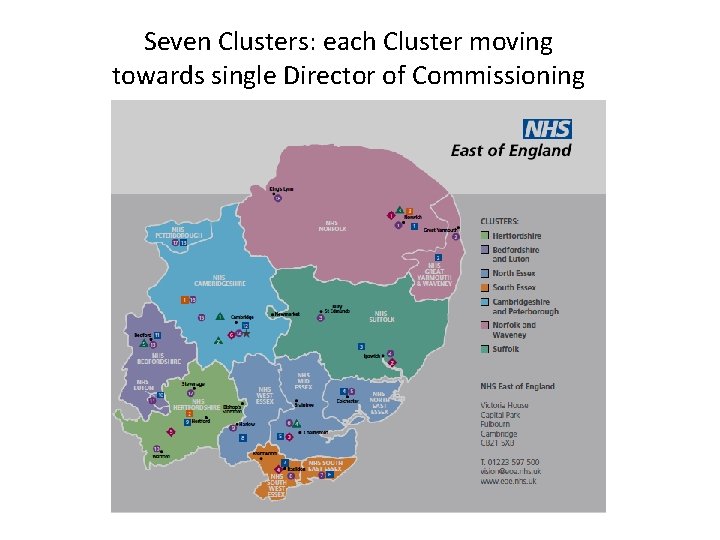
Cluster 1. PCT locality/organisation Norfolk Great Yarmouth and Waveney Name Gwen Davenport Anna Blackburn 2. Suffolk Jane Fuller Linda Pearce Service Improvement Lead - commissioner Nurse Consultant – Network Lead 3. Cambridgeshire Simon Pitts Jonathan Fuld Assistant Director of Public Health/Commissioning Lead - Respiratory Consultant Addenbrooke’s Peterborough Robert Buttery Seema Brij Consultant Addenbrooke’s Consultant Peterborough – Network Lead Luton Judith Williams Talib Abubacker Respiratory Nurse Specialist GP – Network Lead Bedfordshire Corrine Steel Judy Baxter Specialist Community Nurse GP 4. Fran Ross 5. 6. 7. Designation Commissioner PCT - Network Lead Consultant James Paget Hospital – Network Lead GP West Hertfordshire Alexia Stenning David Evans Commissioner – Network Lead Consultant West Herts hospital East and North Herts Glenda Esmond Dr Thida Win Nurse Consultant – Network Lead South East Essex Richard Dent Duncan Powrie Consultant – Network Chair Consultant Southend South West Essex Emily Hughes Vikki Harding Commissioner PCT – Network Lead Nurse Consultant – Joint Network Lead North East Essex Emily Hughes Peter Hawkins Commissioning Manager – Joint Network Lead Consultant Colchester – Network Lead West Essex Jo Broadbent Ram Gulrajani Consultant Public Health Respiratory Nurse Consultant – Network Lead Mid Essex Helen Hodges Tracey Porter Assistant Director Long Term Conditions PCT Commissioning Manager PCT – Network Lead British Lung Foundation Asthma UK NHS Improvement NHS East of England Sue Stephens Ashley Green Rosie Newbigging Ori Okosi Carol Roberts Heather Ballard Commissioner: Long Term Conditions Support and Development Manager Executive Director National Improvement Lead for London and East of England Regional Prescribing & Pharmacy Lead (Presc. QIPP Workstream Lead) Long Term Conditions Lead
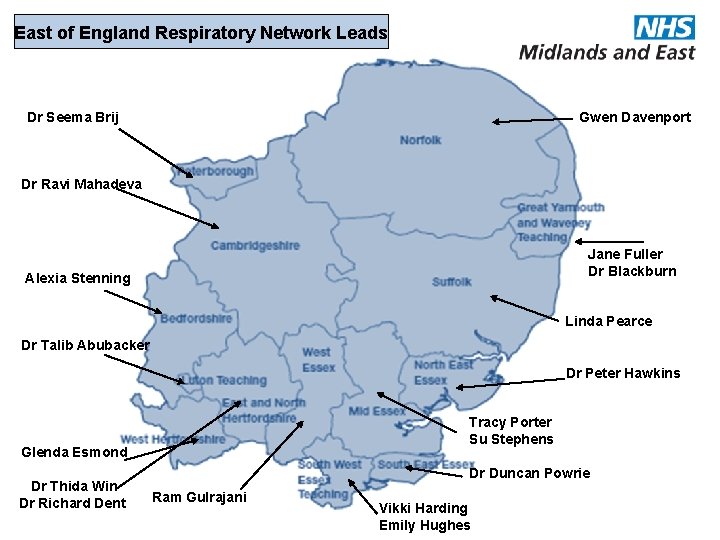
East of England Respiratory Network Leads Dr Seema Brij Gwen Davenport Dr Ravi Mahadeva Jane Fuller Dr Blackburn Alexia Stenning Linda Pearce Dr Talib Abubacker Dr Peter Hawkins Tracy Porter Su Stephens Glenda Esmond Dr Thida Win Dr Richard Dent Dr Duncan Powrie Ram Gulrajani Vikki Harding Emily Hughes
Seven Clusters: each Cluster moving towards single Director of Commissioning
Key lessons……………. . • Review of Respiratory Board – structure, function, purpose and direction • SHA to have line management responsibility for Programme Managers • Roles, responsibilities and accountability made more explicit
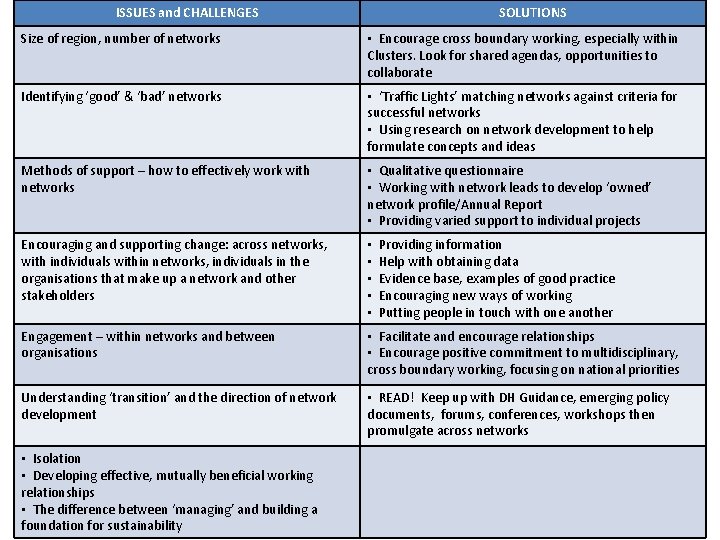
ISSUES and CHALLENGES SOLUTIONS Size of region, number of networks • Encourage cross boundary working, especially within Clusters. Look for shared agendas, opportunities to collaborate Identifying ‘good’ & ‘bad’ networks • ‘Traffic Lights’ matching networks against criteria for successful networks • Using research on network development to help formulate concepts and ideas Methods of support – how to effectively work with networks • Qualitative questionnaire • Working with network leads to develop ‘owned’ network profile/Annual Report • Providing varied support to individual projects Encouraging and supporting change: across networks, with individuals within networks, individuals in the organisations that make up a network and other stakeholders • • • Engagement – within networks and between organisations • Facilitate and encourage relationships • Encourage positive commitment to multidisciplinary, cross boundary working, focusing on national priorities Understanding ‘transition’ and the direction of network development • READ! Keep up with DH Guidance, emerging policy documents, forums, conferences, workshops then promulgate across networks • Isolation • Developing effective, mutually beneficial working relationships • The difference between ‘managing’ and building a foundation for sustainability Providing information Help with obtaining data Evidence base, examples of good practice Encouraging new ways of working Putting people in touch with one another
Support needed and current gaps • Networks (clinicians and commissioners) would benefit from high level support and guidance re ‘transition’ and all that……… • Networks would benefit from more opportunities to participate in improvement projects, particularly around national priorities • Networks would benefit from increased opportunities to undertake research in key areas