Rocine Lesson 41 Deuteronomy 12 30 Goals Identify
- Slides: 18
Rocine Lesson 41 השמר לך אחרי השמדם מפניך Deuteronomy 12: 30
Goals Identify and read • Niphal imperative • Niphal infinitive
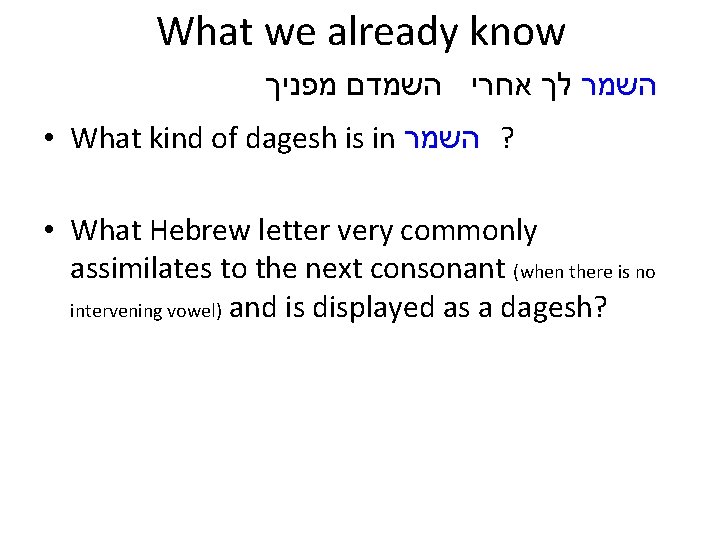
What we already know השמר לך אחרי השמדם מפניך • What kind of dagesh is in ? השמר • What Hebrew letter very commonly assimilates to the next consonant (when there is no intervening vowel) and is displayed as a dagesh?
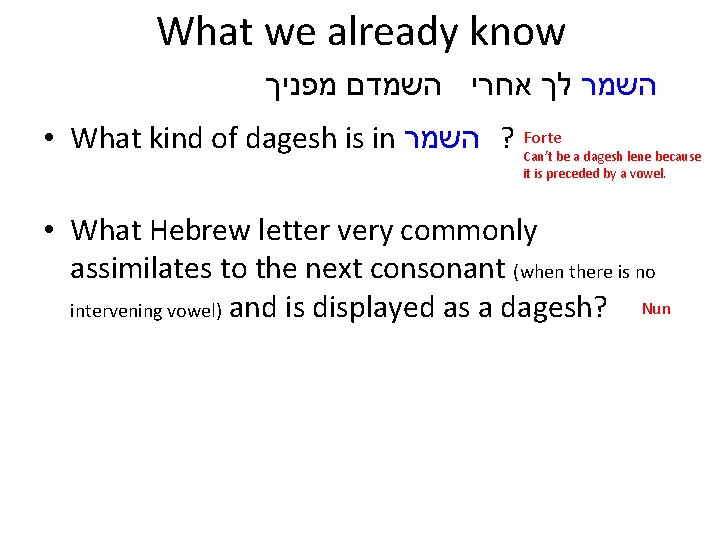
What we already know השמר לך אחרי השמדם מפניך • What kind of dagesh is in ? השמר Forte Can’t be a dagesh lene because it is preceded by a vowel. • What Hebrew letter very commonly assimilates to the next consonant (when there is no Nun intervening vowel) and is displayed as a dagesh?
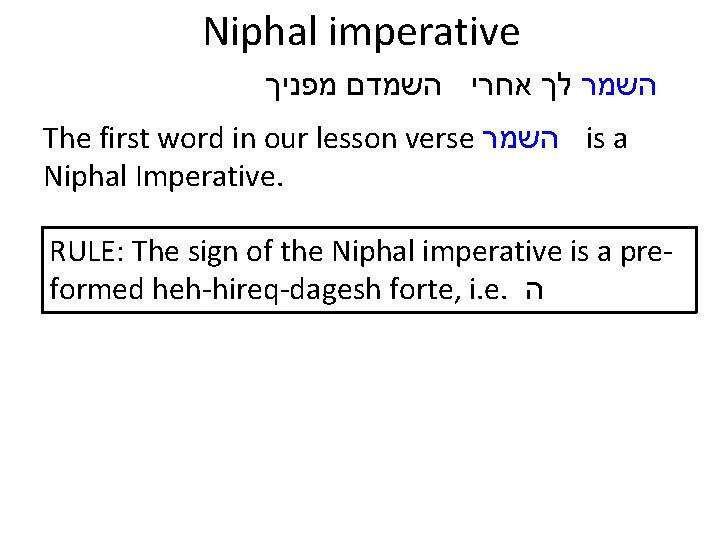
Niphal imperative השמר לך אחרי השמדם מפניך The first word in our lesson verse השמר is a Niphal Imperative. RULE: The sign of the Niphal imperative is a preformed heh-hireq-dagesh forte, i. e. ה
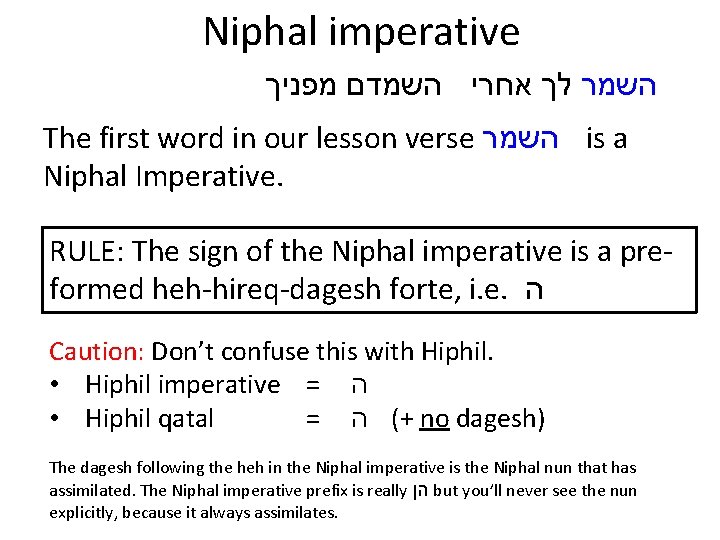
Niphal imperative השמר לך אחרי השמדם מפניך The first word in our lesson verse השמר is a Niphal Imperative. RULE: The sign of the Niphal imperative is a preformed heh-hireq-dagesh forte, i. e. ה Caution: Don’t confuse this with Hiphil. • Hiphil imperative = ה • Hiphil qatal = ( ה + no dagesh) The dagesh following the heh in the Niphal imperative is the Niphal nun that has assimilated. The Niphal imperative prefix is really הן but you’ll never see the nun explicitly, because it always assimilates.
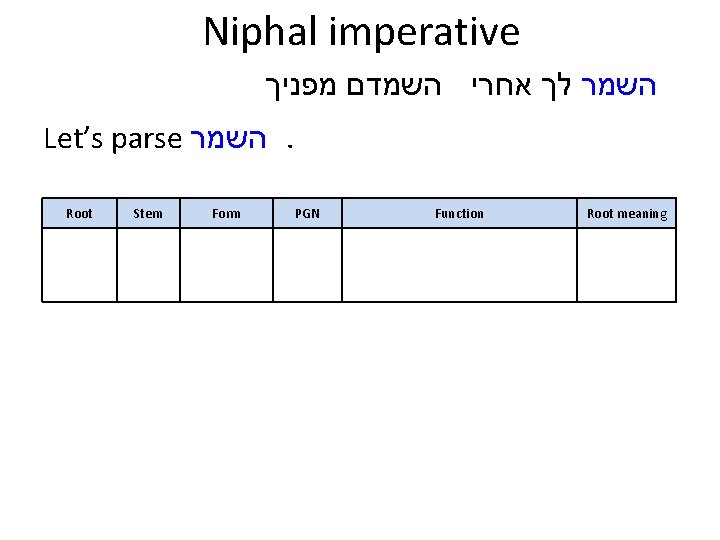
Niphal imperative השמר לך אחרי השמדם מפניך Let’s parse השמר. Root Stem Form PGN Function Root meaning
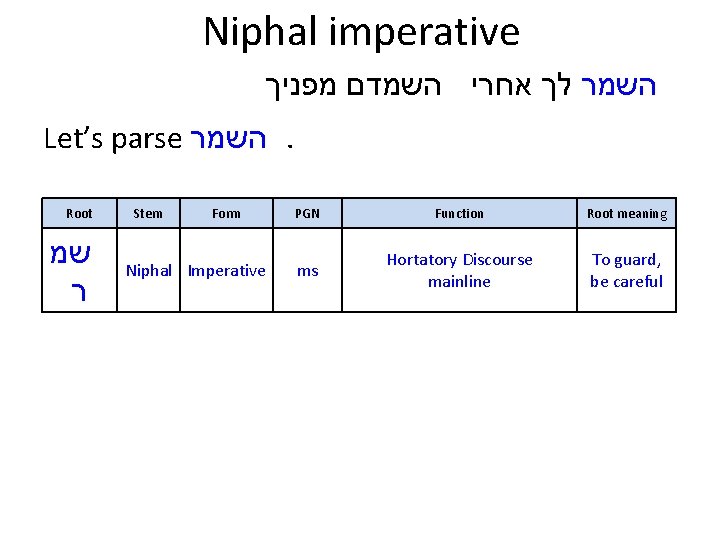
Niphal imperative השמר לך אחרי השמדם מפניך Let’s parse השמר. Root שמ ר Stem Form Niphal Imperative PGN Function Root meaning ms Hortatory Discourse mainline To guard, be careful
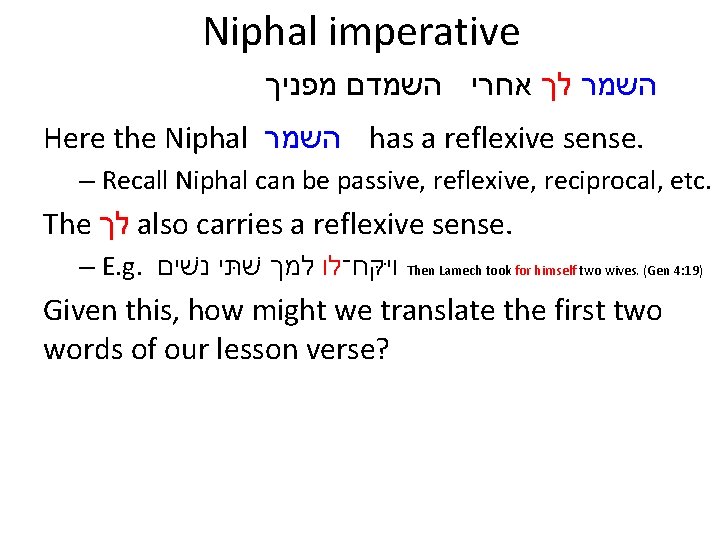
Niphal imperative השמר לך אחרי השמדם מפניך Here the Niphal השמר has a reflexive sense. – Recall Niphal can be passive, reflexive, reciprocal, etc. The לך also carries a reflexive sense. – E. g. ויּקּח־לו למך שׁתּי נשׁים Then Lamech took for himself two wives. (Gen 4: 19) Given this, how might we translate the first two words of our lesson verse?
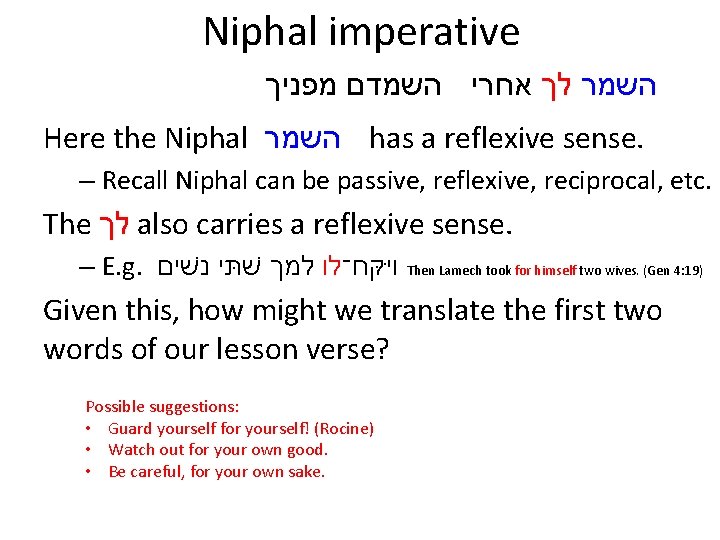
Niphal imperative השמר לך אחרי השמדם מפניך Here the Niphal השמר has a reflexive sense. – Recall Niphal can be passive, reflexive, reciprocal, etc. The לך also carries a reflexive sense. – E. g. ויּקּח־לו למך שׁתּי נשׁים Then Lamech took for himself two wives. (Gen 4: 19) Given this, how might we translate the first two words of our lesson verse? Possible suggestions: • Guard yourself for yourself! (Rocine) • Watch out for your own good. • Be careful, for your own sake.
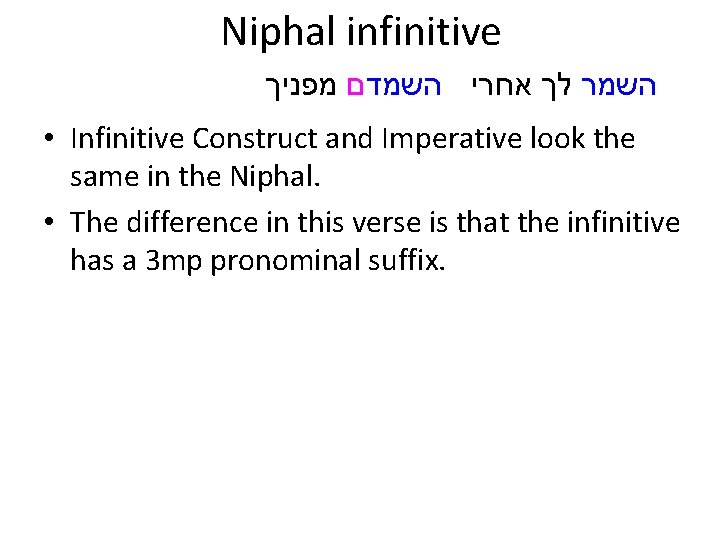
Niphal infinitive השמר לך אחרי השמדם מפניך • Infinitive Construct and Imperative look the same in the Niphal. • The difference in this verse is that the infinitive has a 3 mp pronominal suffix.
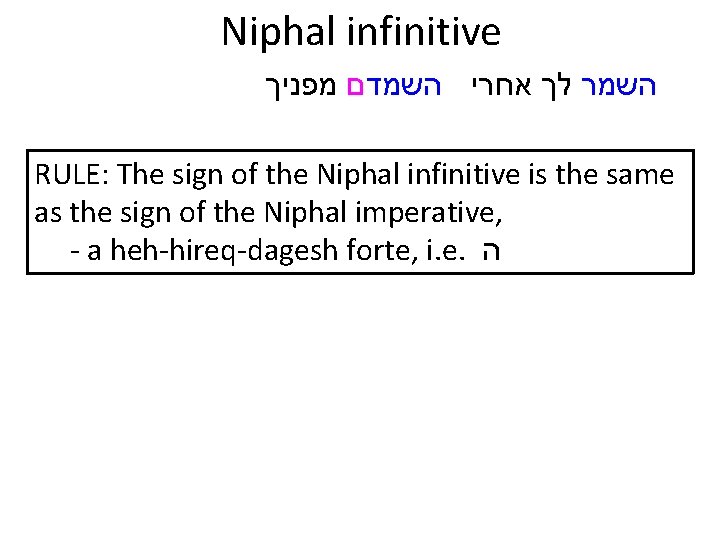
Niphal infinitive השמר לך אחרי השמדם מפניך RULE: The sign of the Niphal infinitive is the same as the sign of the Niphal imperative, - a heh-hireq-dagesh forte, i. e. ה
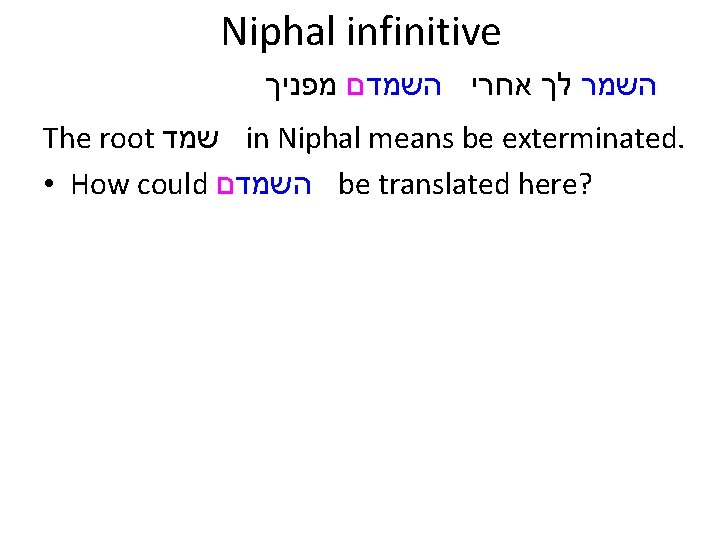
Niphal infinitive השמר לך אחרי השמדם מפניך The root שמד in Niphal means be exterminated. • How could השמדם be translated here?
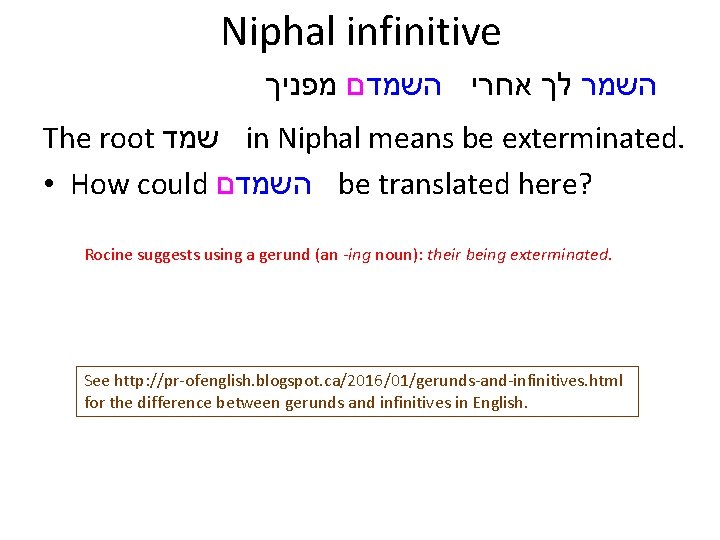
Niphal infinitive השמר לך אחרי השמדם מפניך The root שמד in Niphal means be exterminated. • How could השמדם be translated here? Rocine suggests using a gerund (an -ing noun): their being exterminated. See http: //pr-ofenglish. blogspot. ca/2016/01/gerunds-and-infinitives. html for the difference between gerunds and infinitives in English.
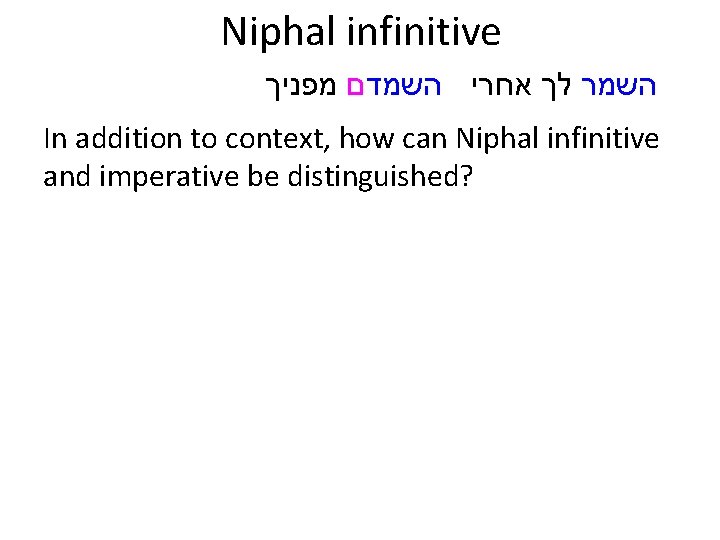
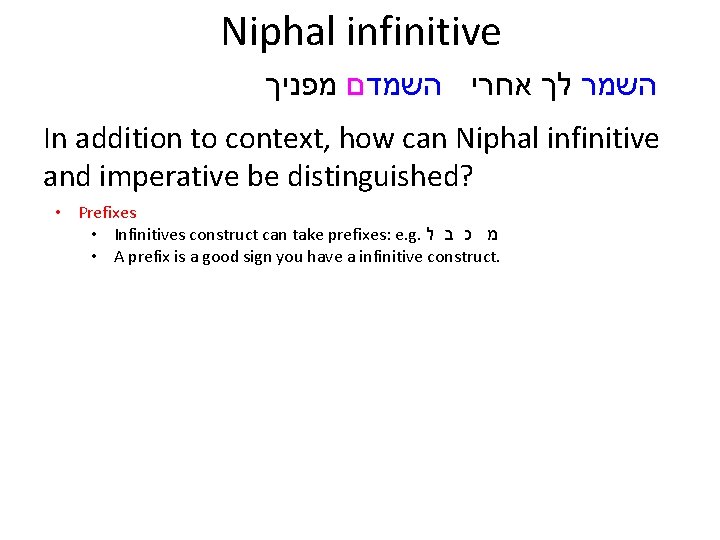
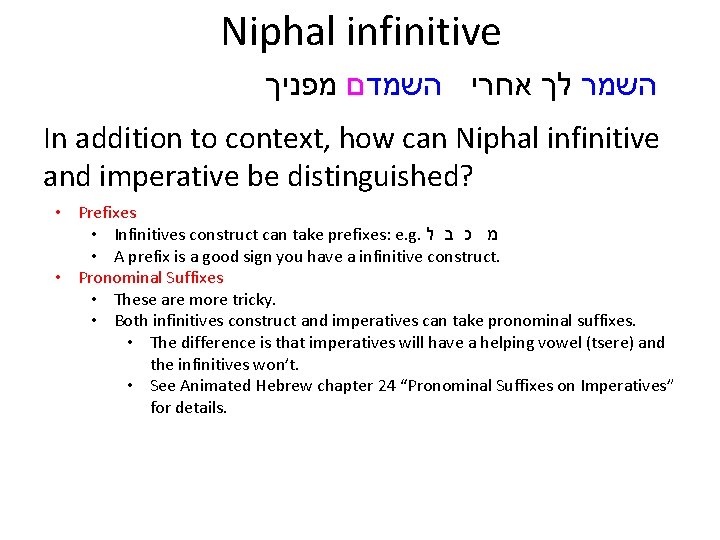
Niphal infinitive השמר לך אחרי השמדם מפניך In addition to context, how can Niphal infinitive and imperative be distinguished?
Niphal infinitive השמר לך אחרי השמדם מפניך In addition to context, how can Niphal infinitive and imperative be distinguished? • Prefixes • Infinitives construct can take prefixes: e. g. מ כ ב ל • A prefix is a good sign you have a infinitive construct.
Niphal infinitive השמר לך אחרי השמדם מפניך In addition to context, how can Niphal infinitive and imperative be distinguished? • Prefixes • Infinitives construct can take prefixes: e. g. מ כ ב ל • A prefix is a good sign you have a infinitive construct. • Pronominal Suffixes • These are more tricky. • Both infinitives construct and imperatives can take pronominal suffixes. • The difference is that imperatives will have a helping vowel (tsere) and the infinitives won’t. • See Animated Hebrew chapter 24 “Pronominal Suffixes on Imperatives” for details.
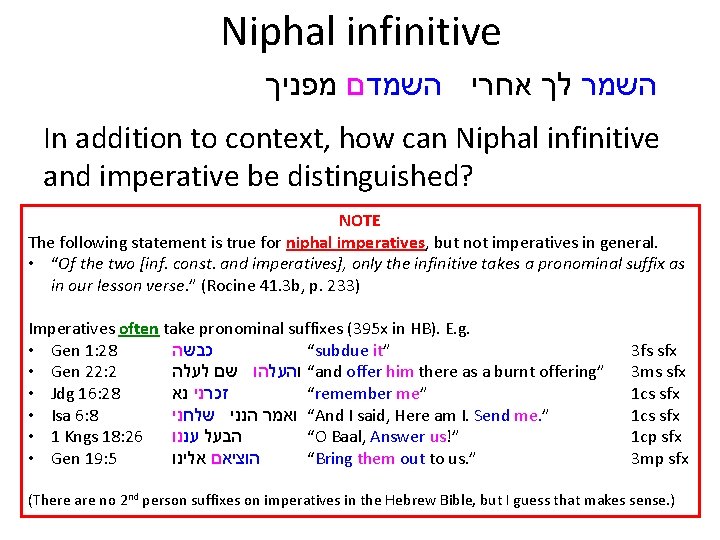
Niphal infinitive השמר לך אחרי השמדם מפניך In addition to context, how can Niphal infinitive and imperative be distinguished? NOTE The following statement is true for niphal imperatives, but not imperatives in general. • “Of the two [inf. const. and imperatives], only the infinitive takes a pronominal suffix as in our lesson verse. ” (Rocine 41. 3 b, p. 233) Imperatives often take pronominal suffixes (395 x in HB). E. g. • Gen 1: 28 כבשה “subdue it” • Gen 22: 2 “ והעלהו שם לעלה and offer him there as a burnt offering” • Jdg 16: 28 זכרני נא “remember me” • Isa 6: 8 “ ואמר הנני שלחני And I said, Here am I. Send me. ” • 1 Kngs 18: 26 הבעל עננו “O Baal, Answer us!” • Gen 19: 5 הוציאם אלינו “Bring them out to us. ” 3 fs sfx 3 ms sfx 1 cs sfx 1 cp sfx 3 mp sfx (There are no 2 nd person suffixes on imperatives in the Hebrew Bible, but I guess that makes sense. )