Reproductive systems and Animal Development Asexual Reproduction n


- Slides: 19
Reproductive systems and Animal Development
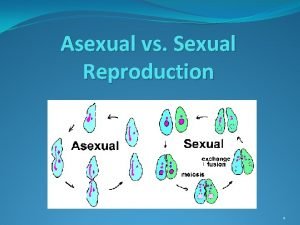
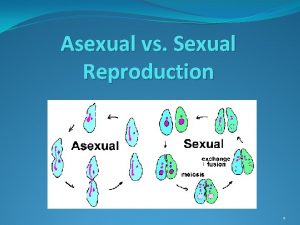
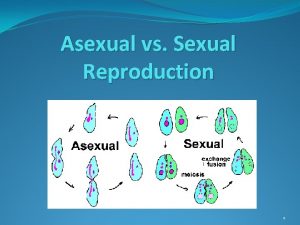
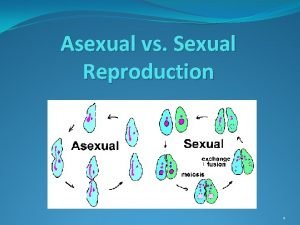
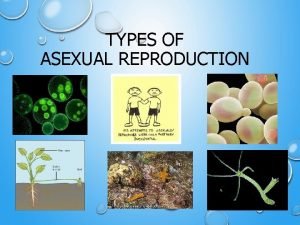
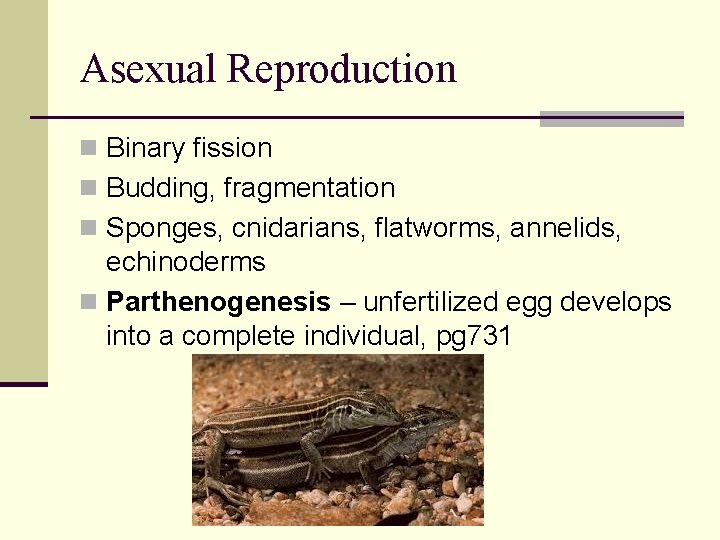
Asexual Reproduction n Binary fission n Budding, fragmentation n Sponges, cnidarians, flatworms, annelids, echinoderms n Parthenogenesis – unfertilized egg develops into a complete individual, pg 731
Sexual reproduction n Egg of one parent is fertilized by the sperm of another. Dioecious – 2 sexes n Monoecious – hermaphrodites, few undergo self-fertilization, most cross fertilization n n Oviparous – n Ovoviviparous – n Viviparous -
Advantages of Asexual vs Sexual n Asexual n More offspring identical to parent n Sexual n Beneficial gene combinations that arise through recombination that speed up adaptation in a changing environment n Can rid a population of harmful genes more easily.
n Hermaphroditism – each individual has both male and female reproductive systems – donates and receives sperm n Example: earthworms, sea slugs n Internal fertilization – sperm deposited in or near female reproductive tract, fewer gametes and zygotes produced n External fertilization – females release eggs into environment, male then fertilizes them, release of gametes by environmental cues, pheromones
Reproductive Organs n Gonads –organs that produce gametes, found in most animals. n Cloaca – structure found in ancestors of vertebrates. Found in non-mammal vertebrates n Digestive, excretory and reproductive opening for wastes.
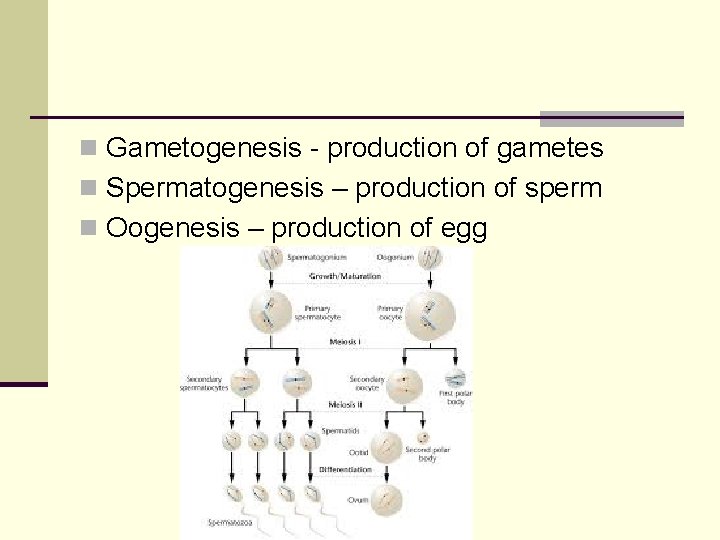
n Gametogenesis - production of gametes n Spermatogenesis – production of sperm n Oogenesis – production of egg
Male Reproductive System n Testes – produce sperm and sex hormones n Epididymis – maturation of sperm n Vas deferens – store sperm n Seminal vesicles – contribute most fluid to sperm n Prostate gland – contribute fluid n Urethra – conduct sperm and urine n Bulbourethral gland – little fluid to sperm n penis
Sperm: hundreds of millions produced each day n 3 parts n Head – nucleus covered by a cap (acrosome) n Middle piece – mitochondria (energy) and microtubules n Tail – microtubules n Takes 7 weeks for 1 sperm to develop n Testosterone – main male sex hormone
Female Reproductive System n Ovaries – produce ovum and hormones n Oviduct (fallopian tubes) – conduct egg, fertilization n Uterus – houses embryo during development n Vagina
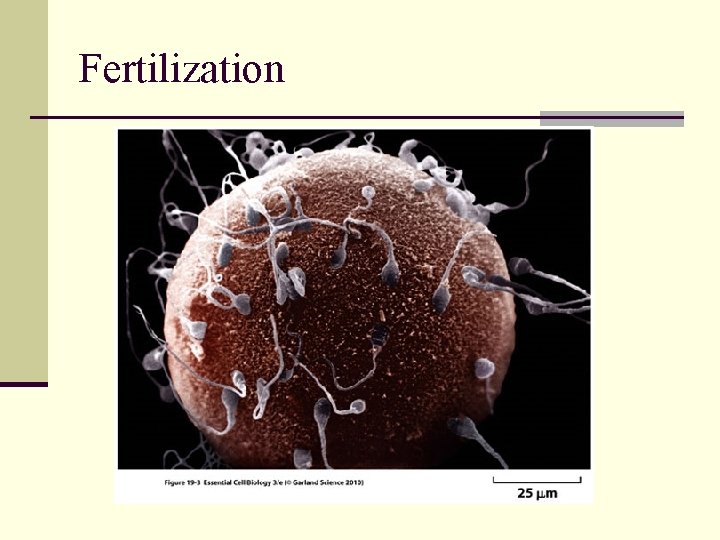
Fertilization
Endocrine System Role in Reproduction n Hypothalamus, anterior pituitary and gonads govern hormones in reproduction cycle Follicle stimulating hormone and luteinizing hormone, tropic hormones n Primary sex hormones: n Androgens: Testosterone n Estrogens: progesterone and estradiol n n Males and females produce all hormones but in different concentrations n Adrenal gland also produces sex hormones
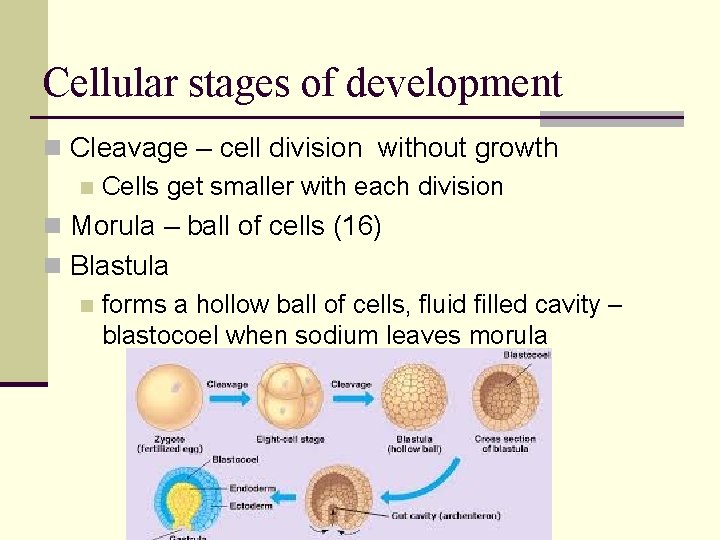
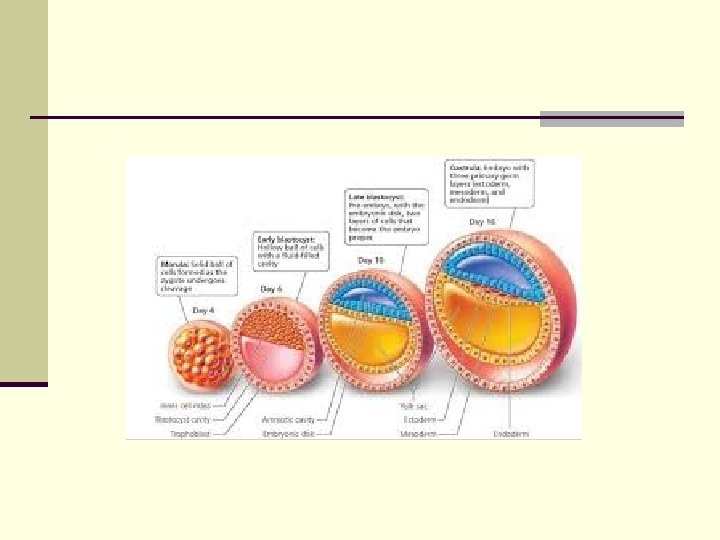
Cellular stages of development n Cleavage – cell division without growth n Cells get smaller with each division n Morula – ball of cells (16) n Blastula n forms a hollow ball of cells, fluid filled cavity – blastocoel when sodium leaves morula
Tissue stages of development n Early Gastrula – cells invaginate into the blastocoel forming the blastopore (protostomes – mouth, deuterstomes – anus) Early gastula has 2 layers of cells, n Ectoderm – outer layer n Endoderm – primitive gut n n Late gastrula – mesoderm forms n Gastrulation complete
Embryonic Germ Layers n Ectoderm – nervous system, epidermis of skin n Mesoderm – musculoskeletal system, dermis of skin, cardiovascular system, urinary system, lymphatic system, reproductive system, outer layers of respiratory and digestive systems n Endoderm – lining of digestive tract and resp. tract, glands, thyroid/parathyroid glands
Developmental processes n Development requires n Growth n Cellular differentiate – cells become specialized n Morphogenesis- shape and form of body
Human Conception n AKA Fertilization –sperm fuses with an egg n Gestation –pregnancy – carrying one or more embryos in the uterus n Placenta –disk shaped organ with embryonic and maternal blood vessels, provides nutrients n Organogenesis – development of the body organs, mainly in first trimester n Fetus –embryo at 8 weeks