REFERRING TO THE WORK OF OTHERS PART 1
- Slides: 11
REFERRING TO THE WORK OF OTHERS PART 1: ACADEMIC CRIME PART 2: MECHANICS
Academic Crime: What is plagiarism? 11. 10
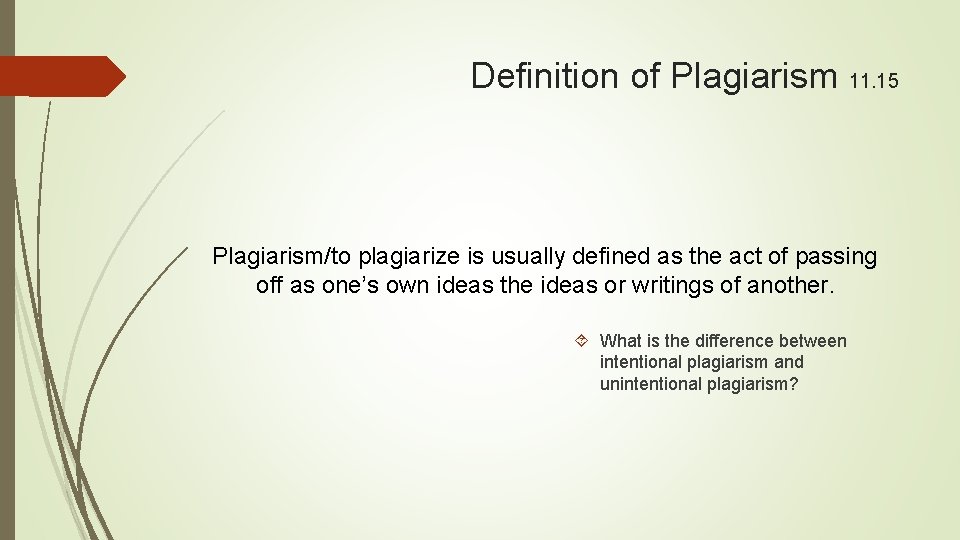
Definition of Plagiarism 11. 15 Plagiarism/to plagiarize is usually defined as the act of passing off as one’s own ideas the ideas or writings of another. What is the difference between intentional plagiarism and unintentional plagiarism?
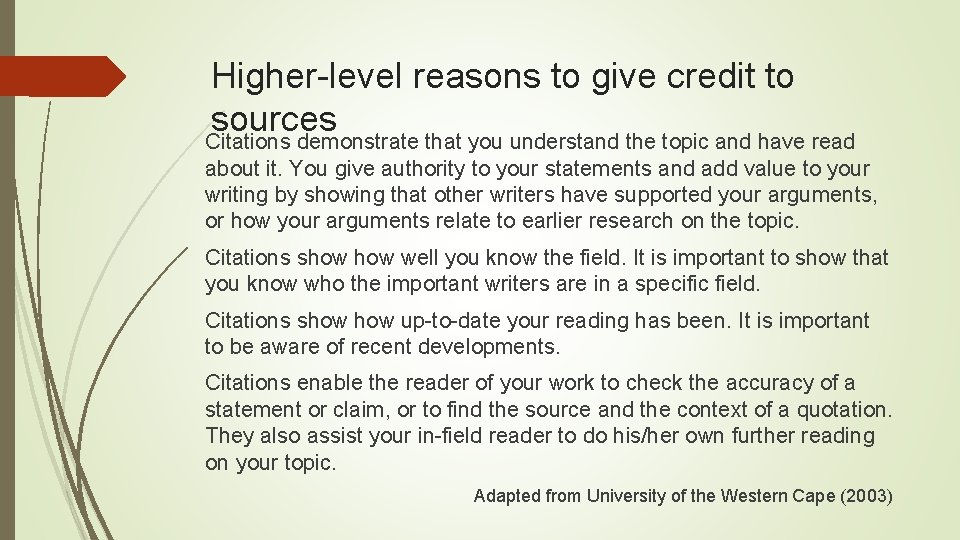
Higher-level reasons to give credit to sources Citations demonstrate that you understand the topic and have read about it. You give authority to your statements and add value to your writing by showing that other writers have supported your arguments, or how your arguments relate to earlier research on the topic. Citations show well you know the field. It is important to show that you know who the important writers are in a specific field. Citations show up-to-date your reading has been. It is important to be aware of recent developments. Citations enable the reader of your work to check the accuracy of a statement or claim, or to find the source and the context of a quotation. They also assist your in-field reader to do his/her own further reading on your topic. Adapted from University of the Western Cape (2003)
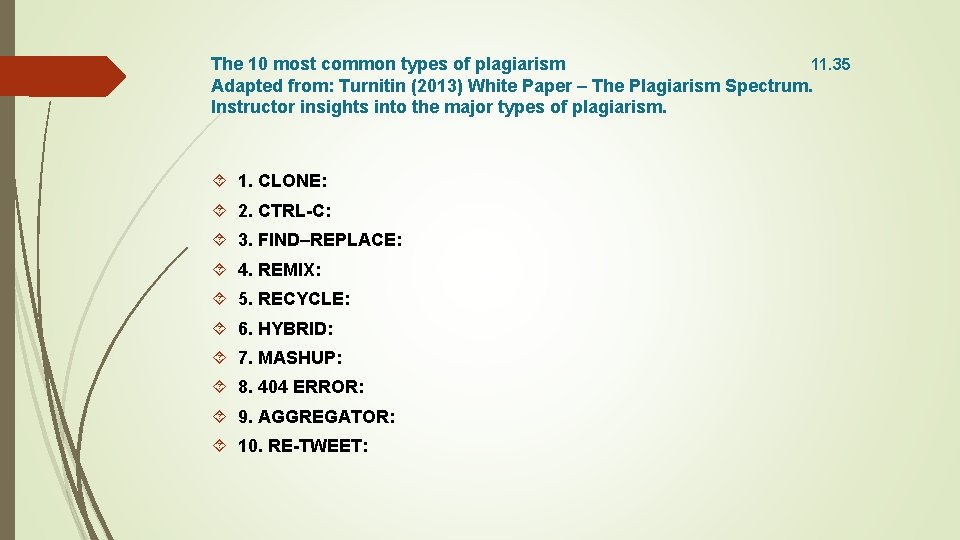
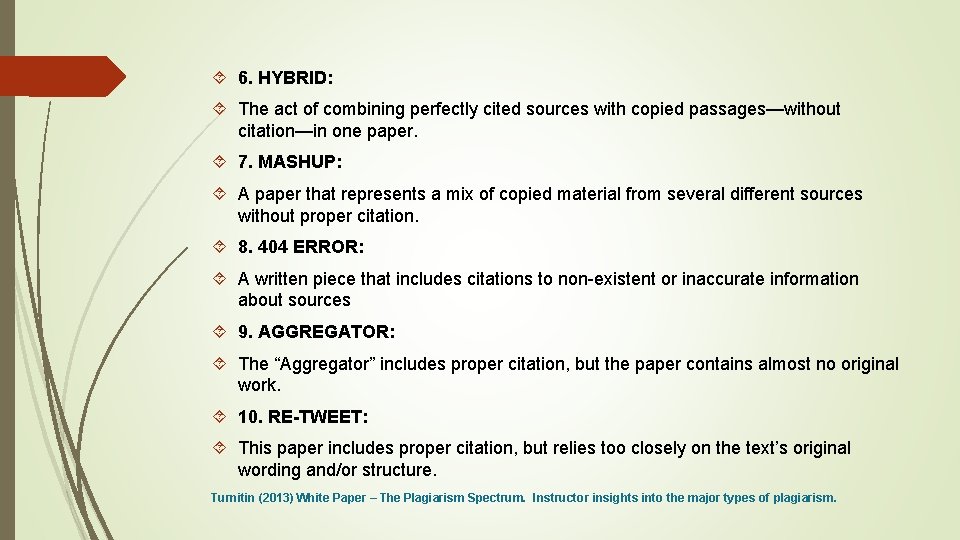
The 10 most common types of plagiarism 11. 35 Adapted from: Turnitin (2013) White Paper – The Plagiarism Spectrum. Instructor insights into the major types of plagiarism. 1. CLONE: 2. CTRL-C: 3. FIND–REPLACE: 4. REMIX: 5. RECYCLE: 6. HYBRID: 7. MASHUP: 8. 404 ERROR: 9. AGGREGATOR: 10. RE-TWEET:
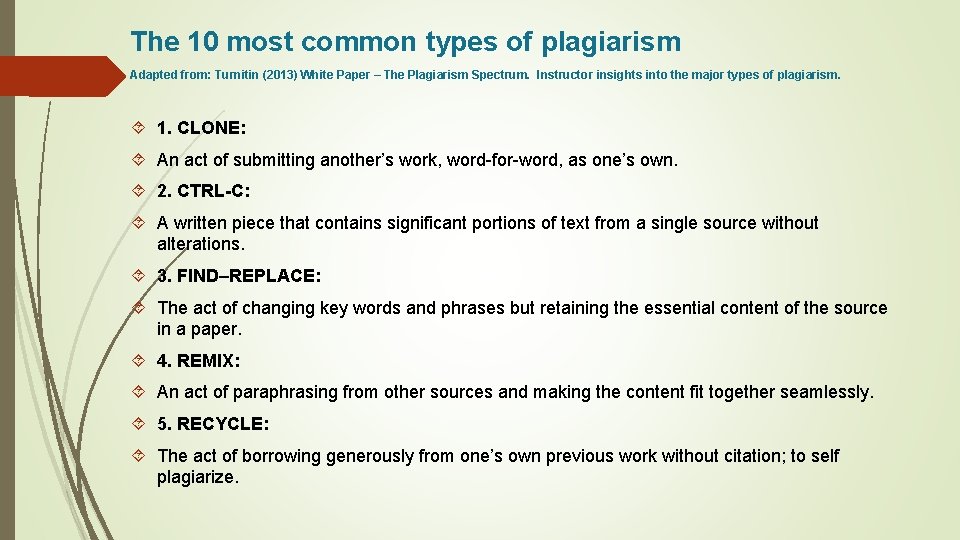
The 10 most common types of plagiarism Adapted from: Turnitin (2013) White Paper – The Plagiarism Spectrum. Instructor insights into the major types of plagiarism. 1. CLONE: An act of submitting another’s work, word-for-word, as one’s own. 2. CTRL-C: A written piece that contains significant portions of text from a single source without alterations. 3. FIND–REPLACE: The act of changing key words and phrases but retaining the essential content of the source in a paper. 4. REMIX: An act of paraphrasing from other sources and making the content fit together seamlessly. 5. RECYCLE: The act of borrowing generously from one’s own previous work without citation; to self plagiarize.
6. HYBRID: The act of combining perfectly cited sources with copied passages—without citation—in one paper. 7. MASHUP: A paper that represents a mix of copied material from several different sources without proper citation. 8. 404 ERROR: A written piece that includes citations to non-existent or inaccurate information about sources 9. AGGREGATOR: The “Aggregator” includes proper citation, but the paper contains almost no original work. 10. RE-TWEET: This paper includes proper citation, but relies too closely on the text’s original wording and/or structure. Turnitin (2013) White Paper – The Plagiarism Spectrum. Instructor insights into the major types of plagiarism.
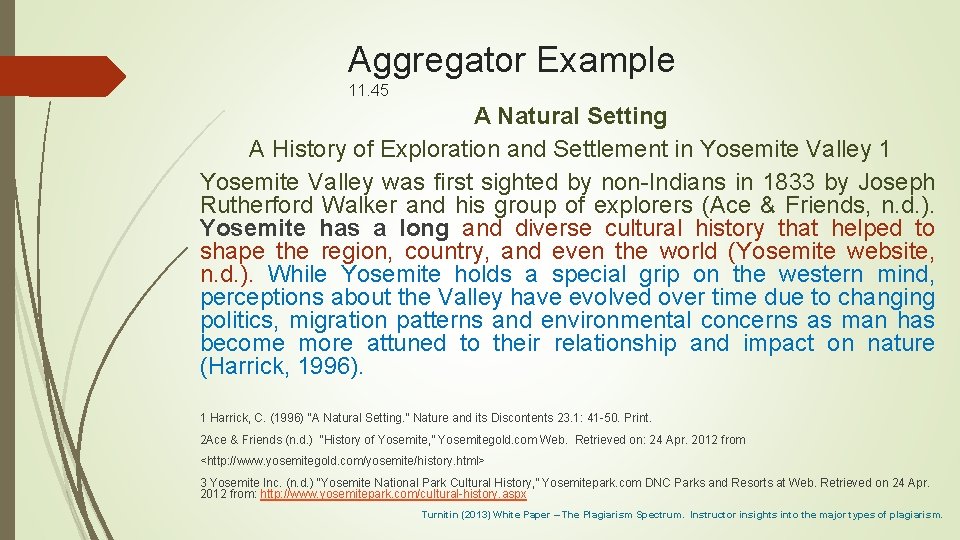
Aggregator Example 11. 45 A Natural Setting A History of Exploration and Settlement in Yosemite Valley 1 Yosemite Valley was first sighted by non-Indians in 1833 by Joseph Rutherford Walker and his group of explorers (Ace & Friends, n. d. ). Yosemite has a long and diverse cultural history that helped to shape the region, country, and even the world (Yosemite website, n. d. ). While Yosemite holds a special grip on the western mind, perceptions about the Valley have evolved over time due to changing politics, migration patterns and environmental concerns as man has become more attuned to their relationship and impact on nature (Harrick, 1996). 1 Harrick, C. (1996) “A Natural Setting. ” Nature and its Discontents 23. 1: 41 -50. Print. 2 Ace & Friends (n. d. ) “History of Yosemite, ” Yosemitegold. com Web. Retrieved on: 24 Apr. 2012 from <http: //www. yosemitegold. com/yosemite/history. html> 3 Yosemite Inc. (n. d. ) “Yosemite National Park Cultural History, ” Yosemitepark. com DNC Parks and Resorts at Web. Retrieved on 24 Apr. 2012 from: http: //www. yosemitepark. com/cultural-history. aspx Turnitin (2013) White Paper – The Plagiarism Spectrum. Instructor insights into the major types of plagiarism.
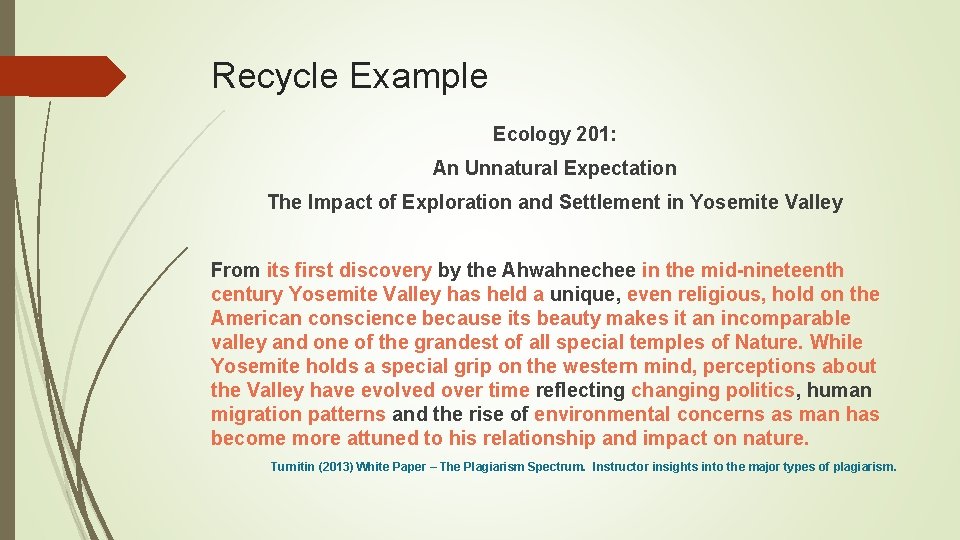
Recycle Example Ecology 201: An Unnatural Expectation The Impact of Exploration and Settlement in Yosemite Valley From its first discovery by the Ahwahnechee in the mid-nineteenth century Yosemite Valley has held a unique, even religious, hold on the American conscience because its beauty makes it an incomparable valley and one of the grandest of all special temples of Nature. While Yosemite holds a special grip on the western mind, perceptions about the Valley have evolved over time reflecting changing politics, human migration patterns and the rise of environmental concerns as man has become more attuned to his relationship and impact on nature. Turnitin (2013) White Paper – The Plagiarism Spectrum. Instructor insights into the major types of plagiarism.
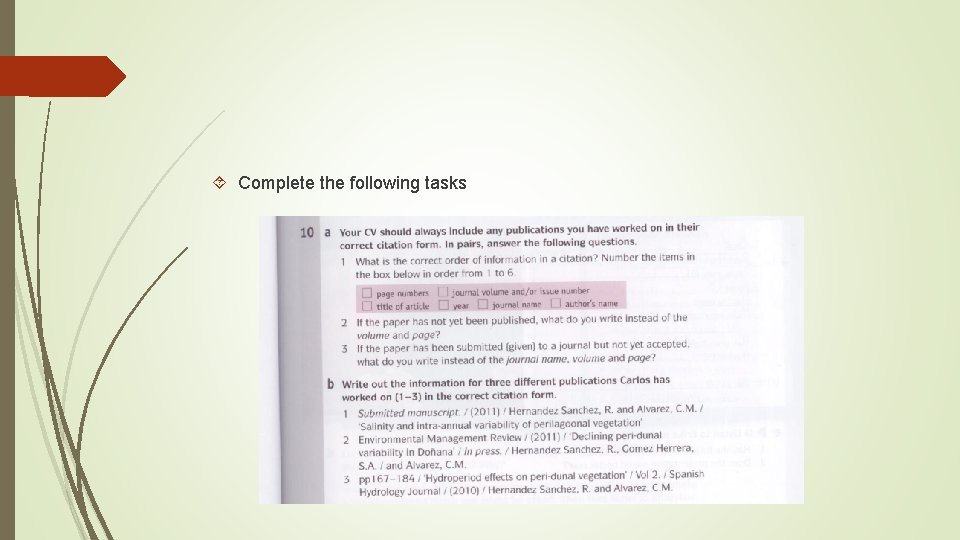
Complete the following tasks
Armer, T. , 2005. Cambridge English for Scientists. Cambridge: Cambridge University Press