RECAP What is a partnership What is an

- Slides: 15
RE-CAP • What is a partnership? • What is an advantage of becoming a partnership? • What is a disadvantage of becoming a partnership? • What document do you need to set up a partnership?
Limited Liability companies
Why Become a Shareholder? Shares in public limited companies are available to buy on the stock exchange.
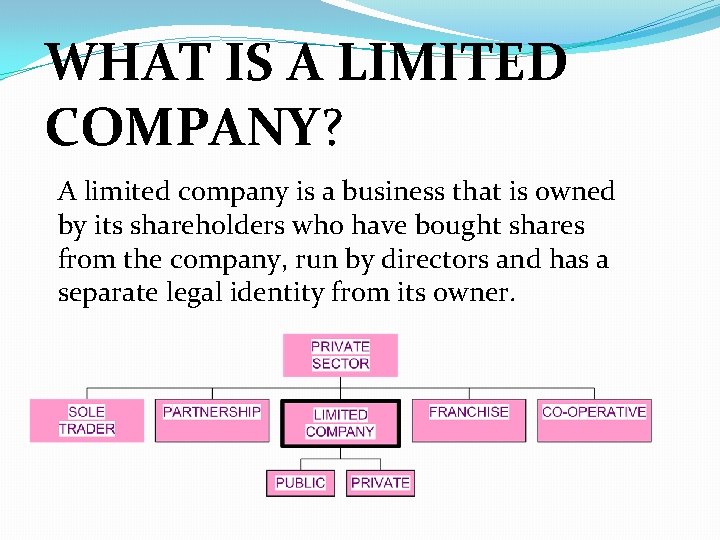
WHAT IS A LIMITED COMPANY? A limited company is a business that is owned by its shareholders who have bought shares from the company, run by directors and has a separate legal identity from its owner.
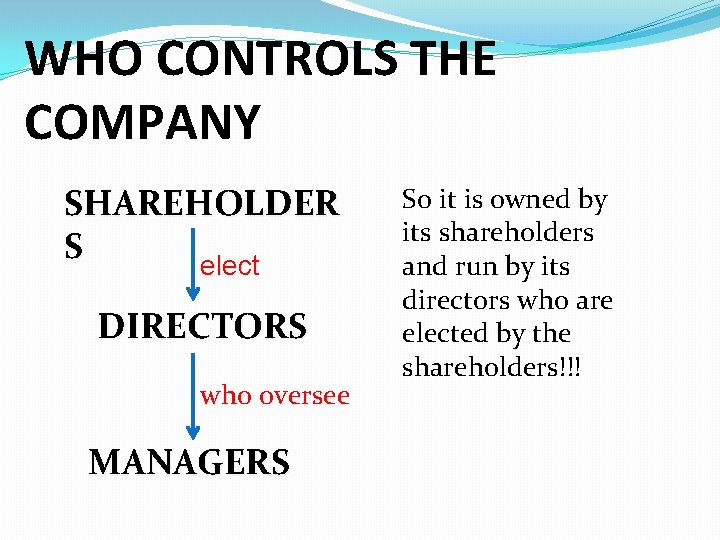
WHO CONTROLS THE COMPANY SHAREHOLDER S elect DIRECTORS who oversee MANAGERS So it is owned by its shareholders and run by its directors who are elected by the shareholders!!!
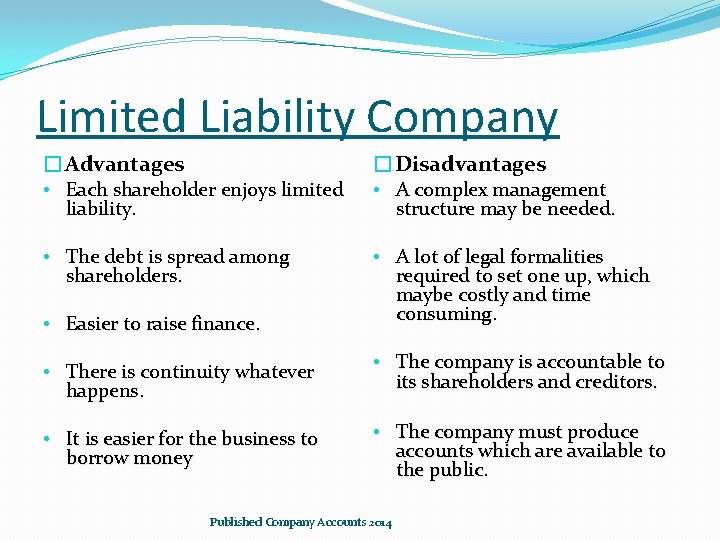
Limited Liability Company �Advantages �Disadvantages • The debt is spread among shareholders. • Easier to raise finance. • A lot of legal formalities required to set one up, which maybe costly and time consuming. • There is continuity whatever happens. • The company is accountable to its shareholders and creditors. • It is easier for the business to borrow money • The company must produce accounts which are available to the public. • Each shareholder enjoys limited liability. • A complex management structure may be needed. Published Company Accounts 2014
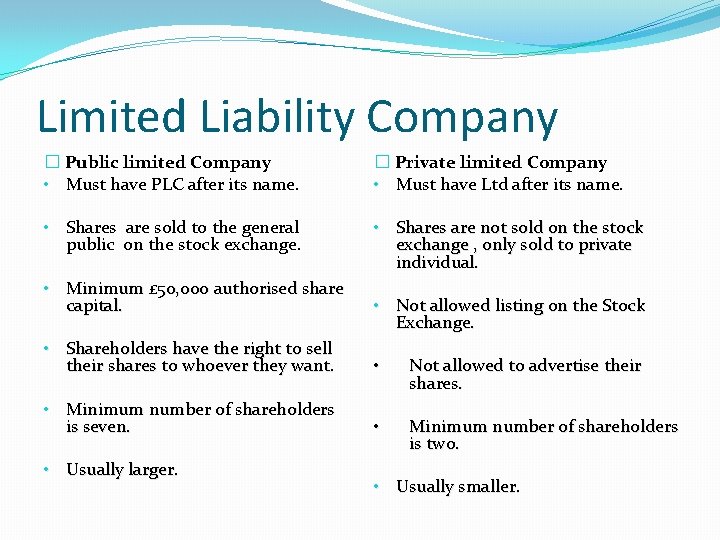
Limited Liability Company � Public limited Company • Must have PLC after its name. � Private limited Company • Must have Ltd after its name. • Shares are sold to the general public on the stock exchange. • Shares are not sold on the stock exchange , only sold to private individual. • Minimum £ 50, 000 authorised share capital. • Not allowed listing on the Stock Exchange. • Shareholders have the right to sell their shares to whoever they want. • Not allowed to advertise their shares. • Minimum number of shareholders is seven. • Minimum number of shareholders is two. • Usually larger. • Usually smaller.
SO AS YOU CAN SEE THEY ARE VERY SIMILAR!!
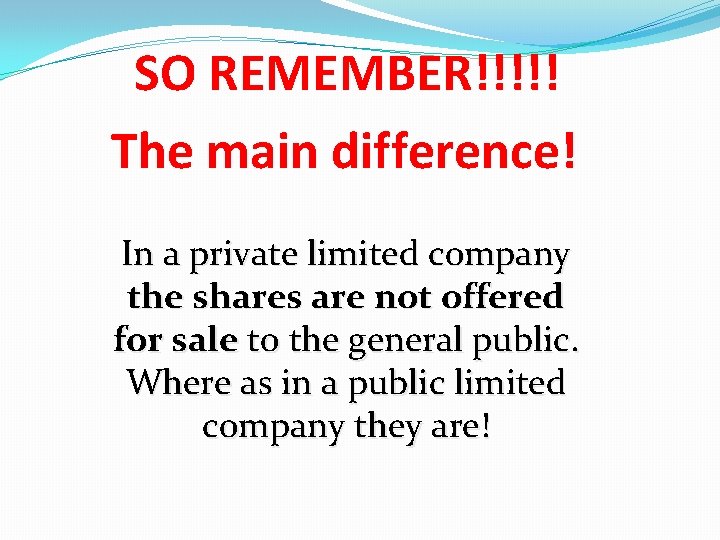
SO REMEMBER!!!!! The main difference! In a private limited company the shares are not offered for sale to the general public. Where as in a public limited company they are!
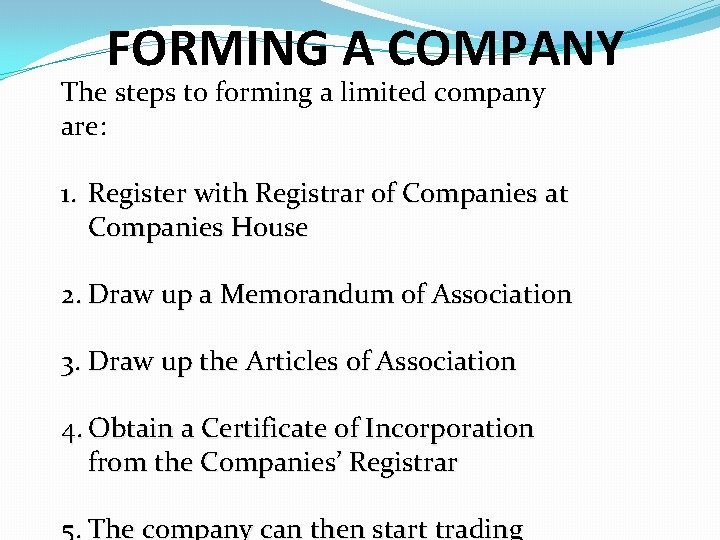
FORMING A COMPANY The steps to forming a limited company are: 1. Register with Registrar of Companies at Companies House 2. Draw up a Memorandum of Association 3. Draw up the Articles of Association 4. Obtain a Certificate of Incorporation from the Companies’ Registrar 5. The company can then start trading
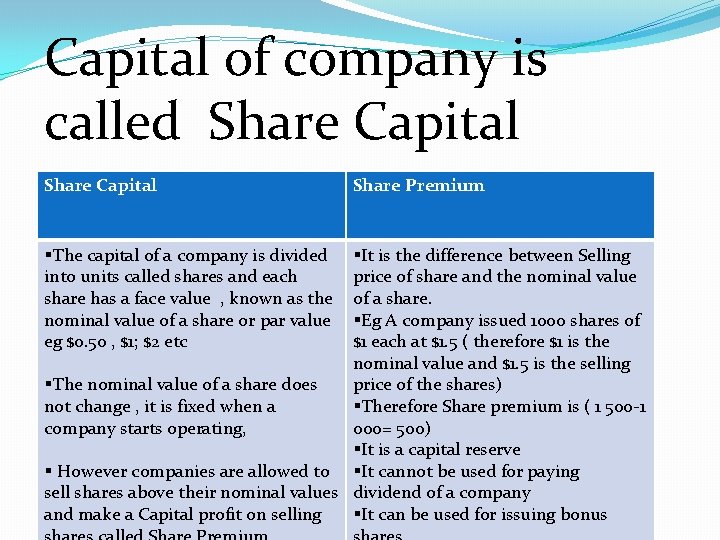
Capital of company is called Share Capital §The capital of a company is divided into units called shares and each share has a face value , known as the nominal value of a share or par value eg $0. 50 , $1; $2 etc Share Premium §It is the difference between Selling price of share and the nominal value of a share. §Eg A company issued 1000 shares of $1 each at $1. 5 ( therefore $1 is the nominal value and $1. 5 is the selling §The nominal value of a share does price of the shares) not change , it is fixed when a §Therefore Share premium is ( 1 500 -1 company starts operating, 000= 500) §It is a capital reserve § However companies are allowed to §It cannot be used for paying sell shares above their nominal values dividend of a company and make a Capital profit on selling §It can be used for issuing bonus
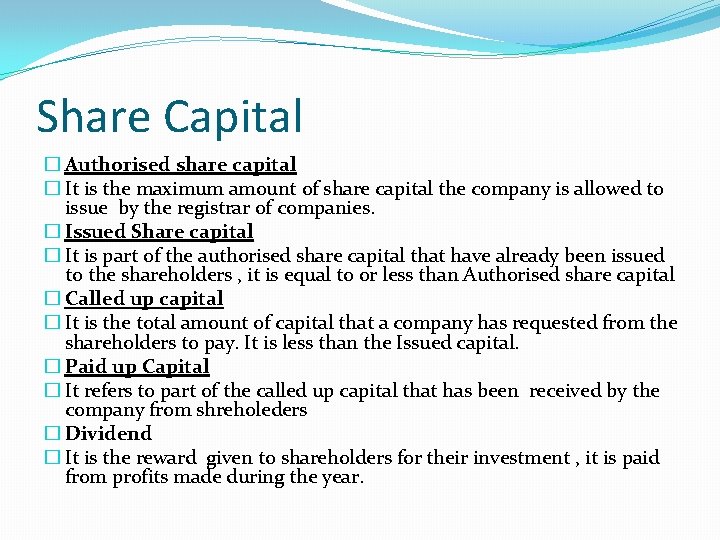
Share Capital � Authorised share capital � It is the maximum amount of share capital the company is allowed to issue by the registrar of companies. � Issued Share capital � It is part of the authorised share capital that have already been issued to the shareholders , it is equal to or less than Authorised share capital � Called up capital � It is the total amount of capital that a company has requested from the shareholders to pay. It is less than the Issued capital. � Paid up Capital � It refers to part of the called up capital that has been received by the company from shreholeders � Dividend � It is the reward given to shareholders for their investment , it is paid from profits made during the year.
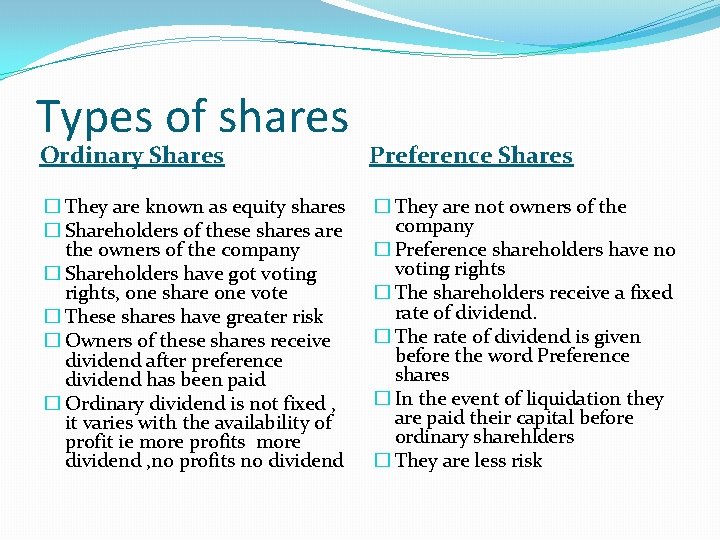
Types of shares Ordinary Shares Preference Shares � They are known as equity shares � Shareholders of these shares are the owners of the company � Shareholders have got voting rights, one share one vote � These shares have greater risk � Owners of these shares receive dividend after preference dividend has been paid � Ordinary dividend is not fixed , it varies with the availability of profit ie more profits more dividend , no profits no dividend � They are not owners of the company � Preference shareholders have no voting rights � The shareholders receive a fixed rate of dividend. � The rate of dividend is given before the word Preference shares � In the event of liquidation they are paid their capital before ordinary sharehlders � They are less risk
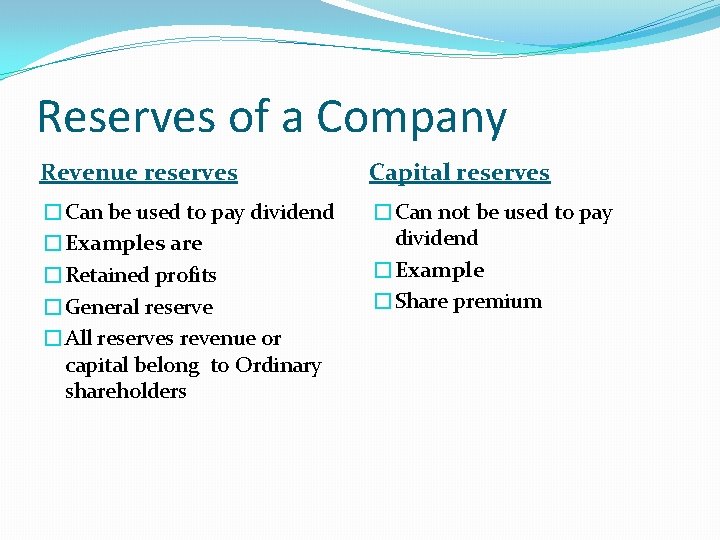
Reserves of a Company Revenue reserves Capital reserves �Can be used to pay dividend �Examples are �Retained profits �General reserve �All reserves revenue or capital belong to Ordinary shareholders �Can not be used to pay dividend �Example �Share premium
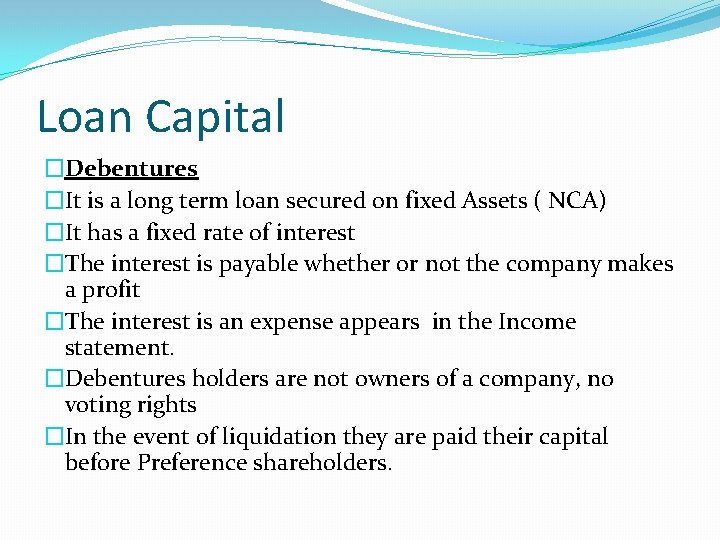
Loan Capital �Debentures �It is a long term loan secured on fixed Assets ( NCA) �It has a fixed rate of interest �The interest is payable whether or not the company makes a profit �The interest is an expense appears in the Income statement. �Debentures holders are not owners of a company, no voting rights �In the event of liquidation they are paid their capital before Preference shareholders.