REAL TIME VIRTUAL CLASSROOM Dale E Parson Kutztown
- Slides: 13
REAL TIME VIRTUAL CLASSROOM Dale E. Parson, Kutztown University Computer Science & Information Technology Research & Teaching Seminar March 29, 2016, 11 AM, Old Main 128 Google “parson kutztown” then go to RTVC link at the bottom of the page.
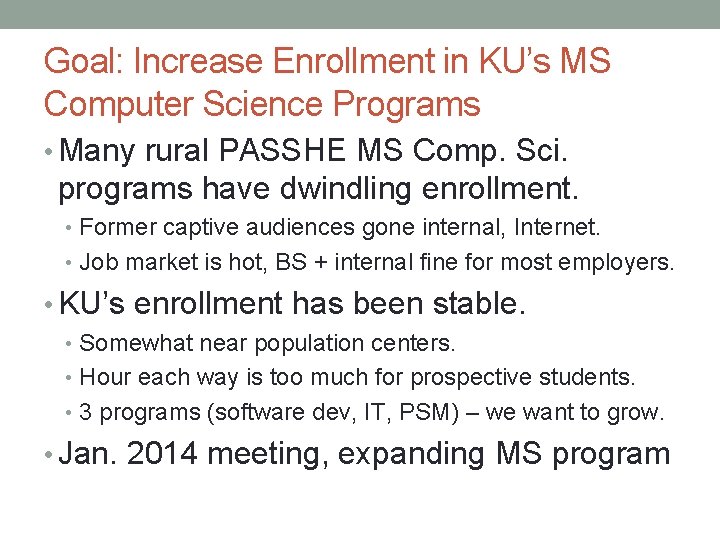
Goal: Increase Enrollment in KU’s MS Computer Science Programs • Many rural PASSHE MS Comp. Sci. programs have dwindling enrollment. • Former captive audiences gone internal, Internet. • Job market is hot, BS + internal fine for most employers. • KU’s enrollment has been stable. • Somewhat near population centers. • Hour each way is too much for prospective students. • 3 programs (software dev, IT, PSM) – we want to grow. • Jan. 2014 meeting, expanding MS program
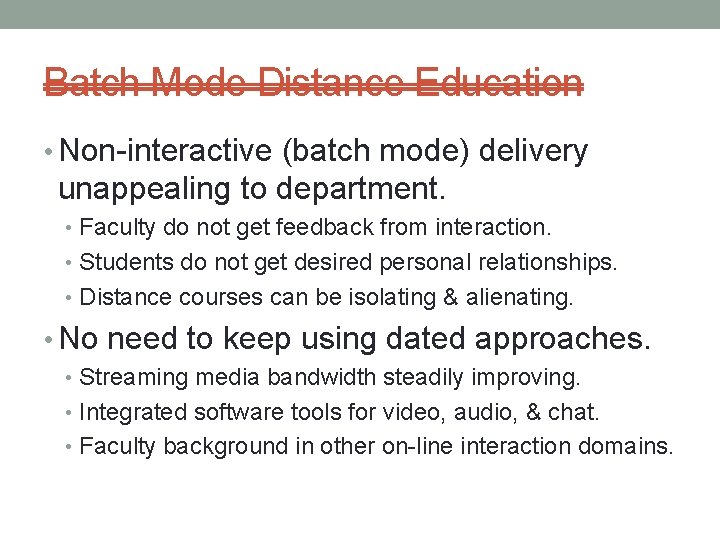
Batch Mode Distance Education • Non-interactive (batch mode) delivery unappealing to department. • Faculty do not get feedback from interaction. • Students do not get desired personal relationships. • Distance courses can be isolating & alienating. • No need to keep using dated approaches. • Streaming media bandwidth steadily improving. • Integrated software tools for video, audio, & chat. • Faculty background in other on-line interaction domains.
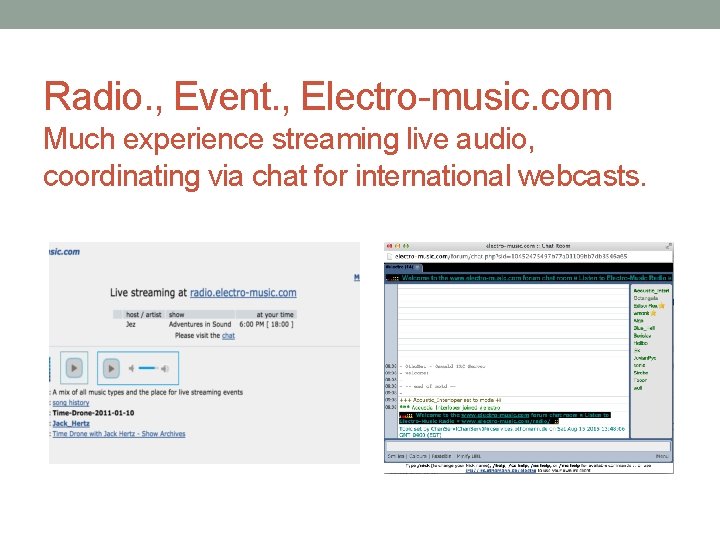
Radio. , Event. , Electro-music. com Much experience streaming live audio, coordinating via chat for international webcasts.
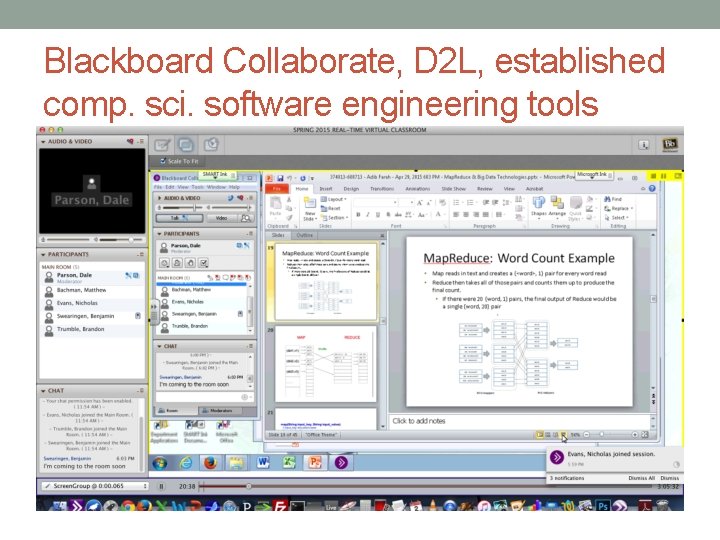
Real Time Virtual Classroom (RTVC) • RTVC maintains in-classroom class times. • Supports simultaneous remote attendance. • Support video, audio, chat, lecture. • Existing comp. sci. on-line tools & assignments. • Also off-line forums, chat, etc. (D 2 L). • Maintain class archives for students with occasional time-of-class conflicts. • Pilot in some grad courses. • Off to see Doug Scott and Jim Brenneck in KU Distance Ed support.
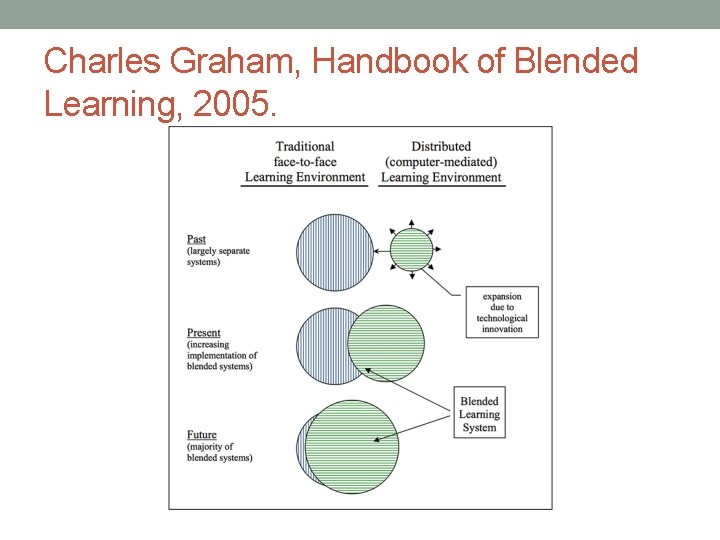
Charles Graham, Handbook of Blended Learning, 2005.
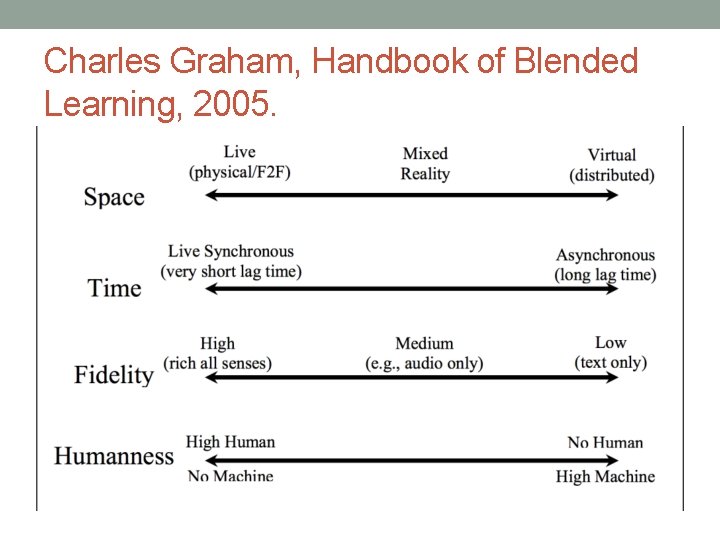
Charles Graham, Handbook of Blended Learning, 2005.
Blackboard Collaborate, D 2 L, established comp. sci. software engineering tools
Piloted in Fall 2014 • CSC 520 – graduate course in object- oriented software engineering. • Students attend 1 st class in person. • Recommend testing bandwidth from home. • Roughly 50% attend in person, 50% from home in first year. Down to 10 -15% in classroom in third semester teaching this way. Success! • All 500 -level courses taught this way. 400 level, full grad program in the works.
Protocols, etc. • We worked out interaction protocols, continue to add to the list. • Type question, then raise hand (bell), OR • Raise hand (bell), then speak a question. • Prefer web based tools. I share entire desktop. • Students use audio for remote presentations. • There is a whole list on my web page. • Students may gather in a dorm/appt. room. • Archive posts by the next day.
Upsides / downsides / ongoing • Students like it. 85 -90% stay at home now. • It mostly works. There are minor glitches. • Student connections may drop audio packets. • BBC not clever about dumping hi pitch buffers. • BBC temporarily lost video camera support. • Now we need to get the word out. • Promotional video is almost ready to go. • Is there marketing budget / priority? • http: //www. mcall. com/business/mc-company-news-1009 -20151008 -story. html
Conclusions • Current tools and network bandwidth are adequate for supporting RTVC. • These will continue to improve. • It works with current students. • Former KU BS computer science students. • Students with BS degrees in other fields. • We need effective marketing. • Quality MS comp. sci. programs at affordable prices. • We need to get the word out to the right people, at the right times, in the right places, to be effective.
Acknowledgements, links • Doug Scott & Jim Brenneck for distance support. • Troy Weidner / KU IT classroom support. • http: //faculty. kutztown. edu/parson/RTVC • Or search “Parson Kutztown” on the web. • RTVC link at bottom of my home page. • Questions?