RAG MARKING Laura Jackson mrsjacksonmusic What is RAG
- Slides: 7
RAG MARKING Laura Jackson @mrsjacksonmusic
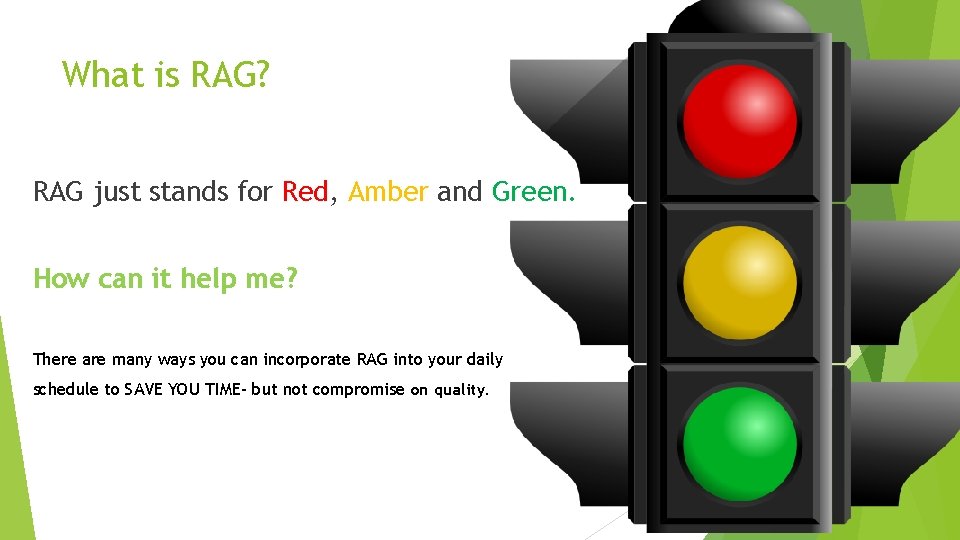
What is RAG? RAG just stands for Red, Amber and Green. How can it help me? There are many ways you can incorporate RAG into your daily schedule to SAVE YOU TIME- but not compromise on quality.
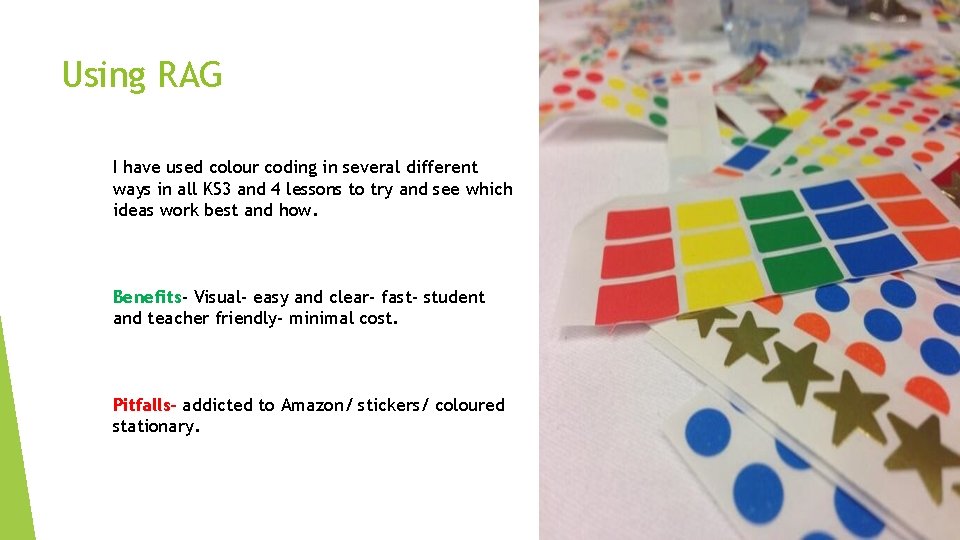
Using RAG I have used colour coding in several different ways in all KS 3 and 4 lessons to try and see which ideas work best and how. Benefits- Visual- easy and clear- fast- student and teacher friendly- minimal cost. Pitfalls- addicted to Amazon/ stickers/ coloured stationary.
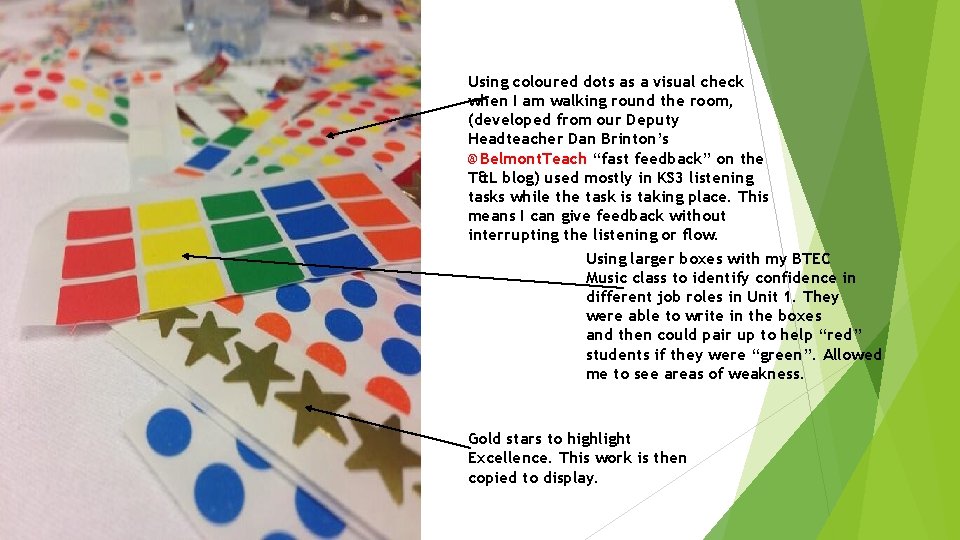
Using coloured dots as a visual check when I am walking round the room, (developed from our Deputy Headteacher Dan Brinton’s @Belmont. Teach “fast feedback” on the T&L blog) used mostly in KS 3 listening tasks while the task is taking place. This means I can give feedback without interrupting the listening or flow. Using larger boxes with my BTEC Music class to identify confidence in different job roles in Unit 1. They were able to write in the boxes and then could pair up to help “red” students if they were “green”. Allowed me to see areas of weakness. Gold stars to highlight Excellence. This work is then copied to display.
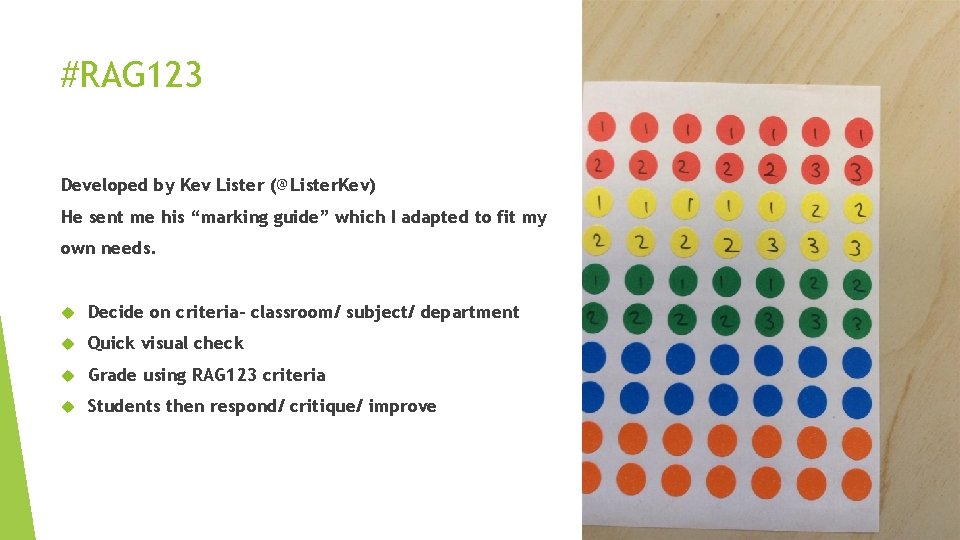
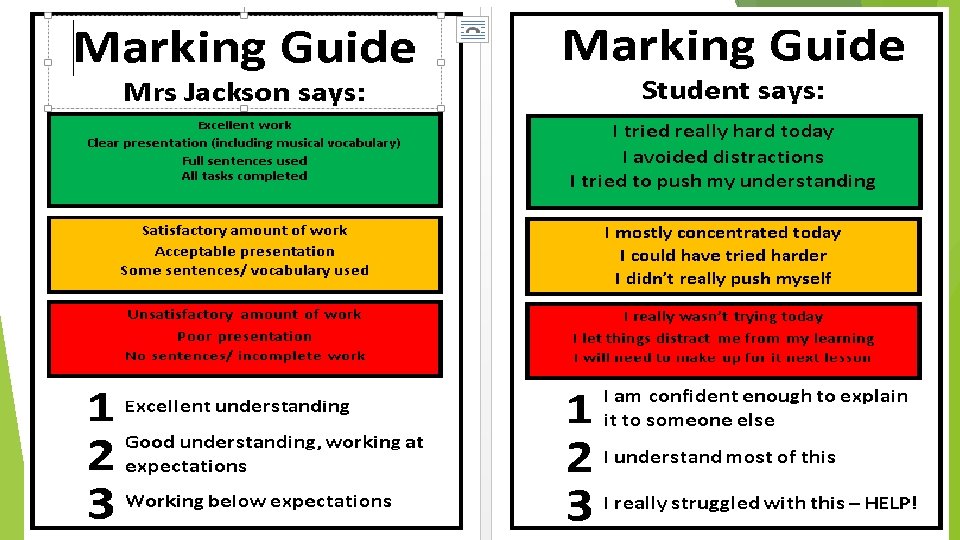
#RAG 123 Developed by Kev Lister (@Lister. Kev) He sent me his “marking guide” which I adapted to fit my own needs. Decide on criteria- classroom/ subject/ department Quick visual check Grade using RAG 123 criteria Students then respond/ critique/ improve
What I have found Marking smarter doesn’t result in a lower quality response. Students tend to know what they’ve not done correctly/ understood. Giving them time to discuss with each other/ critique work means I can speak to the “red” students and check understanding/ quality expectations etc. Marking smarter means I have more time to develop other ideas. After 2/3 weeks I was rarely using red. Student feedback said it was clear and easy to understand. Students enjoy rating themselves and are usually very honest.