Punctuating Direct Speech King of the Sky Hes

- Slides: 9
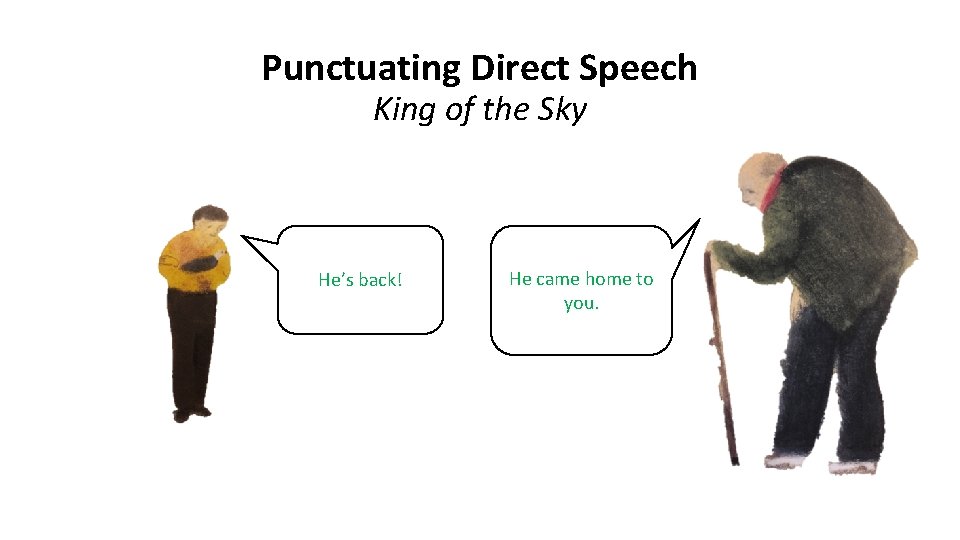
Punctuating Direct Speech King of the Sky He’s back! He came home to you.
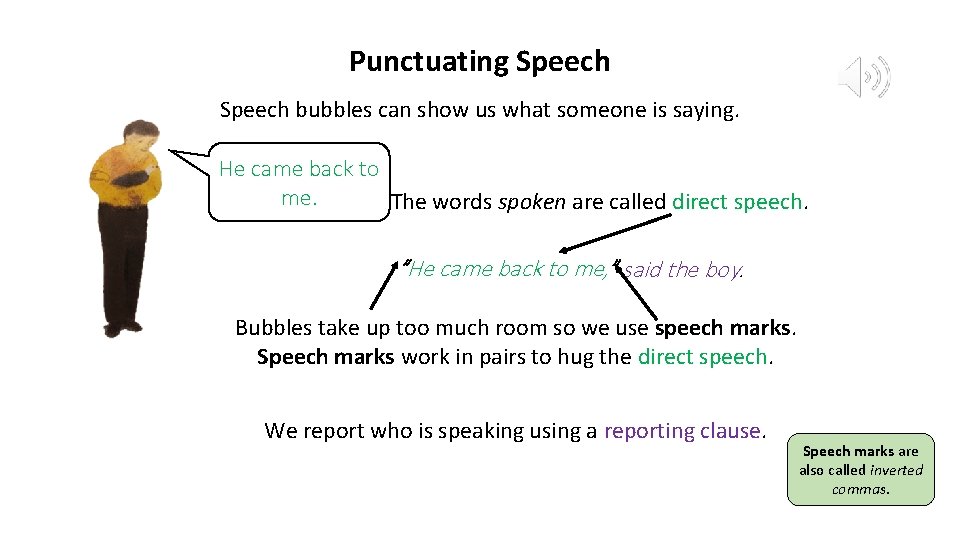
Punctuating Speech bubbles can show us what someone is saying. He came back to me. The words spoken are called direct speech. “He came back to me, ” said the boy. Bubbles take up too much room so we use speech marks. Speech marks work in pairs to hug the direct speech. We report who is speaking using a reporting clause. Speech marks are also called inverted commas.
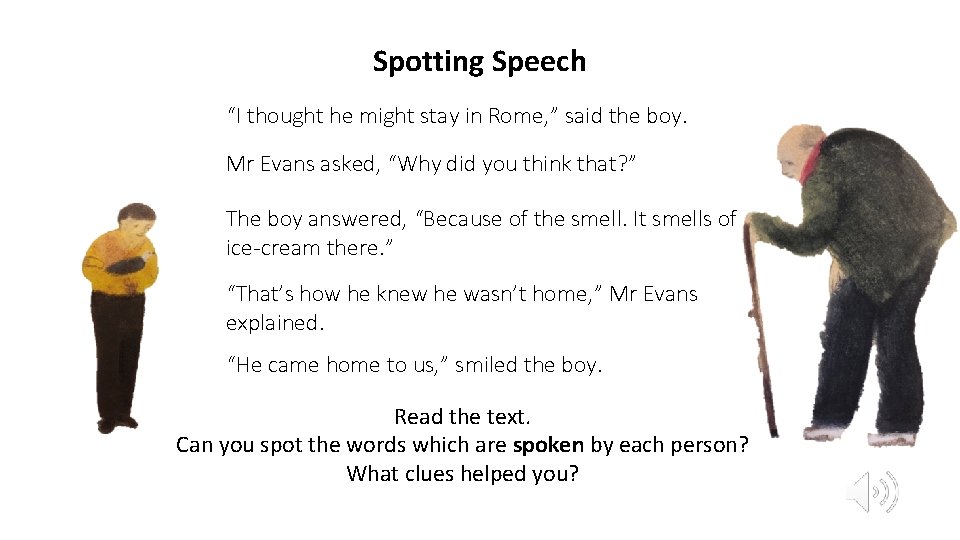
Spotting Speech “I thought he might stay in Rome, ” said the boy. Mr Evans asked, “Why did you think that? ” The boy answered, “Because of the smell. It smells of ice-cream there. ” “That’s how he knew he wasn’t home, ” Mr Evans explained. “He came home to us, ” smiled the boy. Read the text. Can you spot the words which are spoken by each person? What clues helped you?
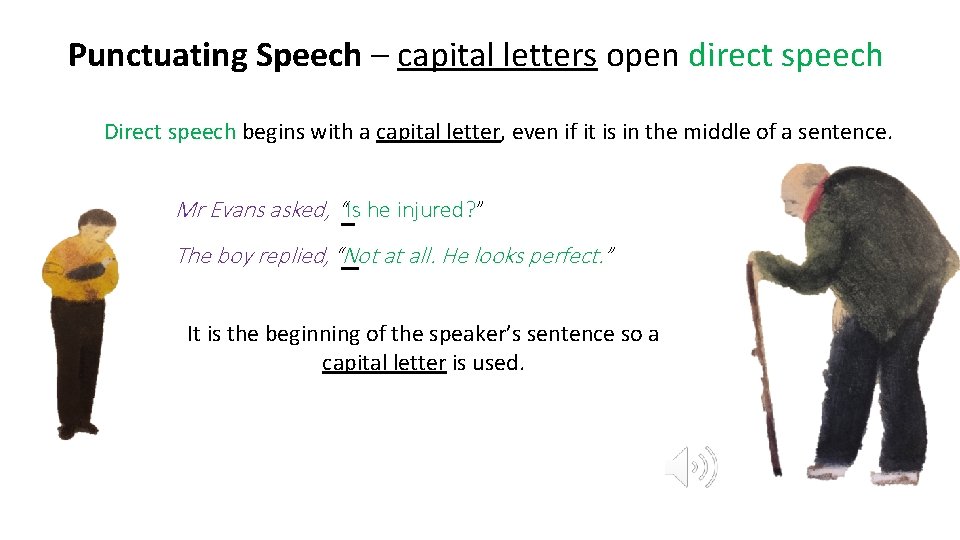
Punctuating Speech – capital letters open direct speech Direct speech begins with a capital letter, even if it is in the middle of a sentence. Mr Evans asked, “Is he injured? ” The boy replied, “Not at all. He looks perfect. ” It is the beginning of the speaker’s sentence so a capital letter is used.
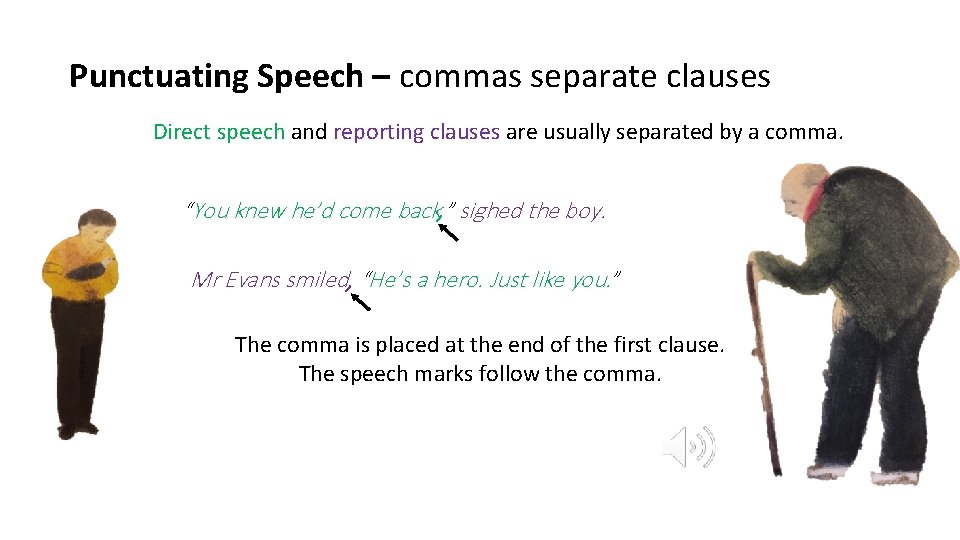
Punctuating Speech – commas separate clauses Direct speech and reporting clauses are usually separated by a comma. “You knew he’d come back, ” sighed the boy. Mr Evans smiled, “He’s a hero. Just like you. ” The comma is placed at the end of the first clause. The speech marks follow the comma.
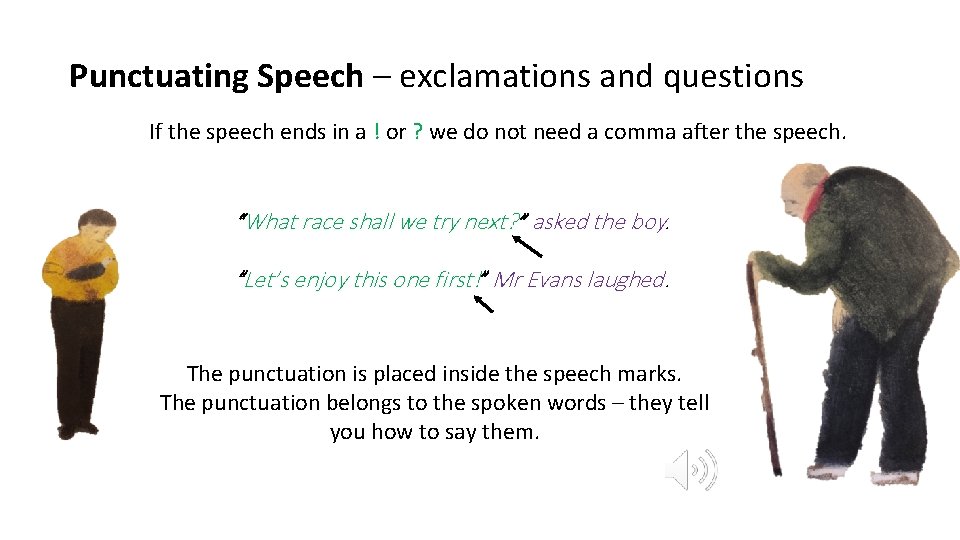
Punctuating Speech – exclamations and questions If the speech ends in a ! or ? we do not need a comma after the speech. “What race shall we try next? ” asked the boy. “Let’s enjoy this one first!” Mr Evans laughed. The punctuation is placed inside the speech marks. The punctuation belongs to the spoken words – they tell you how to say them.
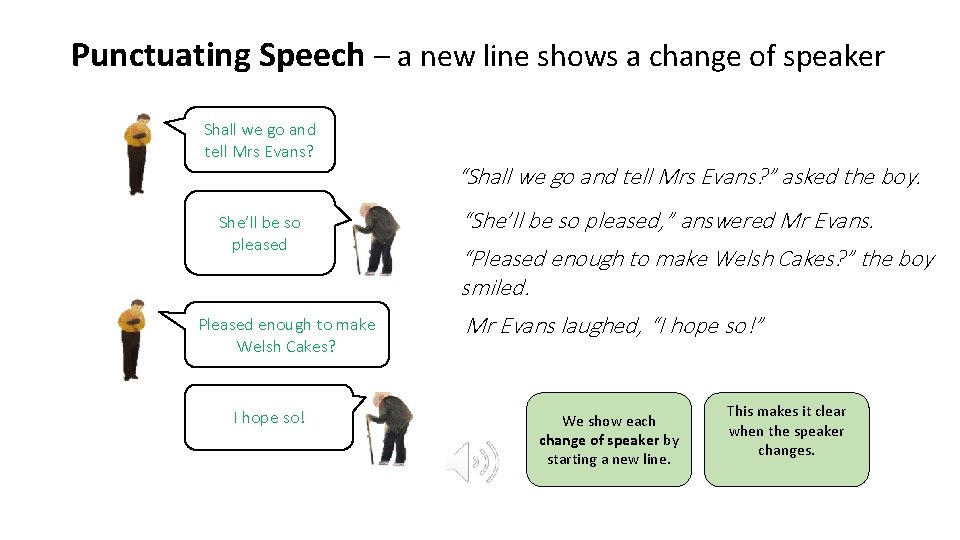
Punctuating Speech – a new line shows a change of speaker Shall we go and tell Mrs Evans? She’ll be so pleased Pleased enough to make Welsh Cakes? I hope so! “Shall we go and tell Mrs Evans? ” asked the boy. “She’ll be so pleased, ” answered Mr Evans. “Pleased enough to make Welsh Cakes? ” the boy smiled. Mr Evans laughed, “I hope so!” We show each change of speaker by starting a new line. This makes it clear when the speaker changes.
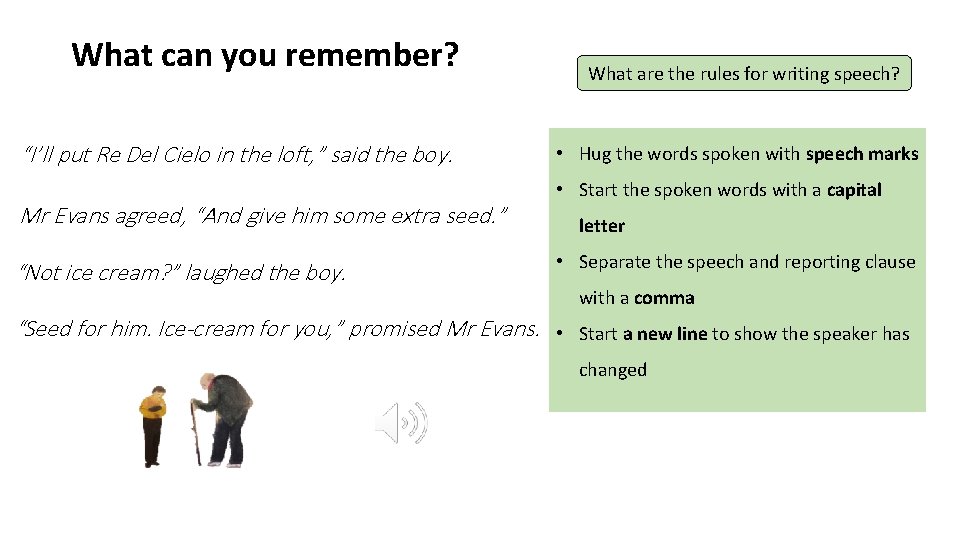
What can you remember? “I’ll put Re Del Cielo in the loft, ” said the boy. Mr Evans agreed, “And give him some extra seed. ” “Not ice cream? ” laughed the boy. What are the rules for writing speech? • Hug the words spoken with speech marks • Start the spoken words with a capital letter • Separate the speech and reporting clause “Seed for him. Ice-cream for you, ” promised Mr Evans. • with a comma Start a new line to show the speaker has changed
Explore more Hamilton Trust Learning Materials at https: //wrht. org. uk/hamilton/.