PRONOUNS AFTER PREPOSITIONS Pronouns after Prepositions Pronouns can


- Slides: 17
PRONOUNS AFTER PREPOSITIONS
Pronouns after Prepositions Pronouns can stand for the same noun yet still have different forms, depending on how they’re being used in the sentence. Yo soy Javier. Tengo quince años y me gusta dibujar. Both the pronouns, yo and me stand for Javier.
Pronouns after Prepositions You already know subject pronouns and the pronouns used with gustar. Pronouns have a different form when they come after prepositions, such as a (to), de (of, from, about), con (with) and en (in, on, at).
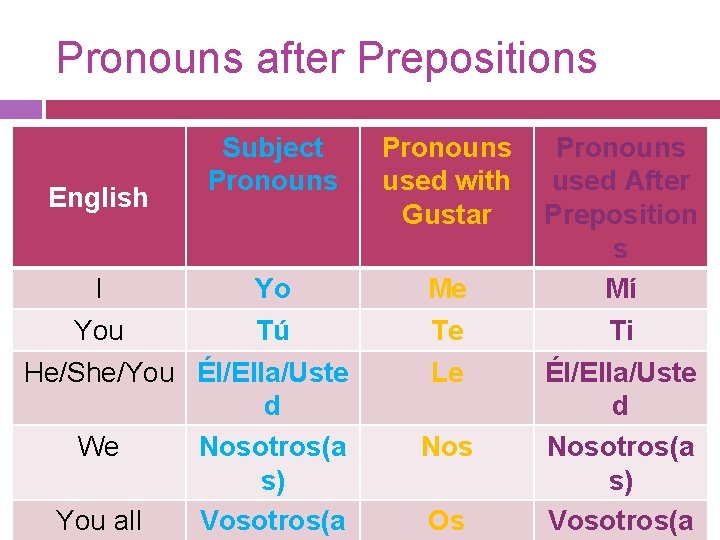
Pronouns after Prepositions English Subject Pronouns I Yo You Tú He/She/You Él/Ella/Uste d We Nosotros(a s) You all Vosotros(a Pronouns used with Gustar Me Te Le Nos Os Pronouns used After Preposition s Mí Ti Él/Ella/Uste d Nosotros(a s) Vosotros(a
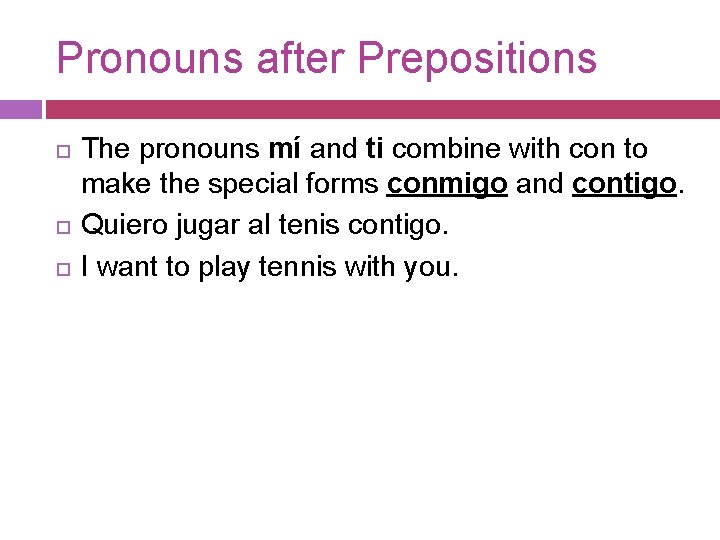
Pronouns after Prepositions The pronouns mí and ti combine with con to make the special forms conmigo and contigo. Quiero jugar al tenis contigo. I want to play tennis with you.
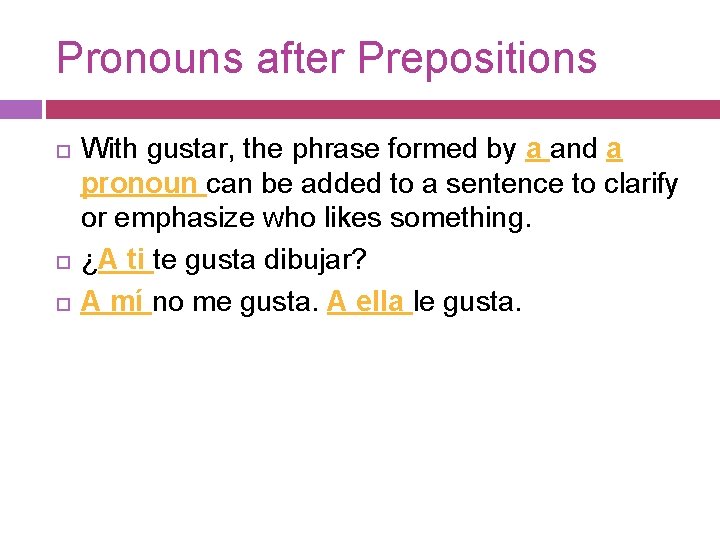
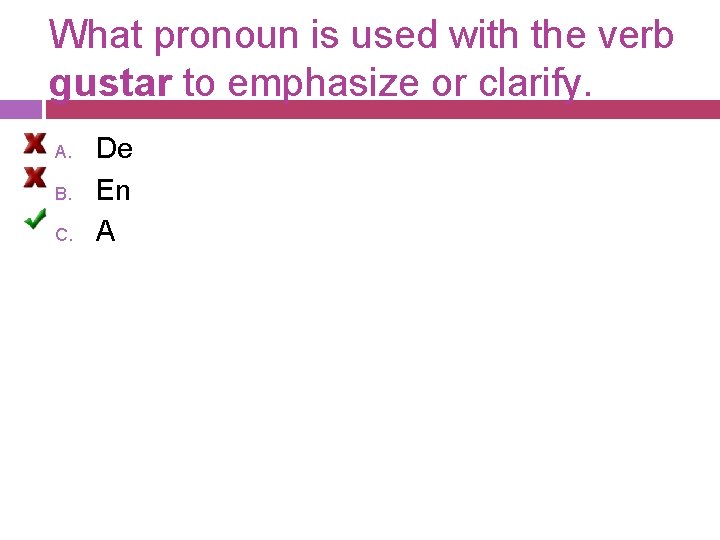
Pronouns after Prepositions With gustar, the phrase formed by a and a pronoun can be added to a sentence to clarify or emphasize who likes something. ¿A ti te gusta dibujar? A mí no me gusta. A ella le gusta.
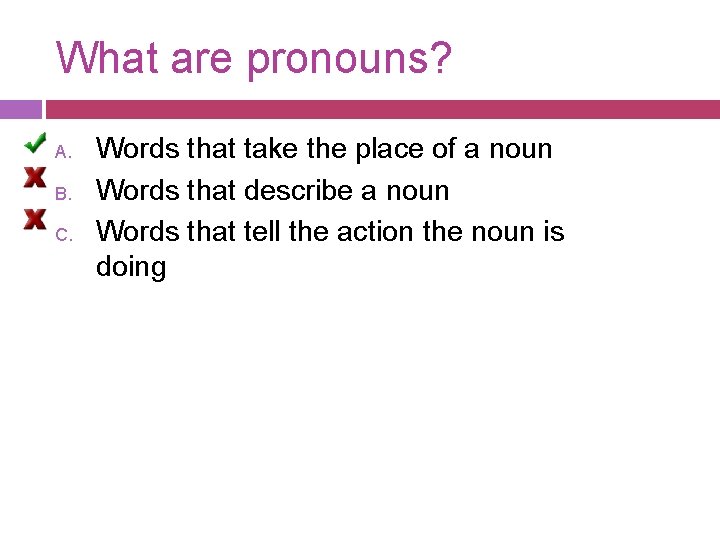
What are pronouns? A. B. C. Words that take the place of a noun Words that describe a noun Words that tell the action the noun is doing
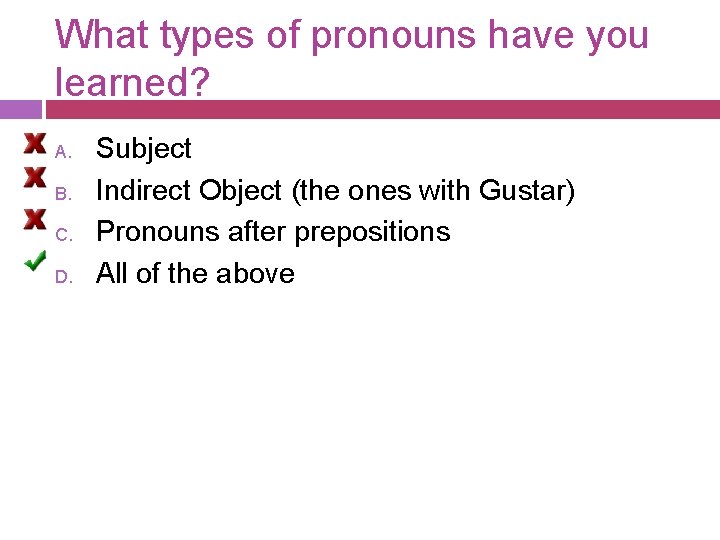
What types of pronouns have you learned? A. B. C. D. Subject Indirect Object (the ones with Gustar) Pronouns after prepositions All of the above
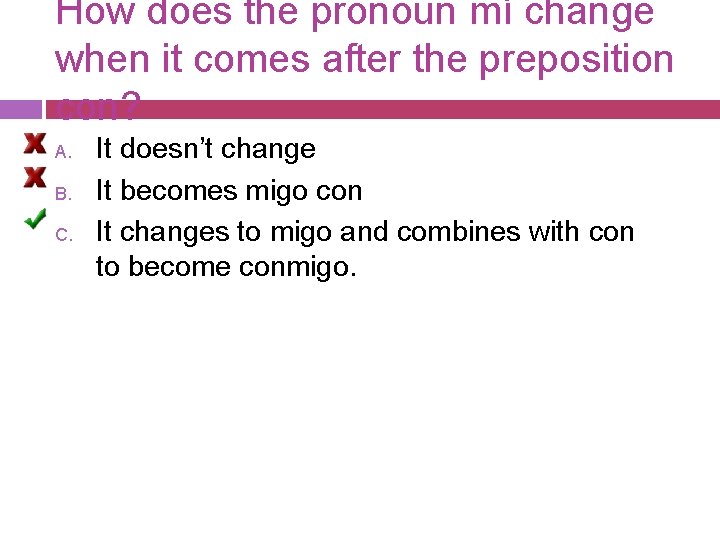
How does the pronoun mí change when it comes after the preposition con? A. B. C. It doesn’t change It becomes migo con It changes to migo and combines with con to become conmigo.
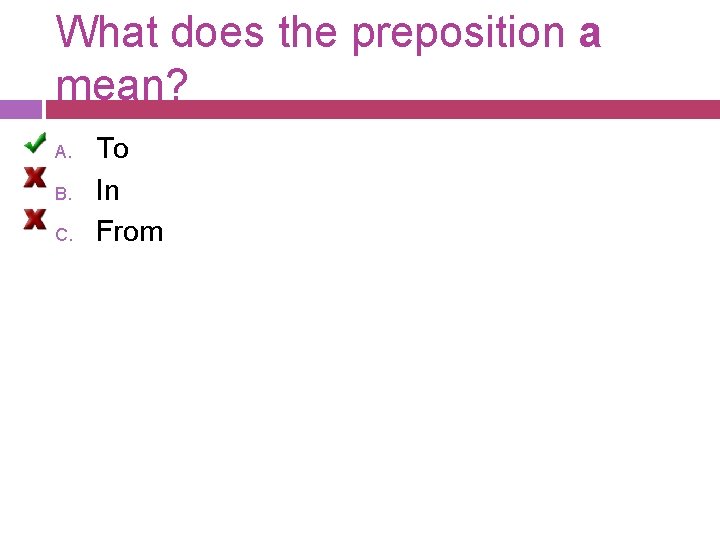
What does the preposition a mean? A. B. C. To In From
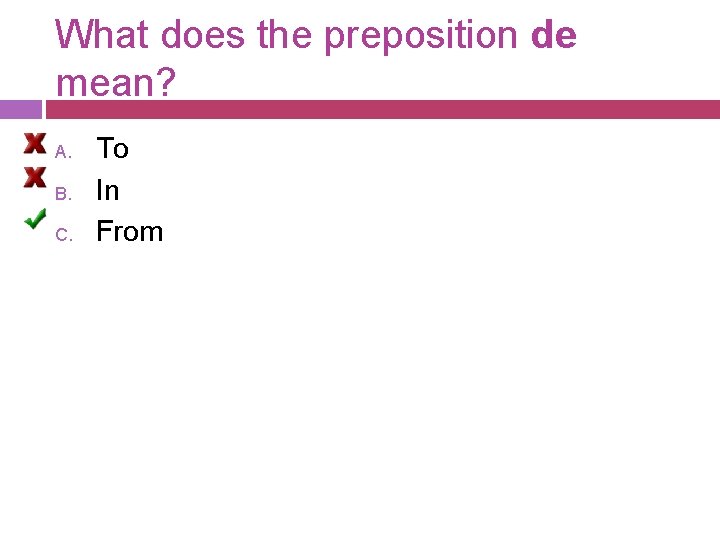
What does the preposition de mean? A. B. C. To In From
What does the preposition con mean? A. B. C. In or on To With
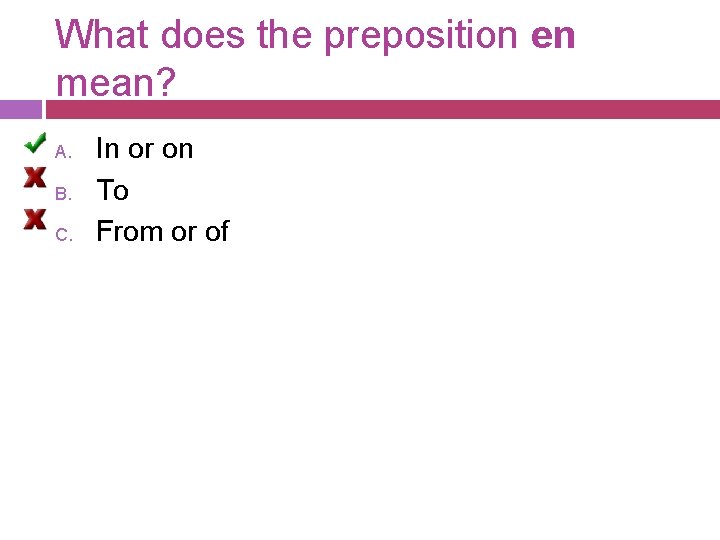
What does the preposition en mean? A. B. C. In or on To From or of
What pronoun is used with the verb gustar to emphasize or clarify. A. B. C. De En A
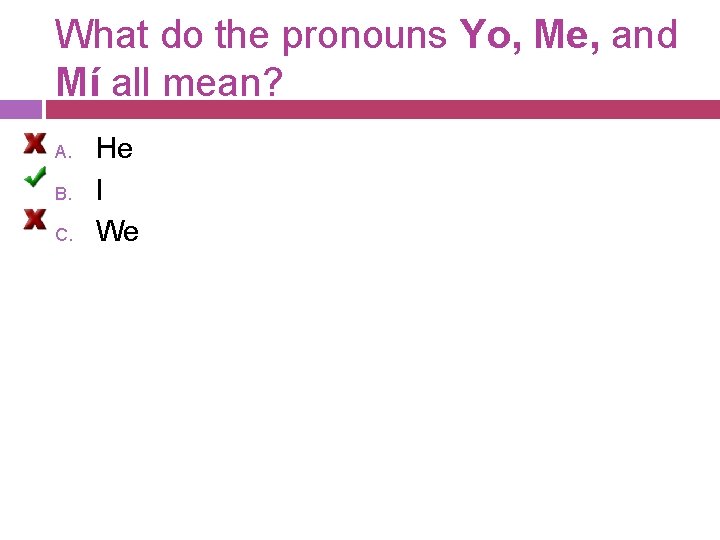
What do the pronouns Yo, Me, and Mí all mean? A. B. C. He I We
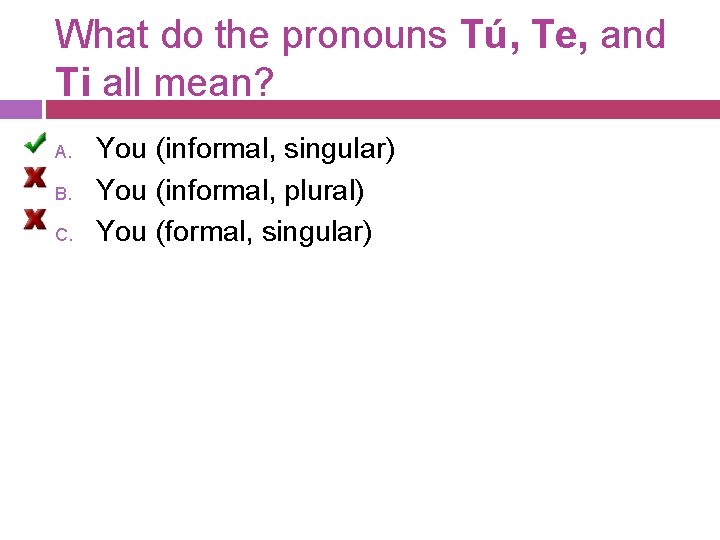
What do the pronouns Tú, Te, and Ti all mean? A. B. C. You (informal, singular) You (informal, plural) You (formal, singular)
Exit Slip Activity 7 on page 86 (review from yesterday) Activity 11 on page 88 Tell me 2 things you learned today and 1 thing you are still confused about from today’s lesson.