
Pronouns After Prepositions Page 154 Avancemos 2 Pronouns








- Slides: 15
Pronouns After Prepositions Page 154 Avancemos 2
Pronouns After Prepositions § In English, prepositions (for, from, to, and with) sometimes link pronouns to another word in a sentence.
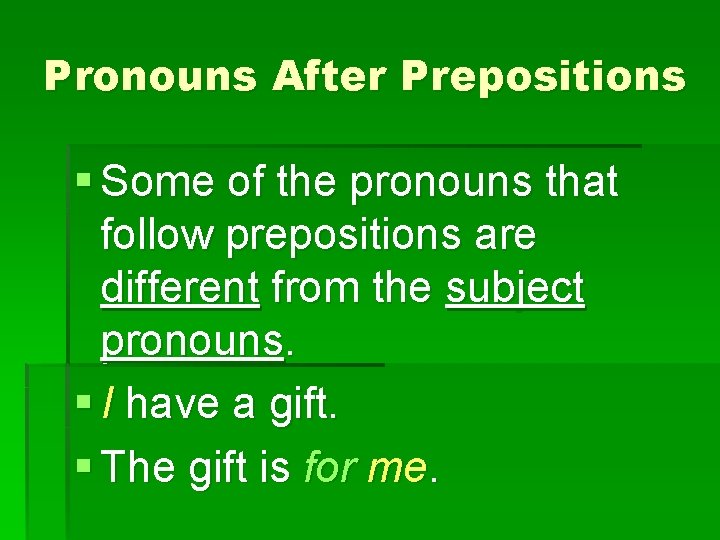
Pronouns After Prepositions § Some of the pronouns that follow prepositions are different from the subject pronouns. § I have a gift. § The gift is for me.
Pronouns After Prepositions § Spanish: § Yo tengo un regalo. § El regalo es para mí.
Pronouns After Prepositions § Pronouns that follow prepositions are different from subject pronouns and object pronouns. § Use these pronouns after prepositions like para, de, a, and con.
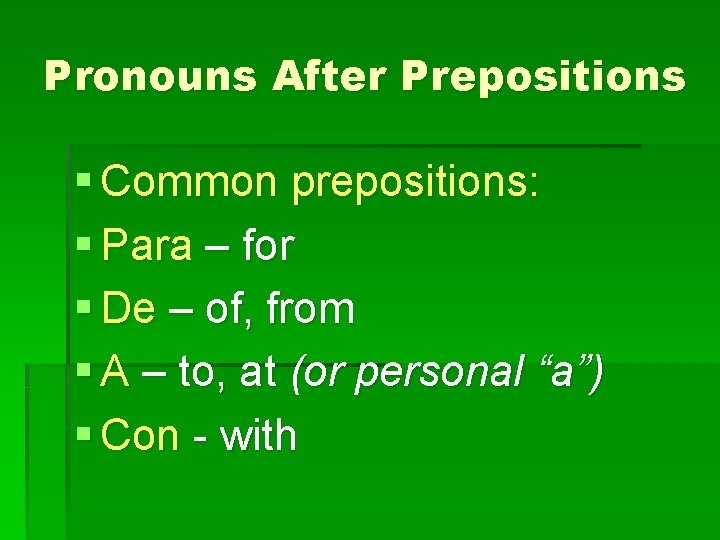
Pronouns After Prepositions § Common prepositions: § Para – for § De – of, from § A – to, at (or personal “a”) § Con - with
Pronouns After Prepositions § para mí § para nosotros para nosotras § para ti § para él, ella, Ud. § para ellos, ellas, Uds.
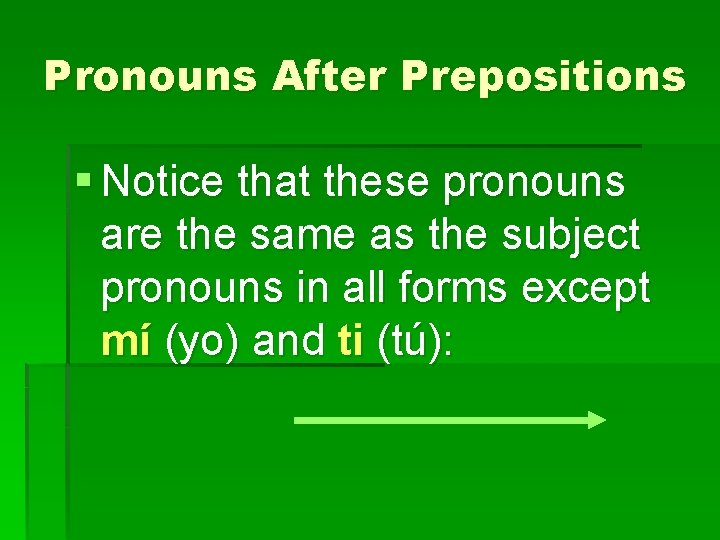
Pronouns After Prepositions § Notice that these pronouns are the same as the subject pronouns in all forms except mí (yo) and ti (tú):
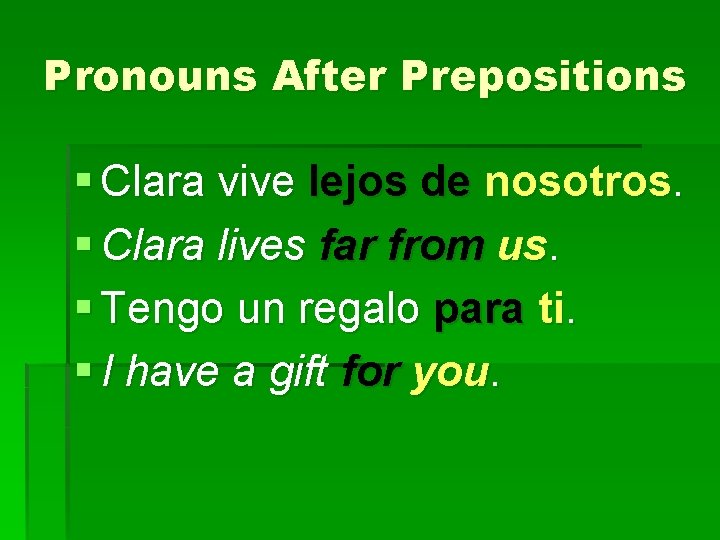
Pronouns After Prepositions § Clara vive lejos de nosotros. § Clara lives far from us. § Tengo un regalo para ti. § I have a gift for you.
Pronouns After Prepositions § With verbs like gustar, use pronouns after the preposition “a” to add emphasis. § A mí no me gusta la ropa de cuadros. § I really don´t like plaid clothes.
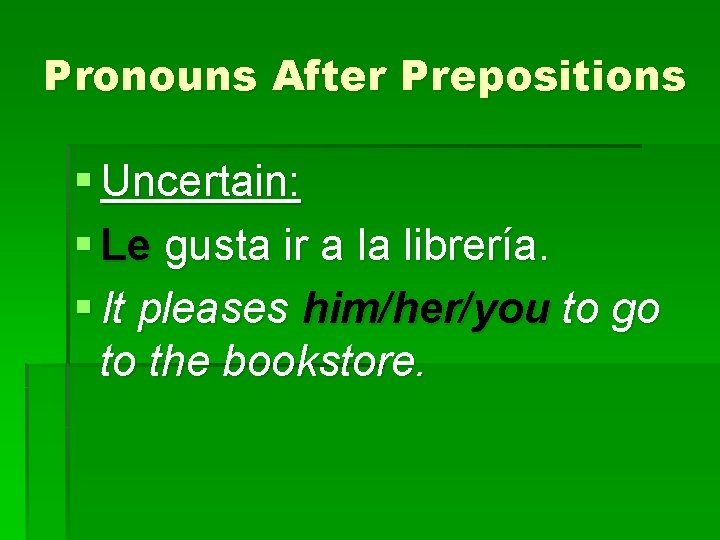
Pronouns After Prepositions § Uncertain: § Le gusta ir a la librería. § It pleases him/her/you to go to the bookstore.
Pronouns After Prepositions § Certain: § A él le gusta ir a la librería. § It pleases him to go to the bookstore.
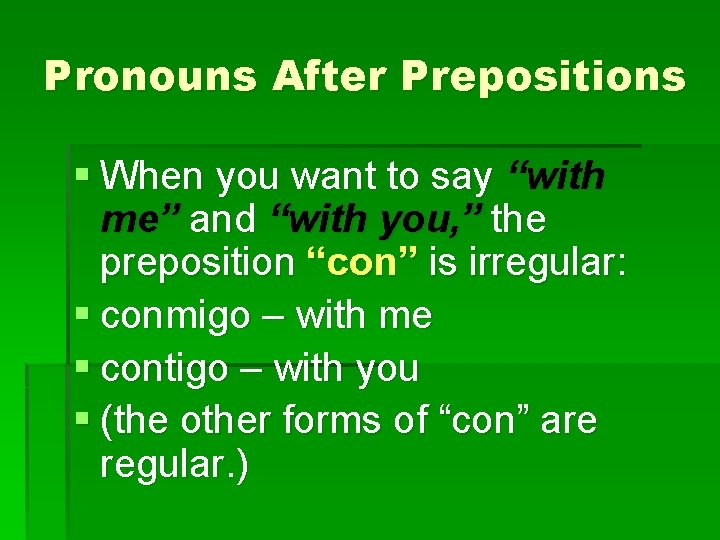
Pronouns After Prepositions § When you want to say “with me” and “with you, ” the preposition “con” is irregular: § conmigo – with me § contigo – with you § (the other forms of “con” are regular. )
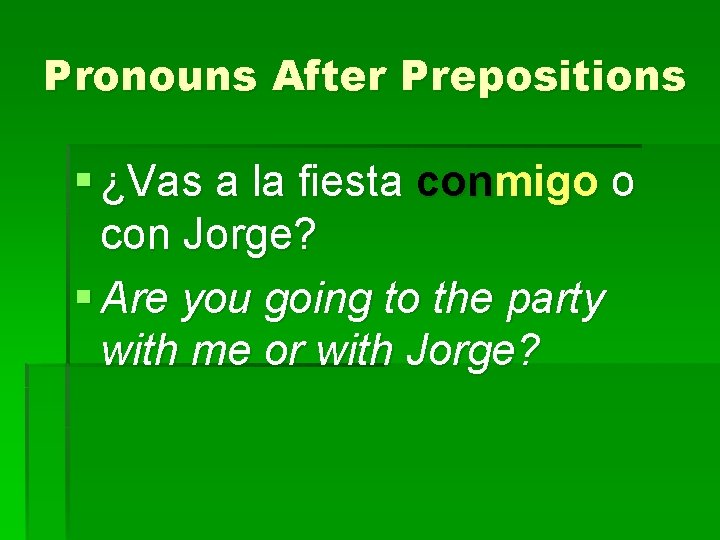
Pronouns After Prepositions § ¿Vas a la fiesta conmigo o con Jorge? § Are you going to the party with me or with Jorge?
Pronouns After Prepositions § No voy con él; voy contigo. § I´m not going with him; I´m going with you.