Promotion of Inclusive Education IE for children with
- Slides: 26
Promotion of Inclusive Education (IE) for children with disabilities in Cambodia Satomi MUKAI, Ratana YEAN, Kazuya OMURO Association for Aid and Relief, Japan
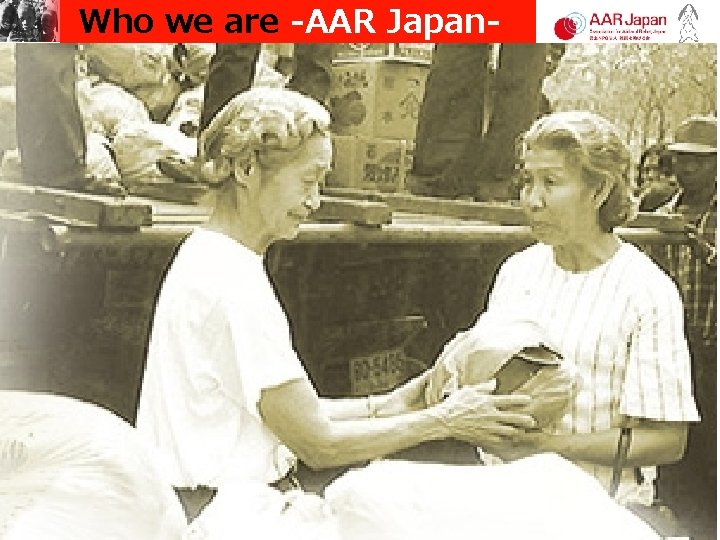
Who we are -AAR Japan-
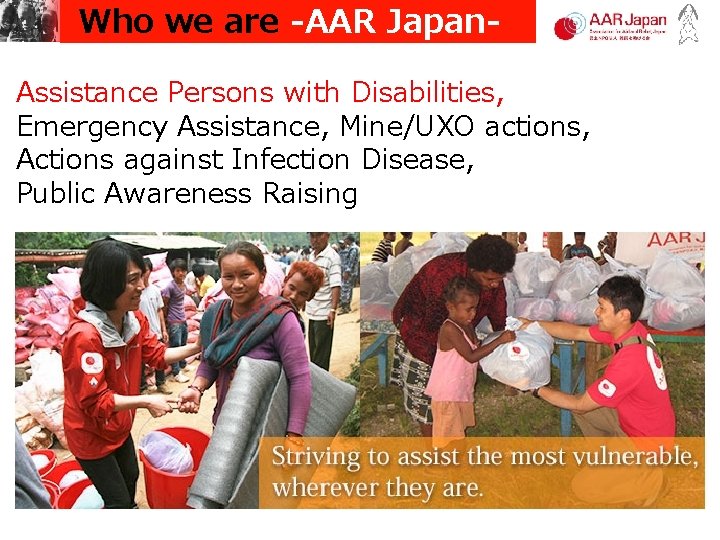
Who we are -AAR Japan. Assistance Persons with Disabilities, Emergency Assistance, Mine/UXO actions, Actions against Infection Disease, Public Awareness Raising
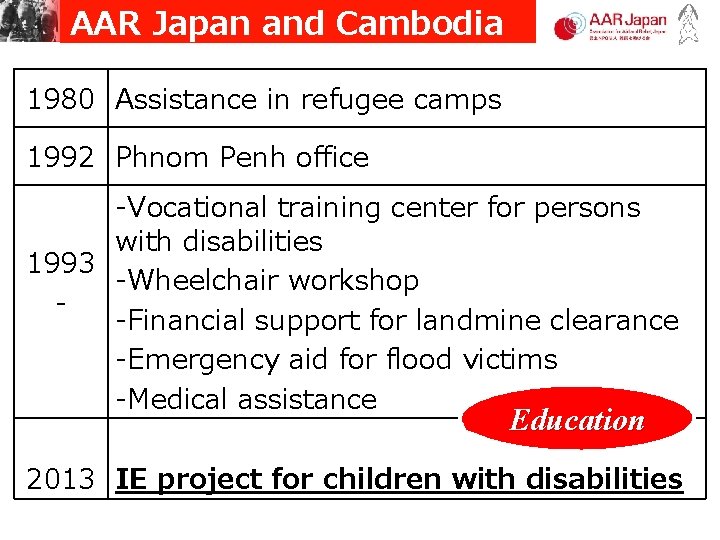
AAR Japan and Cambodia 1980 Assistance in refugee camps 1992 Phnom Penh office -Vocational training center for persons with disabilities 1993 -Wheelchair workshop -Financial support for landmine clearance -Emergency aid for flood victims -Medical assistance Education 2013 IE project for children with disabilities
Persons with disabilities and Cambodia u% of persons with disabilities: 1. 4%~ 8. 1% *varies depending on kind of survey u. UNCRPD Ratification (2012) u. Law on the Protection and the Promotion of the Rights of Persons with Disabilities (2009)
Education for children with disabilities Ø Establishment of Policy on education for children with disabilities(2008) Ø Master plan for the Policy (2009 -2011) *need to be updated Ø Special Education Office in Mo. EYS (2000 -) Less opportunities for children with disabilities to access to quality education
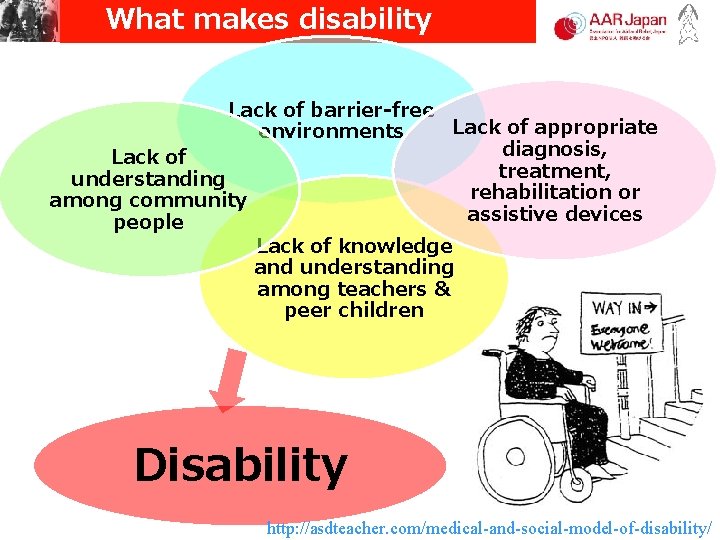
What makes disability Lack of barrier-free Lack of appropriate environments diagnosis, Lack of treatment, understanding rehabilitation or among community assistive devices people Lack of knowledge and understanding among teachers & peer children Disability http: //asdteacher. com/medical-and-social-model-of-disability/
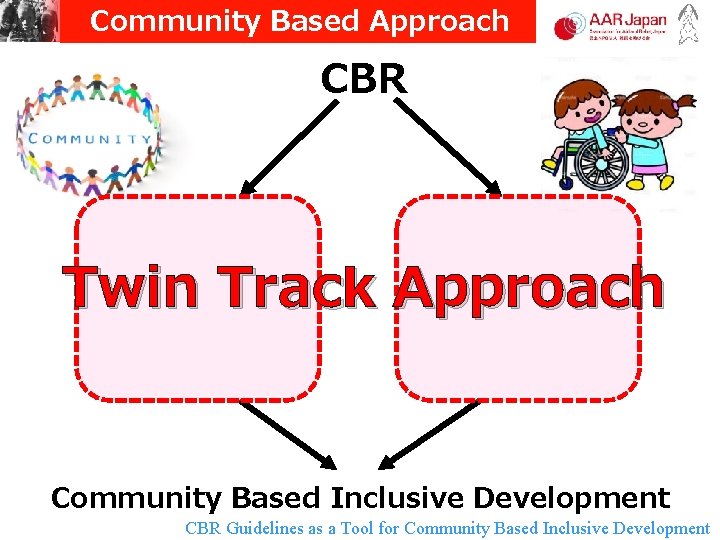
Community Based Approach CBR Twin Track Approach Community Based Inclusive Development CBR Guidelines as a Tool for Community Based Inclusive Development
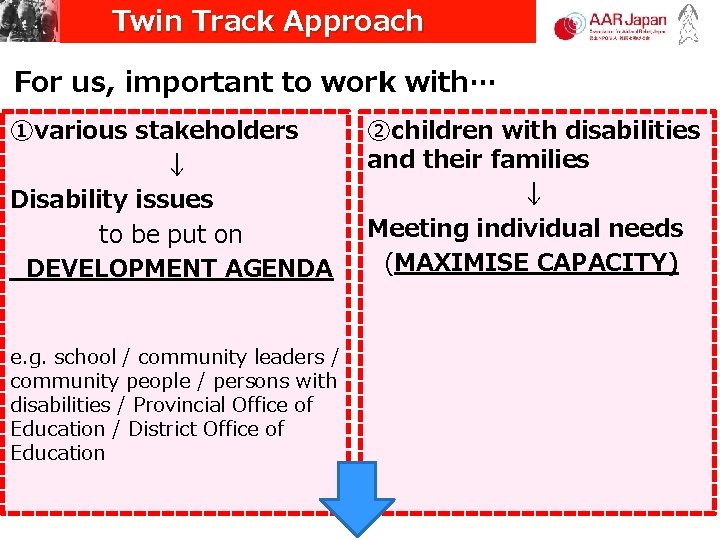
Twin Track Approach For us, important to work with… ①various stakeholders ↓ Disability issues to be put on DEVELOPMENT AGENDA e. g. school / community leaders / community people / persons with disabilities / Provincial Office of Education / District Office of Education ②children with disabilities and their families ↓ Meeting individual needs (MAXIMISE CAPACITY)
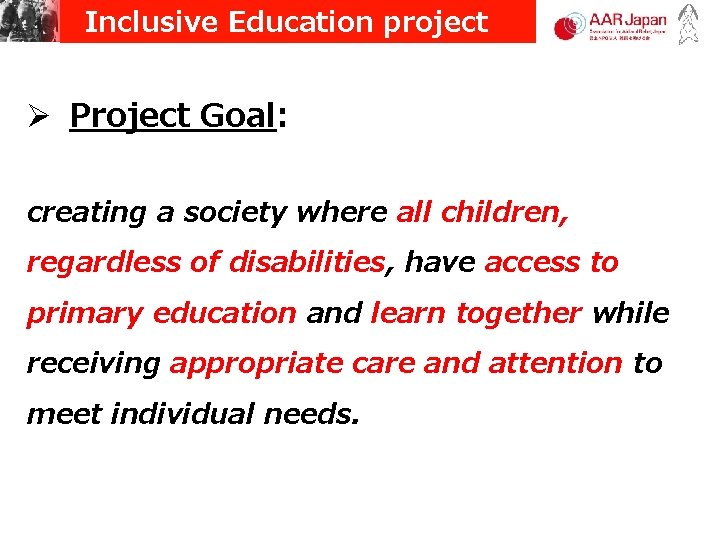
Inclusive Education project Ø Project Goal: creating a society where all children, regardless of disabilities, have access to primary education and learn together while receiving appropriate care and attention to meet individual needs.
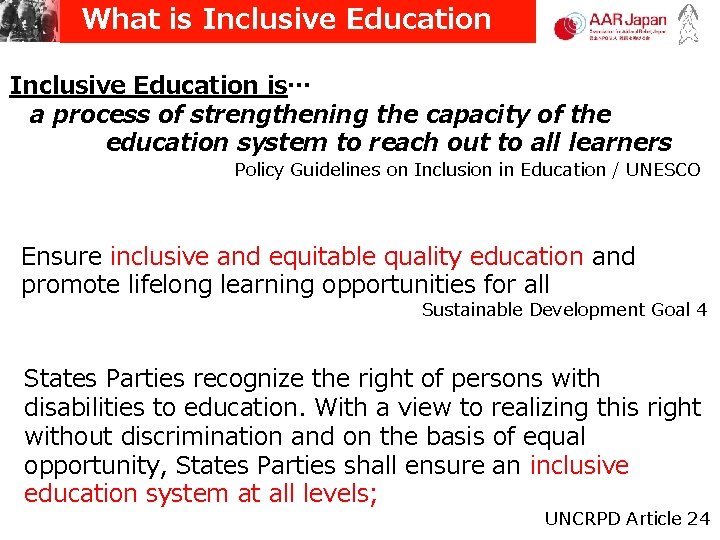
What is Inclusive Education is… a process of strengthening the capacity of the education system to reach out to all learners Policy Guidelines on Inclusion in Education / UNESCO Ensure inclusive and equitable quality education and promote lifelong learning opportunities for all Sustainable Development Goal 4 States Parties recognize the right of persons with disabilities to education. With a view to realizing this right without discrimination and on the basis of equal opportunity, States Parties shall ensure an inclusive education system at all levels; UNCRPD Article 24
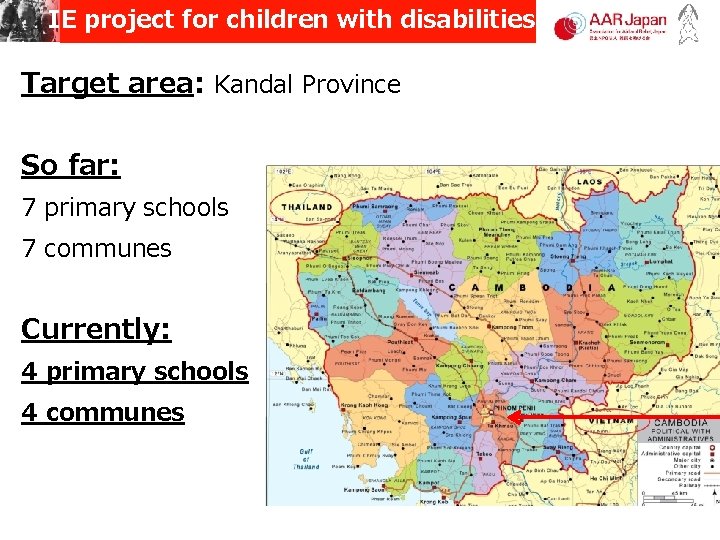
IE project for children with disabilities Target area: Kandal Province So far: 7 primary schools 7 communes Currently: 4 primary schools 4 communes
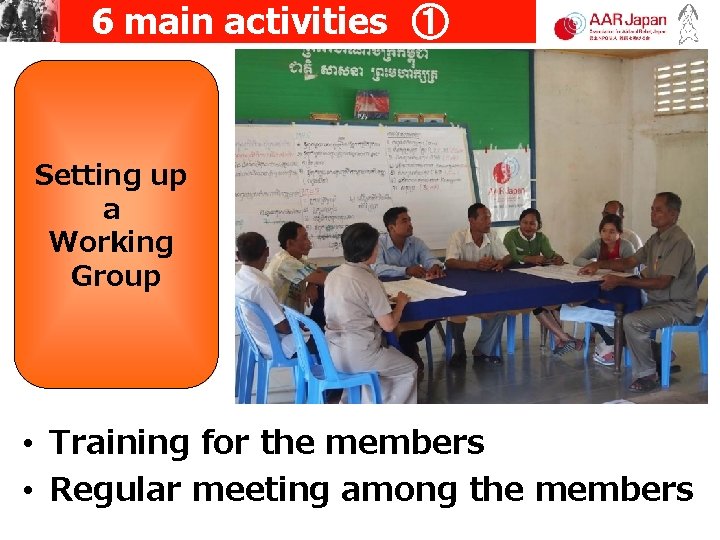
6 main activities ① Setting up a Working Group • Training for the members • Regular meeting among the members
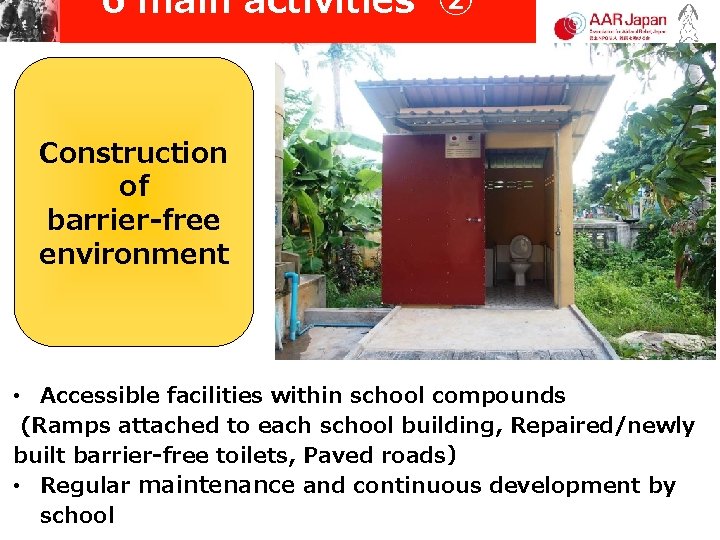
6 main activities ② Construction of barrier-free environment • Accessible facilities within school compounds (Ramps attached to each school building, Repaired/newly built barrier-free toilets, Paved roads) • Regular maintenance and continuous development by school
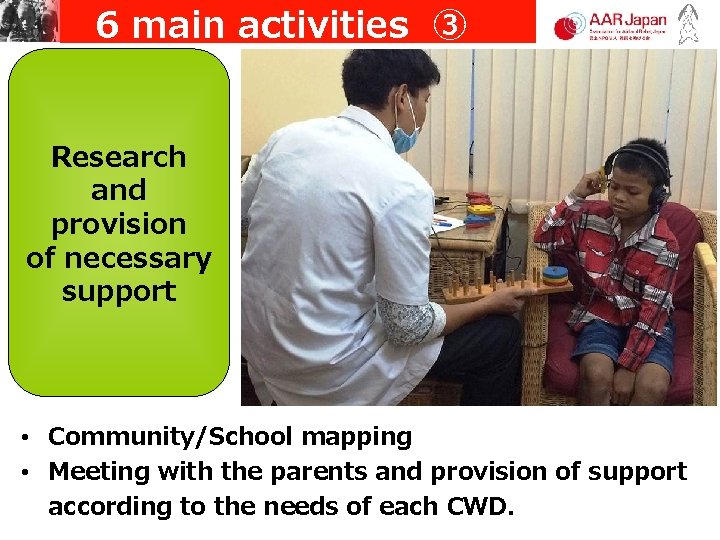
6 main activities ③ Research and provision of necessary support • Community/School mapping • Meeting with the parents and provision of support according to the needs of each CWD.
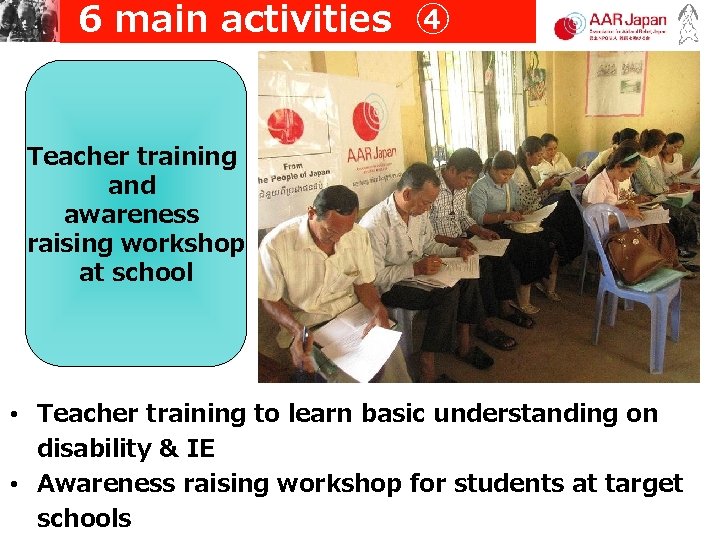
6 main activities ④ Teacher training and awareness raising workshop at school • Teacher training to learn basic understanding on disability & IE • Awareness raising workshop for students at target schools
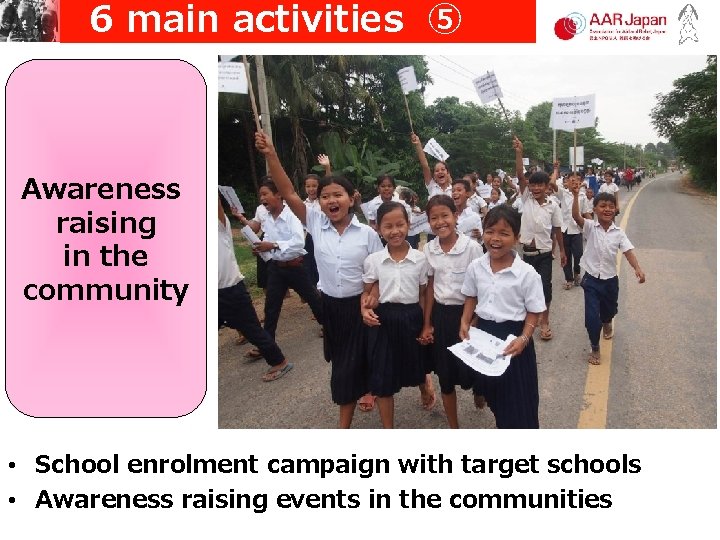
6 main activities ⑤ Awareness raising in the community • School enrolment campaign with target schools • Awareness raising events in the communities
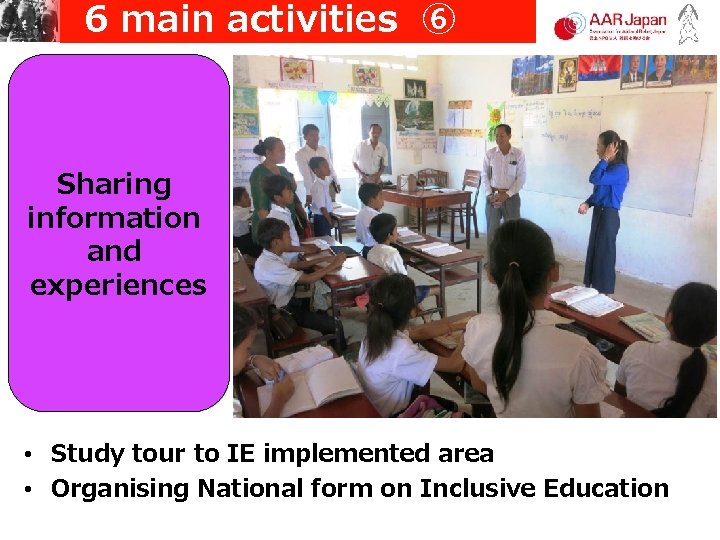
6 main activities ⑥ Sharing information and experiences • Study tour to IE implemented area • Organising National form on Inclusive Education
What has been achieved • WG members have increased their knowledge and experience. Actively participating in finding out new children and following up to provide appropriate advice for learning and impairment situation • Barrier-free environments have made it easier to use school facilities for not only children with disabilities, but also teachers and other students.
What has been achieved (cont. ) • Almost 330 children were interviewed and, about 70% out of 330 were identified to be children with disabilities. • More than 150 children with disabilities have received support to meet each needs such as more detailed diagnosis, treatment, rehabilitation, counselling or assistive devices.
What has been achieved (cont. ) • Teachers, students, and community people increased their understanding including disability and IE. Their attitude and ideas have positively changed. • Teachers who teach in inclusive classrooms learned about teaching methods appropriate to the needs of each child.
What has been achieved (cont. ) • Through the project, now there are children, Ø Who started to attend school Ø Whose parents plan to send children to school in the future Ø Who are able to do daily activities more than before Ø Whose learning situation has become better
What needs to be considered • Different level of capacity and commitment from Working Group members ⇒ Strengthening member selection process and training content
What needs to be considered(cont. ) • Sustainability of referral to service providers ⇒ Ensuring sustainability of Working Group ⇒ Building cooperation with SHGs ⇒ Strengthening network with relevant authorities and other organisations
What needs to be considered(cont. ) • Limited opportunities to receive education especially for children with severe disabilities ⇒ Raising understanding of parents, community people, national/local level of stakeholders
Thanks for your participation!