Principles of pharmacy practice Lec Title Calculation of



- Slides: 12
Principles of pharmacy practice Lec. Title: Calculation of doses patient parameters Lecturer Dr Athmar Dhahir Habeeb Al-Shohani Ph. D in industrial pharmacy and pharmaceutical formulations athmar 1978@uomustansiriyah. edu. iq athmar 1978@yahoo. com athmar. habeeb. 12@ucl. ac. uk
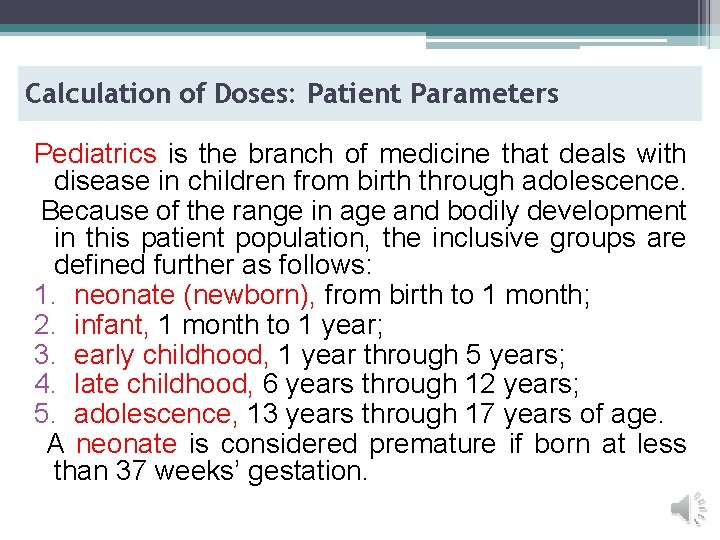
Calculation of Doses: Patient Parameters Pediatrics is the branch of medicine that deals with disease in children from birth through adolescence. Because of the range in age and bodily development in this patient population, the inclusive groups are defined further as follows: 1. neonate (newborn), from birth to 1 month; 2. infant, 1 month to 1 year; 3. early childhood, 1 year through 5 years; 4. late childhood, 6 years through 12 years; 5. adolescence, 13 years through 17 years of age. A neonate is considered premature if born at less than 37 weeks’ gestation.
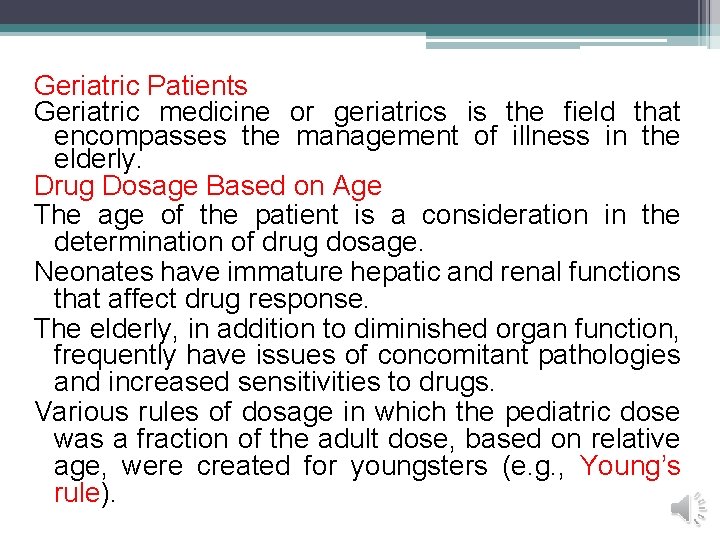
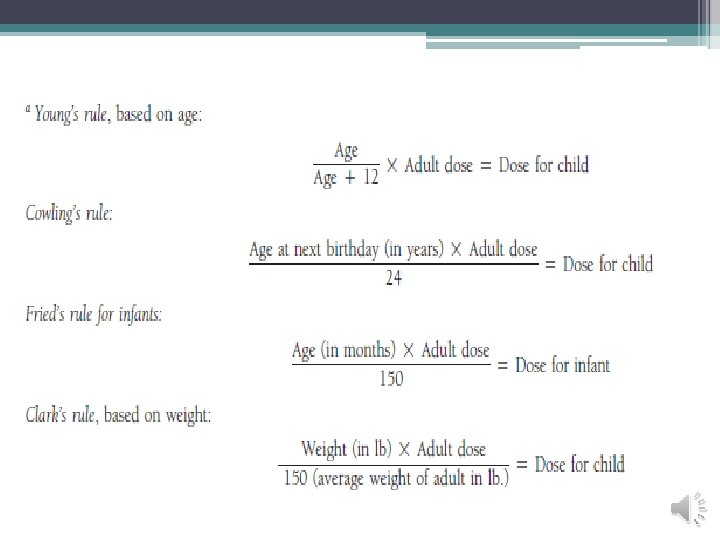
Geriatric Patients Geriatric medicine or geriatrics is the field that encompasses the management of illness in the elderly. Drug Dosage Based on Age The age of the patient is a consideration in the determination of drug dosage. Neonates have immature hepatic and renal functions that affect drug response. The elderly, in addition to diminished organ function, frequently have issues of concomitant pathologies and increased sensitivities to drugs. Various rules of dosage in which the pediatric dose was a fraction of the adult dose, based on relative age, were created for youngsters (e. g. , Young’s rule).
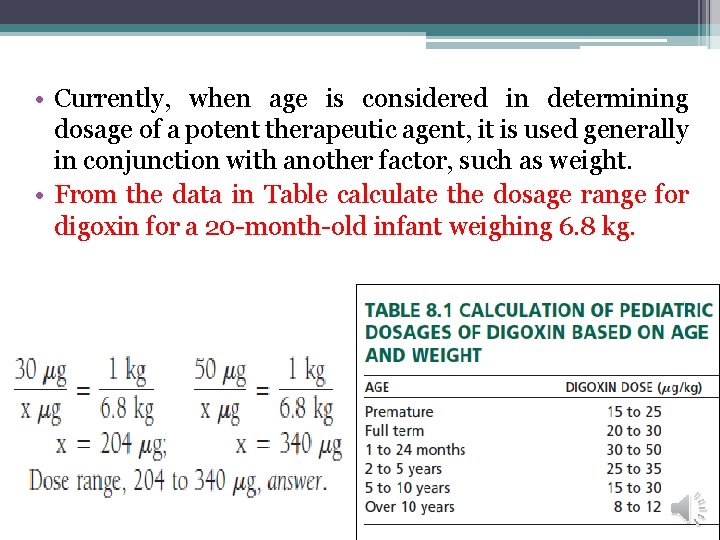
• Currently, when age is considered in determining dosage of a potent therapeutic agent, it is used generally in conjunction with another factor, such as weight. • From the data in Table calculate the dosage range for digoxin for a 20 -month-old infant weighing 6. 8 kg.
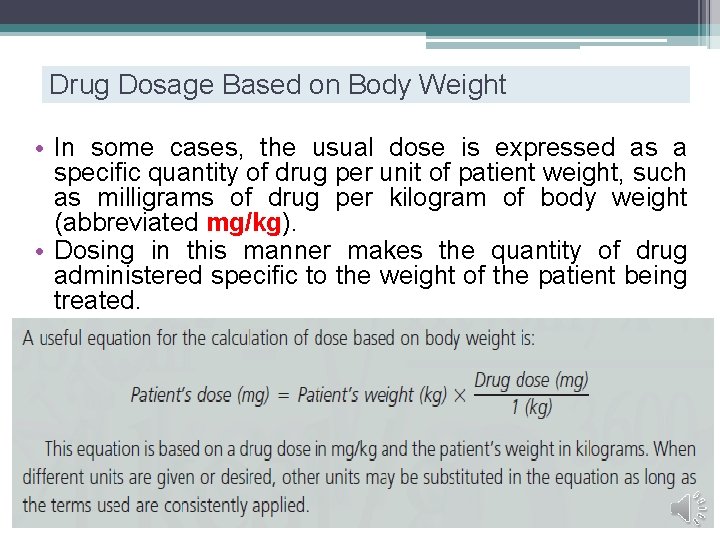
Drug Dosage Based on Body Weight • In some cases, the usual dose is expressed as a specific quantity of drug per unit of patient weight, such as milligrams of drug per kilogram of body weight (abbreviated mg/kg). • Dosing in this manner makes the quantity of drug administered specific to the weight of the patient being treated.
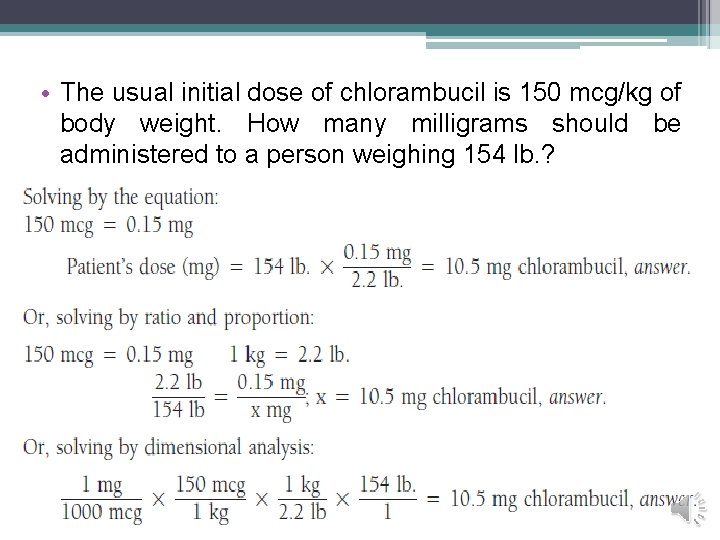
• The usual initial dose of chlorambucil is 150 mcg/kg of body weight. How many milligrams should be administered to a person weighing 154 lb. ?
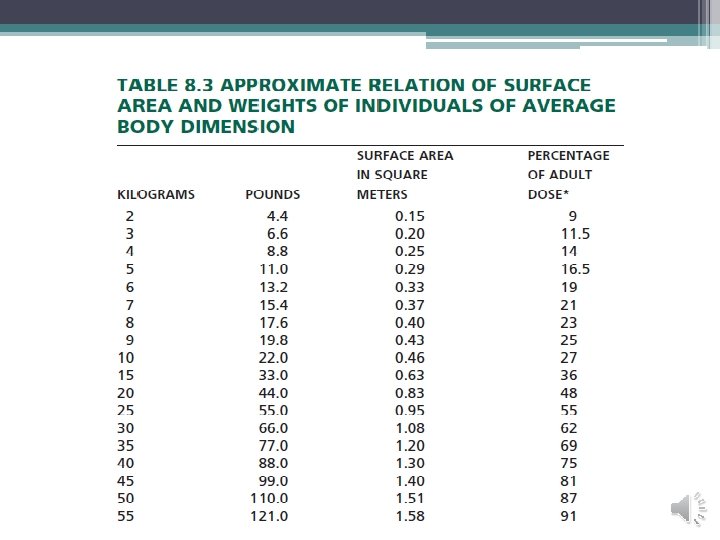
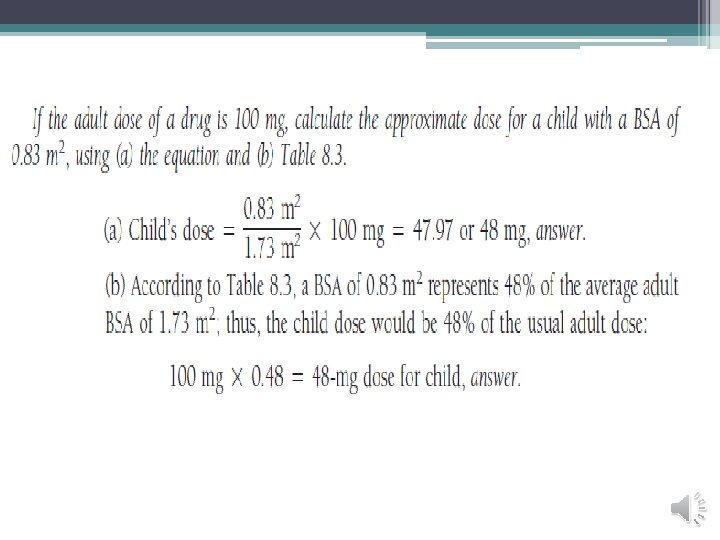
Drug Dosage Based on Body Surface Area The body surface area (BSA) method of calculating drug doses is widely used for two types of patient groups: • cancer patients receiving chemotherapy and • pediatric patients, with the general exception of neonates, who are usually dosed on a weight basis with consideration of age and a variety of biochemical, physiologic, functional, pathologic, and immunologic factors. A useful equation for the calculation of dose based on BSA is:
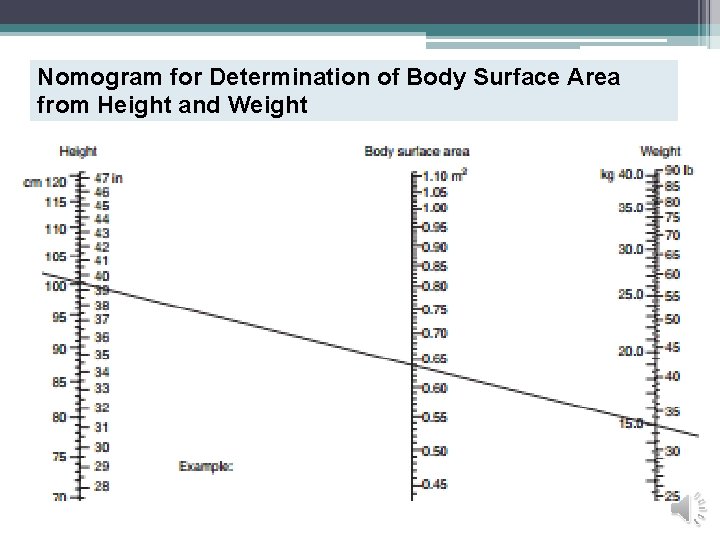
Nomograms Most BSA calculations use a standard nomogram, which includes both weight and height. Nomograms for children and adults are shown in the following tables. The BSA of an individual is determined by drawing a straight line connecting the person’s height and weight. The point at which the line intersects the center column indicates the person’s BSA in square meters.
Nomogram for Determination of Body Surface Area from Height and Weight