Preterite VS Imperfect Spanish has two past tenses

- Slides: 13
Preterite VS. Imperfect
Spanish has two past tenses: preterite and imperfect.
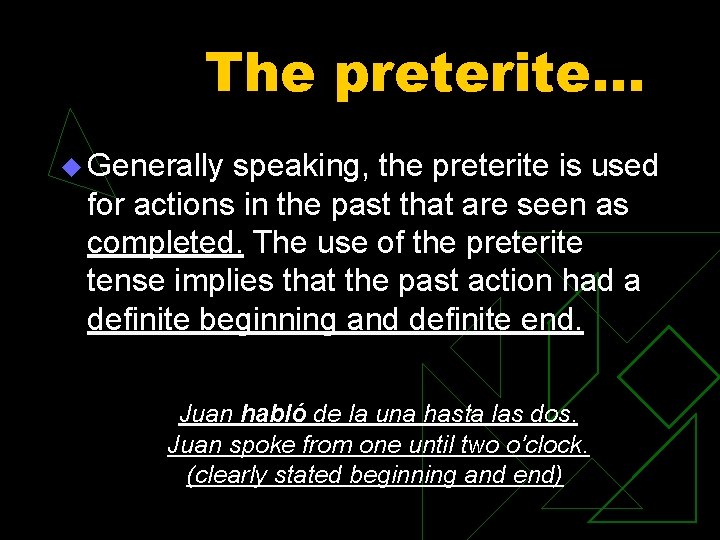
The preterite… u Generally speaking, the preterite is used for actions in the past that are seen as completed. The use of the preterite tense implies that the past action had a definite beginning and definite end. Juan habló de la una hasta las dos. Juan spoke from one until two o'clock. (clearly stated beginning and end)
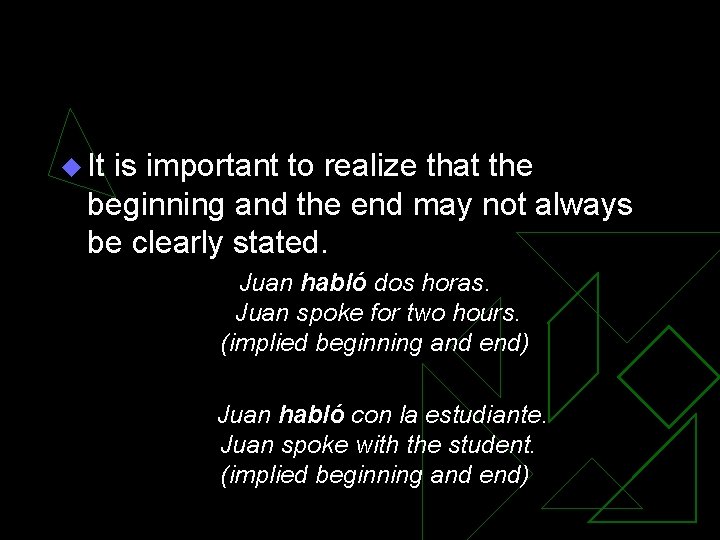
u It is important to realize that the beginning and the end may not always be clearly stated. Juan habló dos horas. Juan spoke for two hours. (implied beginning and end) Juan habló con la estudiante. Juan spoke with the student. (implied beginning and end)
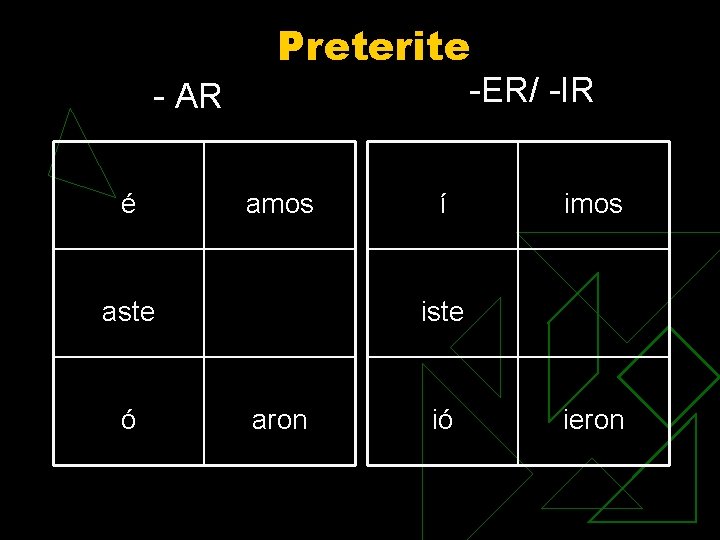
Preterite -ER/ -IR - AR é amos aste ó í imos iste aron ió ieron
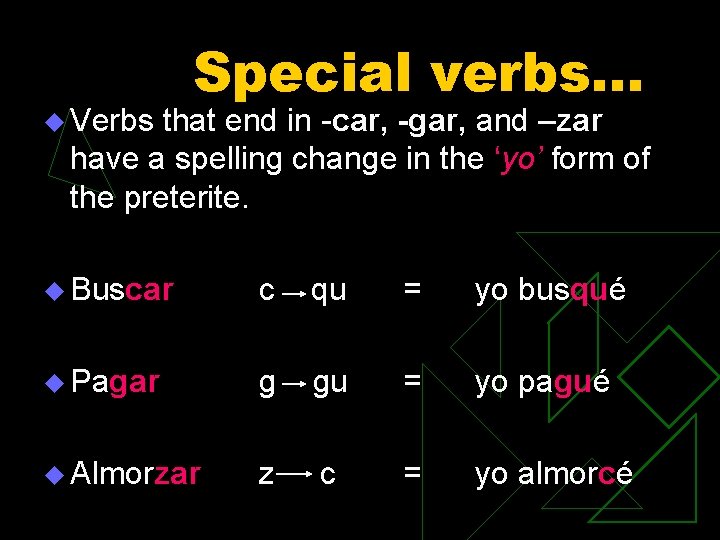
u Verbs Special verbs… that end in -car, -gar, and –zar have a spelling change in the ‘yo’ form of the preterite. u Buscar c qu = yo busqué u Pagar g gu = yo pagué u Almorzar z c = yo almorcé
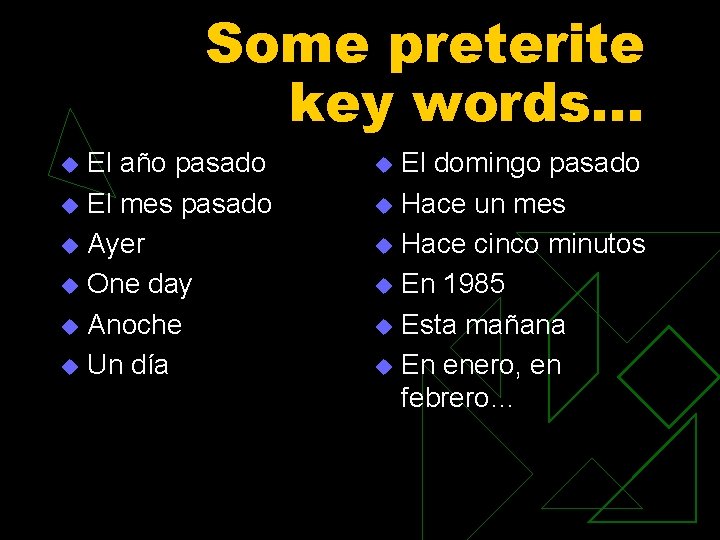
Some preterite key words… El año pasado u El mes pasado u Ayer u One day u Anoche u Un día u El domingo pasado u Hace un mes u Hace cinco minutos u En 1985 u Esta mañana u En enero, en febrero… u
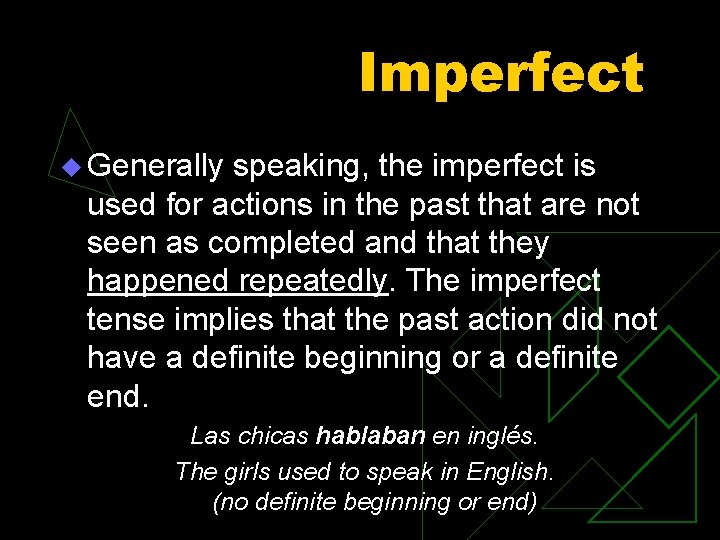
Imperfect u Generally speaking, the imperfect is used for actions in the past that are not seen as completed and that they happened repeatedly. The imperfect tense implies that the past action did not have a definite beginning or a definite end. Las chicas hablaban en inglés. The girls used to speak in English. (no definite beginning or end)
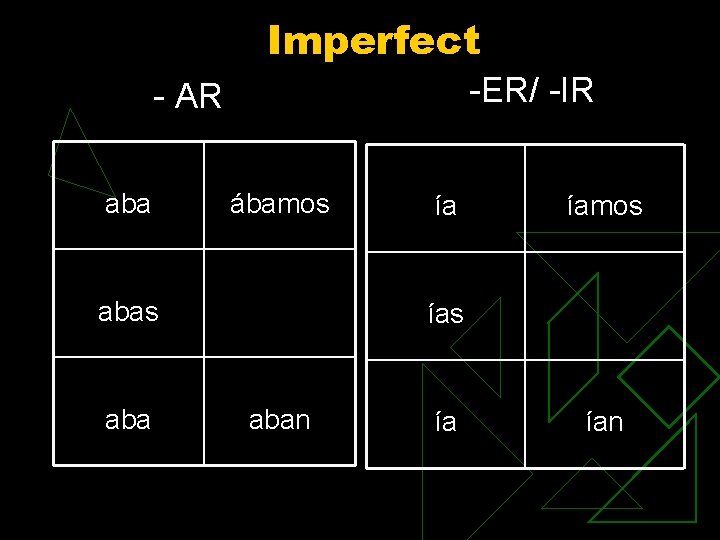
Imperfect -ER/ -IR - AR aba ábamos aba ía íamos ías aban ía ían
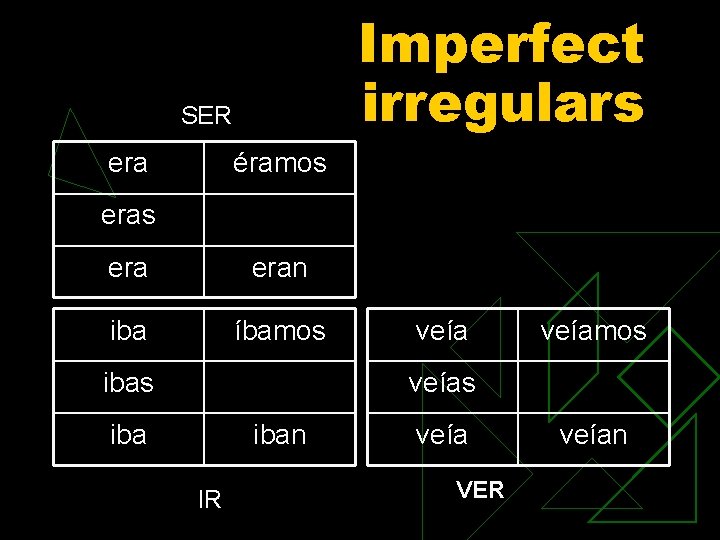
Imperfect irregulars SER era éramos era eran iba íbamos ibas veíamos veías iban IR veía VER veían
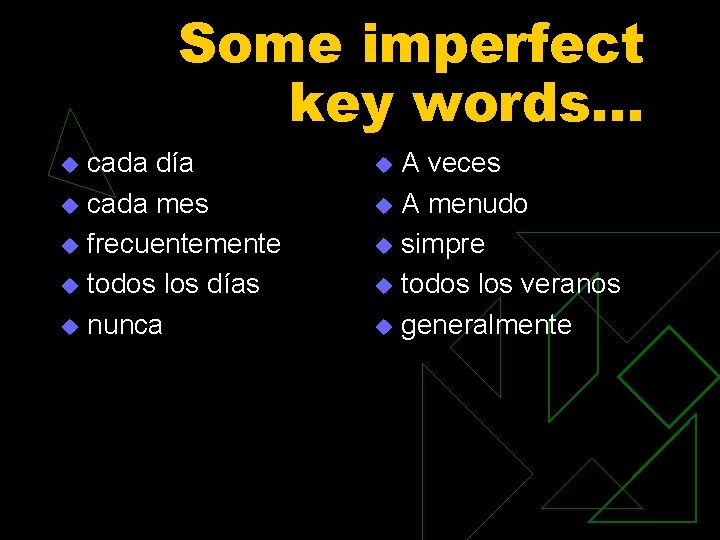
Some imperfect key words… cada día u cada mes u frecuentemente u todos los días u nunca u A veces u A menudo u simpre u todos los veranos u generalmente u
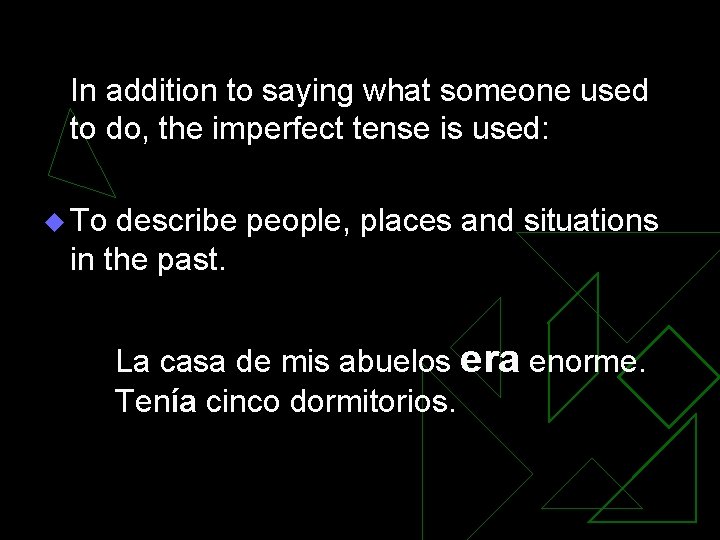
In addition to saying what someone used to do, the imperfect tense is used: u To describe people, places and situations in the past. La casa de mis abuelos era enorme. Tenía cinco dormitorios.
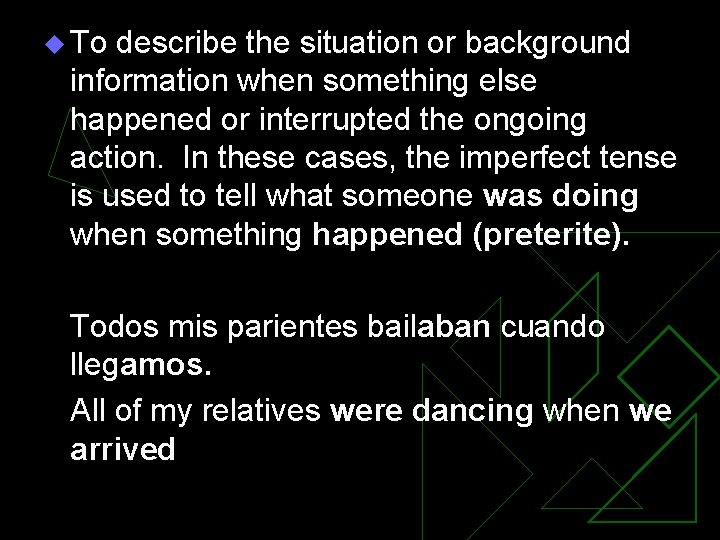
u To describe the situation or background information when something else happened or interrupted the ongoing action. In these cases, the imperfect tense is used to tell what someone was doing when something happened (preterite). Todos mis parientes bailaban cuando llegamos. All of my relatives were dancing when we arrived