Physiological Effects of Occupational Sitting Vs Standing Presented
- Slides: 20
Physiological Effects of Occupational Sitting Vs Standing Presented by Zainab Rashid MCSP SRP MACPOHE
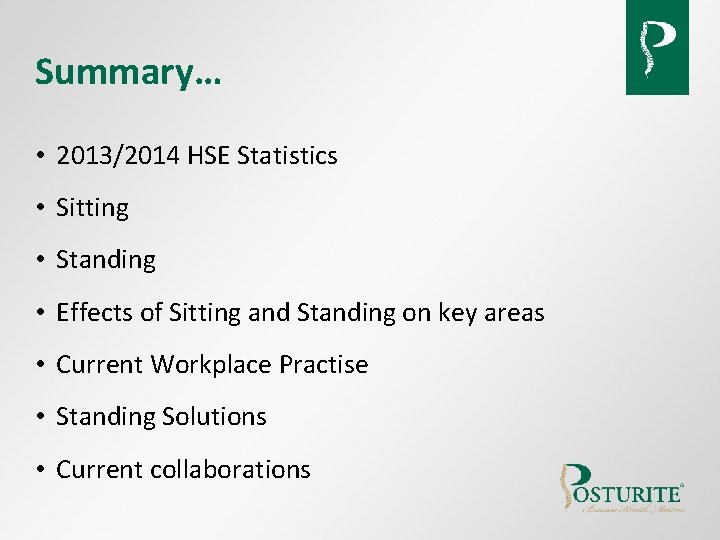
Summary… • 2013/2014 HSE Statistics • Sitting • Standing • Effects of Sitting and Standing on key areas • Current Workplace Practise • Standing Solutions • Current collaborations
2013/2014 - HSE Statistics Musculoskeletal Disorders (MSDs) can affect muscles, joints and tendons in all parts of the body. Most work-related MSDs develop over time and can also result from fractures sustained in an accident. The latest estimates are from the Labour Force Survey (LFS) and information from The Health and Occupational network for GPs : The total number of MSD cases in 2013/14 was 526 000 out of a total 1 241 000 for all work-related illnesses. The number of new cases of MSDs in 2013/14 was 184 000, up from 141 000 in 2011/12. There has generally been a downward trend in the rate of total cases and new cases of work-related MSDs since 2001/02, although the latest year has a higher rate than in 2011/12. The total number of working days lost due to MSDs in 2013/14 was 8. 3 million, an average of 15. 9 days per case of MSDs and according to The Work Foundation, UK lost £ 15 bn to sickness absence.
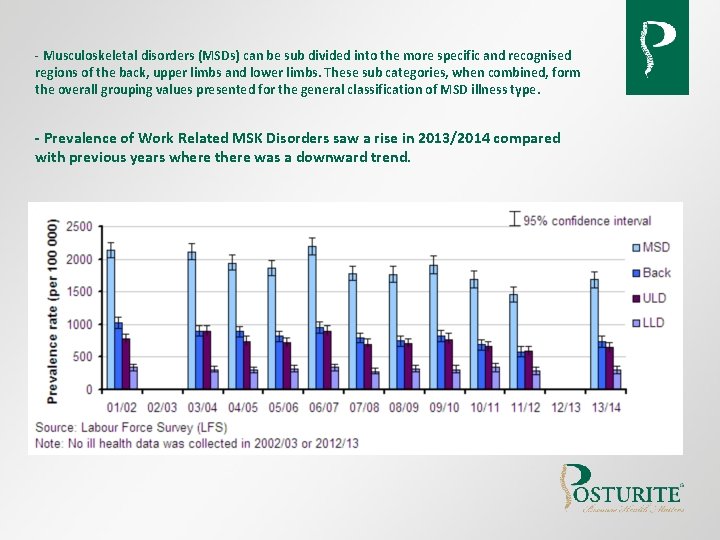
- Musculoskeletal disorders (MSDs) can be sub divided into the more specific and recognised regions of the back, upper limbs and lower limbs. These sub categories, when combined, form the overall grouping values presented for the general classification of MSD illness type. - Prevalence of Work Related MSK Disorders saw a rise in 2013/2014 compared with previous years where there was a downward trend.
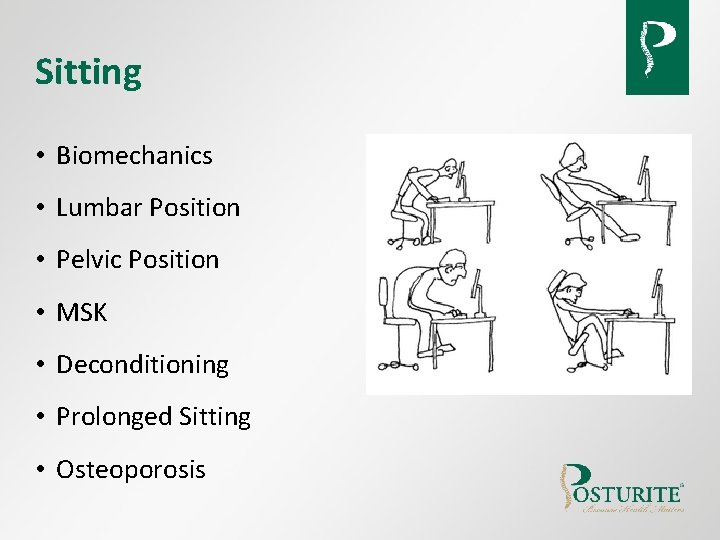
Sitting • Biomechanics • Lumbar Position • Pelvic Position • MSK • Deconditioning • Prolonged Sitting • Osteoporosis
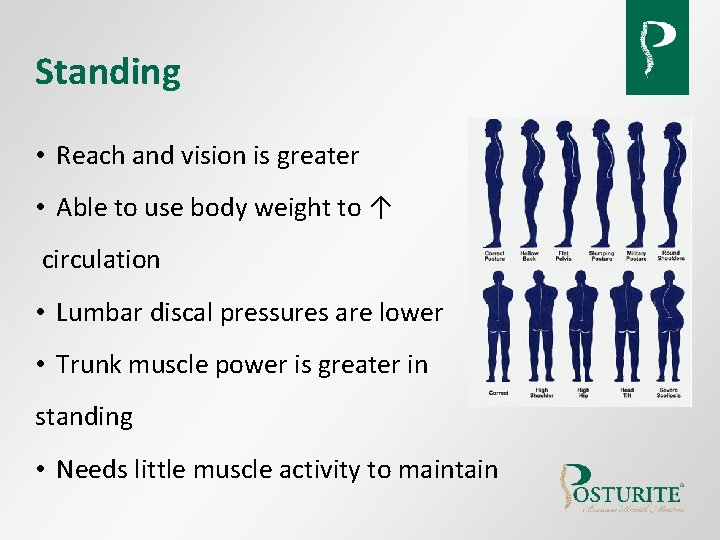
Standing • Reach and vision is greater • Able to use body weight to ↑ circulation • Lumbar discal pressures are lower • Trunk muscle power is greater in standing • Needs little muscle activity to maintain
Effects of Sitting and Standing on the following… • Vertebral Disc Pressure • Lower Back Pain • Blood Glucose Levels • Cardiovascular and Metabolic rates
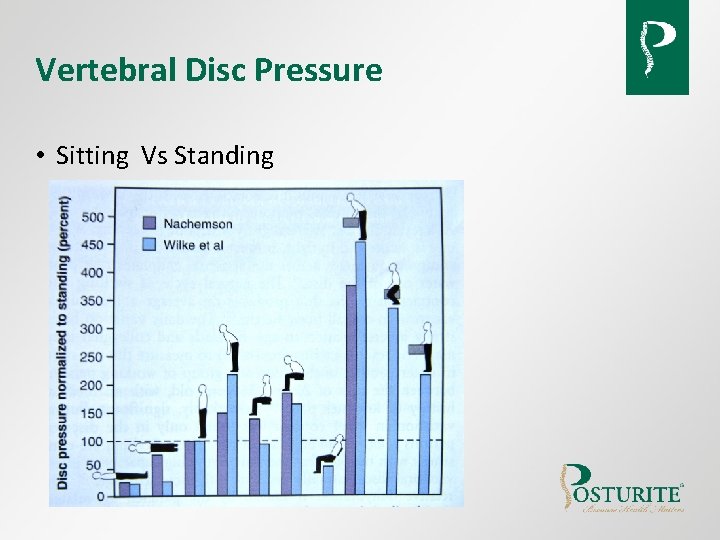
Vertebral Disc Pressure • Sitting Vs Standing
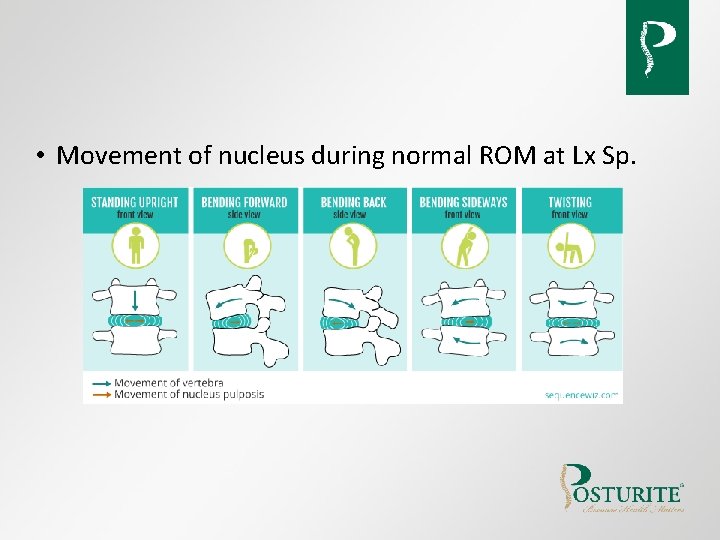
• Movement of nucleus during normal ROM at Lx Sp.
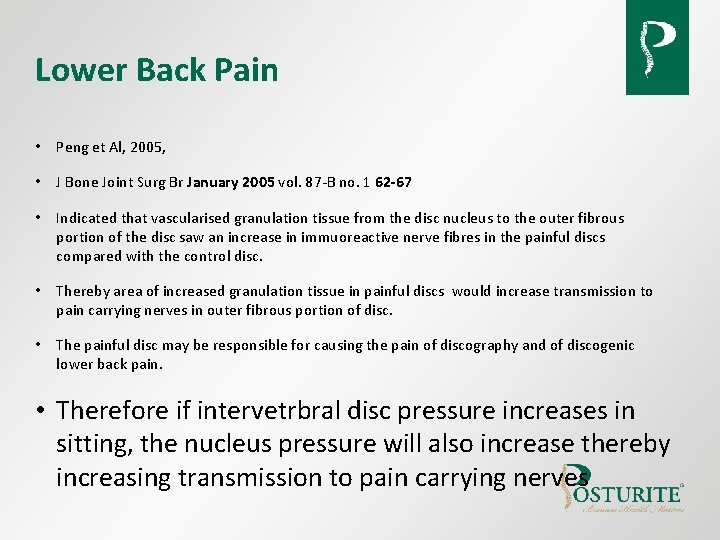
Lower Back Pain • Peng et Al, 2005, • J Bone Joint Surg Br January 2005 vol. 87 -B no. 1 62 -67 • Indicated that vascularised granulation tissue from the disc nucleus to the outer fibrous portion of the disc saw an increase in immuoreactive nerve fibres in the painful discs compared with the control disc. • Thereby area of increased granulation tissue in painful discs would increase transmission to pain carrying nerves in outer fibrous portion of disc. • The painful disc may be responsible for causing the pain of discography and of discogenic lower back pain. • Therefore if intervetrbral disc pressure increases in sitting, the nucleus pressure will also increase thereby increasing transmission to pain carrying nerves
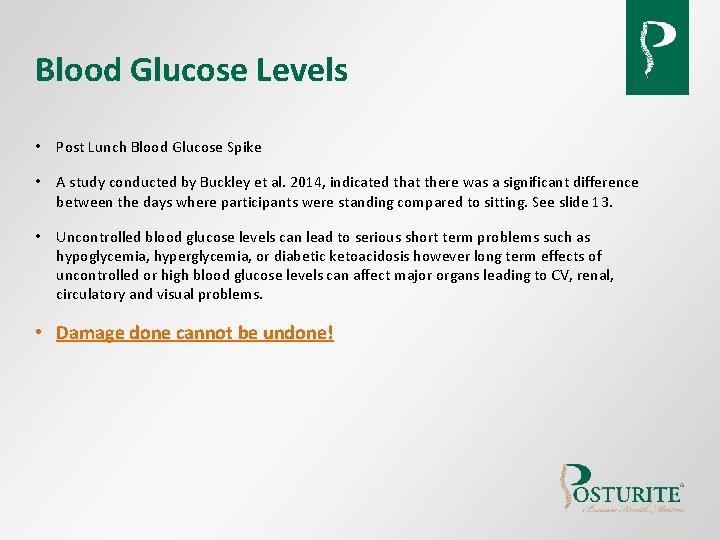
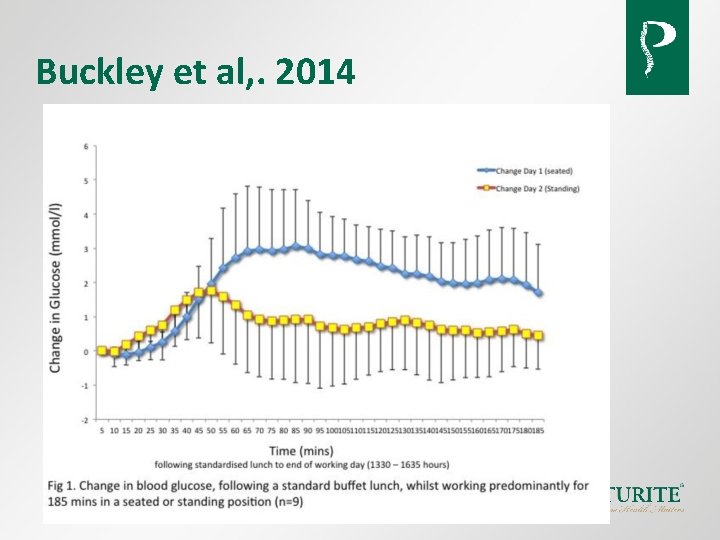
Blood Glucose Levels • Post Lunch Blood Glucose Spike • A study conducted by Buckley et al. 2014, indicated that there was a significant difference between the days where participants were standing compared to sitting. See slide 13. • Uncontrolled blood glucose levels can lead to serious short term problems such as hypoglycemia, hyperglycemia, or diabetic ketoacidosis however long term effects of uncontrolled or high blood glucose levels can affect major organs leading to CV, renal, circulatory and visual problems. • Damage done cannot be undone!
Buckley et al, . 2014
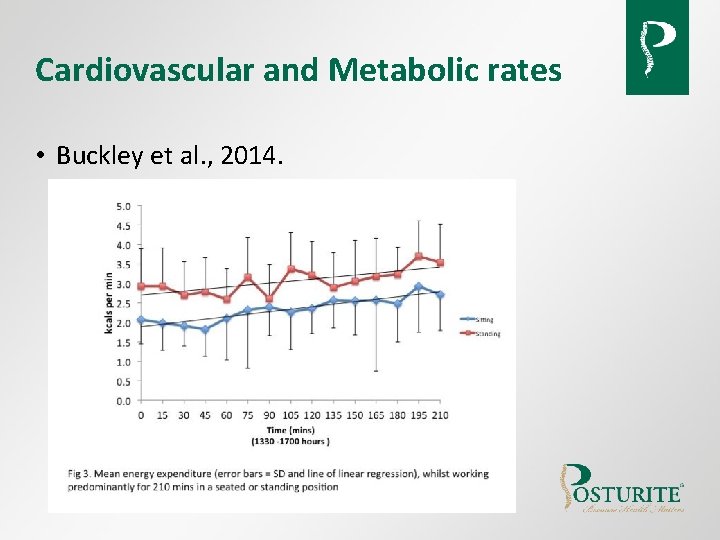
Cardiovascular and Metabolic rates • Buckley et al. , 2014.
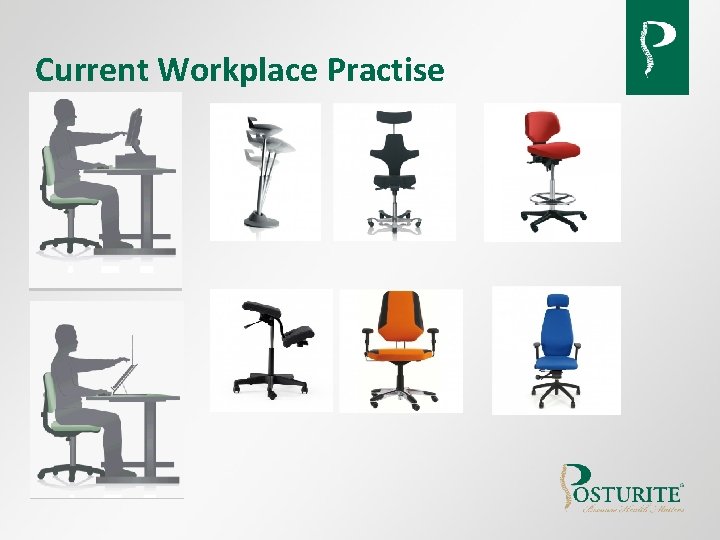
Current Workplace Practise
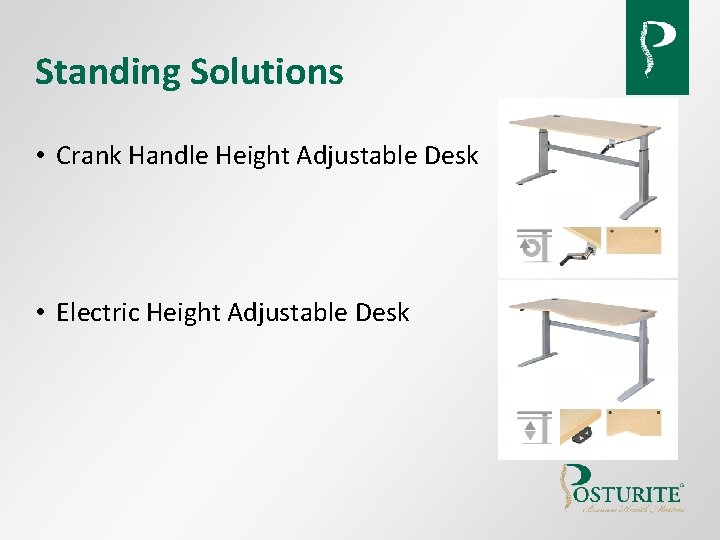
Standing Solutions • Crank Handle Height Adjustable Desk • Electric Height Adjustable Desk
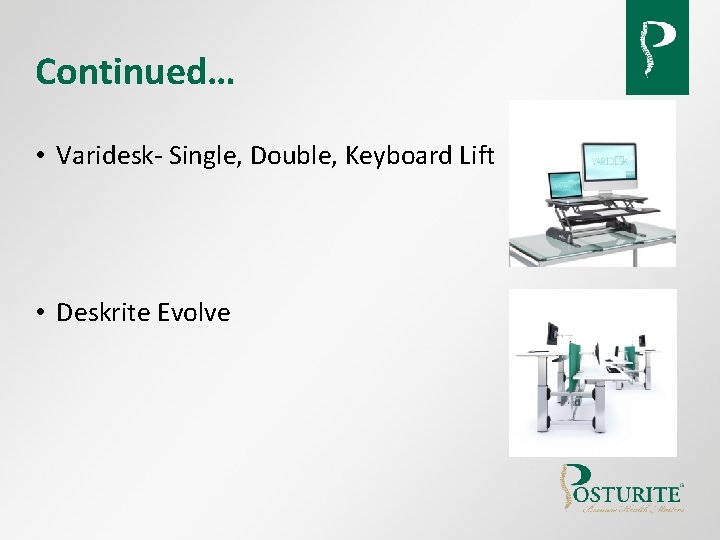
Continued… • Varidesk- Single, Double, Keyboard Lift • Deskrite Evolve
Combination of Sitting and Standing can help to improve: • Posture • Breathing • Circulation • Mobility • Balance • Sleep • Stress control • Overall health and thus reduces chronic disease
Moving Forward… • Guidelines Buckley et al. , 2015 • Initial aim for sedentary and inactive people • A minimum of 2 hours more standing per day • Progress up to 4+ hours more standing per day • Expert statement commissioned by Public Health England Active Working C. I. C.
Current Collaborations • University of Chester - @uochester • Posturite - @Posturite • #sitstandchester • Virgin Media Study
Any Q’s…?