OSTEOPOROSIS Florence TREMOLLIERES MD Ph D Menopause and
- Slides: 6
OSTEOPOROSIS Florence TREMOLLIERES, MD, Ph. D Menopause and Metabolic Bone Diseases Center Hôpital Paule de Viguier University Hospital of Toulouse, France
Postmenopausal osteoporosis • Physiopathology of osteoporotic fractures • Epidemiology and consequences of fractures • Assessment of the risk of fracture – Risk factors – Measurement of bone mineral density – Bone turnover markers • Current treatment options • MHT and the prevention of osteoporosis at menopause • The future of osteoporosis treatment
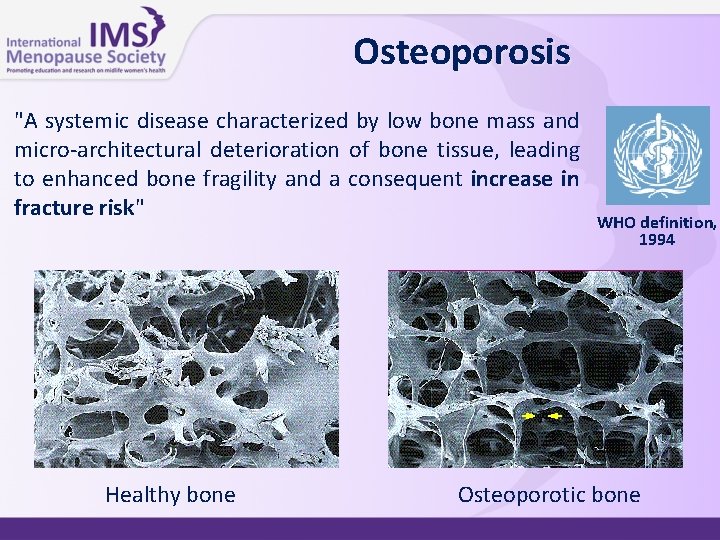
Osteoporosis "A systemic disease characterized by low bone mass and micro-architectural deterioration of bone tissue, leading to enhanced bone fragility and a consequent increase in fracture risk" Healthy bone WHO definition, 1994 Osteoporotic bone
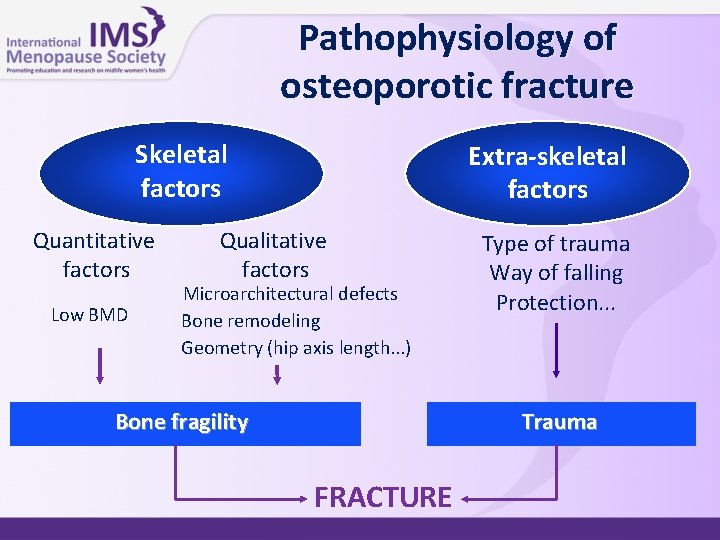
Pathophysiology of osteoporotic fracture Skeletal factors Quantitative factors Low BMD Extra-skeletal factors Qualitative factors Microarchitectural defects Bone remodeling Geometry (hip axis length. . . ) Bone fragility Type of trauma Way of falling Protection. . . Trauma FRACTURE
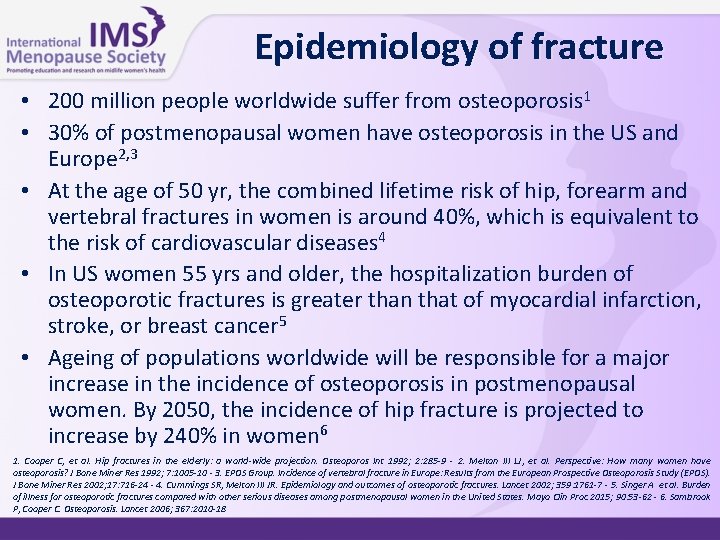
Epidemiology of fracture • 200 million people worldwide suffer from osteoporosis 1 • 30% of postmenopausal women have osteoporosis in the US and Europe 2, 3 • At the age of 50 yr, the combined lifetime risk of hip, forearm and vertebral fractures in women is around 40%, which is equivalent to the risk of cardiovascular diseases 4 • In US women 55 yrs and older, the hospitalization burden of osteoporotic fractures is greater than that of myocardial infarction, stroke, or breast cancer 5 • Ageing of populations worldwide will be responsible for a major increase in the incidence of osteoporosis in postmenopausal women. By 2050, the incidence of hip fracture is projected to increase by 240% in women 6 1. Cooper C, et al. Hip fractures in the elderly: a world-wide projection. Osteoporos Int 1992; 2: 285 -9 - 2. Melton III LJ, et al. Perspective: How many women have osteoporosis? J Bone Miner Res 1992; 7: 1005 -10 - 3. EPOS Group. Incidence of vertebral fracture in Europe: Results from the European Prospective Osteoporosis Study (EPOS). J Bone Miner Res 2002; 17: 716 -24 - 4. Cummings SR, Melton III JR. Epidemiology and outcomes of osteoporotic fractures. Lancet 2002; 359: 1761 -7 - 5. Singer A et al. Burden of illness for osteoporotic fractures compared with other serious diseases among postmenopausal women in the United States. Mayo Clin Proc 2015; 90: 53 -62 - 6. Sambrook P, Cooper C. Osteoporosis. Lancet 2006; 367: 2010 -18
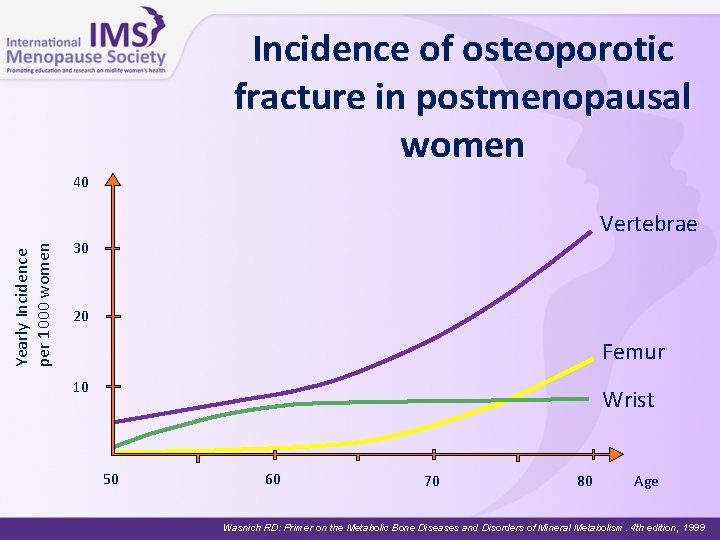
Incidence of osteoporotic fracture in postmenopausal women 40 Yearly Incidence per 1000 women Vertebrae 30 20 Femur 10 Wrist 50 60 70 80 Age Wasnich RD: Primer on the Metabolic Bone Diseases and Disorders of Mineral Metabolism. 4 th edition, 1999