OSHA Inspections OSHA inspectors or compliance safety and

- Slides: 19
OSHA Inspections
OSHA inspectors, or compliance safety and health officers (CSHOs), are experienced, welltrained industrial hygienists and safety professionals. Their goal is to: q Make sure companies are compliant with OSHA requirements q Help companies and workers reduce hazards and prevent injuries, illnesses, and deaths in the workplace PPT-SM-OI 2017 2
OSHA typically conducts inspections without giving a company advance notice. PPT-SM-OI 2017 3
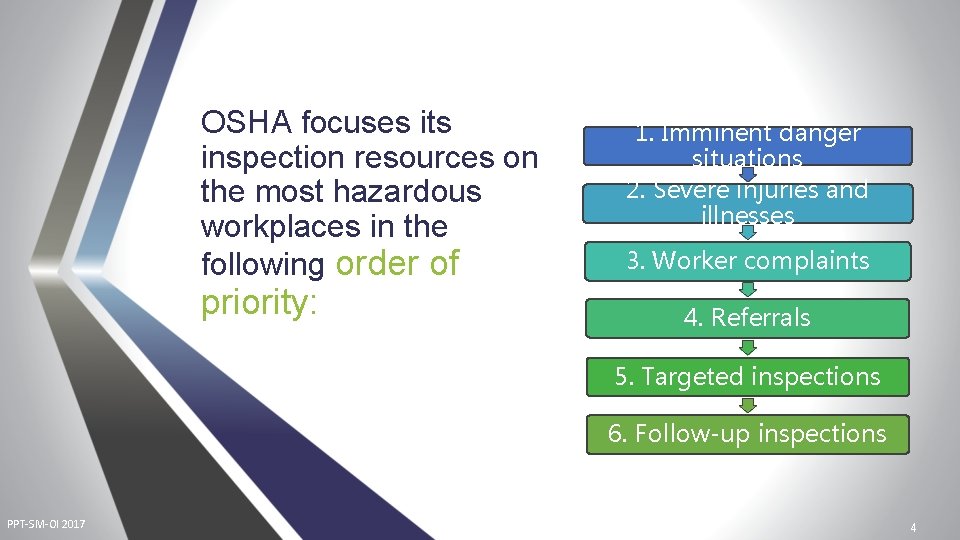
OSHA focuses its inspection resources on the most hazardous workplaces in the following order of priority: 1. Imminent danger situations 2. Severe injuries and illnesses 3. Worker complaints 4. Referrals 5. Targeted inspections 6. Follow-up inspections PPT-SM-OI 2017 4
Imminent danger situations are hazards that could cause serious physical harm or death. These situations are a top priority for OSHA inspections. Compliance officers will ask companies to correct these hazards immediately or remove endangered workers. PPT-SM-OI 2017 5
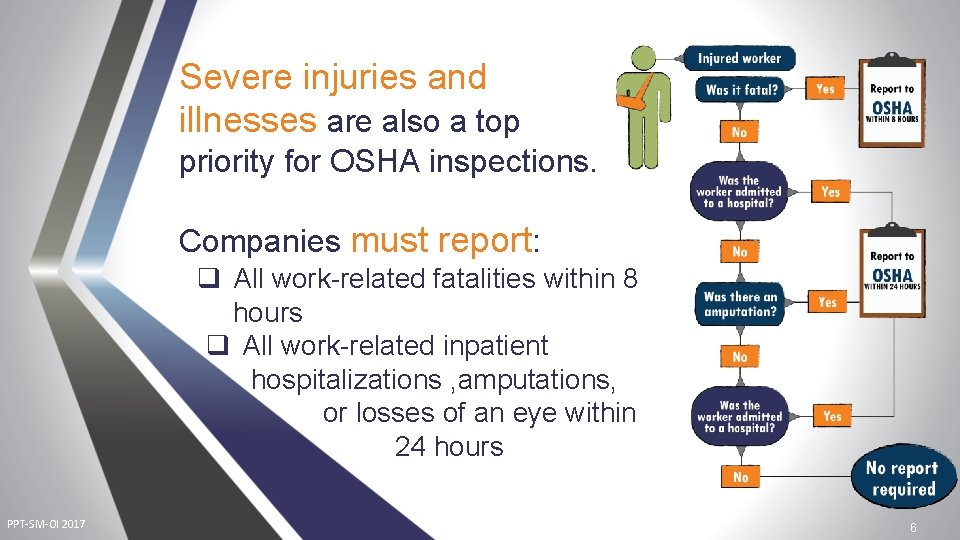
Severe injuries and illnesses are also a top priority for OSHA inspections. Companies must report: q All work-related fatalities within 8 hours q All work-related inpatient hospitalizations , amputations, or losses of an eye within 24 hours PPT-SM-OI 2017 6
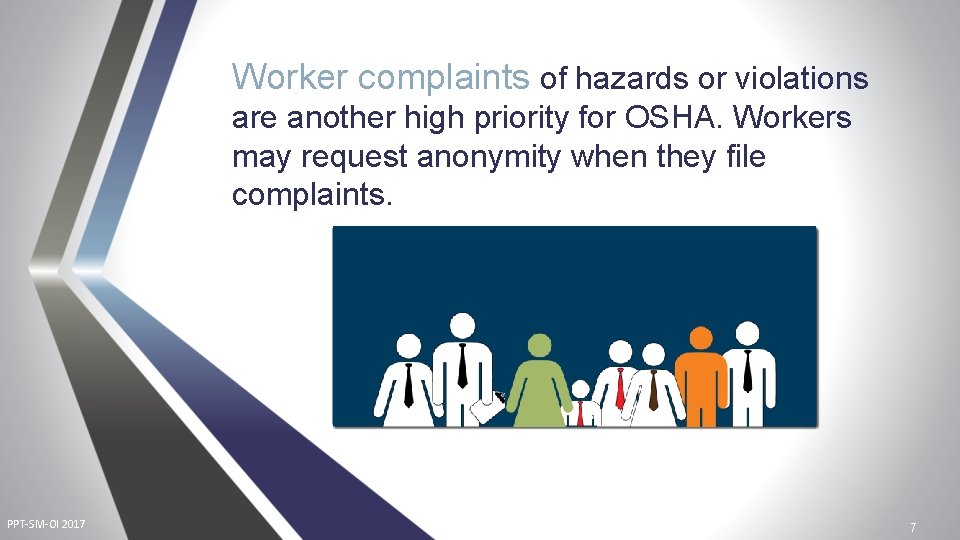
Worker complaints of hazards or violations are another high priority for OSHA. Workers may request anonymity when they file complaints. PPT-SM-OI 2017 7
Referrals of hazards from federal, state, or local agencies, individuals, organizations, or the media are considered for inspection. Targeted inspections aimed at specific highhazard industries or individual workplaces that have experienced high rates of injuries and illnesses also receive priority. PPT-SM-OI 2017 8
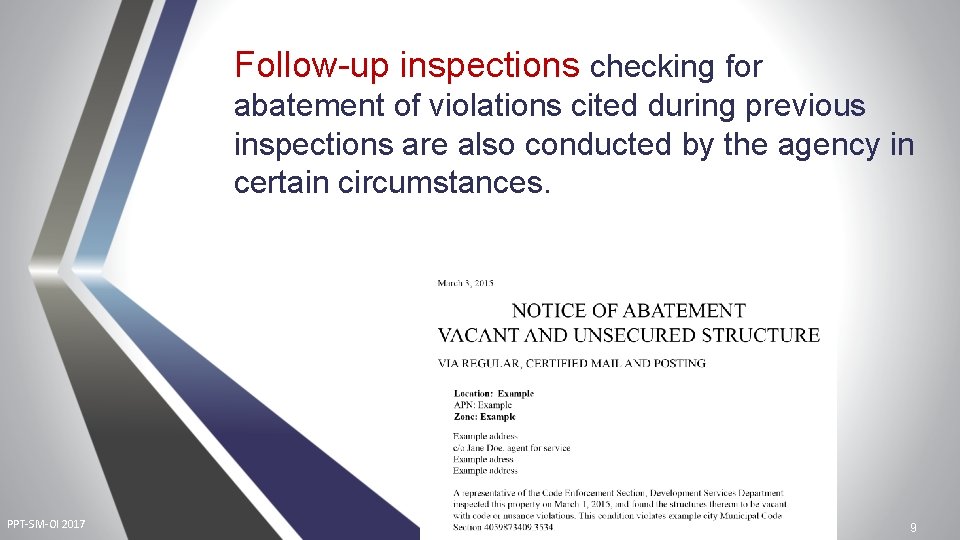
Follow-up inspections checking for abatement of violations cited during previous inspections are also conducted by the agency in certain circumstances. PPT-SM-OI 2017 9
Onsite inspections have several distinct parts, starting with the presentation of the compliance officer’s credentials, which include both a photograph and a serial number. Companies have the right to require compliance officers to have an inspection warrant before entering the worksite. PPT-SM-OI 2017 10
During the opening conference, the compliance officer will: q Explain why OSHA selected the workplace for inspection q Describe the scope of the inspection, walkaround procedures, employee representation, and interviews PPT-SM-OI 2017 11
At this time, the company will select a representative to go along with the compliance officer during the inspection. Workers also have the right to have an authorized representative go on the inspection. PPT-SM-OI 2017 12
After the opening conference, the compliance officer and the representatives will conduct a walkaround of the workplace, inspecting for hazards that could lead to worker injuries or illnesses. PPT-SM-OI 2017 13
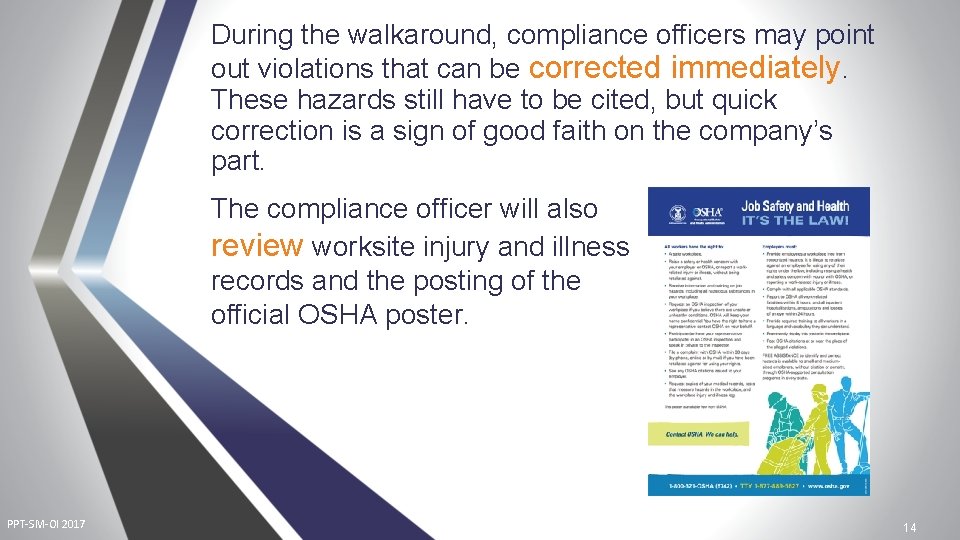
During the walkaround, compliance officers may point out violations that can be corrected immediately. These hazards still have to be cited, but quick correction is a sign of good faith on the company’s part. The compliance officer will also review worksite injury and illness records and the posting of the official OSHA poster. PPT-SM-OI 2017 14
After the walkaround, the compliance officer will hold a closing conference with the company and the worker representatives to discuss the findings. PPT-SM-OI 2017 15
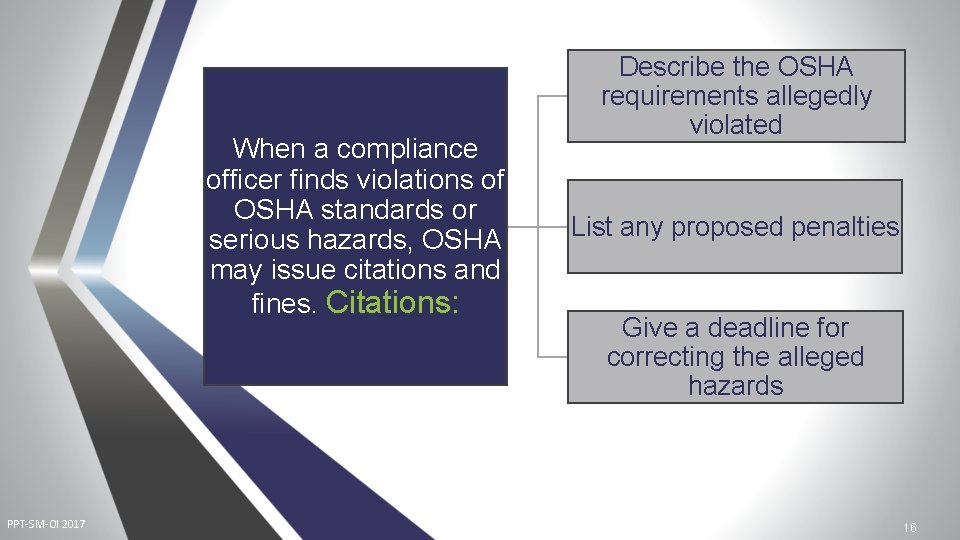
When a compliance officer finds violations of OSHA standards or serious hazards, OSHA may issue citations and fines. Citations: PPT-SM-OI 2017 Describe the OSHA requirements allegedly violated List any proposed penalties Give a deadline for correcting the alleged hazards 16
OSHA must issue a citation and proposed penalty within 6 months of when the violation occurred. OSHA and the company may work out a settlement agreement to resolve the matter and to eliminate the hazard. PPT-SM-OI 2017 17
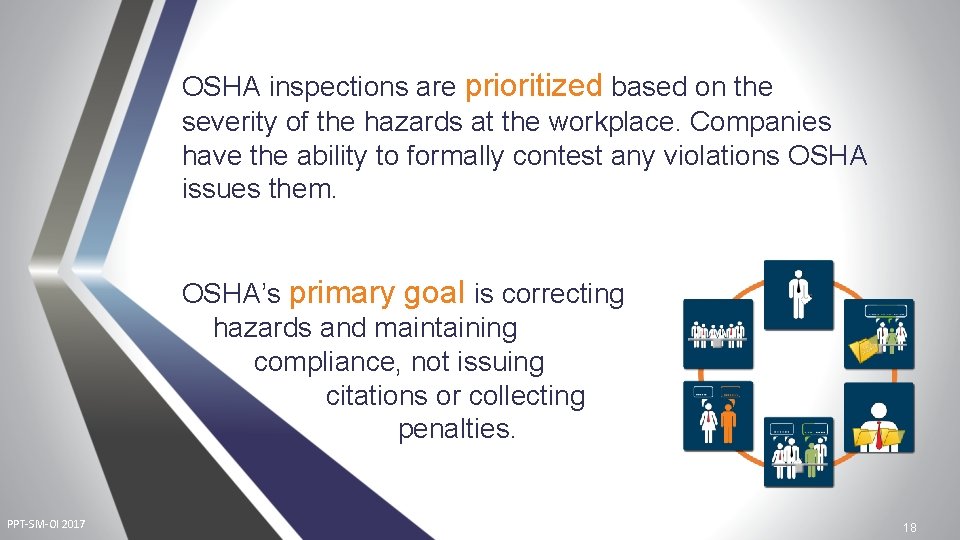
OSHA inspections are prioritized based on the severity of the hazards at the workplace. Companies have the ability to formally contest any violations OSHA issues them. OSHA’s primary goal is correcting hazards and maintaining compliance, not issuing citations or collecting penalties. PPT-SM-OI 2017 18
Copyright © 2016 by PEC/Premier Safety Operations, LLC