Orofacial Pain Management MJDF Study Group Craig Hadden
- Slides: 24
Orofacial Pain Management MJDF Study Group. Craig Hadden
Definition �Orofacial: Relating to the mouth and face (Trigeminal Nerve distribution) �Pain: Feeling of distress, suffering, or agony, caused by stimulation of specialized nerve endings. Also includes perception and subjective interpretation.
Prevalence: 22% of the US population suffer orofacial pain more than once in 6 months. ¼ of population in England, only half sought help, prevalence higher in young people (18 -25 yo) and women. Total cost of “headache” accross 8 countries in Europe is estimated at approximately 173 billion Euros annually.
Diagnosis: Site Onset Character Radiating Associations Timing Exacerbating/relieving features Severity – pain scale.
Diagnosis: �Identify inflammation – redness, swelling, heat, pain. �Loss of function – trismus, inability to bite on tooth, difficulty swallowing.
Diagnosis: �Special Tests: Hot/cold, EPT. �Radiographs: PAs, BWs, Panoral, CBCT. �Haematological investigations. �Biopsy �Signs of sinister disease: >50 yo, Painless trismus, Asymmetry, Sudden or recent acute pain.
Aetiology of pain: Dental: most common Pulpal – reversible pulpitis – caries removal – irreversible pulpitis – RCT/XLA Sensitivity - Cold/Sweet/Physical - coatings/TBI/ sensitive tooth paste.
Aetiology of pain: �Apical: �Heavy bite - adjust occlusion �Apical periodontitis, leading to dental abscess – RCT/XLA �Post operatively after RCT – monitor/analgesics.
Aetiology of pain: �Apical spread: �Blocked airway, �Systemic involvement: Fever/malaise and swelling/trismus – XLA with drainage and appropriate antibiotics – SDCEP.
Aetiology of pain: �Pericoronitis – XLA if possible (according to paper) but antibiotics indicated if XLA not an available option. �Periodontitis - remove causative factors: plaque retentive areas. Scaling as appropriate, OHI, TBI, Smoking cessation where applicable.
Aetiology of pain: �ANUG – debridement, OHI, TBI, Metronidazole with review after 3 days. (see SDCEP) �Alveolar Osteitis – curettage, rinse of socket (avoiding Chlorohexidine) alvogyl.
Aetiology of pain: �Non Odontogenic: �Maxillary sinusitis – maxillary molars, ache which worsens when lying down. Treat with decongestants, refer if chronic. �Viral infections (see previous!) �Atypical facial pain – rule out any dental causes. � Trigeminal Neuralgia – refer � TMD – Covered previously.
Intra and Post Operative Pain Prevention �Intra-operative: �Local Anaesthetic: � Prevents transmission of nerve impulses � Binds to sodium channels preventing polarisation and firing.
LA �Lidocaine 2%, 1: 80 k adrenaline: general use, minor oral surgery, block required for lower molars. �Prilocaine 3%, Felypressin: Medically compromised patients eg hypertension/ hyperthyroidism. �Mepivicaine 2%, 1: 100 k adrenaline: as lidocaine �Articaine 4%, 1: 100 k adrenaline: good for ‘hot’ pulps, infiltratations all round mouth. �Bupivacaine 0. 5%, 1: 200 k adrenaline: long acting, increased toxicity comparatively. �Levobupivacaine 0. 5%, 1: 200 k adrenaline: long acting, reduced toxicity comparatively to bupivacaine
LA �Risks of parasthesia �Unfounded that 4% Articaine has increased risk of causing nerve damage when used as block. �Repeated insertion of needle when repeating injection after failed block more likely to traumatise nerve. �Suggestion that Articaine infiltrations for lower molars are therefore safer for lower molar anaesthesia.
LA �Technique: depends on requirement: �Block/Infiltration. �Standard ID Block, Gow Gates or Akinosi “high block. ” �Lower teeth can have additional innervation from: �Nerve to Mylohyoid �Long Buccal Nerve �Cutaneous Coli Nerve (labial periostium) �Auriculotemporal.
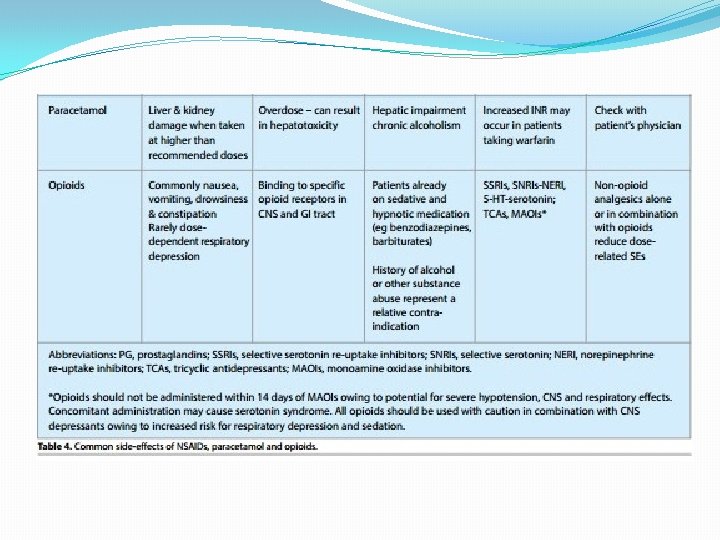
Post Operative Management �Use of analgesics can speed recovery. �Opiod/Non-opiod (NSAIDs, paracetemol) �NSAIDs – reduce pain from inflammatory reaction (Arachidonic Acid Cascade) �Opiods may affect emotional aspects of pa in and modify transmission of pain information
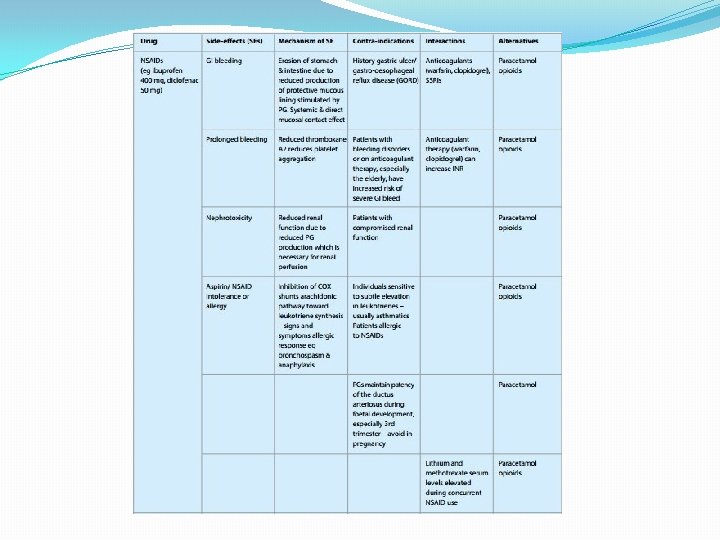
NSAIDs �Gold standard for analgesia in dentistry. �Action: inhibition of the enzyme Cyclo-oxygenase, and hence prostaglandin production. �Ibuprofen 200/400 mg, tds �Diclofenac 25/50 mg, tds (see SDCEP) �Contraindications: GI issues, Anticoagulant therapies, Bleeding disorders, Nephropathy, Allergy.
Paracetamol �No significant anti-inflammatory effect �Hepatotoxic – be aware of alcoholics/patients with liver disease. �Mechanism unclear.
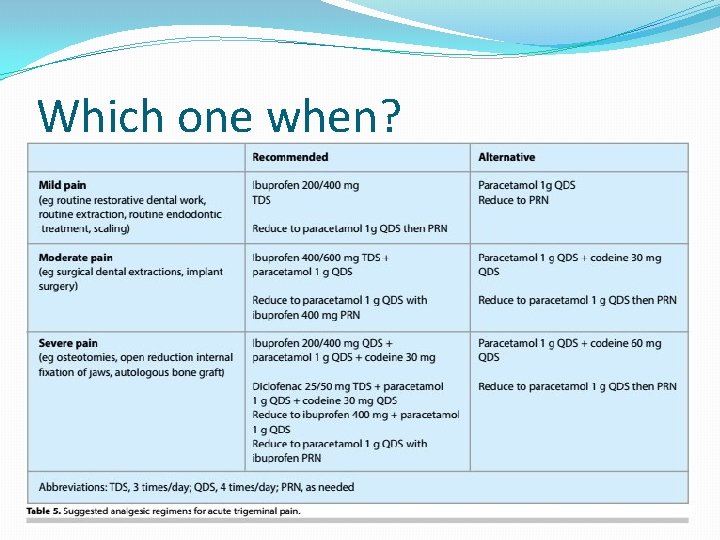
Which one when?
Summary �Orofacial pain requires a diagnosis �Intra-operative pain can be controlled with appropriate LA delivered through an appropriate technique. �Post-operative recovery is aided by appropriate pain management.
References: �Acute Orofacial Pain, Khawaja N, Renton T, Dental Update, June 2015, 442 -462.