
IU Health Paoli Emergency Department Pain Management Committee



- Slides: 25
IU Health Paoli Emergency Department Pain Management Committee Cheryl Lee, RN Pain Committee Coordinator
WHY? In case you have not heard – We have an opioid epidemic going on ! 2
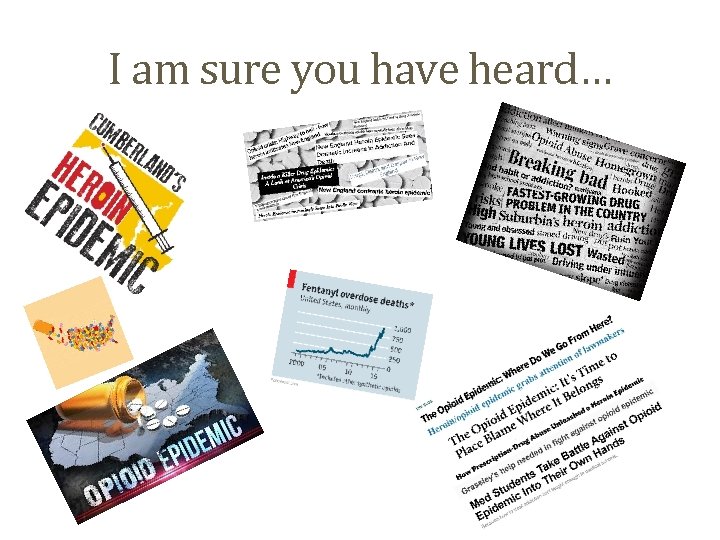
I am sure you have heard…
Critical Access Hospital • Limited resources • Limited staffing • We knew we had to address the issues related to the opioid epidemic
5
MY PASSION TO HELP • Co-workers daughter • • Addicted Only used ‘prescription medication’ Never had a prescription in her name Overdosed – death at age 27 • Former co-workers daughter • Addicted • Started at age 14 with a script for a sports related back injury • Her life ended at age 21 from a fentanyl overdose • Community Leadership class participant • Addicted • Recovered • Now a Recovery Coach in Scott Co. –helping others recover 6
OUR PROGRAM -OUR PURPOSE To develop and implement a plan to allow our emergency medical team to provide effective, legal, and ethical management for patients with complaint of chronic pain. To treat acute pain appropriately and effectively. Our goal is to provide this care to our patients without contributing to the detriment resulting from continued and unregulated narcotic administration.
8
Building a program … • Be certain we were providing the best patient care • Properly addressing their pain • Not adding detriment caused by overuse of narcotic pain medication – According to www. in. gov – 4 out of 5 heroin uses report starting use with prescription medications
It is not a me thing; it’s a WE thing! • Staff will be educated. • Effective pain management starts with a welleducated staff • Passing this education to patients and their families in a consistent manner is key to a successful program. • This education starts as soon as the patient enters our doors (or before, by utilizing public relations and education in community) 10
STAFF SCRIPTING • We must change the words we use when talking to patients about pain management • Communication that demonstrates empathy, compassion AND sets boundaries will lead to more positive clinical outcomes • Instead of saying ‘well you have a narcotic agreement so I am limited (or I cannot) give you narcotics’, say ‘I see in your file you have used narcotics in the past (or are currently using narcotics), we must be careful when treating your episodes of increased pain, because an overuse of narcotics can actually cause an increase in the sensation of the pain you are feeling. 11
According to American College of Physicians – Feb 2017 Physicians and patients should treat acute or subacute low back pain with non-drug therapies such as superficial heat, massage, acupuncture, or spinal manipulation. If drug therapy is desired, physicians and patients should select nonsteroidal antiinflammatory drugs or skeletal muscle relaxants.
UTILIZE AVAILABLE RESOURCES • Refer to – PT, OT, Healing Arts Center • Communicate with patients Primary care if a referral is needed for PT, OT, etc. • During patient education stress importance of ‘listening to your body’ and strengthening core muscles. • “Physicians should reassure their patients that acute and subacute low back pain usually improves over time regardless of treatment. Physicians should avoid prescribing unnecessary tests and costly and potentially harmful drugs, especially narcotics, for these patients. ” Nitin S. Damle, MD, MS, MACP, president of ACP
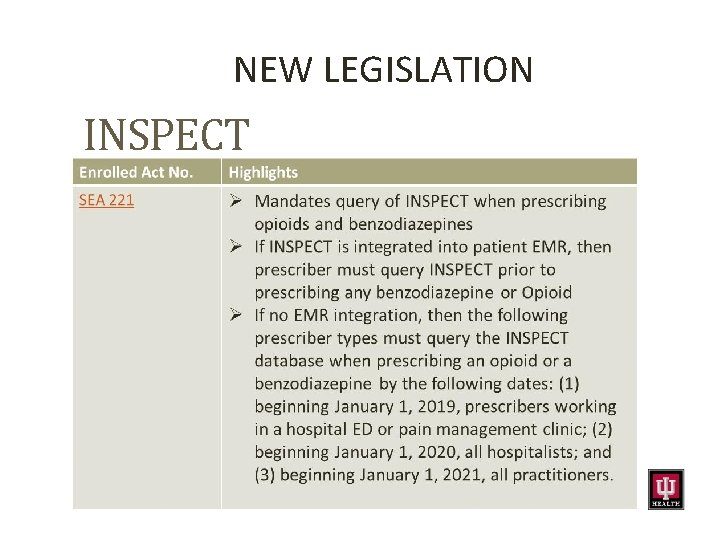
NEW LEGISLATION INSPECT
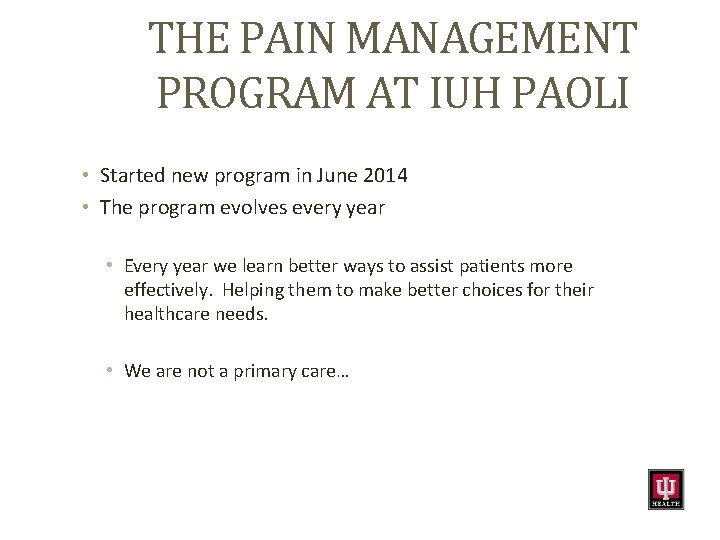
THE PAIN MANAGEMENT PROGRAM AT IUH PAOLI • Started new program in June 2014 • The program evolves every year • Every year we learn better ways to assist patients more effectively. Helping them to make better choices for their healthcare needs. • We are not a primary care…
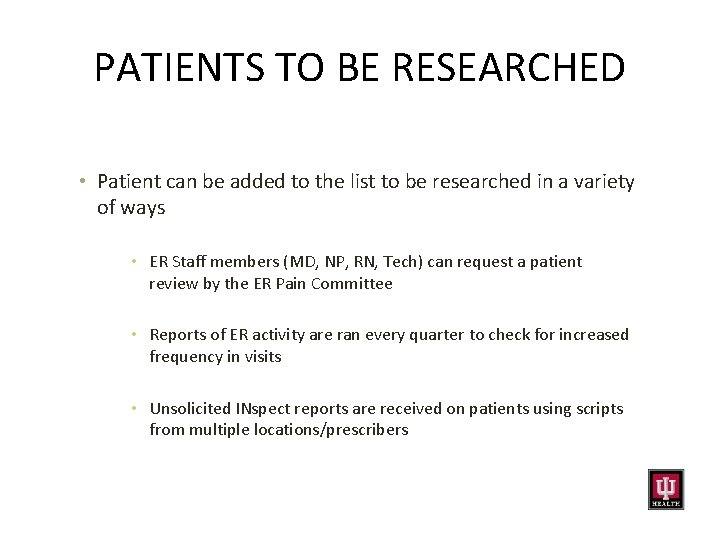
PATIENTS TO BE RESEARCHED • Patient can be added to the list to be researched in a variety of ways • ER Staff members (MD, NP, RN, Tech) can request a patient review by the ER Pain Committee • Reports of ER activity are ran every quarter to check for increased frequency in visits • Unsolicited INspect reports are received on patients using scripts from multiple locations/prescribers
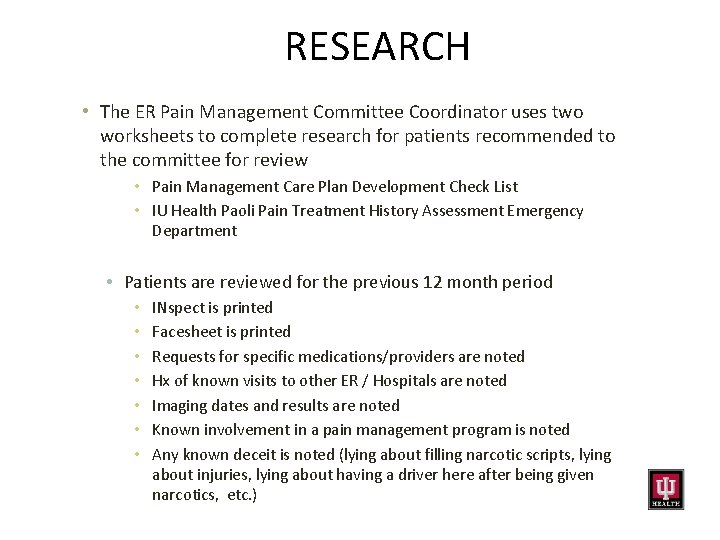
RESEARCH • The ER Pain Management Committee Coordinator uses two worksheets to complete research for patients recommended to the committee for review • Pain Management Care Plan Development Check List • IU Health Paoli Pain Treatment History Assessment Emergency Department • Patients are reviewed for the previous 12 month period • • INspect is printed Facesheet is printed Requests for specific medications/providers are noted Hx of known visits to other ER / Hospitals are noted Imaging dates and results are noted Known involvement in a pain management program is noted Any known deceit is noted (lying about filling narcotic scripts, lying about injuries, lying about having a driver here after being given narcotics, etc. )
DECISION After research is completed the coordinator presents information to the committee for one of three decisions • Send patient a personalized, detailed certified letter • Continue to monitor patient over the next few months and report any activity which might qualify them to received a certified letter • Remove them from the list completely
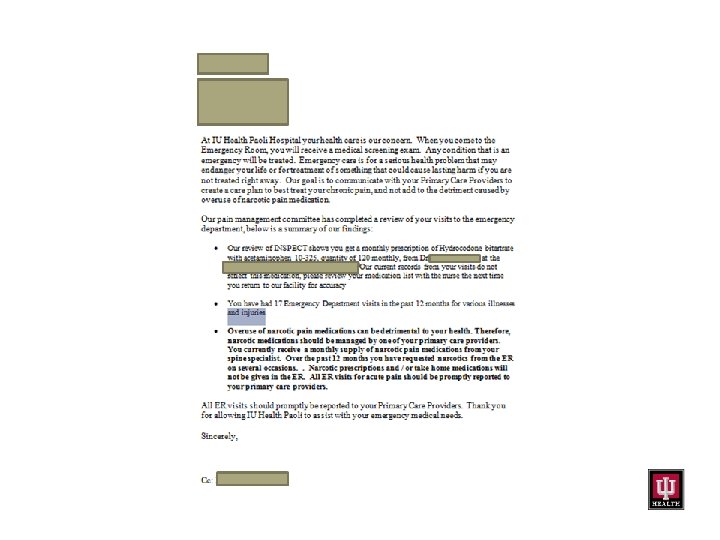
CERTIFIED LETTERS Every letter includes the following • General information • Specific findings from the Inspect report • Examples • Review of your INSPECT report reveals you are currently receiving 60 Hydrocodone with Acetaminophen 10/325 mg monthly from your primary care physician, Dr. xxx, in xxx, Indiana, as well as, several prescriptions for narcotics from multiple other providers in the past year. Summarized as 19 prescriptions from 8 providers. • During your visit on 10/25/14 our documentation shows you reported you were not currently taking any pain medications. Review of your INspect report (Indiana prescription monitoring system) shows you currently receive a quantity of 90 Oxycodone 10 mg monthly from xxx, NP at Dr. xxx office. I have added this to your home medication list • Summary of recent visits
FACTS • The overuse of U. S. emergency departments is responsible for $38 billion in wasteful spending each year according to the New England Healthcare Institute • Drivers of ED overuse include lack of access to timely primary care services, referral to the ED by primary care physicians themselves, and financial and legal obligations by hospitals to treat all patients who arrive in the ED.
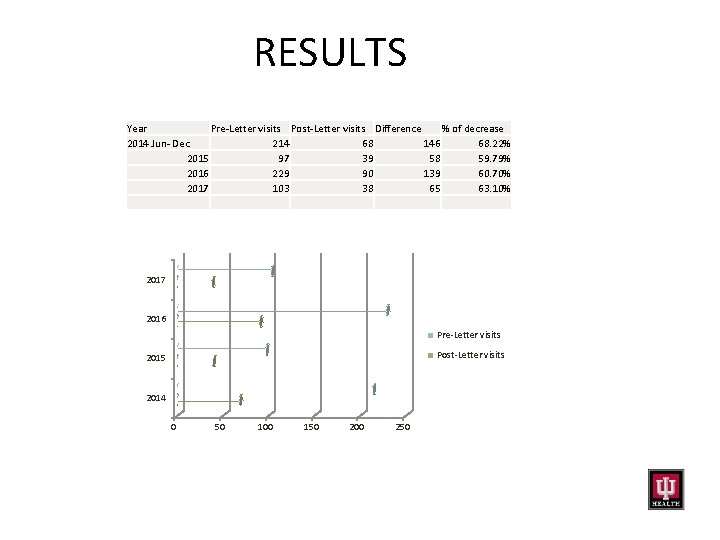
RESULTS Year Pre-Letter visits Post-Letter visits Difference % of decrease 2014 Jun- Dec 214 68 146 68. 22% 2015 97 39 58 59. 79% 2016 229 90 139 60. 70% 2017 103 38 65 63. 10% 2017 2016 Pre-Letter visits Post-Letter visits 2015 2014 0 50 100 150 200 250
Many success stories
My challenge to each of you…