Origin and History of Life Chapter 19 A

- Slides: 43
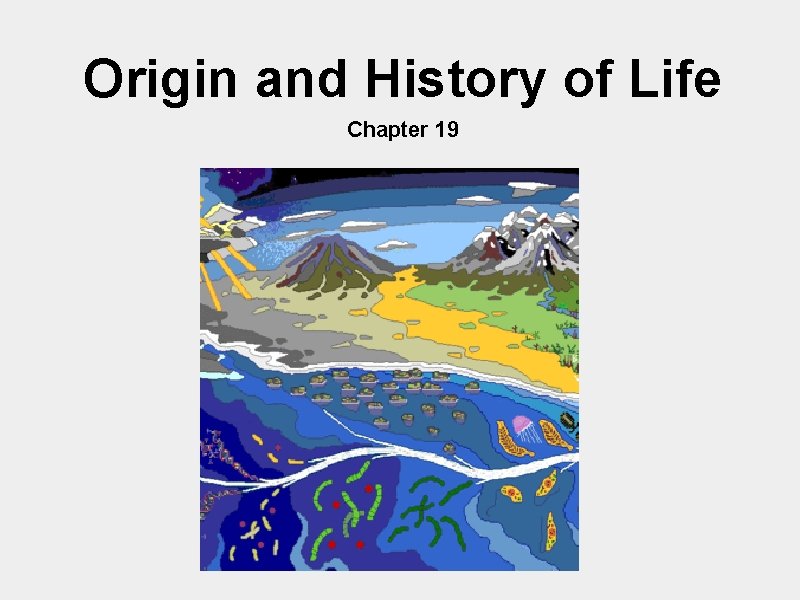
Origin and History of Life Chapter 19
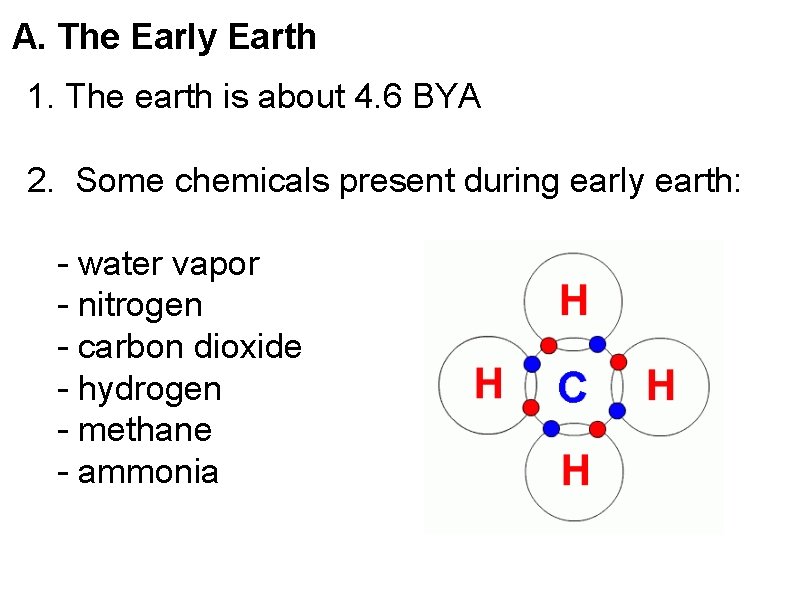
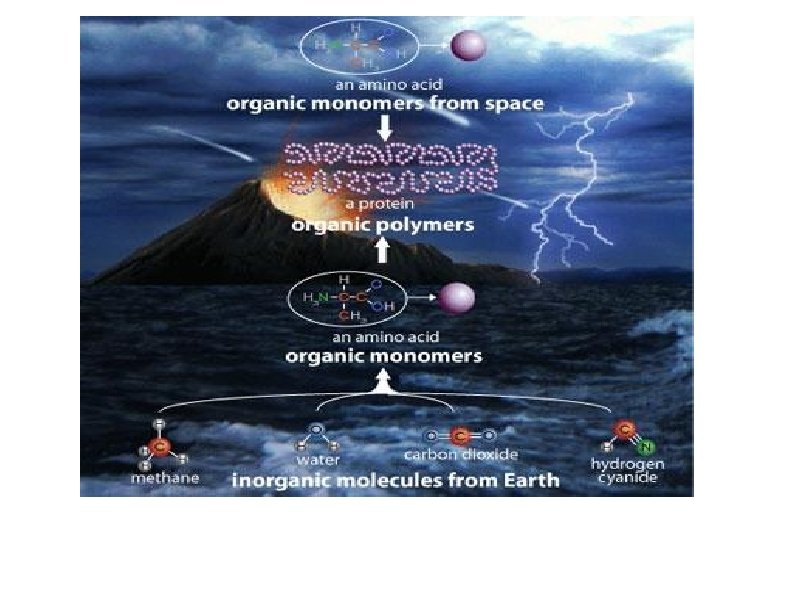
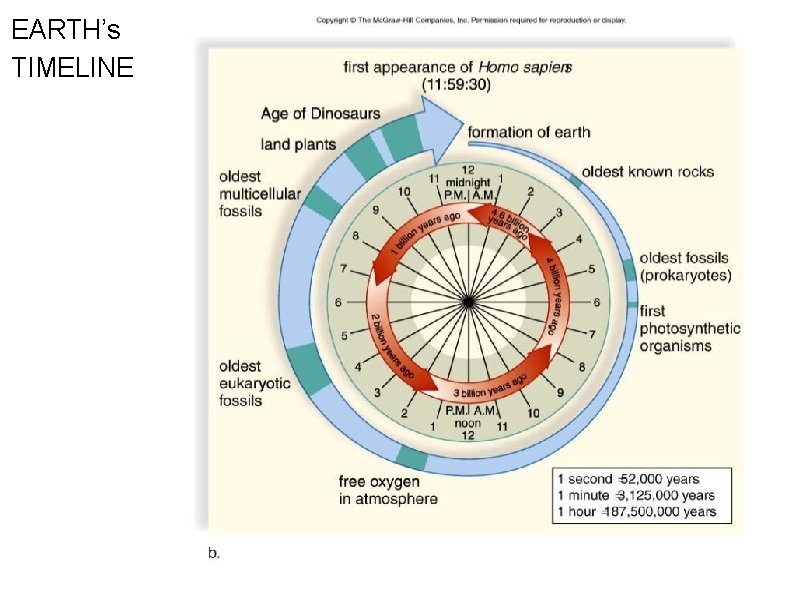
A. The Early Earth 1. The earth is about 4. 6 BYA 2. Some chemicals present during early earth: - water vapor - nitrogen - carbon dioxide - hydrogen - methane - ammonia
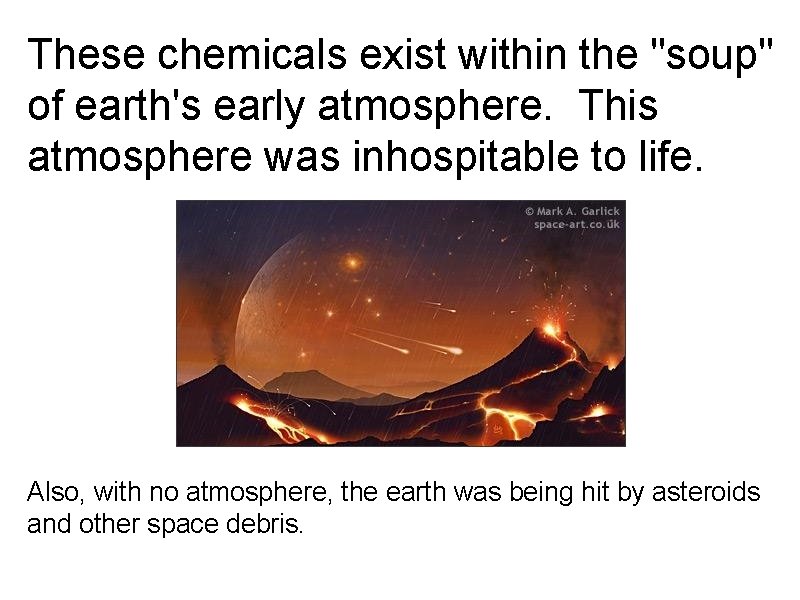
These chemicals exist within the "soup" of earth's early atmosphere. This atmosphere was inhospitable to life. Also, with no atmosphere, the earth was being hit by asteroids and other space debris.
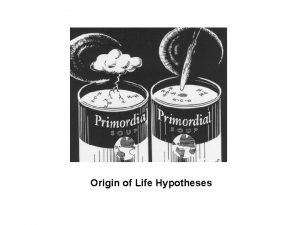
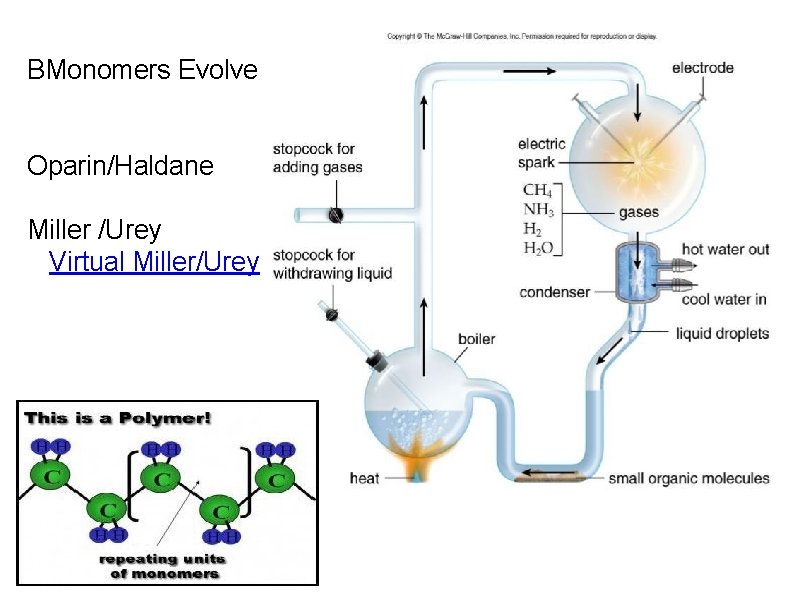
BMonomers Evolve Oparin/Haldane Miller /Urey Virtual Miller/Urey
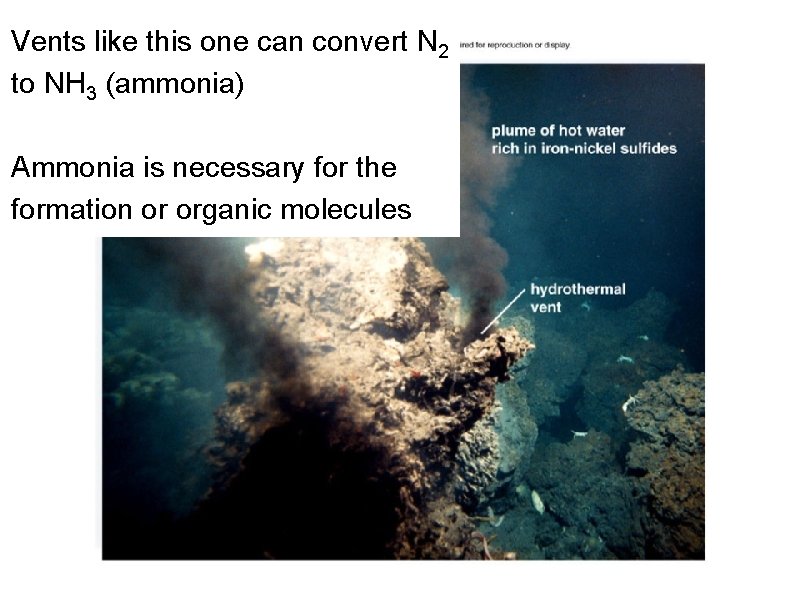
Vents like this one can convert N 2 to NH 3 (ammonia) Ammonia is necessary for the formation or organic molecules
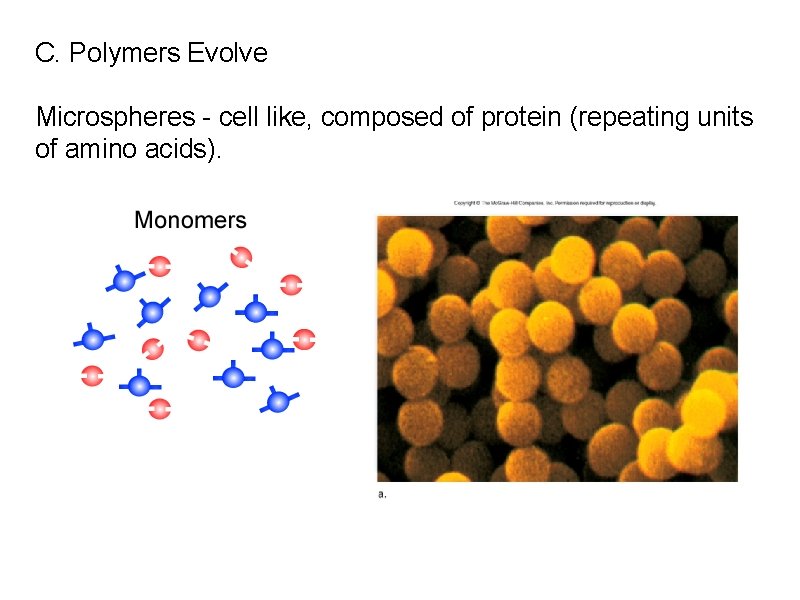
C. Polymers Evolve Microspheres - cell like, composed of protein (repeating units of amino acids).
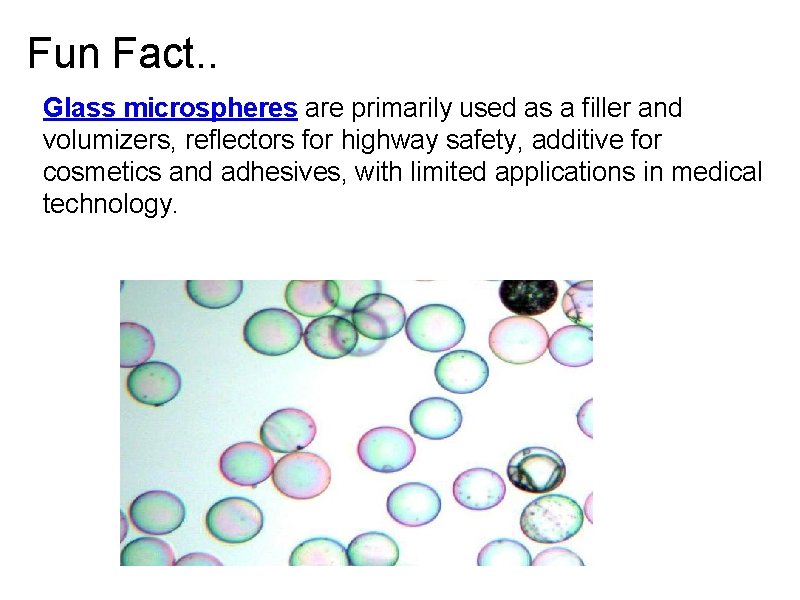
Fun Fact. . Glass microspheres are primarily used as a filler and volumizers, reflectors for highway safety, additive for cosmetics and adhesives, with limited applications in medical technology.
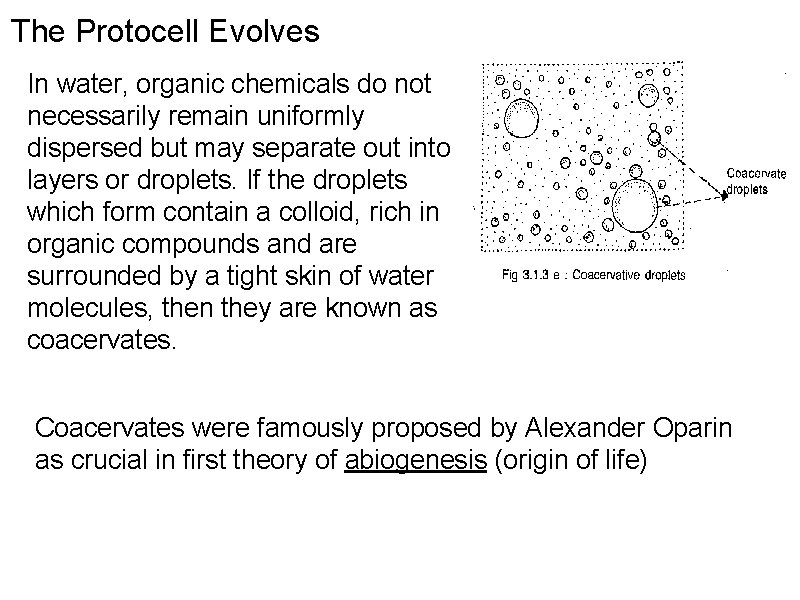
The Protocell Evolves In water, organic chemicals do not necessarily remain uniformly dispersed but may separate out into layers or droplets. If the droplets which form contain a colloid, rich in organic compounds and are surrounded by a tight skin of water molecules, then they are known as coacervates. Coacervates were famously proposed by Alexander Oparin as crucial in first theory of abiogenesis (origin of life)
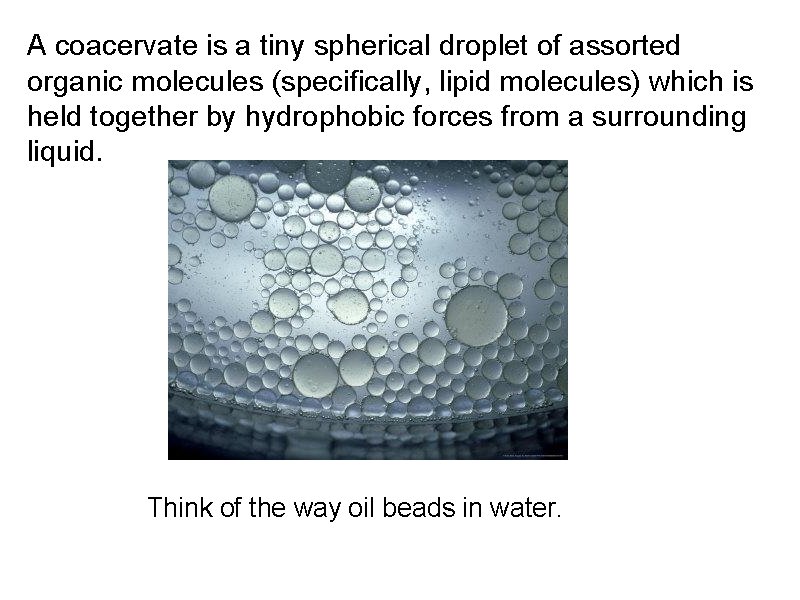
A coacervate is a tiny spherical droplet of assorted organic molecules (specifically, lipid molecules) which is held together by hydrophobic forces from a surrounding liquid. Think of the way oil beads in water.
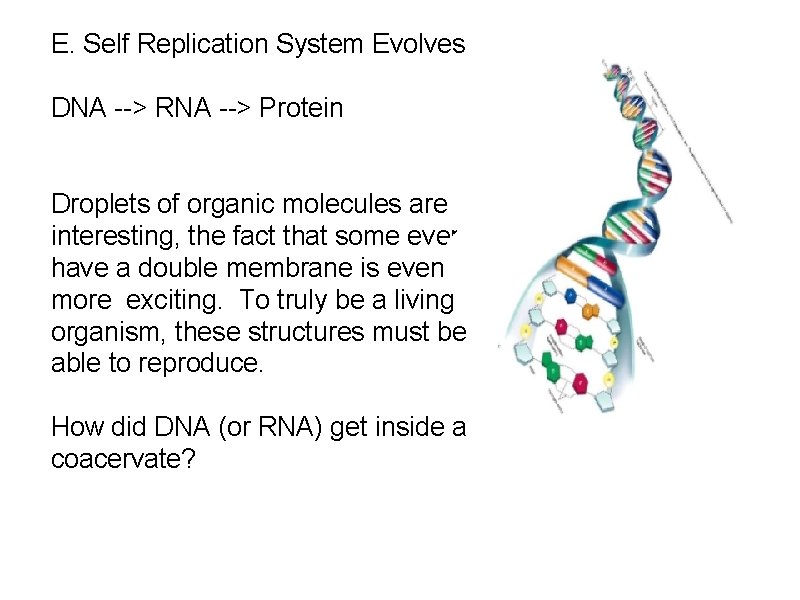
E. Self Replication System Evolves DNA --> RNA --> Protein Droplets of organic molecules are interesting, the fact that some even have a double membrane is even more exciting. To truly be a living organism, these structures must be able to reproduce. How did DNA (or RNA) get inside a coacervate?
Hypotheses for Self Replicating Systems 1. RNA - First Hypothesis - the first genes were RNA, which was used as a template to make DNA 2. Protein - First Hypothesis - enzymes came first as they were needed to drive the synthesis of DNA 3. Polypeptide and RNA evolved simultaneously - this hypothesis eliminates the "chicken and egg" question.
Once the protocell was capable of reproduction, it became a true cell
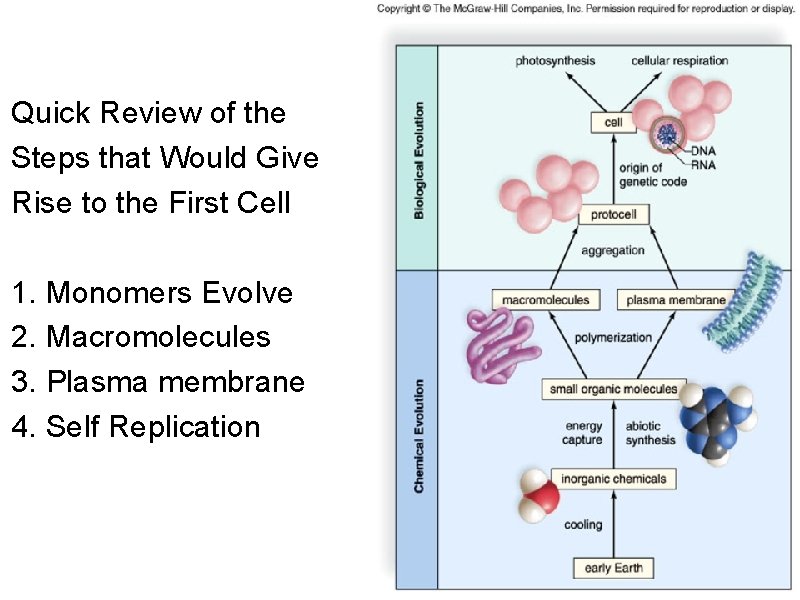
Quick Review of the Steps that Would Give Rise to the First Cell 1. Monomers Evolve 2. Macromolecules 3. Plasma membrane 4. Self Replication
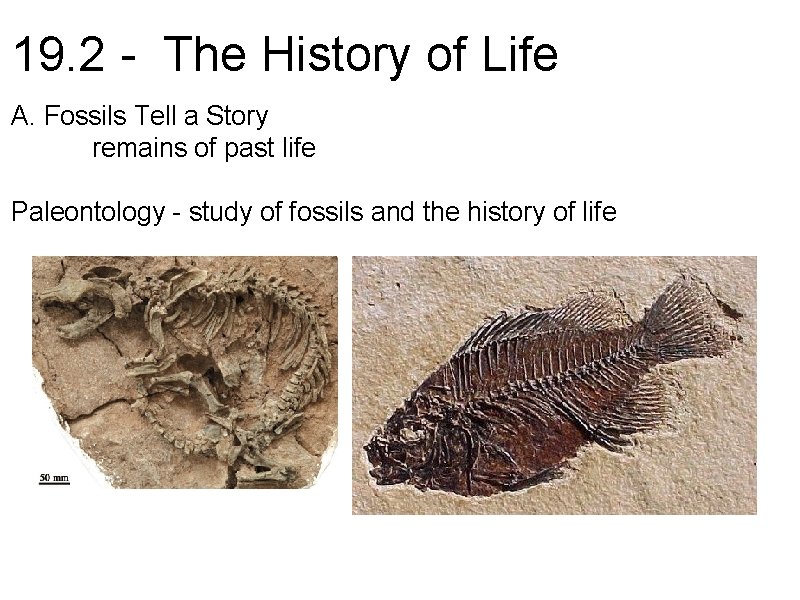
19. 2 - The History of Life A. Fossils Tell a Story remains of past life Paleontology - study of fossils and the history of life
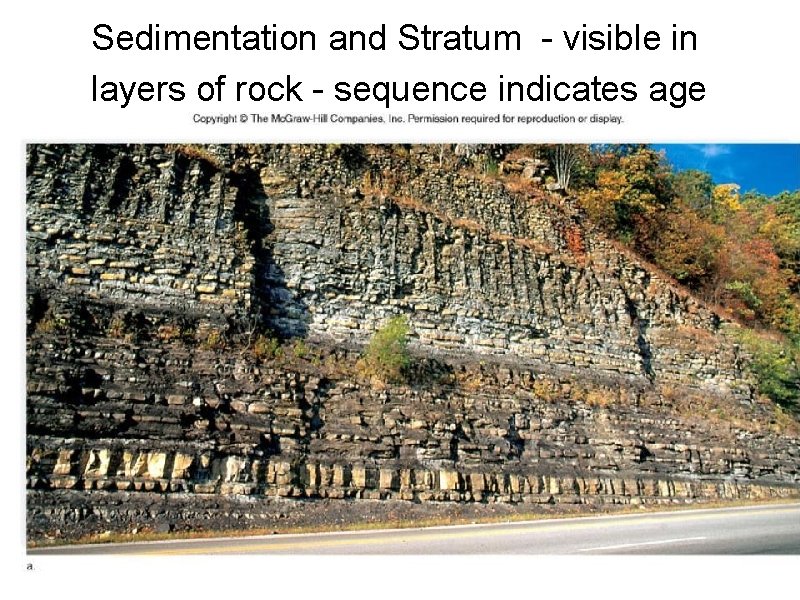
Sedimentation and Stratum - visible in layers of rock - sequence indicates age
AP Biology 2010 Fossil Project
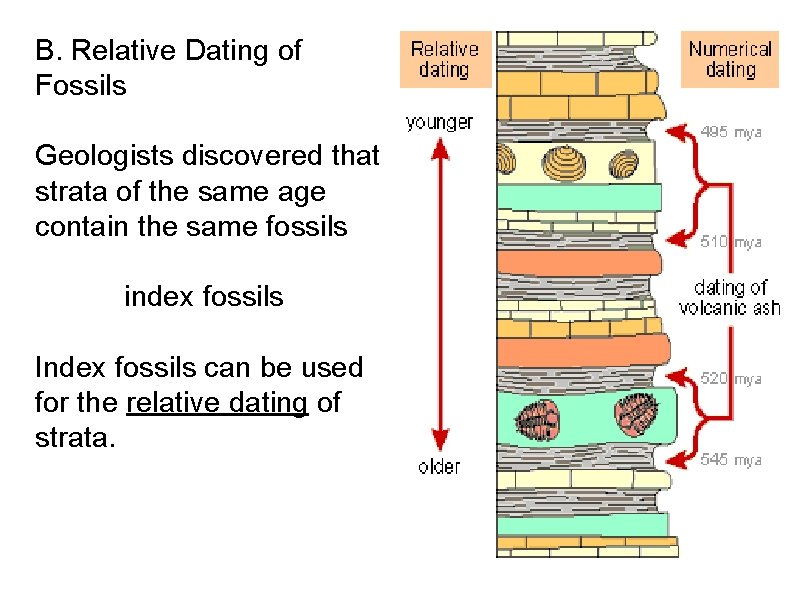
B. Relative Dating of Fossils Geologists discovered that strata of the same age contain the same fossils index fossils Index fossils can be used for the relative dating of strata.
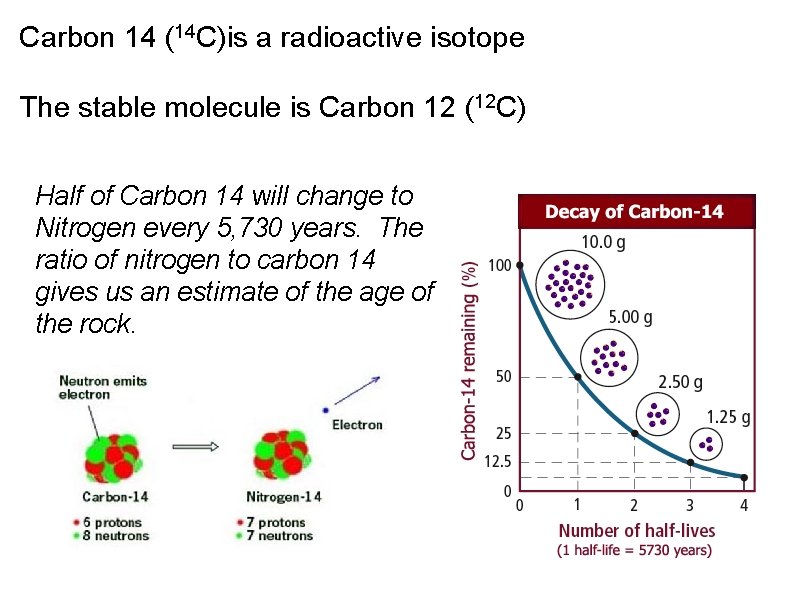
Absolute Dating of Fossils 1. Absolute dating relies on radioactive dating to determine the actual age of fossils. - also called numerical dating 2. Radioactive isotopes have a half-life, the time it takes for half of a radioactive isotope to change into a stable element. M&M Activity on Half Life
Another explanation of why carbon is used to estimate time. Ratios of carbon and nitrogen in fossils give a good estimate of how long something has been dead.
Carbon 14 (14 C)is a radioactive isotope The stable molecule is Carbon 12 (12 C) Half of Carbon 14 will change to Nitrogen every 5, 730 years. The ratio of nitrogen to carbon 14 gives us an estimate of the age of the rock.
EARTH’s TIMELINE
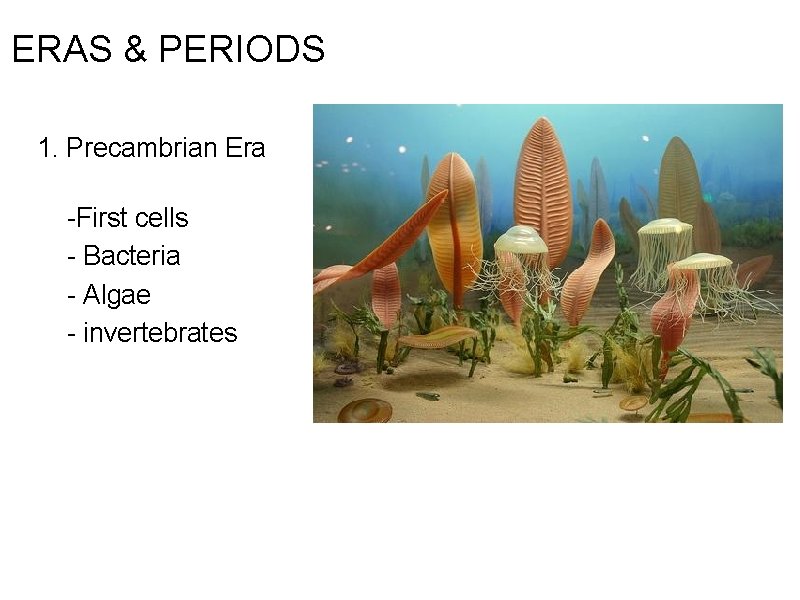
ERAS & PERIODS 1. Precambrian Era -First cells - Bacteria - Algae - invertebrates
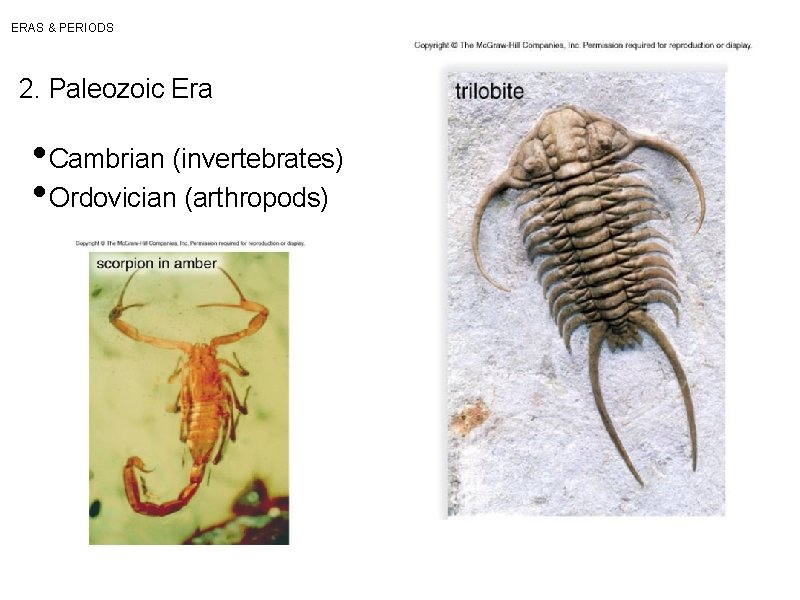
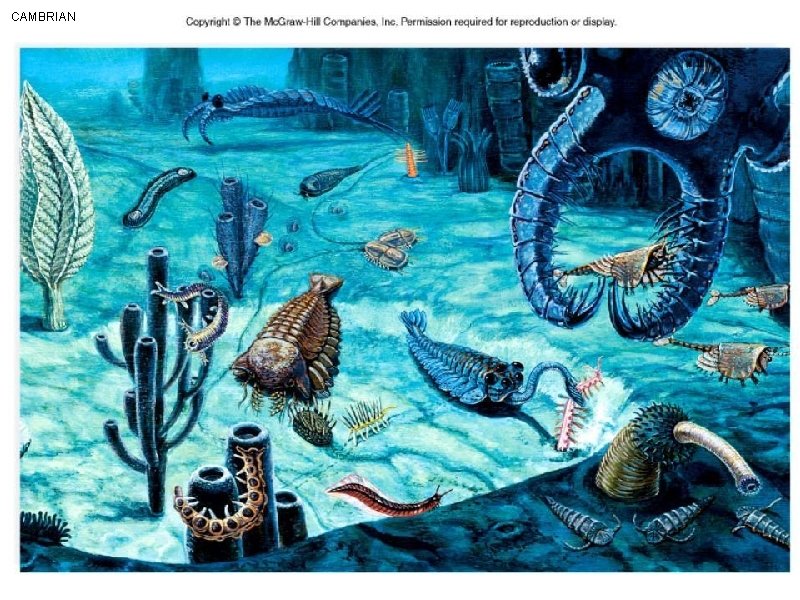
ERAS & PERIODS 2. Paleozoic Era • Cambrian (invertebrates) • Ordovician (arthropods)
CAMBRIAN
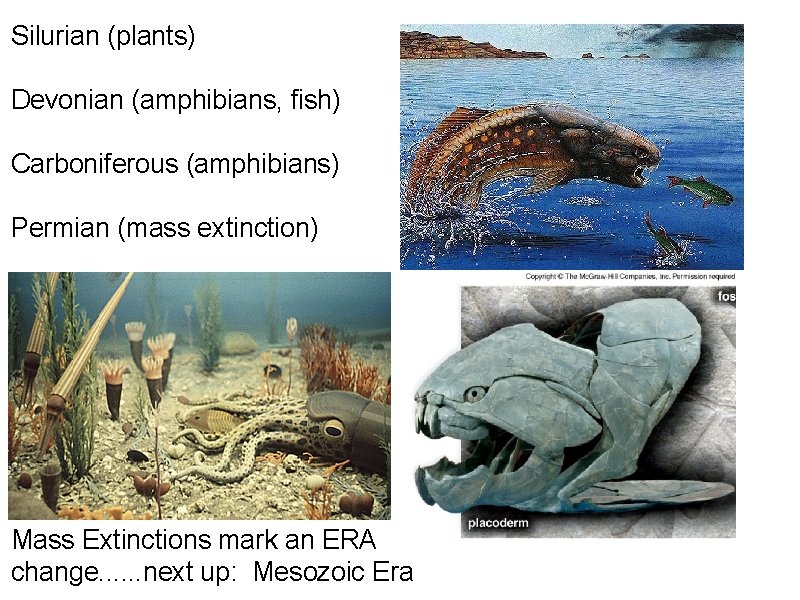
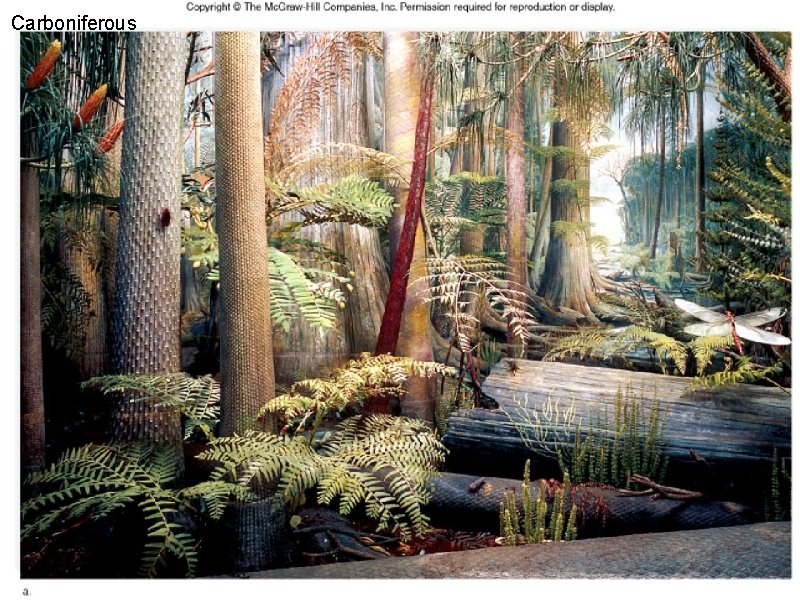
Silurian (plants) Devonian (amphibians, fish) Carboniferous (amphibians) Permian (mass extinction) Mass Extinctions mark an ERA change. . . next up: Mesozoic Era
Carboniferous
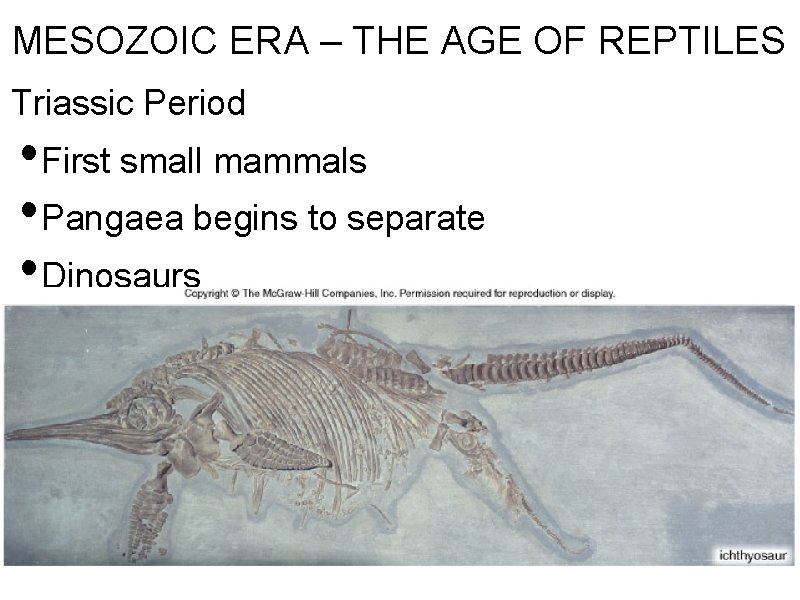
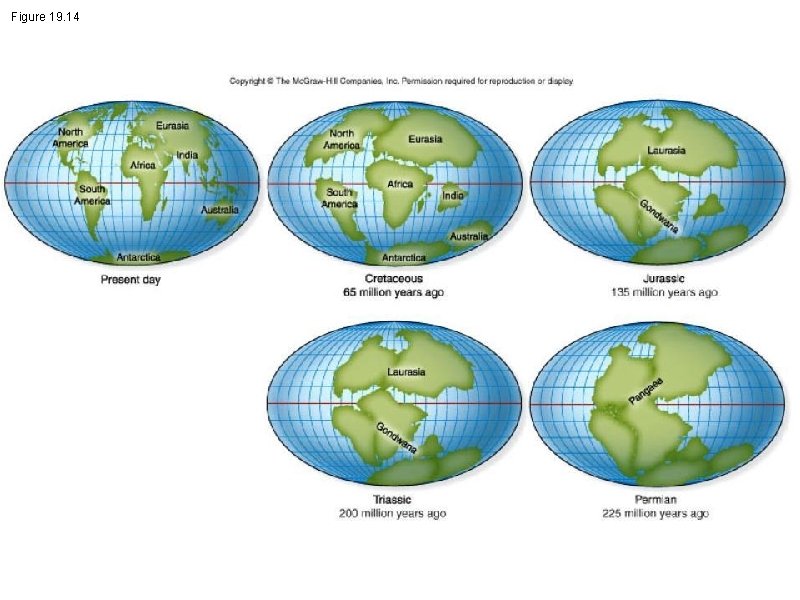
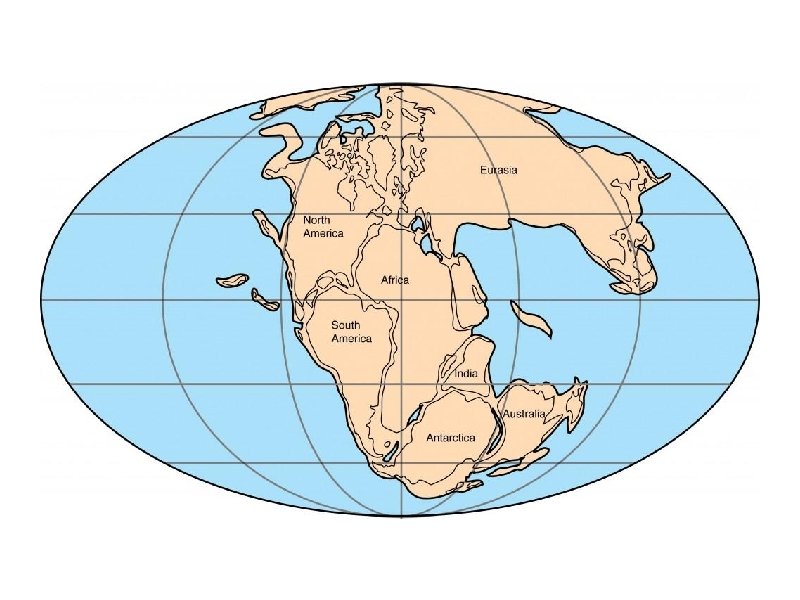
MESOZOIC ERA – THE AGE OF REPTILES Triassic Period • First small mammals • Pangaea begins to separate • Dinosaurs
Figure 19. 14
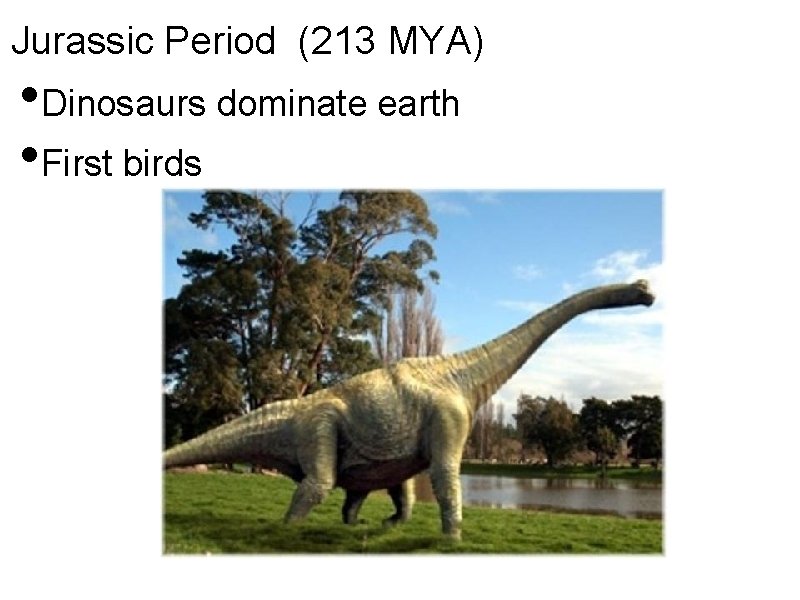
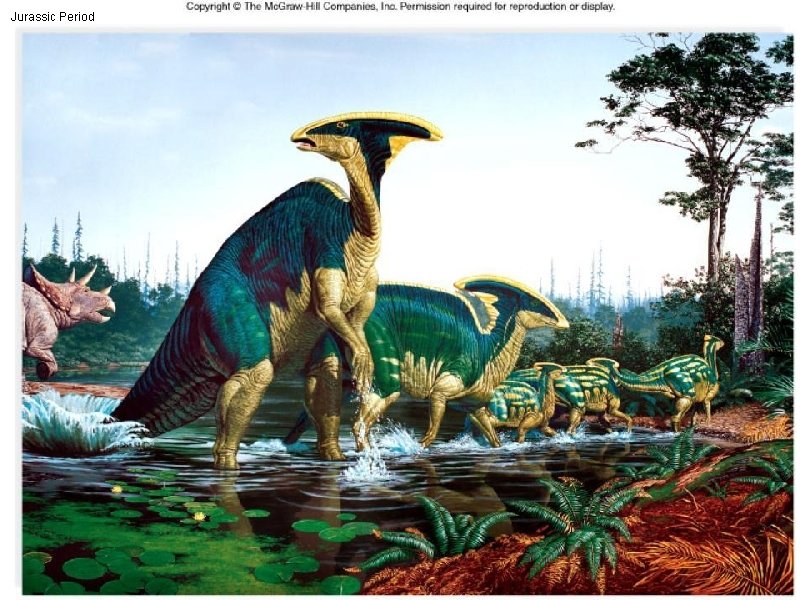
Jurassic Period (213 MYA) • Dinosaurs dominate earth • First birds
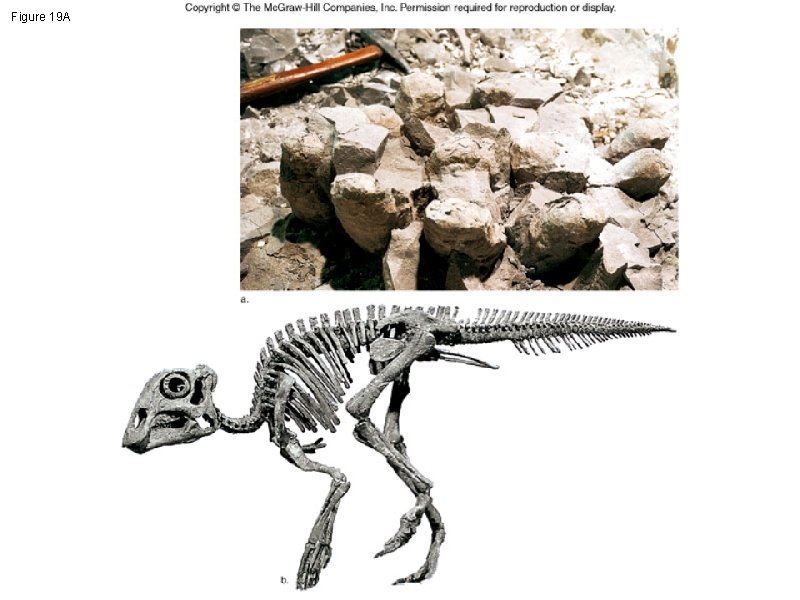
Figure 19 A
Jurassic Period
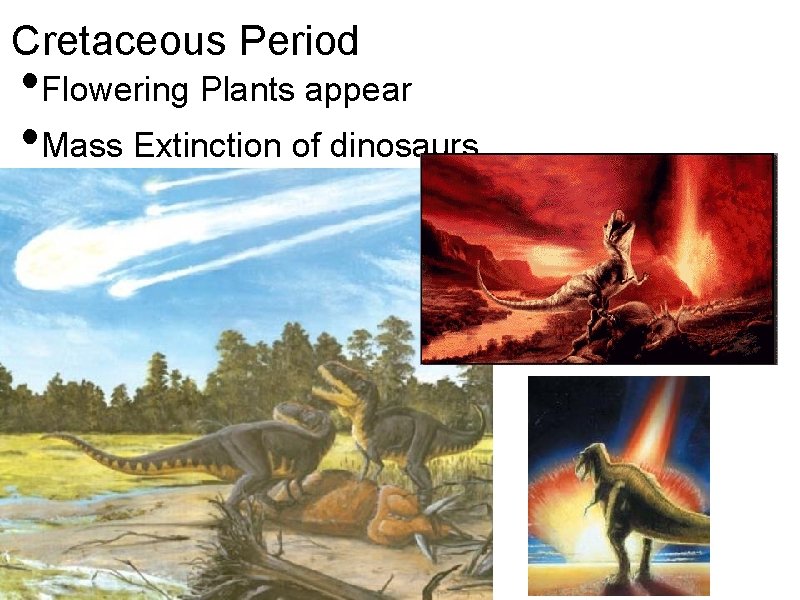
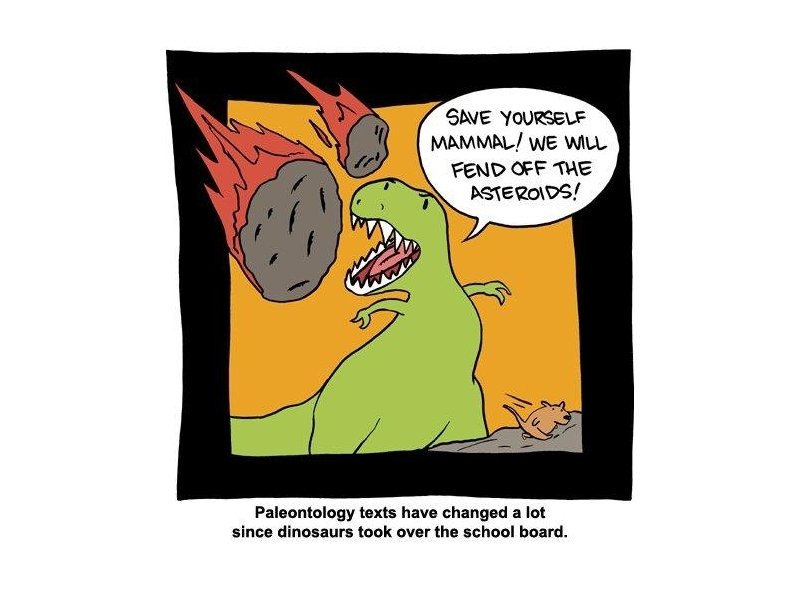
Cretaceous Period • Flowering Plants appear • Mass Extinction of dinosaurs
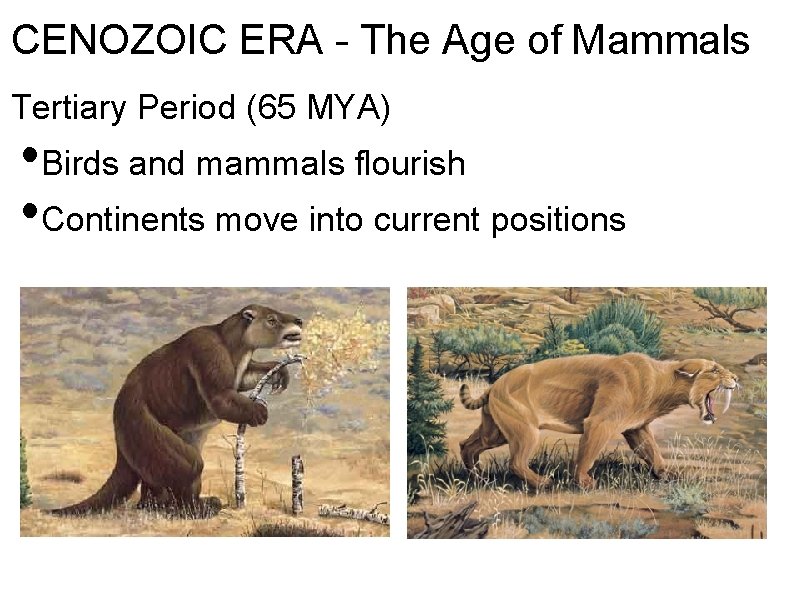
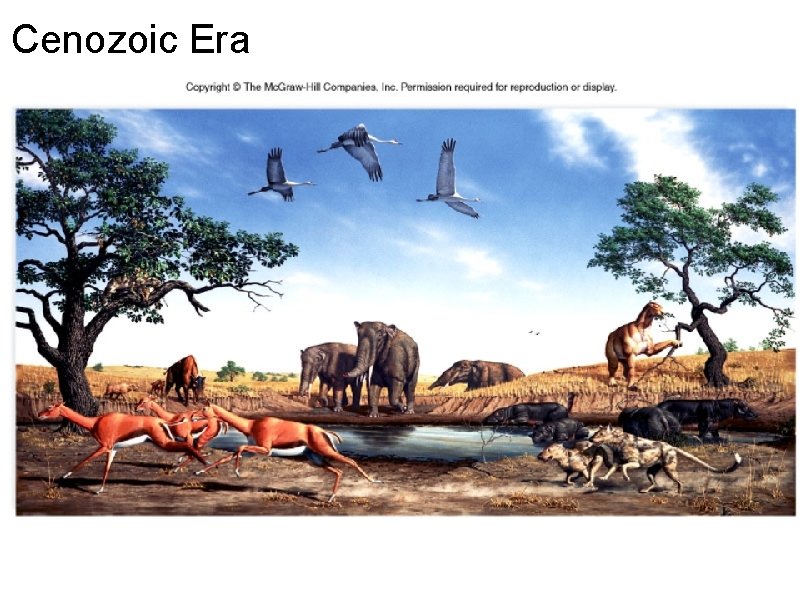
CENOZOIC ERA - The Age of Mammals Tertiary Period (65 MYA) • Birds and mammals flourish • Continents move into current positions
Cenozoic Era
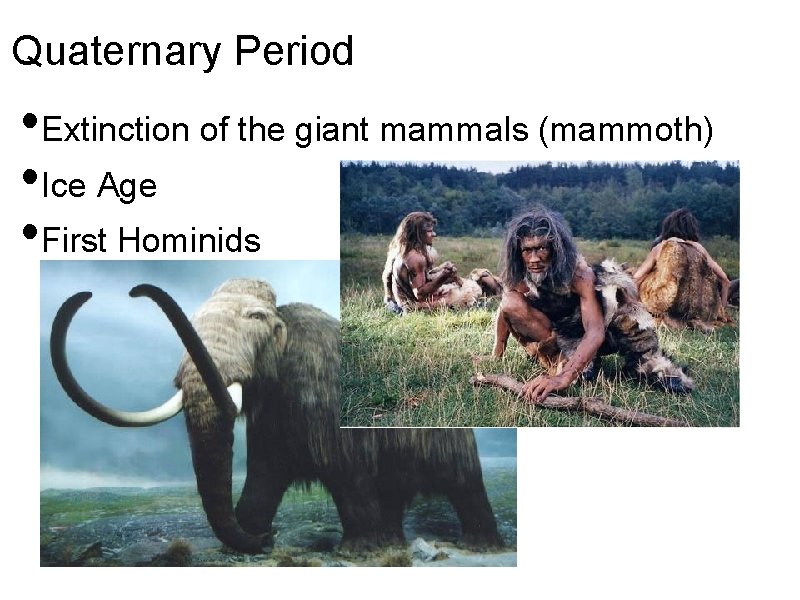
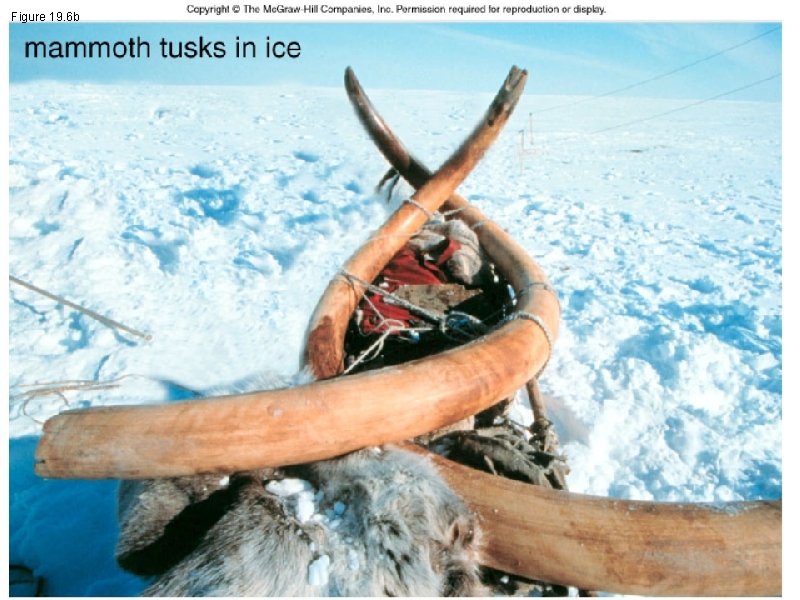
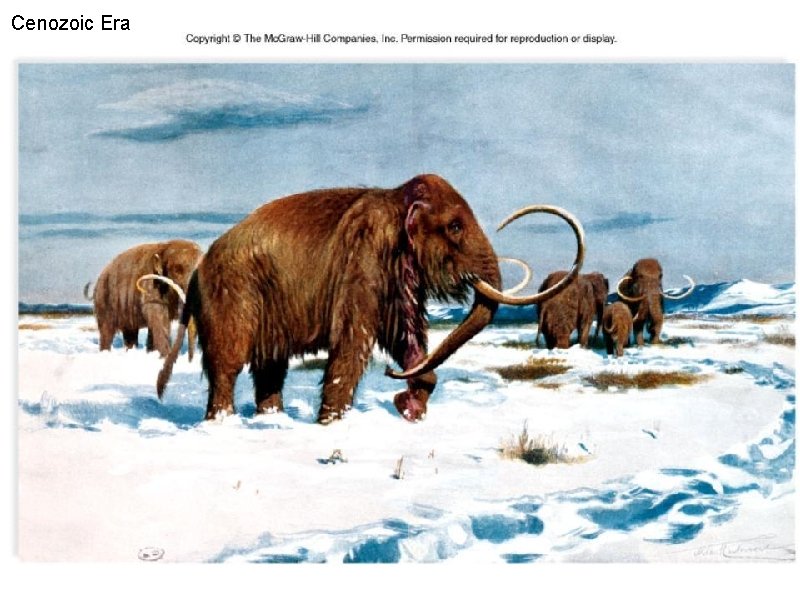
Quaternary Period • Extinction of the giant mammals (mammoth) • Ice Age • First Hominids
Figure 19. 6 b
Cenozoic Era
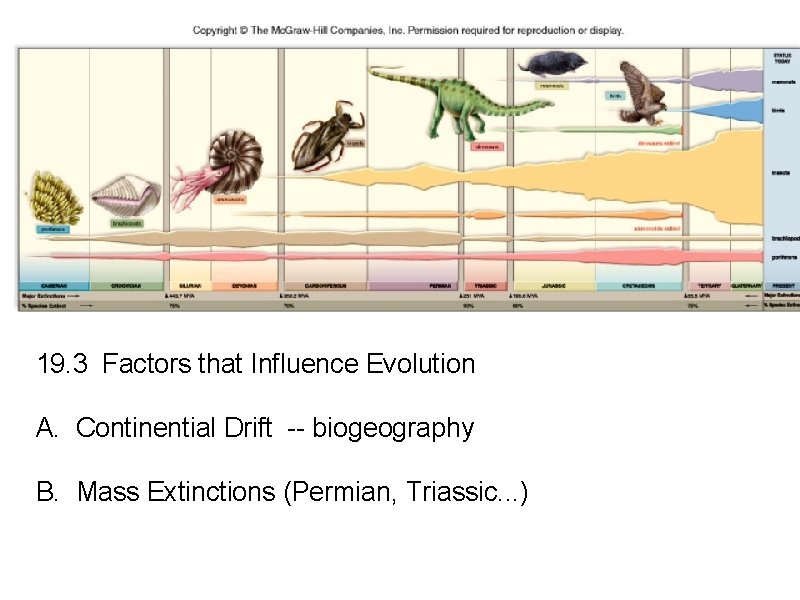
19. 3 Factors that Influence Evolution A. Continential Drift -- biogeography B. Mass Extinctions (Permian, Triassic. . . )
Related Videos Youtube - The Cambrian Explosion (13 Min) Nova Science Now - Permian Mass Extinction PBS - Extinction of the Dinosaurs History - Armageddon: What Killed the Dinosaurs Fox News - What Killed the Dinosaurs (3. 15 min)