
Chapter 26 Properties of Light Origin and Nature

- Slides: 48
Chapter 26 Properties of Light
Origin and Nature of Light originates with accelerated motion of electrons. It is an electromagnetic wave phenomenon.
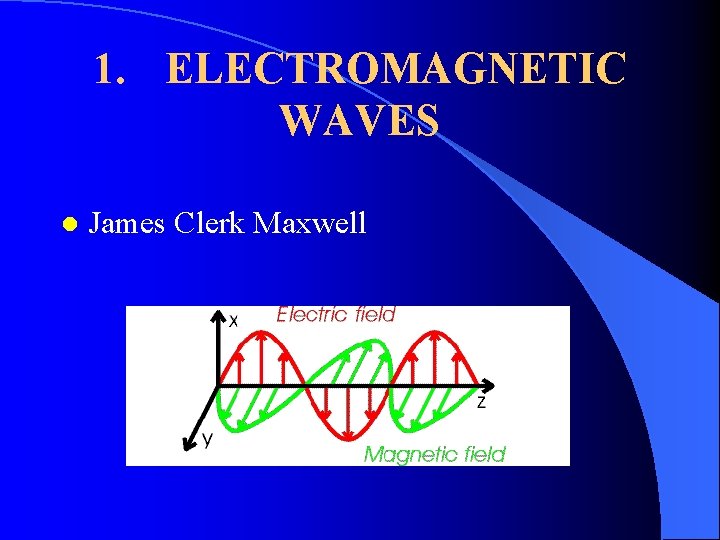
1. ELECTROMAGNETIC WAVES l James Clerk Maxwell
Electromagnetic Wave Velocity l The speed of light (E&M waves) is called c. l c = 300, 000 km/s = 186, 000 mi/s
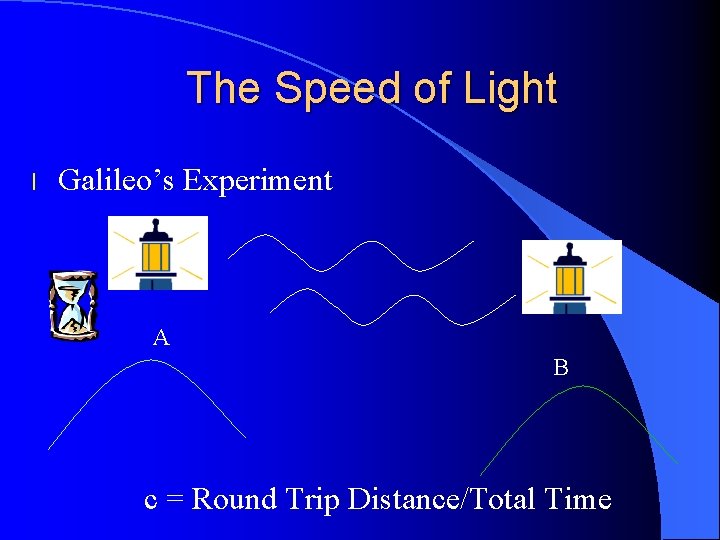
The Speed of Light l Galileo’s Experiment A B c = Round Trip Distance/Total Time
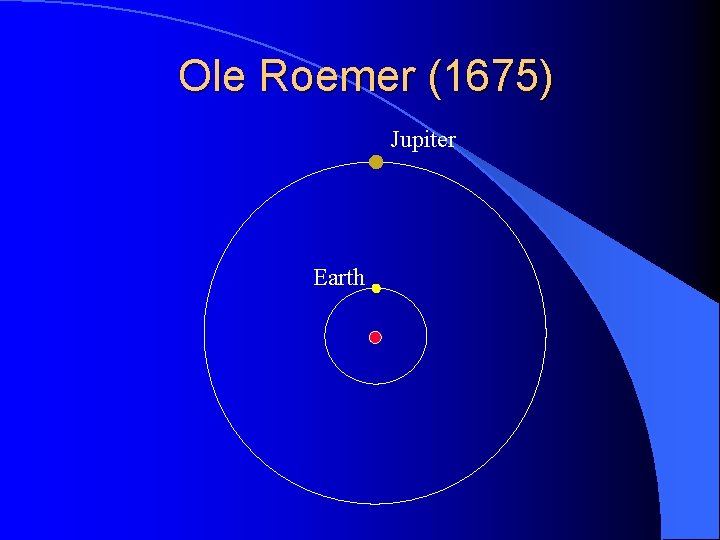
Ole Roemer (1675) Jupiter Earth
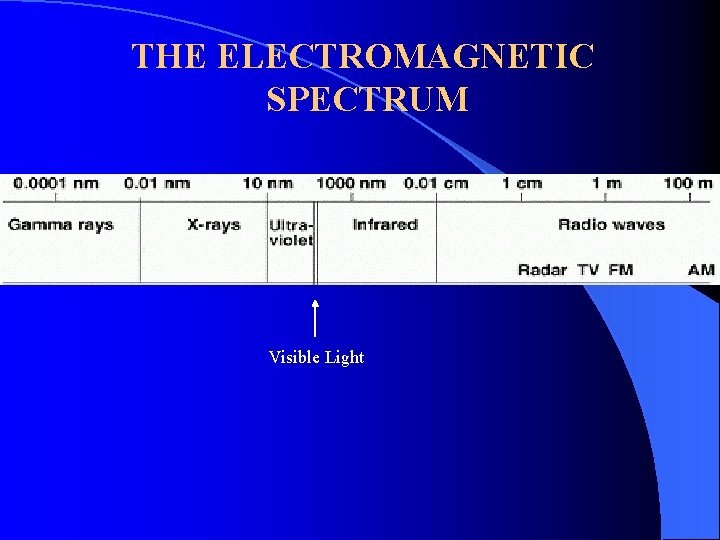
THE ELECTROMAGNETIC SPECTRUM Visible Light
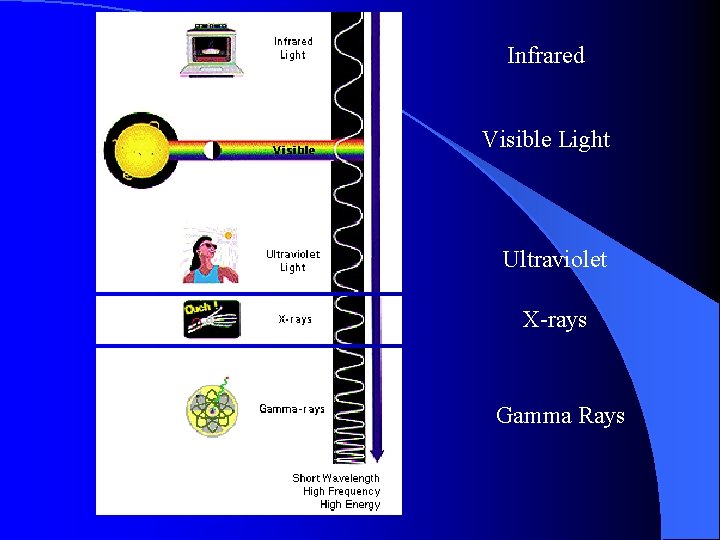
Infrared Visible Light Ultraviolet X-rays Gamma Rays
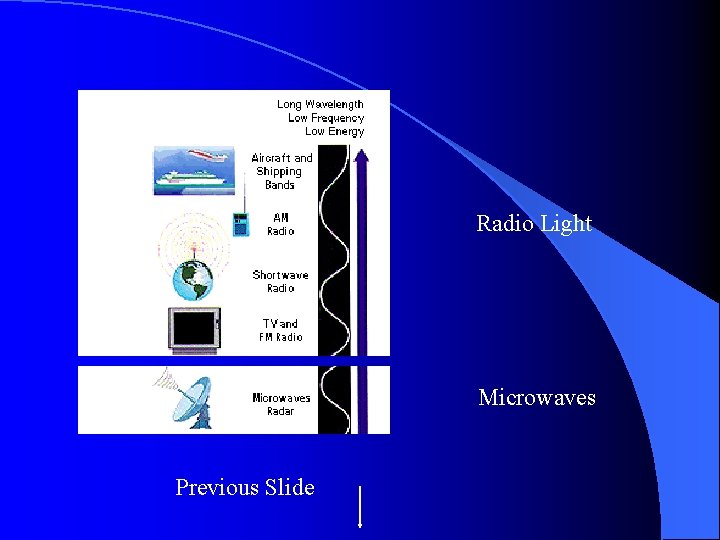
Radio Light Microwaves Previous Slide
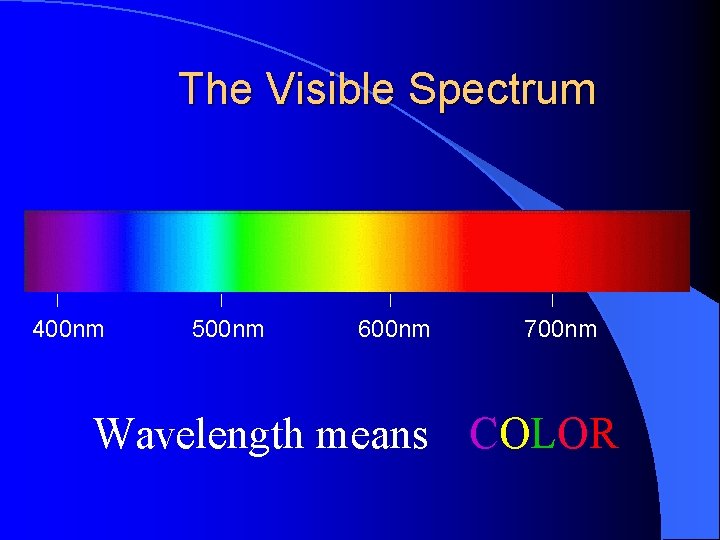
The Visible Spectrum 400 nm 500 nm 600 nm 700 nm Wavelength means COLOR
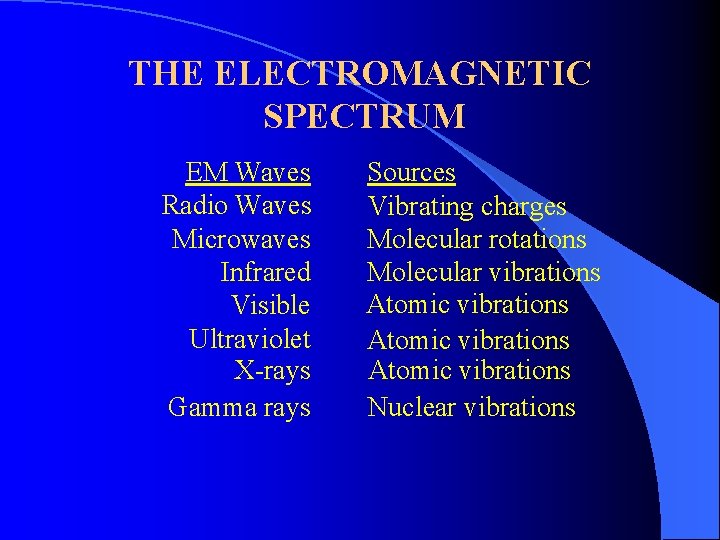
THE ELECTROMAGNETIC SPECTRUM EM Waves Radio Waves Microwaves Infrared Visible Ultraviolet X-rays Gamma rays Sources Vibrating charges Molecular rotations Molecular vibrations Atomic vibrations Nuclear vibrations
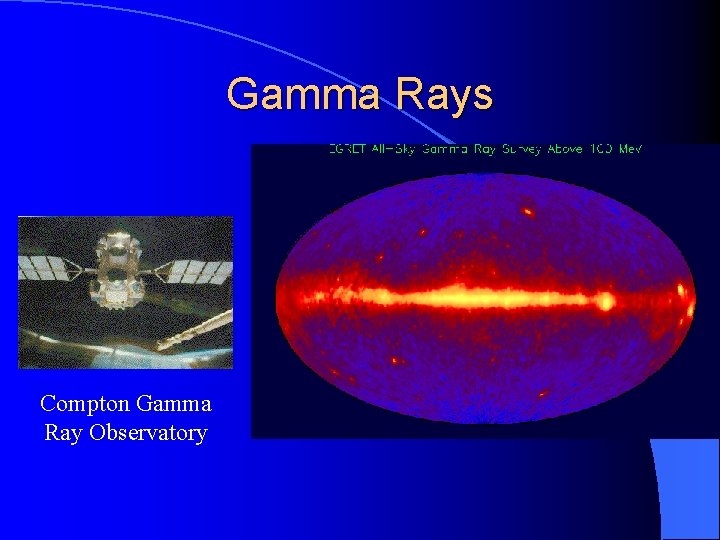
Gamma Rays Compton Gamma Ray Observatory
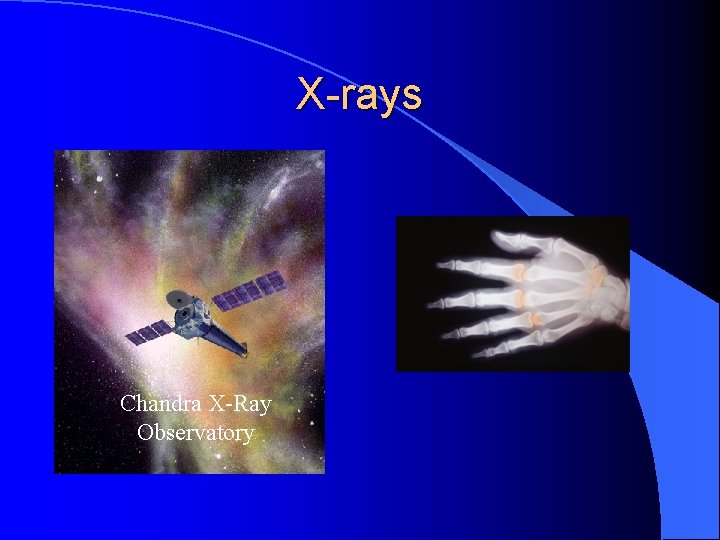
X-rays Chandra X-Ray Observatory
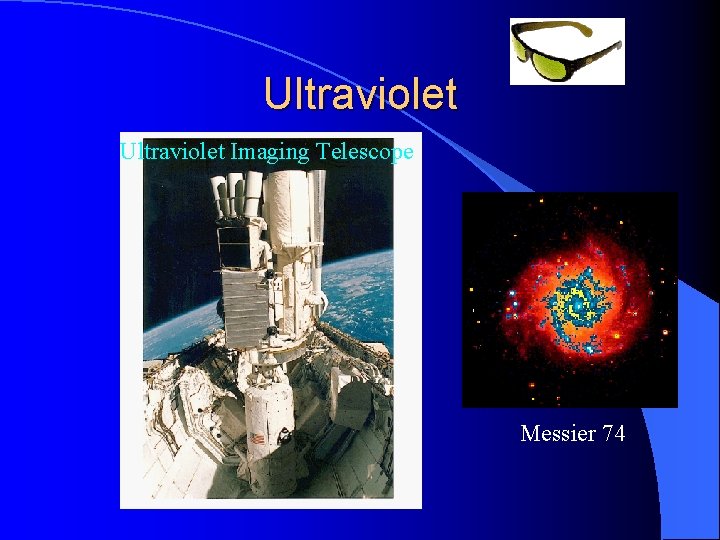
Ultraviolet Imaging Telescope Messier 74
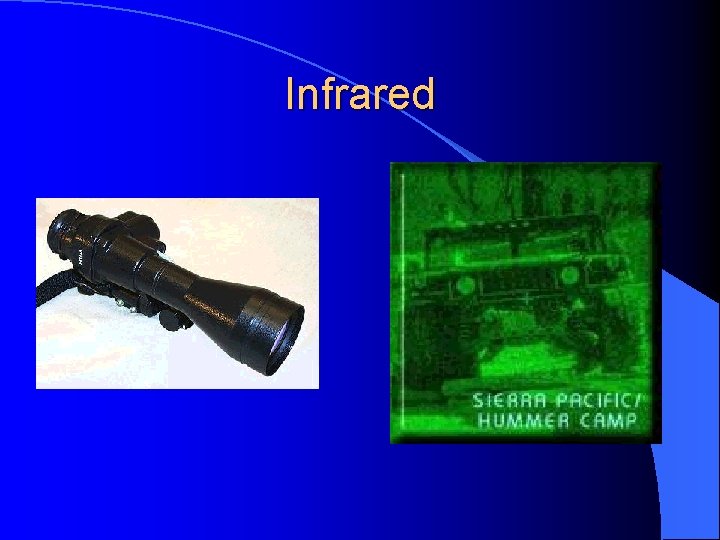
Infrared
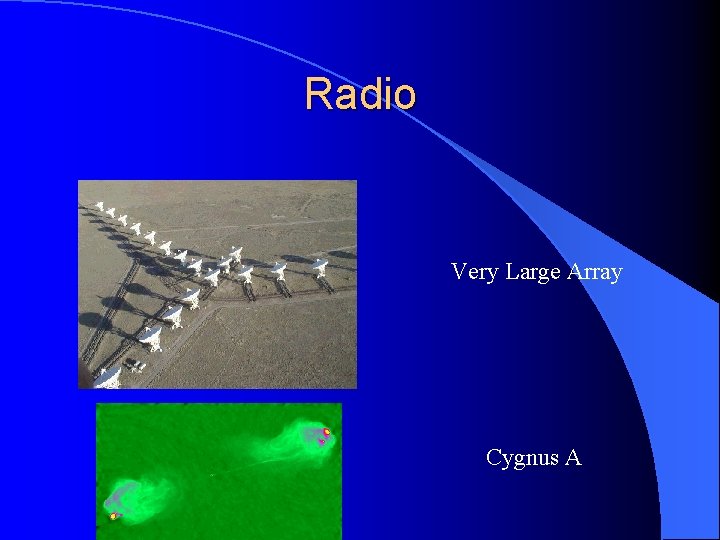
Radio Very Large Array Cygnus A
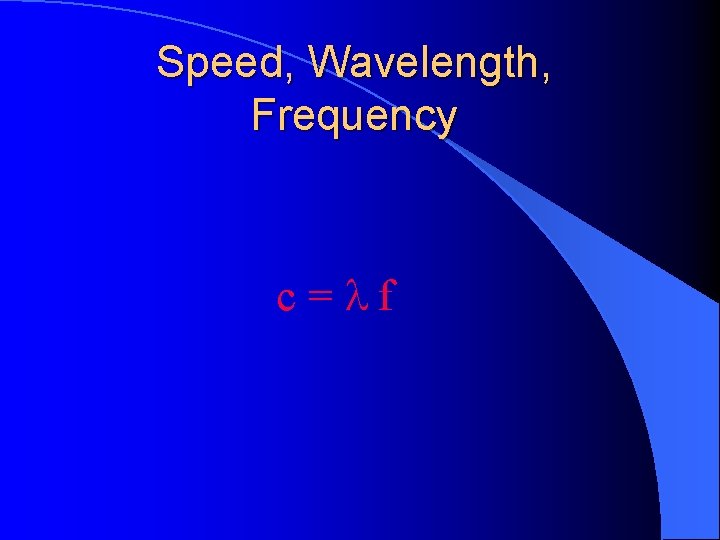
Speed, Wavelength, Frequency c = f
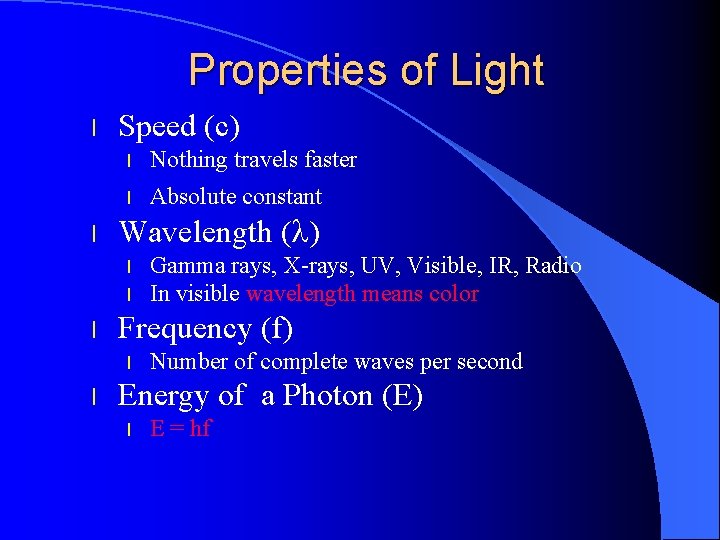
Properties of Light l l Speed (c) l Nothing travels faster l Absolute constant Wavelength ( ) l l l Frequency (f) l l Gamma rays, X-rays, UV, Visible, IR, Radio In visible wavelength means color Number of complete waves per second Energy of a Photon (E) l E = hf
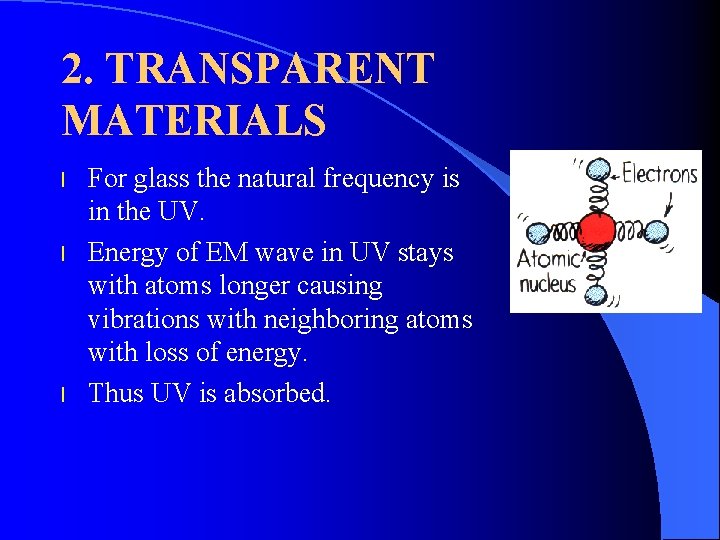
2. TRANSPARENT MATERIALS l l l For glass the natural frequency is in the UV. Energy of EM wave in UV stays with atoms longer causing vibrations with neighboring atoms with loss of energy. Thus UV is absorbed.
For visible light the electrons in the glass are forced into vibration, but at smaller amplitude. l The atom holds the energy for less time, with less chance of collision with neighboring atoms, and less energy transformed to heat. l All visible gets through clear glass. l
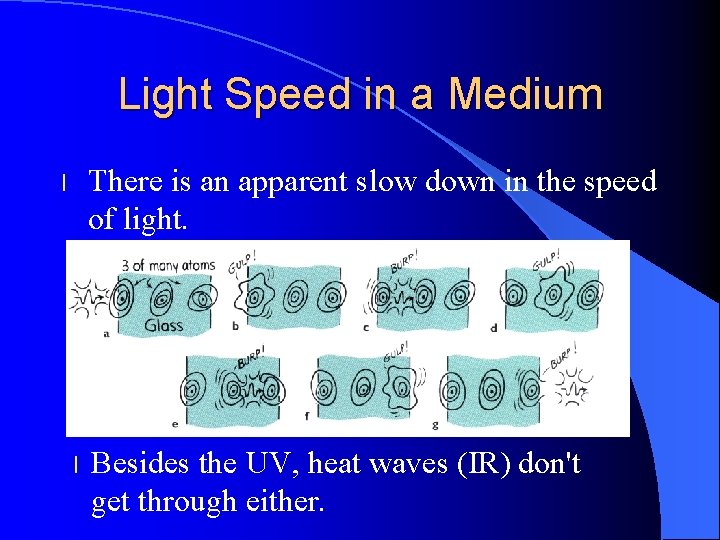
Light Speed in a Medium There is an apparent slow down in the speed of light. l l Besides the UV, heat waves (IR) don't get through either.
TRANSLUCENT MATERIALS l Frosted glasses are good examples of translucent materials. l They scatter light on transmission. l You can’t read or identify objects from light passing through translucent materials.
3. OPAQUE MATERIALS Most things around us are opaque. l Metals are shiny and reflect. l – Because of free electrons - they don’t pass on energy to atoms. Our atmosphere is transparent in visible and part of IR. l It's good that UV is absorbed in our UV causes sunburns. atmosphere. l
Demo - Radiometer and Filters
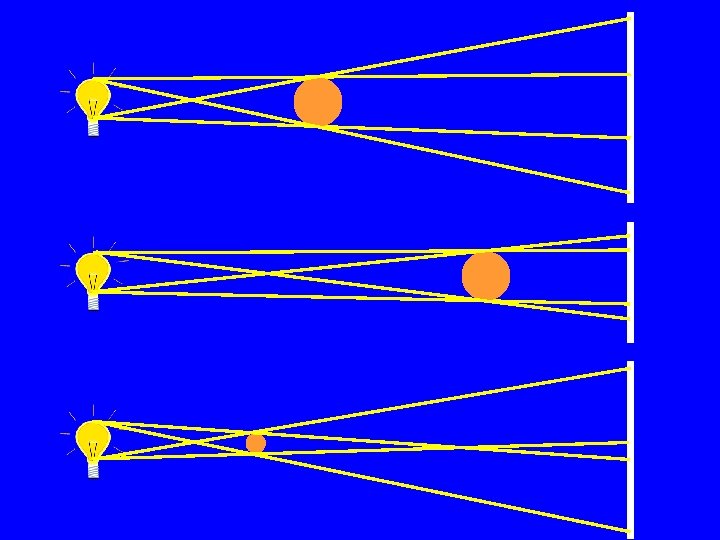
4. SHADOWS When light is blocked, shadows are created. l The kind of shadow depends on the source of light and the relative positions of the light source, object, and shadow of the object. l For instance, a total shadow (umbra) occurs when an object is illuminated by a point light source. l
Extended light sources cause shadows of objects to be partial shadows (penumbras). l The shadows may or may not have umbras. l A penumbra will be small if the light source is far from the object and its shadow. l
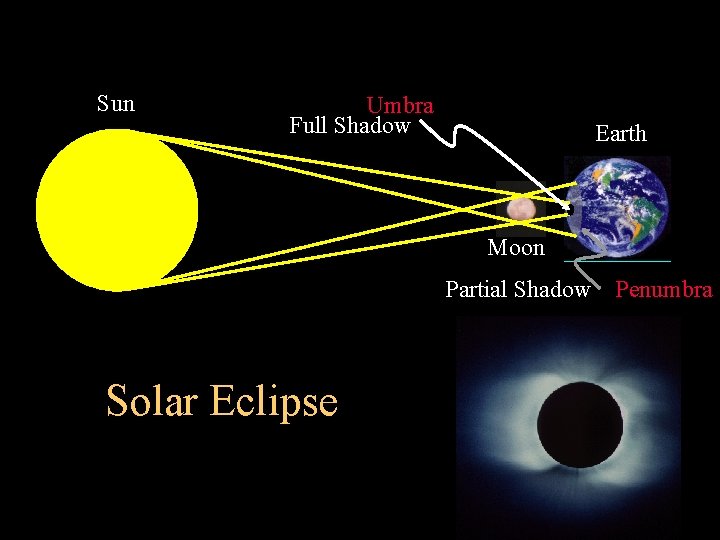
Sun Umbra Full Shadow Earth Moon Partial Shadow Solar Eclipse Penumbra
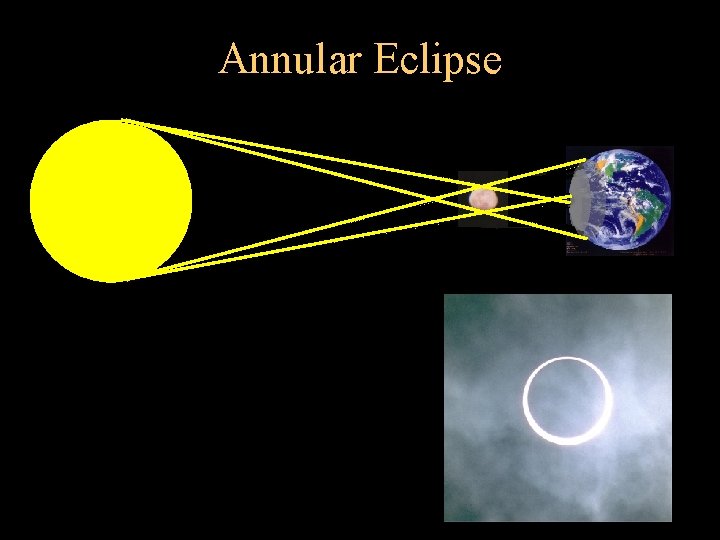
Annular Eclipse
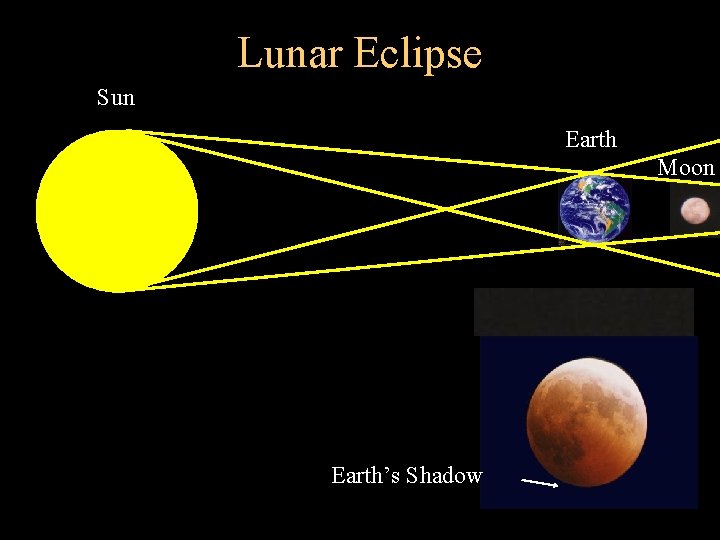
Lunar Eclipse Sun Earth Moon Earth’s Shadow
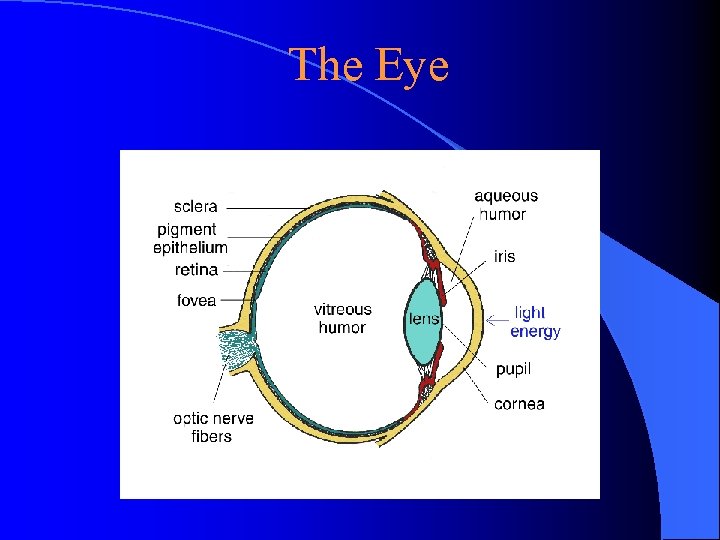
The Eye
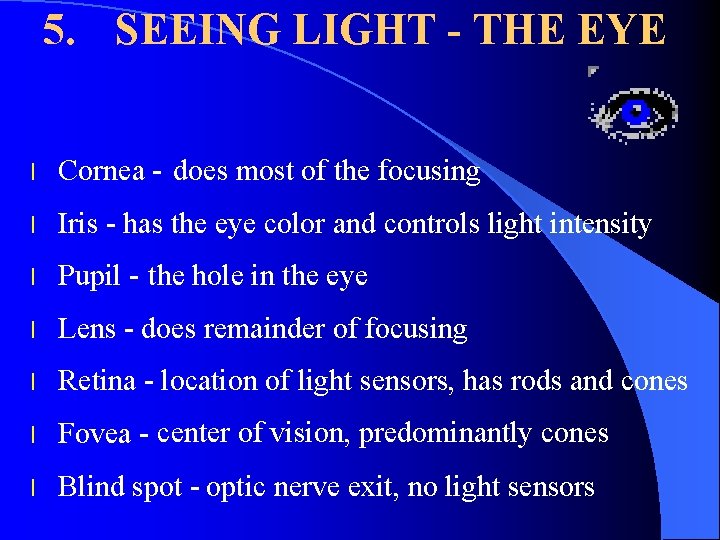
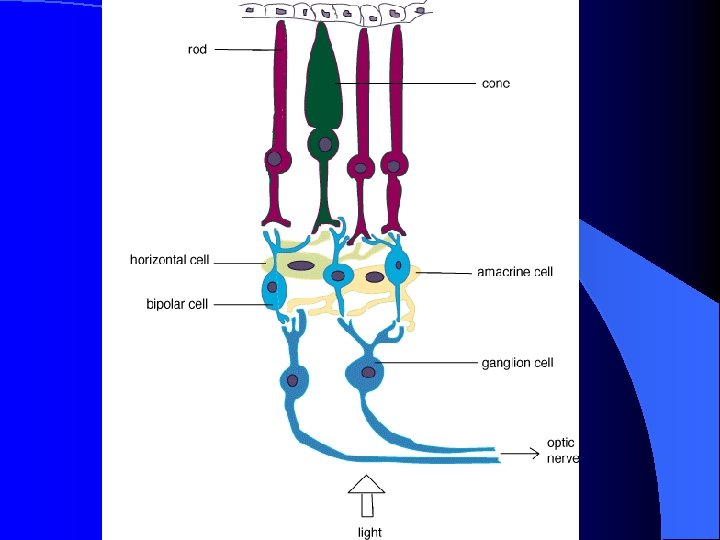
5. SEEING LIGHT - THE EYE l Cornea - does most of the focusing l Iris - has the eye color and controls light intensity l Pupil - the hole in the eye l Lens - does remainder of focusing l Retina - location of light sensors, has rods and cones l Fovea - center of vision, predominantly cones l Blind spot - optic nerve exit, no light sensors
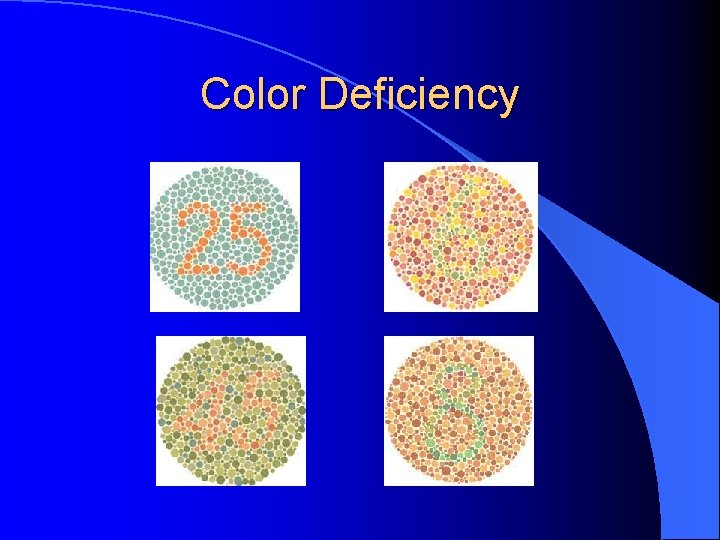
Color Deficiency
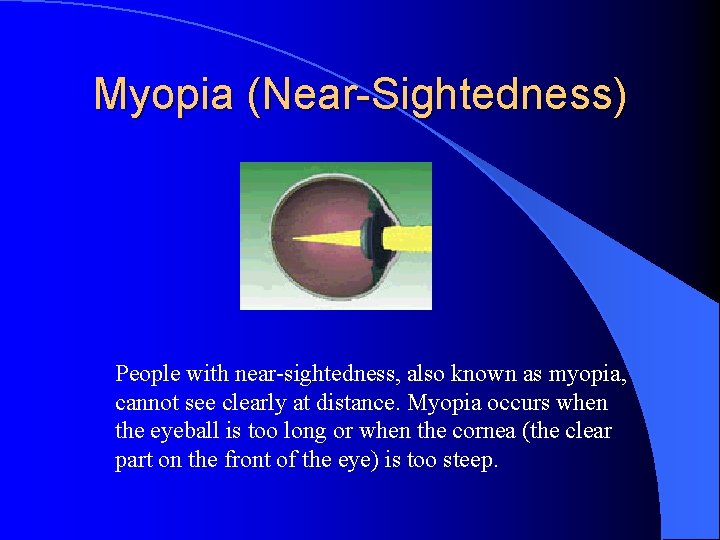
Myopia (Near-Sightedness) People with near-sightedness, also known as myopia, cannot see clearly at distance. Myopia occurs when the eyeball is too long or when the cornea (the clear part on the front of the eye) is too steep.
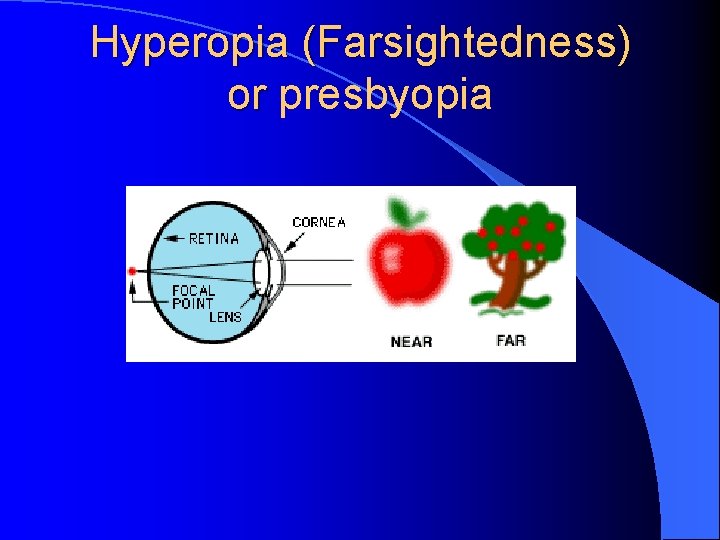
Hyperopia (Farsightedness) or presbyopia
Demo - Blind Spot (in text) l Primates and a species of ground squirrel are the only mammals that experience full color vision. l At the periphery of our vision we see l – Motions first – Colors second
l Rods are more sensitive to low light levels than cones are. l Examples: stars and twilight Demo - Turn off Room Lights l Rods see blue better. Blue will appear much brighter than red in dim light, though the red might be much brighter than the blue in bright light. l
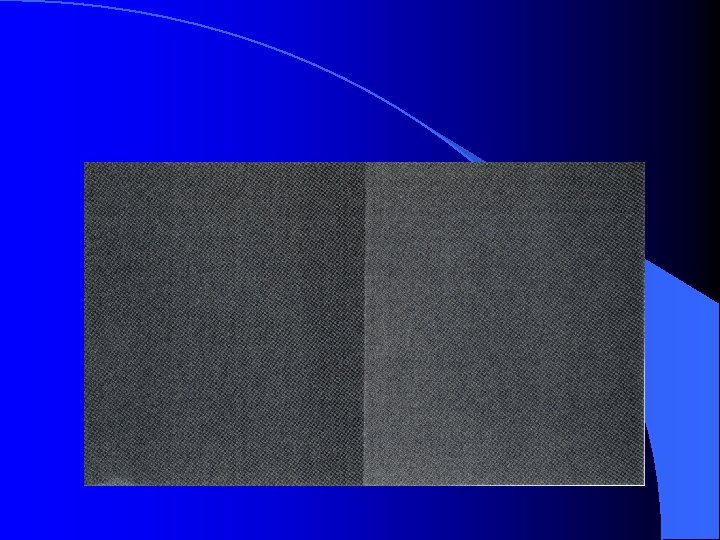
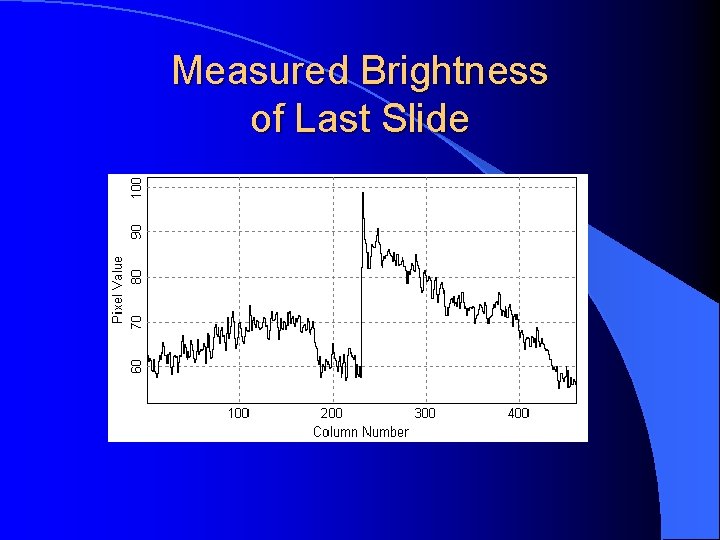
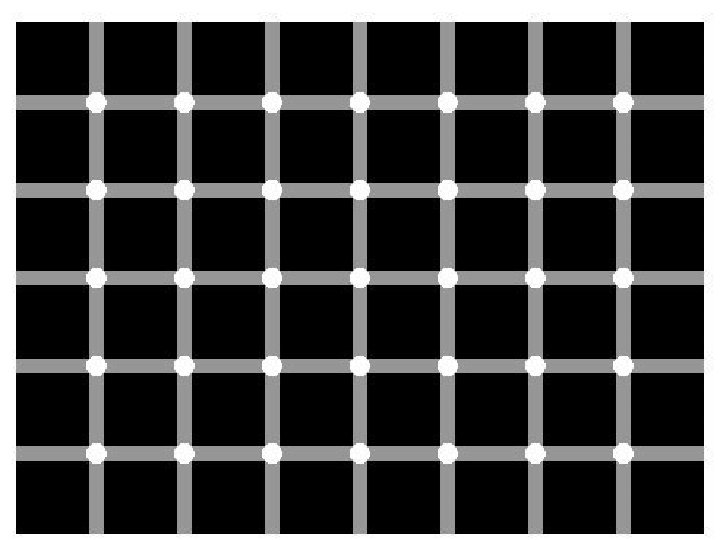
Lateral Inhibition l l We don't perceive the actual differences in brightness in fields of light and dark. We even out our visual field. This allows us to discern detail in very bright areas and in dark areas at the same time. We accentuate differences rather than similarities.
Measured Brightness of Last Slide
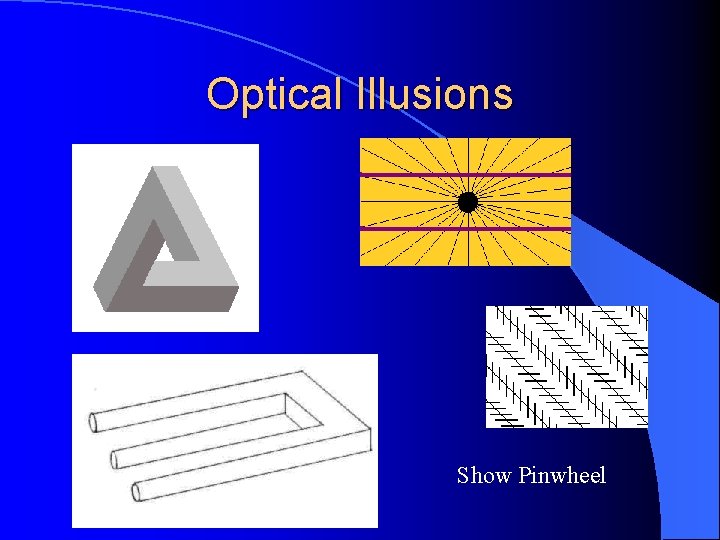
Optical Illusions Show Pinwheel
Chapter 26 Review Questions
You will observe a total eclipse of the sun when (a) you stand in the penumbra of the moon’s shadow (b) you stand in the umbra of the moon’s shadow (c) sunlight diffracts around the moon (d) sunlight reflects from the moon to the earth
Which of the following will cast a shadow that has an umbra but no penumbra? (a) the sun (b) an incandescent lamp (c) a fluorescent lamp (d) a point source of light
The speed of light (a) has never been measured (b) is about the same as that of sound (c) is infinitely fast (d) is very fast, but not infinite
What is the purpose of the pupil in an eye? (a) to adjust the focal length of the lens (b) to adjust the amount of light passing through the lens (c) to focus the image (d) to change the width of the field of view