Organising for international marketing Factors affecting organisational design
- Slides: 11
Organising for international marketing • • Factors affecting organisational design organisation by product or brand/Matrix organisations Guidelines for the organisation Factors influencing the international organisation Centralisation v decentralisation The impact of business culture Human resource implications Expatriate managers
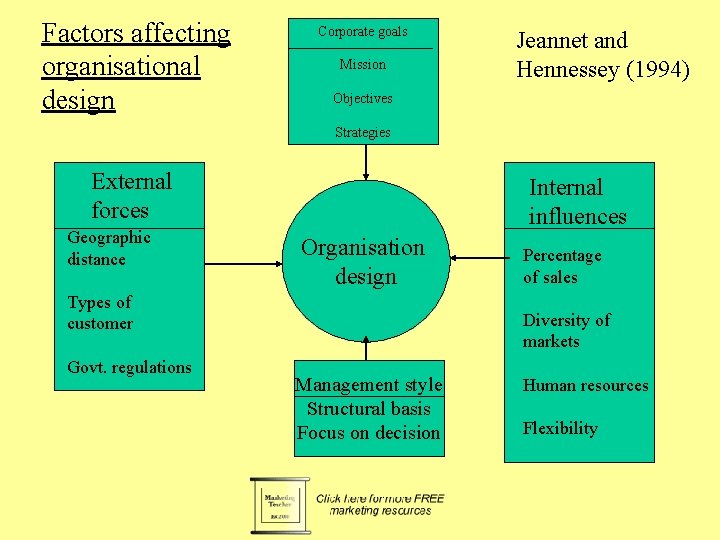
Factors affecting organisational design Corporate goals Mission Jeannet and Hennessey (1994) Objectives Strategies External forces Geographic distance Internal influences Organisation design Types of customer Govt. regulations Percentage of sales Diversity of markets Management style Structural basis Focus on decision Human resources Flexibility
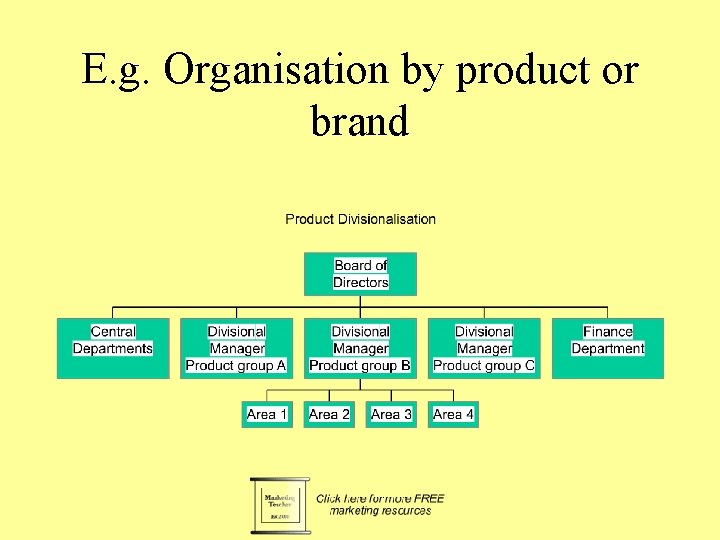
E. g. Organisation by product or brand
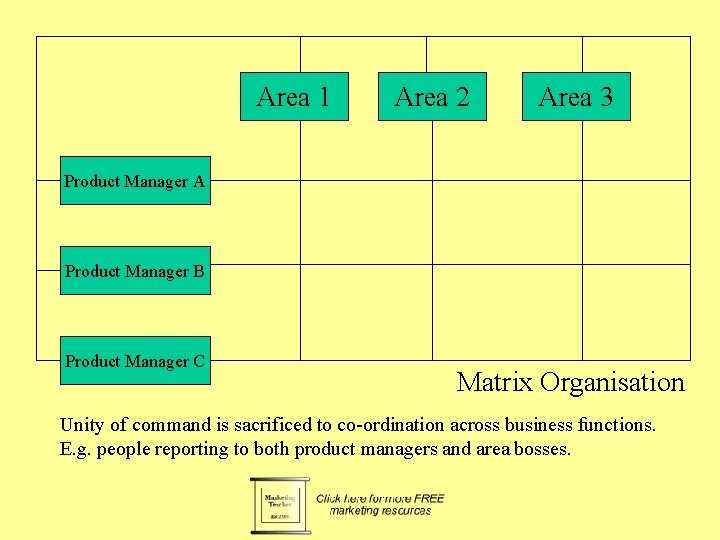
Area 1 Area 2 Area 3 Product Manager A Product Manager B Product Manager C Matrix Organisation Unity of command is sacrificed to co-ordination across business functions. E. g. people reporting to both product managers and area bosses.
Guidelines to the organisation Concerns: • the division of labour • the allocation of responsibilities • delegation/power/authority
There must be: • a clear chain of command • everyone must know who to report to/who reports to whom • responsibility must be matched with authority • few levels of authority • the span of control should not be too great • the structure must be flexible
Factors influencing international marketing organisation • • Size of the firm number of foreign countries involved level of involvement firm’s objectives for its foreign business firm’s experience in international business the value and variety of its products the nature of the marketing task
Centralisation v decentralisation • I. e. the global division of labour or specialisation by subsidiary? • advantages of centralisation? • better for planning • better co-ordination • optimum use of resources • disadvantages of centralisation • poor motivation amongst subsidiary staff due to too much control • misunderstandings and delays in communication
The impact of business culture Influenced by: • the organisation’s founder • the organisation’s history • leadership and management style • original structure and systems • the industry itself e. g. ‘Silicon Valley’ and software
Human resource implications expatriates v locals? • Think global and act local • Local managers could lead to loss of control • Is there such a thing as a global manager, if so is he/she available?
Expatriate managers (reverse for local managers) • Advantages • where there are poor educational opportunities • where senior managers believe expatriates are better • where there is control at the top. • Disadvantages • • they cost more! E. g. relocation growth in dual career households culture shock substantial training programme