OPERATING SYSTEMS OVERVIEW Contents O S Functions The

- Slides: 38
OPERATING SYSTEMS OVERVIEW
Contents à O. S. Functions à The Evolution of O. S. à Characteristics of O. S. à Basic hardware elements
Contents à O. S. Components à System calls à O. S. Structure
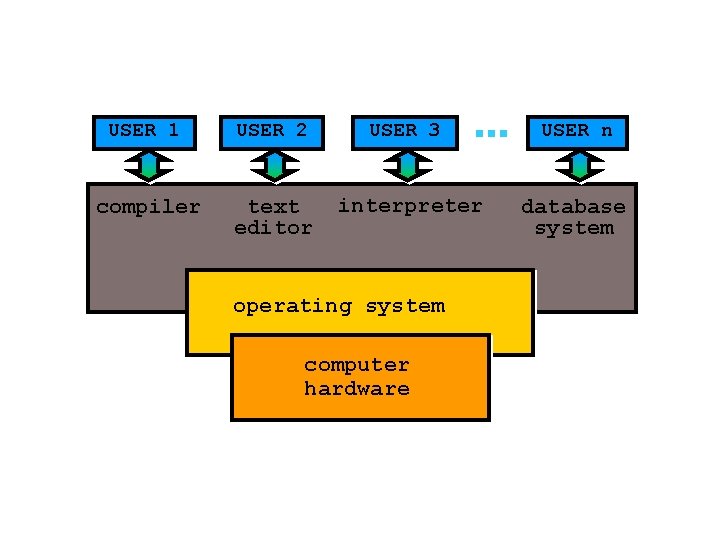
USER 1 USER 2 USER 3 USER n compiler text editor interpreter database system operating system computer hardware
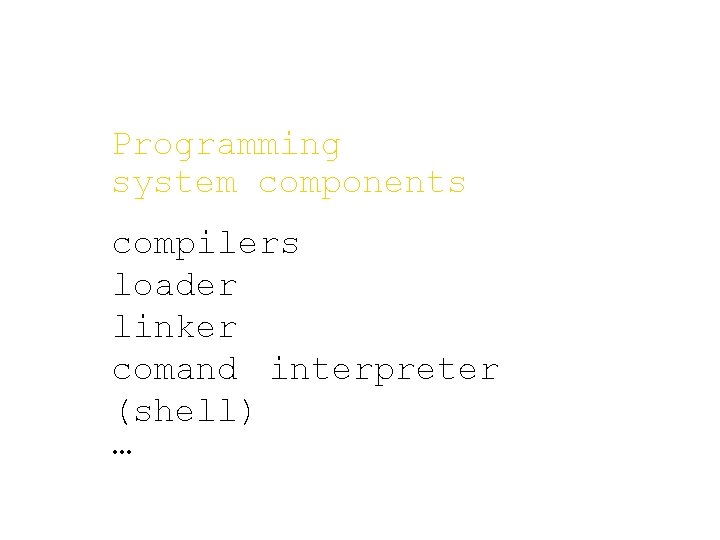
Programming system components compilers loader linker comand interpreter (shell) …
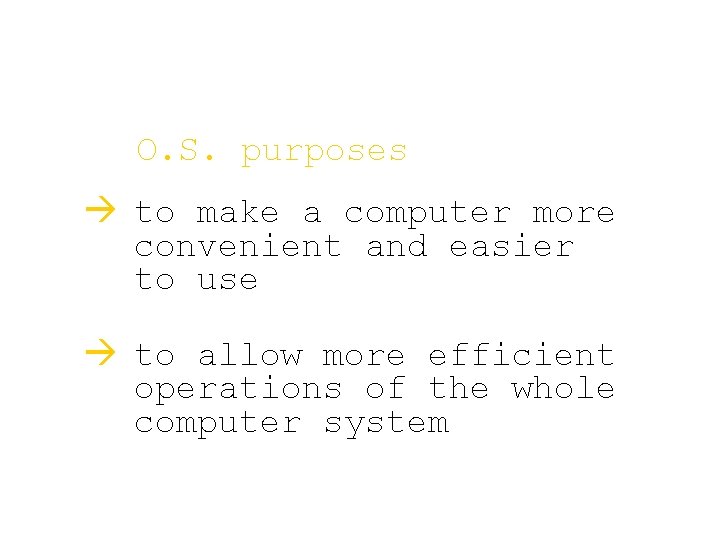
O. S. purposes à to make a computer more convenient and easier to use à to allow more efficient operations of the whole computer system
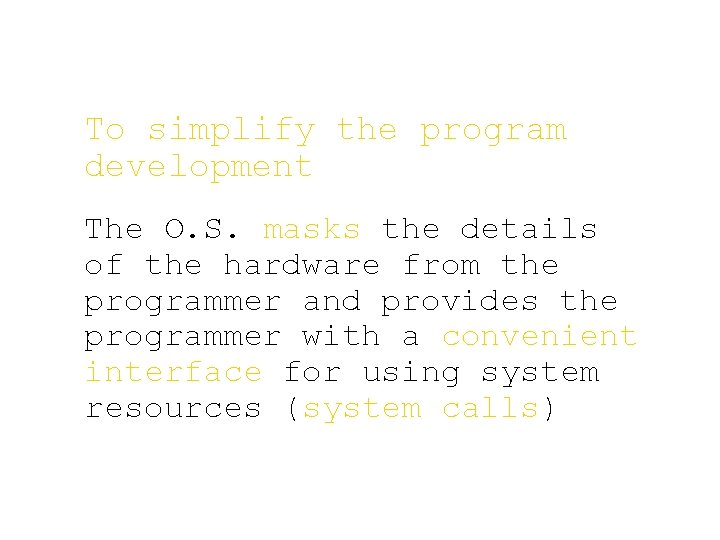
To simplify the program development The O. S. masks the details of the hardware from the programmer and provides the programmer with a convenient interface for using system resources (system calls)
To simplify the program development Definition of an extended (virtual) machine
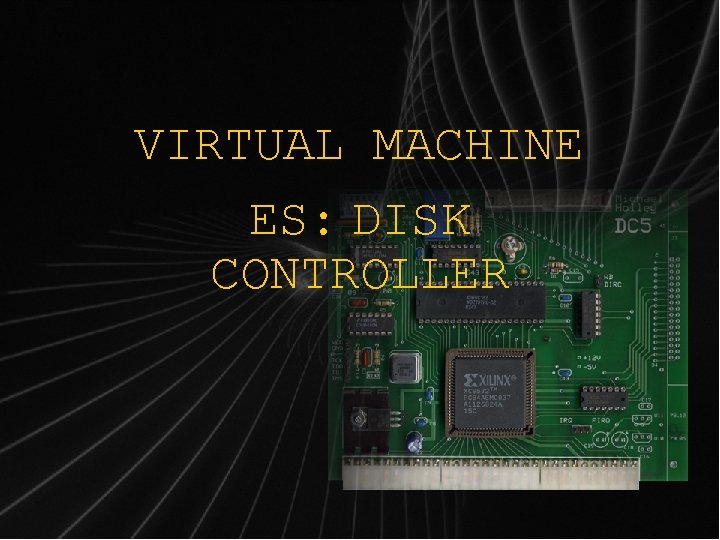
VIRTUAL MACHINE ES: DISK CONTROLLER
à commands: read, write, head motion, ecc… à parameters: sector address, number of sectors for each track, ecc… à state and error conditions
Hardware resource allocation Access to system resources must be controlled and conflicts for resource contention resolved
Hardware resource allocation Any user should be provided with required resources, by following suitable policies
The details for the management of hardware resources must be hidden to users
System calls provide the interface between the application programs and the O. S.
THE EVOLUTION OF O. S.
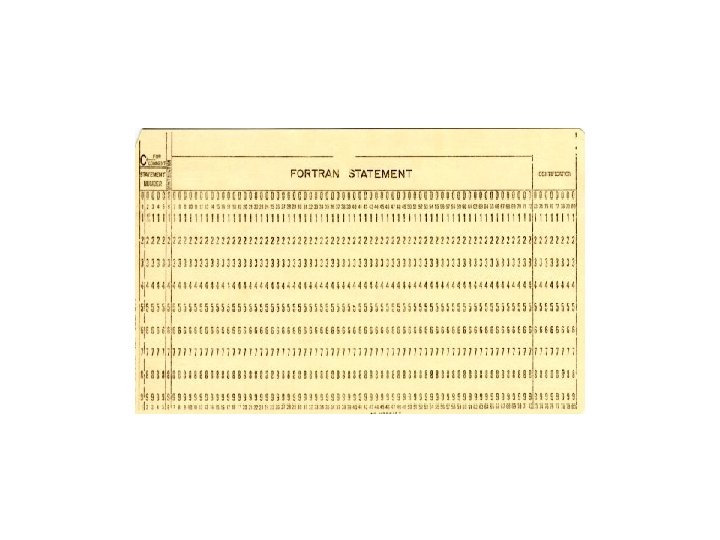
Serial processing à à No O. S. Control by console Scheduling Setup time
Simple batch systems Monitor à Resident in main memory à Control of the program execution à “batch” solution
Uniprogramming systems Only one program in main memory Machine time alternates between execution of user programs and monitor (OS)
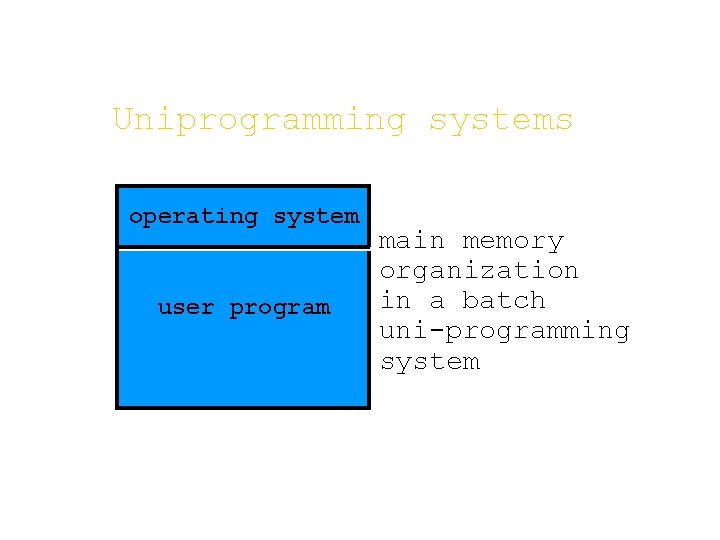
Uniprogramming systems operating system user program main memory organization in a batch uni-programming system
Uniprogramming systems Hardware and software resources of the computer system are dedicated to only one program (monouser system)
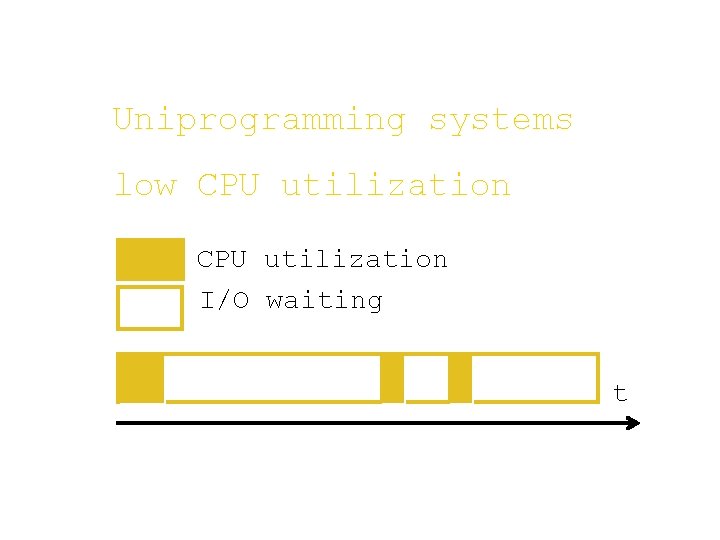
Uniprogramming systems low CPU utilization I/O waiting t
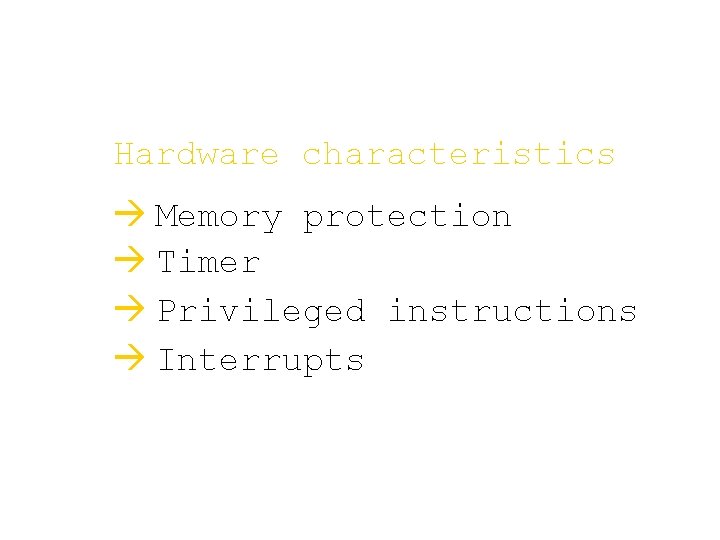
Hardware characteristics à Memory protection à Timer à Privileged instructions à Interrupts
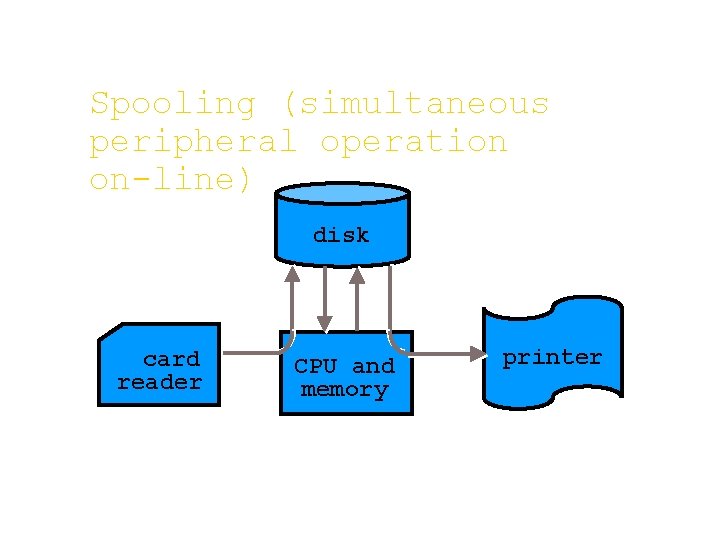
Spooling (simultaneous peripheral operation on-line) disk card reader CPU and memory printer
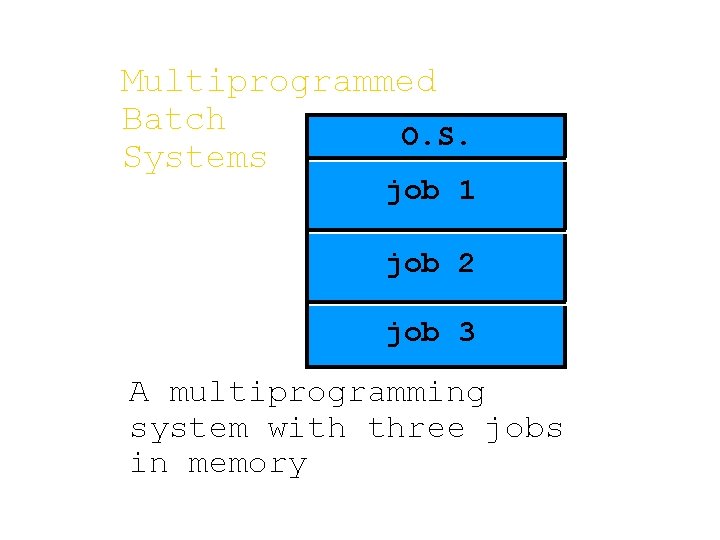
Multiprogrammed Batch O. S. Systems job 1 job 2 job 3 A multiprogramming system with three jobs in memory
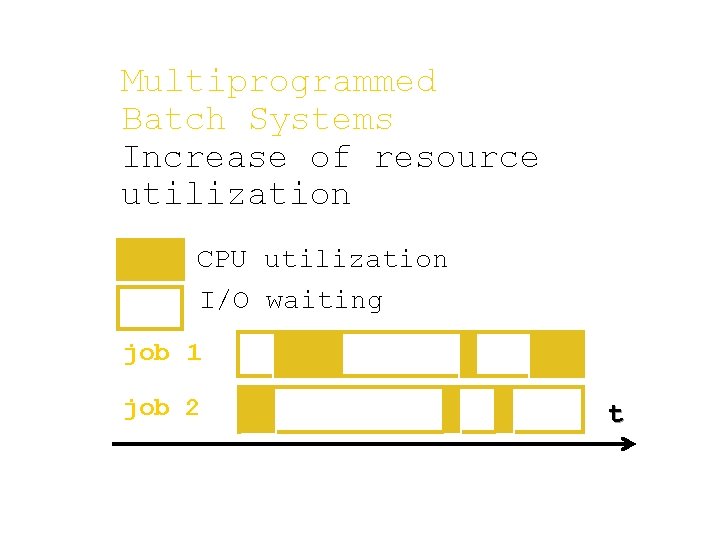
Multiprogrammed Batch Systems Increase of resource utilization CPU utilization I/O waiting job 1 job 2 t
Multiprogrammed Systems O. S. are more sophisticated à Algorithms for resource management (CPU, memory, I/O)
Multiprogrammed Systems O. S. are more sophisticated à Protection of the environments of different jobs
Multiprogrammed Systems Scheduling algorithms Job mix CPU-bound job I/O-bound job
Multiprogrammed Batch Systems Example OS/36 O working on IBM 36 O e 37 O series
Multiprogrammed Batch Systems à High efficiency in resource utilization à Users cannot directly interact with the O. S. à Large response time
Interactive systems à direct communication between the user and the system
Interactive systems à the user gives instruction to the O. S. directly, by using either a keyboard or a mouse and waits for immediate results
Time-sharing systems Logical extension of multiprogramming à Multiple users simultaneously access the system through terminals
Time-sharing systems Logical extension of multiprogramming à The O. S. interleaves the execution of each user program in a short burst or quantum of computation
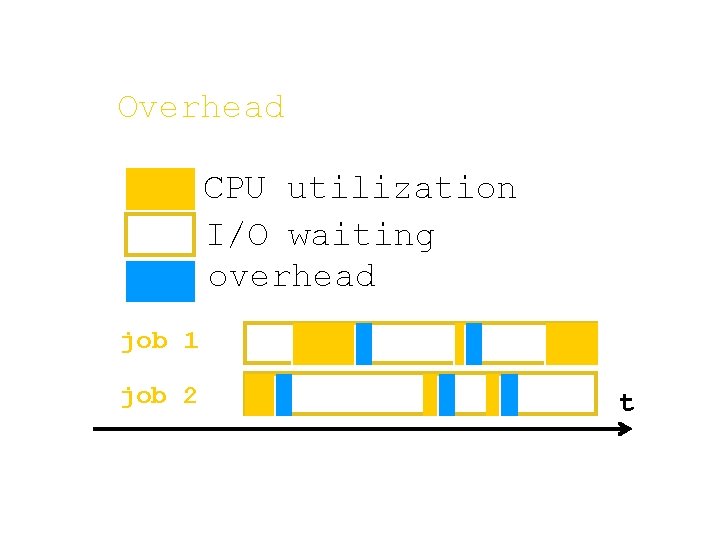
Time-sharing systems At the end of the quantum (or during the quantum, if the job executes an I/O instruction) the CPU is switched to a different job.
Time-sharing systems One of the first developed time sharing O. S. was the CTSS (Compatible Time Serie System), MIT years 6 O’ MULTICS, UNIX, …
Overhead CPU utilization I/O waiting overhead job 1 job 2 t