Opening an IND Investigator Perspective Michael CohenWolkowiez MD
- Slides: 11
Opening an IND: Investigator Perspective Michael Cohen-Wolkowiez, MD Ph. D Pediatric Trials Network Professor of Pediatrics, Duke University
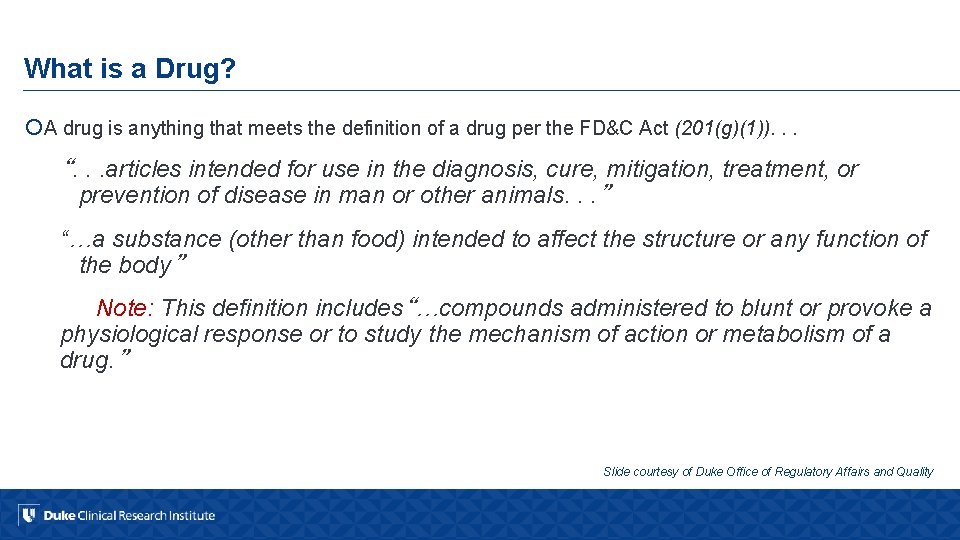
What is a Drug? A drug is anything that meets the definition of a drug per the FD&C Act (201(g)(1)). . . “. . . articles intended for use in the diagnosis, cure, mitigation, treatment, or prevention of disease in man or other animals. . . ” “…a substance (other than food) intended to affect the structure or any function of the body” Note: This definition includes“…compounds administered to blunt or provoke a physiological response or to study the mechanism of action or metabolism of a drug. ” Slide courtesy of Duke Office of Regulatory Affairs and Quality
What is an Investigational Drug? § An article that is not lawfully marketed in the US as a drug, OR § An article that is lawfully marketed in the US as a drug that is not used according to the approved label (including a new combination of approved drugs) Note: The practice of medicine allows a physician to use any lawfully marketed drug without prior regulatory approval.
What is an Investigational New Drug Application (IND)? § An IND is a regulatory submission to the FDA that permits the clinical investigation of a drug. § An effective IND allows: – An investigational drug (or biologic) to be used in a clinical investigation. – A drug to be shipped lawfully for the purpose of conducting clinical investigations. § Not all clinical investigations using investigational drugs require an IND.
Definitions: Categories of INDs § Commercial IND – Ultimate goal is to obtain marketing approval § Research IND – Goal is publication – Generally sponsored by individual investigators, academic institutions, and non-profit entities – Labeling changes
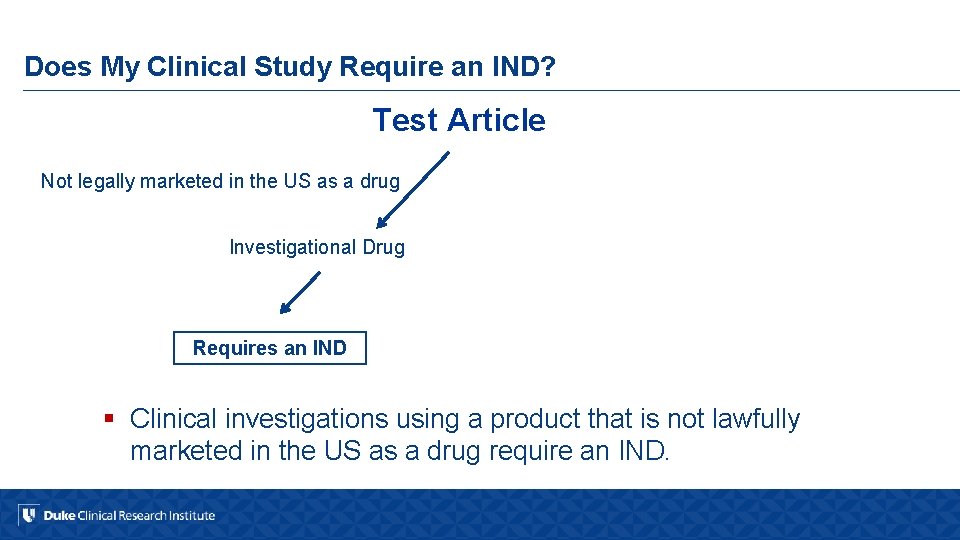
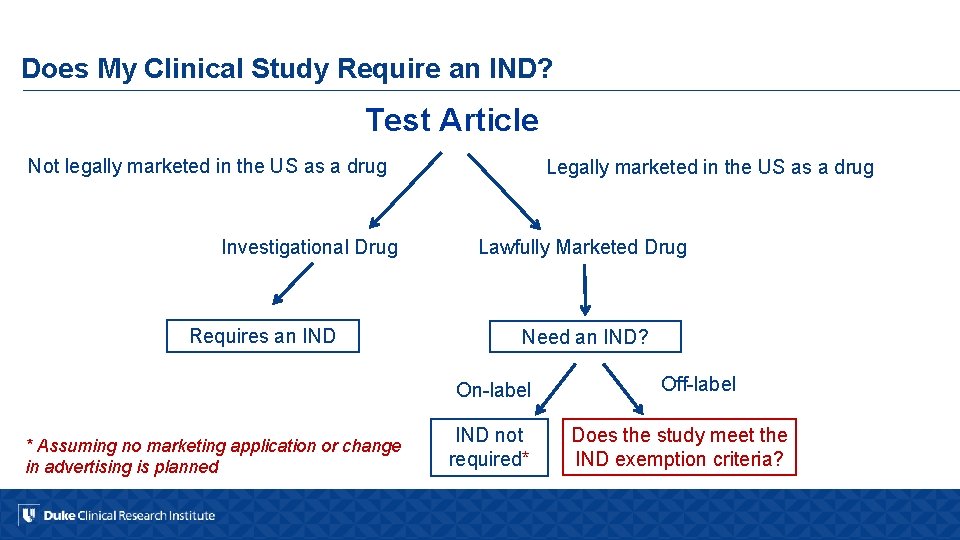
Does My Clinical Study Require an IND? Test Article Not legally marketed in the US as a drug Investigational Drug Requires an IND § Clinical investigations using a product that is not lawfully marketed in the US as a drug require an IND.
Does My Clinical Study Require an IND? Test Article Not legally marketed in the US as a drug Investigational Drug Requires an IND Legally marketed in the US as a drug Lawfully Marketed Drug Need an IND? On-label * Assuming no marketing application or change in advertising is planned IND not required* Off-label Does the study meet the IND exemption criteria?
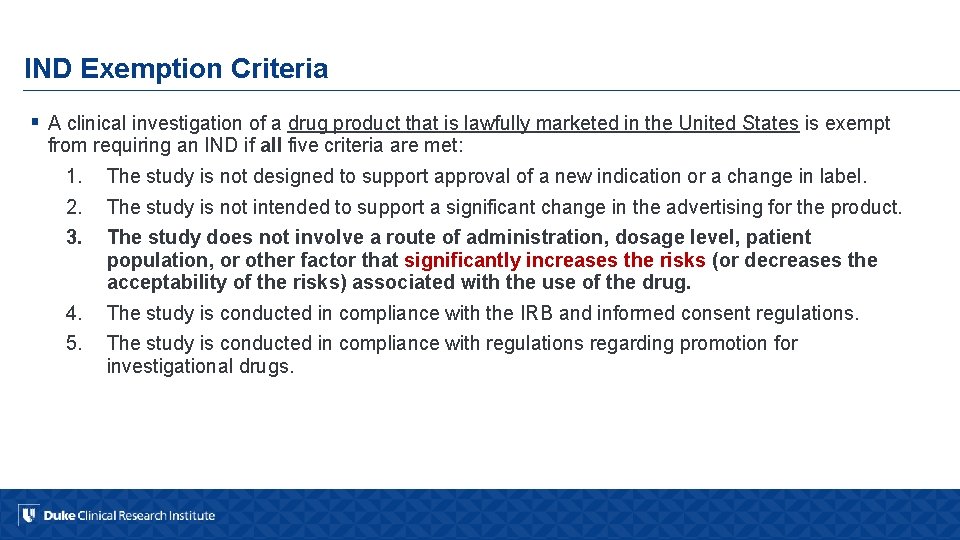
IND Exemption Criteria § A clinical investigation of a drug product that is lawfully marketed in the United States is exempt from requiring an IND if all five criteria are met: 1. 2. 3. The study is not designed to support approval of a new indication or a change in label. 4. 5. The study is conducted in compliance with the IRB and informed consent regulations. The study is not intended to support a significant change in the advertising for the product. The study does not involve a route of administration, dosage level, patient population, or other factor that significantly increases the risks (or decreases the acceptability of the risks) associated with the use of the drug. The study is conducted in compliance with regulations regarding promotion for investigational drugs.
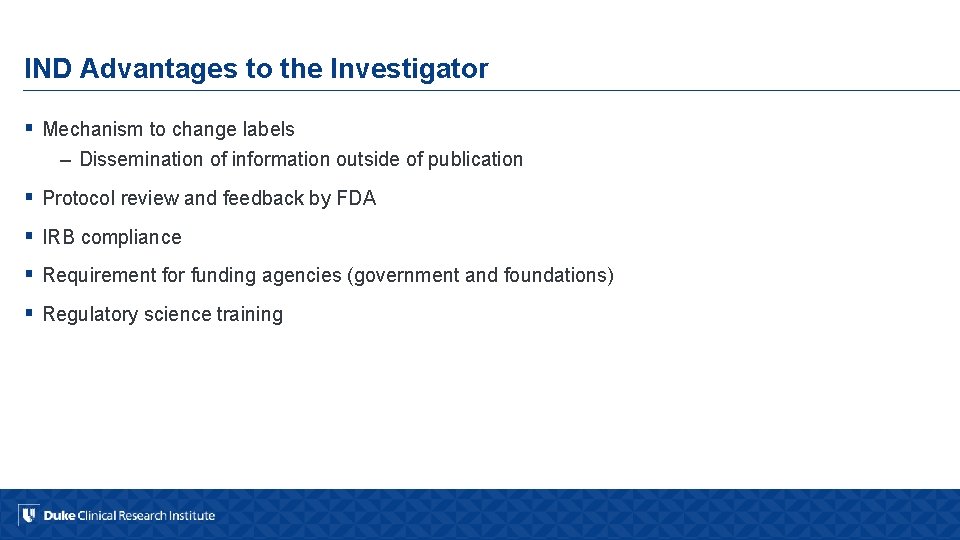
IND Advantages to the Investigator § Mechanism to change labels – Dissemination of information outside of publication § Protocol review and feedback by FDA § IRB compliance § Requirement for funding agencies (government and foundations) § Regulatory science training
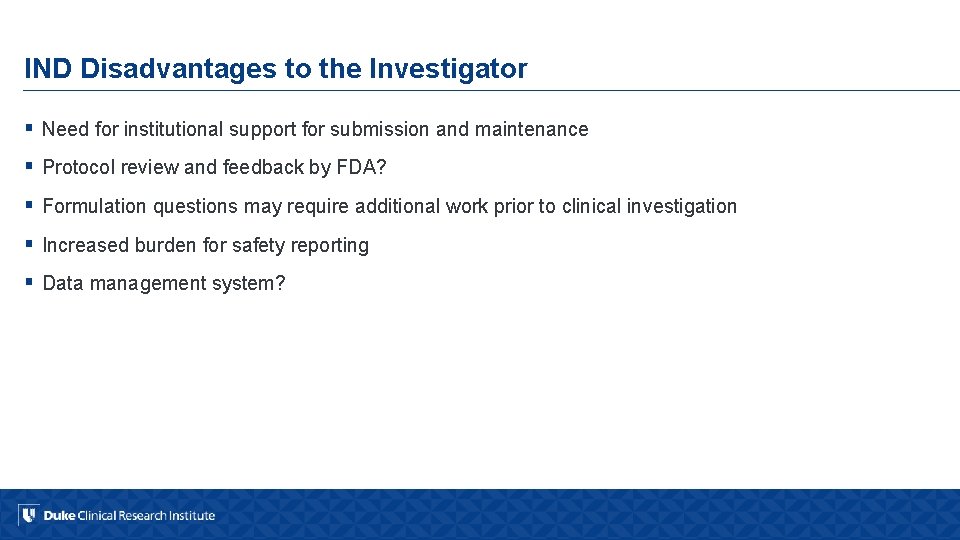
IND Disadvantages to the Investigator § Need for institutional support for submission and maintenance § Protocol review and feedback by FDA? § Formulation questions may require additional work prior to clinical investigation § Increased burden for safety reporting § Data management system?
Acknowledgements § NICHD – Pediatric Trials Network