Oak Processionary Moth Thaumetopoea processionea Oak Processionary Moth






- Slides: 25
Oak Processionary Moth Thaumetopoea processionea
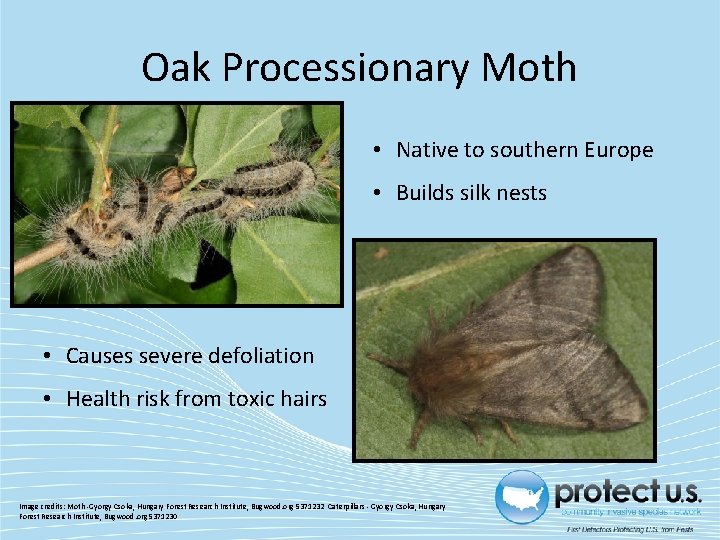
Oak Processionary Moth • Native to southern Europe • Builds silk nests • Causes severe defoliation • Health risk from toxic hairs Image credits: Moth -Gyorgy Csoka, Hungary Forest Research Institute, Bugwood. org 5371232 Caterpillars - Gyorgy Csoka, Hungary Forest Research Institute, Bugwood. org 5371230
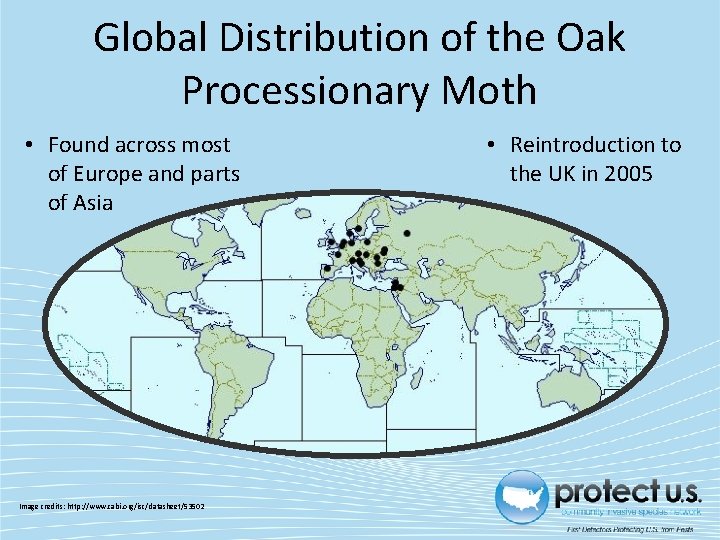
Global Distribution of the Oak Processionary Moth • Found across most of Europe and parts of Asia Image credits: http: //www. cabi. org/isc/datasheet/53502 • Reintroduction to the UK in 2005
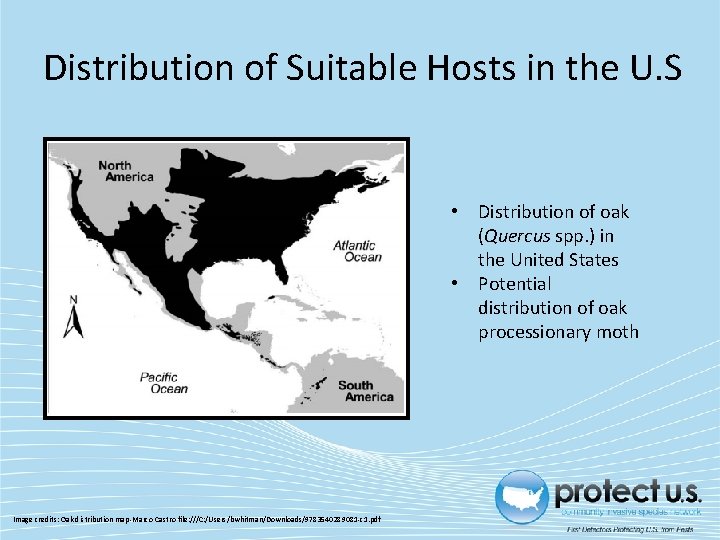
Distribution of Suitable Hosts in the U. S • Distribution of oak (Quercus spp. ) in the United States • Potential distribution of oak processionary moth Image credits: Oak distribution map-Marco Castro file: ///C: /Users/bwhitman/Downloads/9783540289081 -c 1. pdf
Pest of Oak • Almost exclusive feeder on oak (Quercus) trees Image credits: Wikipedia https: //en. wikipedia. org/wiki/Oak English oak sapling - http: //www. britannica. com/plant/English-oak Black oak tree http: //www. britannica. com/plant/black-oak
Look for: Damage • Defoliation • Caterpillars traveling in a line • Silk nests on branches and trunks Image credits: Branch defoliation - ©Louis-Michel Nageleisen/Departement de la Santé des Forêts, France/Bugwood. org - CC BY 3. 0 US Larvae pouch - Gyorgy Csoka, Hungary Forest Research Institute, Bugwood. org 5444410
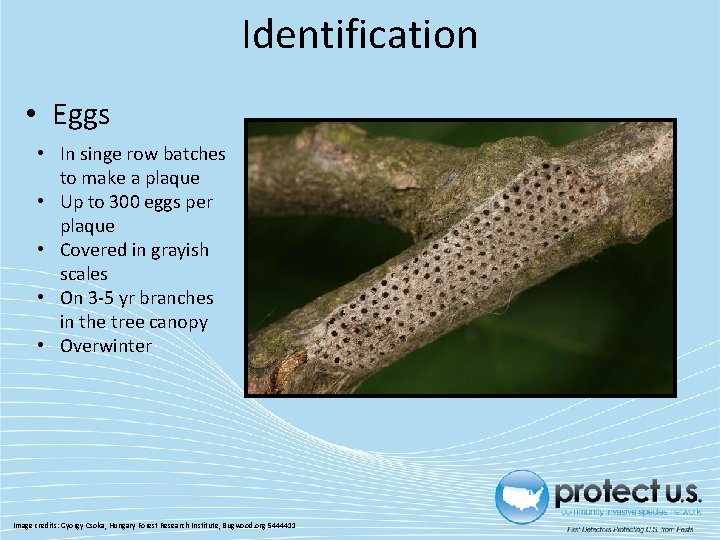
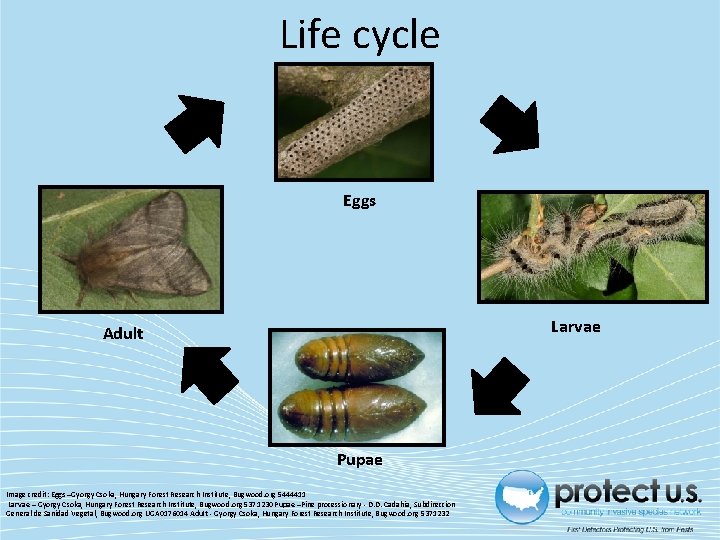
Identification • Eggs • In singe row batches to make a plaque • Up to 300 eggs per plaque • Covered in grayish scales • On 3 -5 yr branches in the tree canopy • Overwinter Image credits: Gyorgy Csoka, Hungary Forest Research Institute, Bugwood. org 5444411
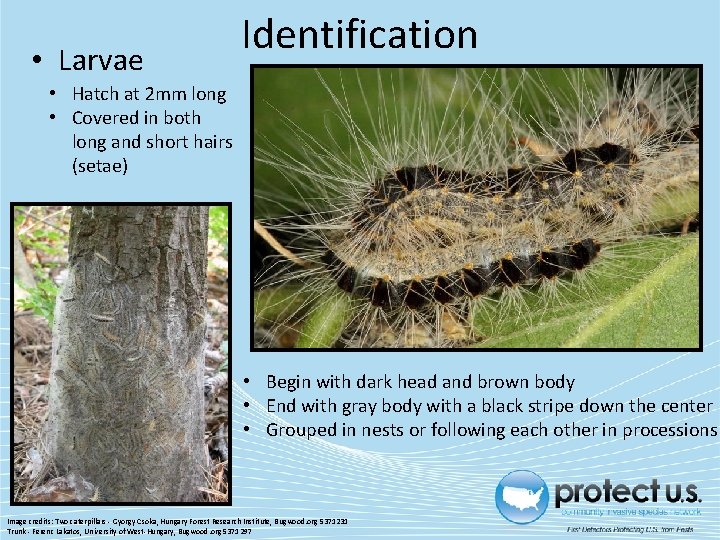
• Larvae Identification • Hatch at 2 mm long • Covered in both long and short hairs (setae) • Begin with dark head and brown body • End with gray body with a black stripe down the center • Grouped in nests or following each other in processions Image credits: Two caterpillars - Gyorgy Csoka, Hungary Forest Research Institute, Bugwood. org 5371231 Trunk - Ferenc Lakatos, University of West-Hungary, Bugwood. org 5371297
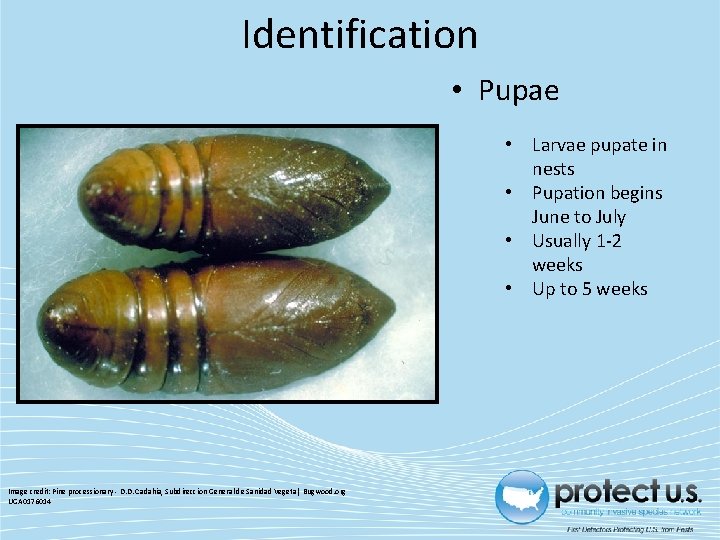
Identification • Pupae • Larvae pupate in nests • Pupation begins June to July • Usually 1 -2 weeks • Up to 5 weeks Image credit: Pine processionary - D. D. Cadahia, Subdireccion General de Sanidad Vegetal, Bugwood. org UGA 0176014
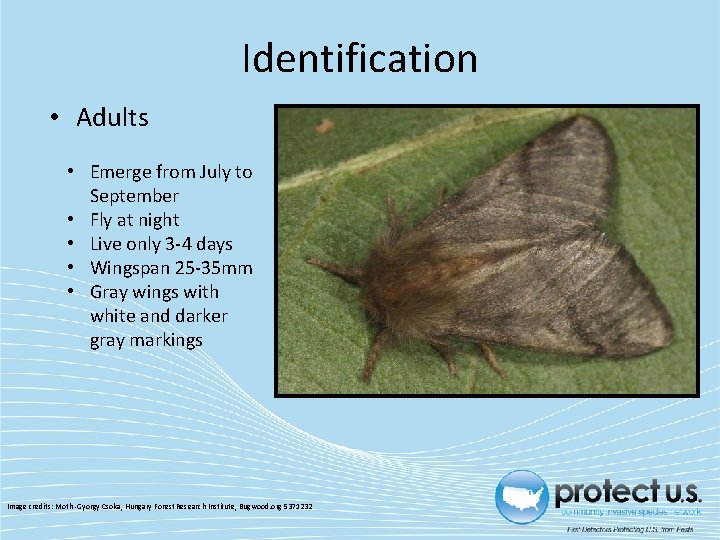
Identification • Adults • Emerge from July to September • Fly at night • Live only 3 -4 days • Wingspan 25 -35 mm • Gray wings with white and darker gray markings Image credits: Moth -Gyorgy Csoka, Hungary Forest Research Institute, Bugwood. org 5371232
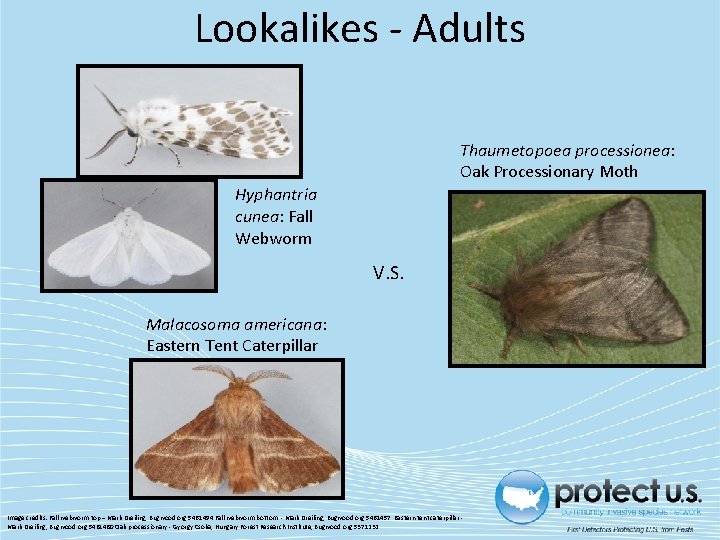
Lookalikes - Adults Thaumetopoea processionea: Oak Processionary Moth Hyphantria cunea: Fall Webworm V. S. Malacosoma americana: Eastern Tent Caterpillar Image credits: Fall webworm top – Mark Dreiling, Bugwood. org 5461494 Fall webworm bottom - Mark Dreiling, Bugwood. org 5461457 Eastern tent caterpillar - Mark Dreiling, Bugwood. org 5461480 Oak processionary - Gyorgy Csoka, Hungary Forest Research Institute, Bugwood. org 5371232
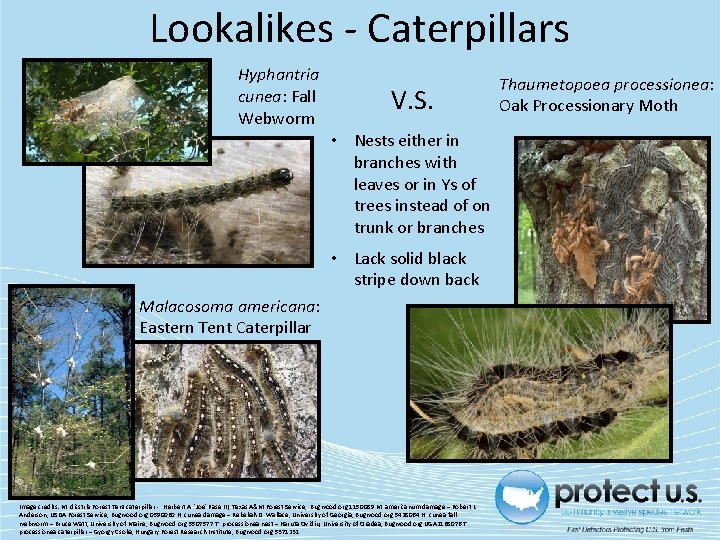
Lookalikes - Caterpillars Hyphantria cunea: Fall Webworm V. S. • Nests either in branches with leaves or in Ys of trees instead of on trunk or branches • Lack solid black stripe down back Malacosoma americana: Eastern Tent Caterpillar Image credits: M. disstria Forest Tent caterpillar - Herbert A. 'Joe' Pase III, Texas A&M Forest Service, Bugwood. org 1150089 M. americanum damage – Robert L. Anderson, USDA Forest Service, Bugwood. org 0590060 H. cunea damage – Rebekah D. Wallace, University of Georgia, Bugwood. org 5428064 H. cunea fall webworm – Bruce Watt, University of Maine, Bugwood. org 5507577 T. processionea nest – Haruta Ovidiu, University of Oradea, Bugwood. org UGA 2168076 T. processionea caterpillar – Gyorgy Csoka, Hungary Forest Research Institute, Bugwood. org 5371231 Thaumetopoea processionea: Oak Processionary Moth
Life cycle Eggs Larvae Adult Pupae Image credit: Eggs –Gyorgy Csoka, Hungary Forest Research Institute, Bugwood. org 5444411 Larvae – Gyorgy Csoka, Hungary Forest Research Institute, Bugwood. org 5371230 Pupae –Pine processionary - D. D. Cadahia, Subdireccion General de Sanidad Vegetal, Bugwood. org UGA 0176014 Adult - Gyorgy Csoka, Hungary Forest Research Institute, Bugwood. org 5371232
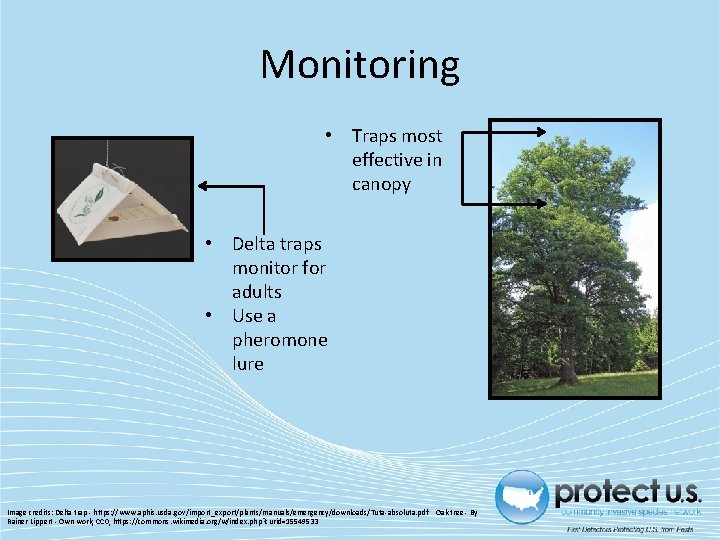
Monitoring • Traps most effective in canopy • Delta traps monitor for adults • Use a pheromone lure Image credits: Delta trap - https: //www. aphis. usda. gov/import_export/plants/manuals/emergency/downloads/Tuta-absoluta. pdf Oak tree - By Rainer Lippert - Own work, CC 0, https: //commons. wikimedia. org/w/index. php? curid=15549533
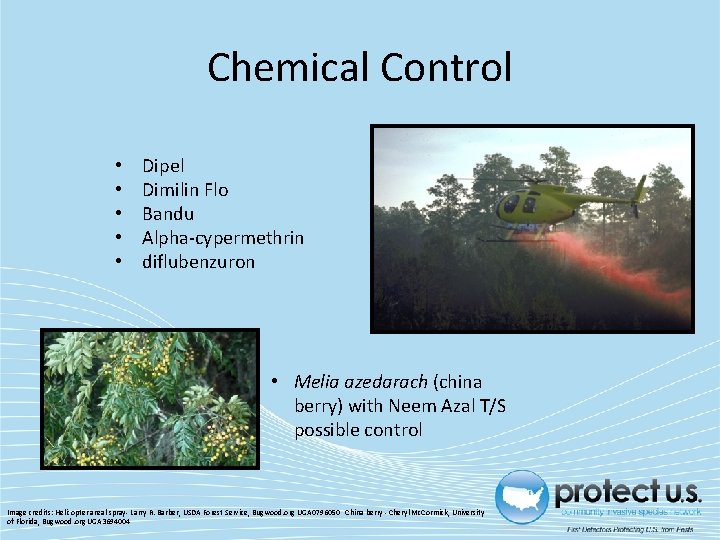
Chemical Control • • • Dipel Dimilin Flo Bandu Alpha-cypermethrin diflubenzuron • Melia azedarach (china berry) with Neem Azal T/S possible control Image credits: Helicopter areal spray- Larry R. Barber, USDA Forest Service, Bugwood. org UGA 0796050 China berry - Cheryl Mc. Cormick, University of Florida, Bugwood. org UGA 3694004
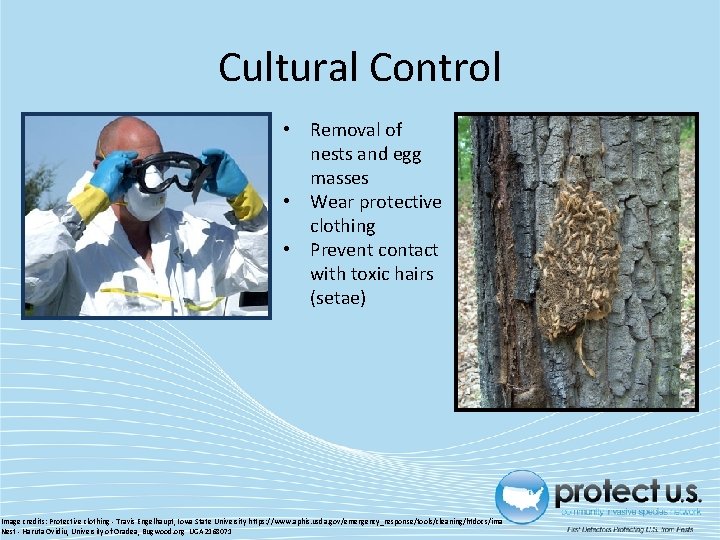
Cultural Control • Removal of nests and egg masses • Wear protective clothing • Prevent contact with toxic hairs (setae) Image credits: Protective clothing - Travis Engelhaupt, Iowa State University https: //www. aphis. usda. gov/emergency_response/tools/cleaning/htdocs/ima Nest - Haruta Ovidiu, University of Oradea, Bugwood. org UGA 2168071
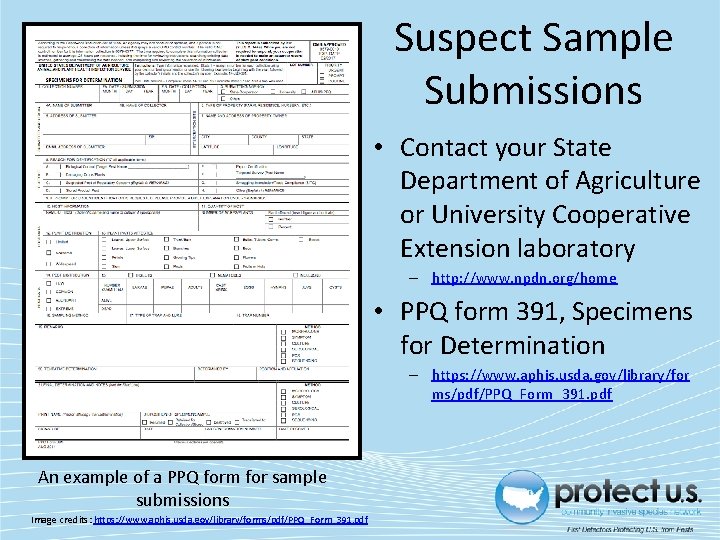
Suspect Sample Submissions • Contact your State Department of Agriculture or University Cooperative Extension laboratory – http: //www. npdn. org/home • PPQ form 391, Specimens for Determination – https: //www. aphis. usda. gov/library/for ms/pdf/PPQ_Form_391. pdf An example of a PPQ form for sample submissions Image credits: https: //www. aphis. usda. gov/library/forms/pdf/PPQ_Form_391. pdf
Communications • Contact your State Plant Health Director – https: //www. aphis. usda. gov/aphis/ ourfocus/planthealth/ppq-program -overview/ct_sphd • Contact your State Plant Regulatory Official – http: //nationalplantboard. org/me mbership/ Image credits: http: //www. usda. gov/wps/portal/usdahome; http: //nationalplantboard. org/
Author and Publication Dates • Brianna Whitman, B. S. ‒ Laboratory Technician, Department of Entomology and Nematology, University of Florida • Amanda Hodges, Ph. D. ‒ Associate Extension Scientist, Department of Entomology and Nematology, University of Florida Publication date: October 2016
Reviewers • Catherine A. Marzolf – Assistant State Plant Health Director, USDA APHIS PPQ
Educational Disclaimer and Citation • This presentation can be used for educational purposes for NON-PROFIT workshops, trainings, etc. • Citation: Whitman, Brianna and Amanda Hodges. 2016. Oak processionary moth - Thaumetopoea processionea. Accessed (add the date) www. protectingusnow. org
Our Partners • United States Department of Agriculture, National Institute of Food and Agriculture (USDA NIFA) • United States Department of Agriculture, Animal and Plant Health Inspection Service, Plant Protection and Quarantine (USDA APHIS PPQ) • Cooperative Agriculture Pest Survey (CAPS) Program • National Plant Board (NPB) • States Department of Agriculture • Extension Disaster Education Network (EDEN) • Center for Invasive Species and Ecosystem Health (Bugwood) • National Plant Diagnostic Network (NPDN) • U. S. Department of Homeland Security (DHS) • U. S. Forest Service (USFS)
References • 1. Anonymous. 2016. Thaumetopea processionea (oak processionary moth). Invasive Species Compendium. Accessed 6/14/16. ‒ http: //www. cabi. org/isc/datasheet/53502 ‒ https: //entomology. ca. uky. edu/files/efpdf 2/ef 423. pdf ‒ http: //www. forestry. gov. uk/oakprocessionarymoth ‒ http: //idtools. org/id/leps/tortai/Tortrix_viridana. htm ‒ http: //ento. psu. edu/extension/factsheets/fall-webworm • 2. Bessin, Ric. 2003. Eastern Tent Caterpillar. University of Kentucky, Cooperative Extension Service ENTFACT-423. Accessed 6/30/16. • 3. Forestry Commission: Oak processionary moth (Thaumetpoea processionea) 2016. Forestry Commission England. Accessed 6/14/16 • 4. Gillian, Todd M. and Marc E. Epstein. 2014. Tort. AI: Tortricids of Agricultural Importance. Colorado State University. Accessed 6/3/16. • 5. Groenen, Frans and Nicolas Meurisse. 2012 Historical distribution of the oak processionary moth Thaumetopoea processionea in Europe suggests recolonization instead of expansion. Agricultural and Forest Entomology. 14: 147 -155 • 6. Hoover, Gregory A. 2001. Insect Advice from Extension: Fall Webworm. Pennsylvania State University, Department of Entomology. Accessed 6/30/16.
References • 7. Maier, H. , W. Spiegel, T. Kinaciyan, H. Krehan, A. Cabaj, A. Schopf, and H. Hönigsmann. 2003. The oak processionary caterpillar as the cause of an epidemic airborne disease: survey and analysis. British Journal of Dermatology. 149: 990 -997. • 8. Most Unwanted: Oak processionary moth. 2016. OPAL Explore Nature. Big Lottery Fund. Accessed 6/14/16. ‒ https: //www. opalexplorenature. org/oak-processionary-moth#/0 ‒ http: //mothphotographersgroup. msstate. edu/species. php? hodges=7701 ‒ http: //processionarymoth. co. uk/life-cycle-of-opm. cfm ‒ http: //www. plantwise. org/Knowledge. Bank/Datasheet. aspx? dsid=53502 • 9. North American Moth Photographers Group. 2016. Mississippi State University, Mississippi Entomological Museum. Accessed 6/30/16. • 10. Percival, Glynn C. . 2016. Bartlett Tree Research Laboratories Technical Report: Oak Processionary Moth. Bartlett Tree Experts. • 11. Percival, Dr. Glynn. 2016. Oak Processionary Moth. Bartlett’s Tree Reasearch and Diagnostic Laboratory, University of Reading UK. • 12. Plantwise Technical Factsheet: oak processionary moth (Thaumetopoea processionea). 2016. Plantwise Knowledge Bank. Accessed 6/14/16.
References • 13. Tree Health Tree pest Advisory Note: Oak Processionary Moth. 2016. Forest Research. Tree Health Division. • 14. Williams, David T. , N. Straw, M. Townsend, A. S. Wilkinson, and A Mullins. 2013. Monitoring oak processionary moth Thaumetopoea processionea L. using pheromone traps: the influence of pheromone lure source, trap design and height above ground on capture rates. Agricultural and Forest Entomology. 15: 126 -134.