Gypsy Moth European Asian and Rosy Asian Gypsy
- Slides: 20
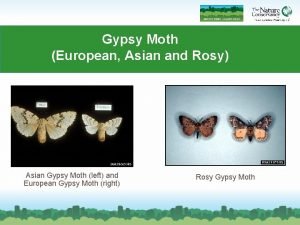
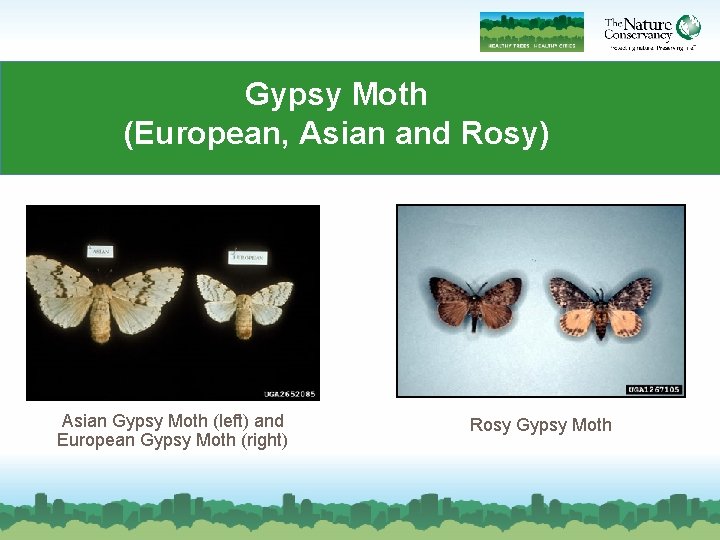
Gypsy Moth (European, Asian and Rosy) Asian Gypsy Moth (left) and European Gypsy Moth (right) Rosy Gypsy Moth
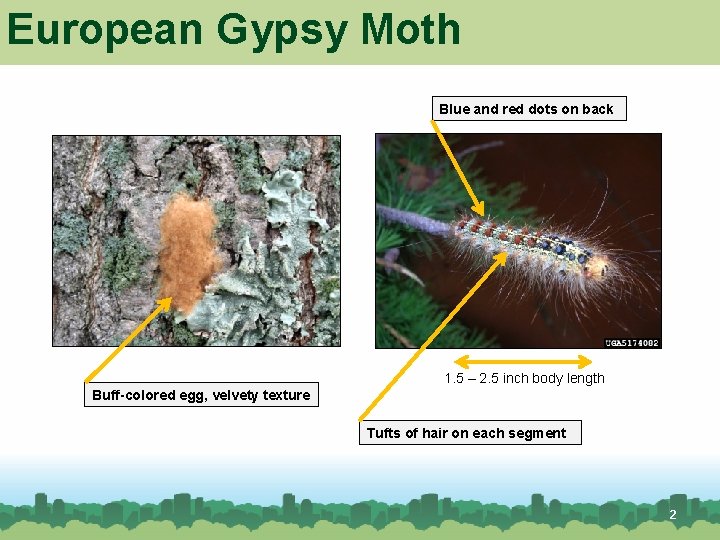
European Gypsy Moth Blue and red dots on back 1. 5 – 2. 5 inch body length Buff-colored egg, velvety texture Tufts of hair on each segment 2
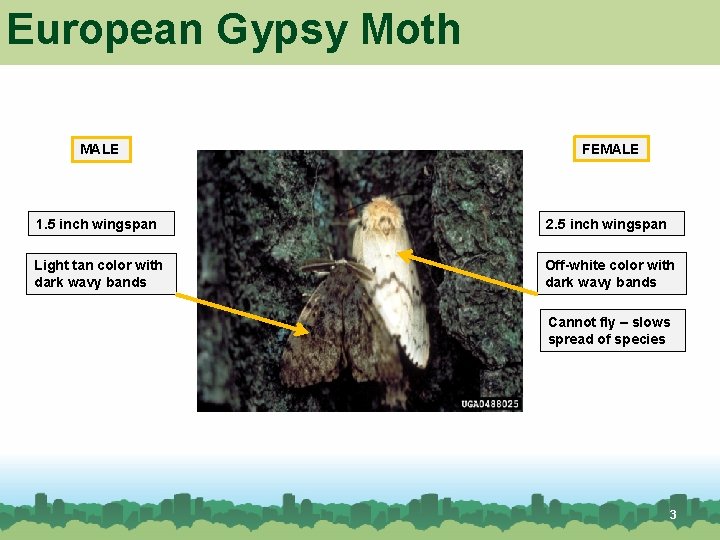
European Gypsy Moth MALE FEMALE 1. 5 inch wingspan 2. 5 inch wingspan Light tan color with dark wavy bands Off-white color with dark wavy bands Cannot fly – slows spread of species 3
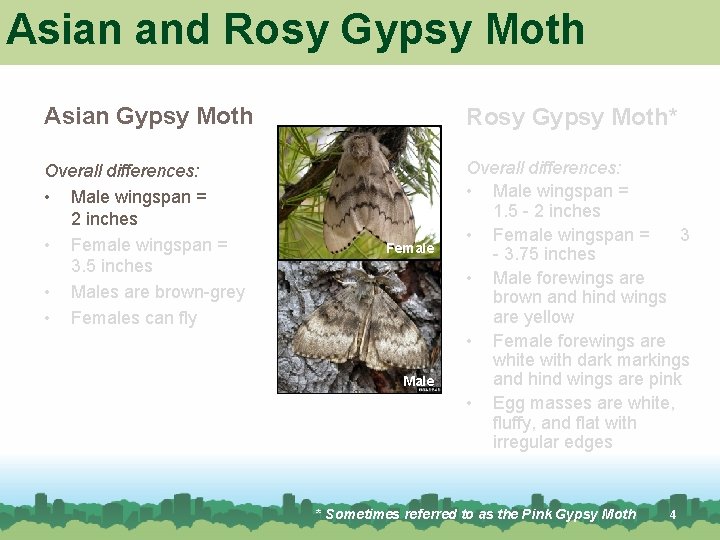
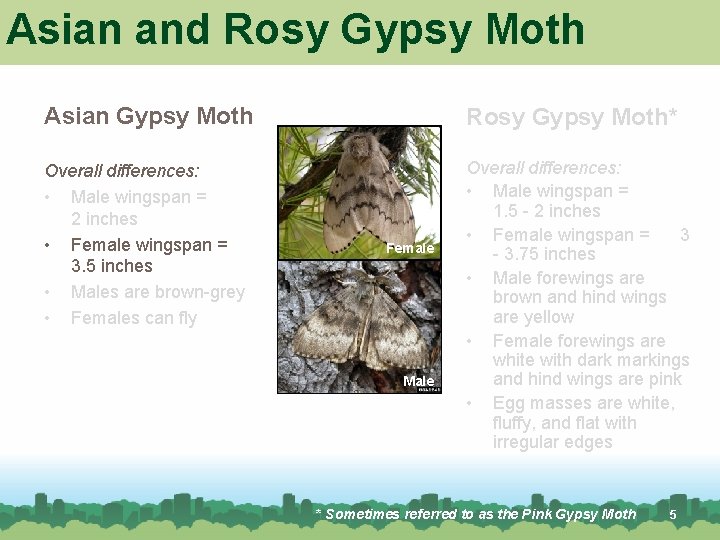
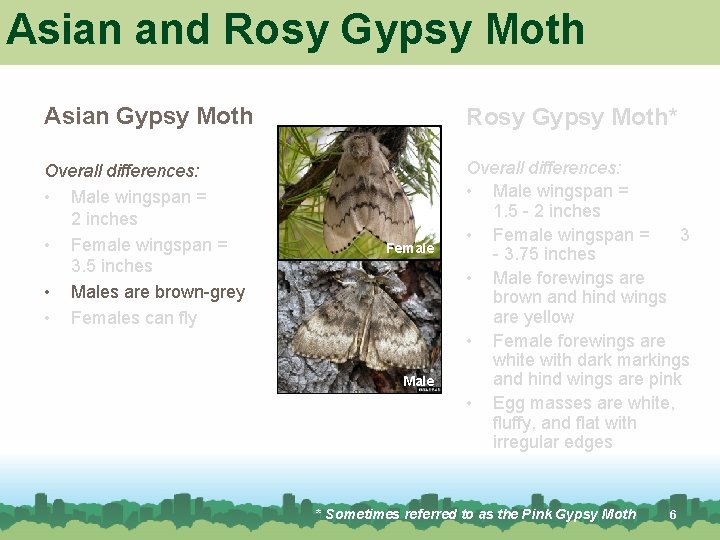
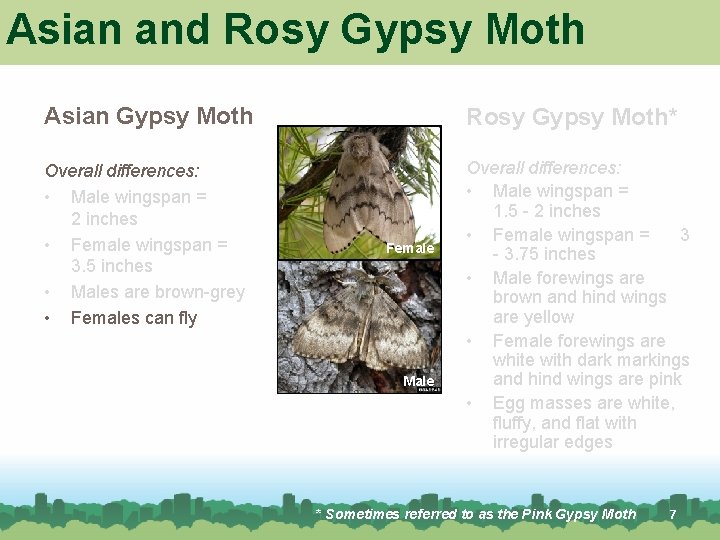
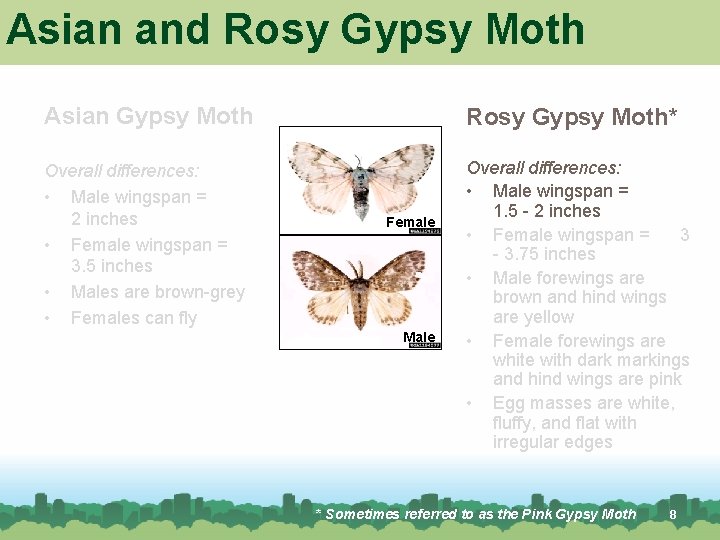
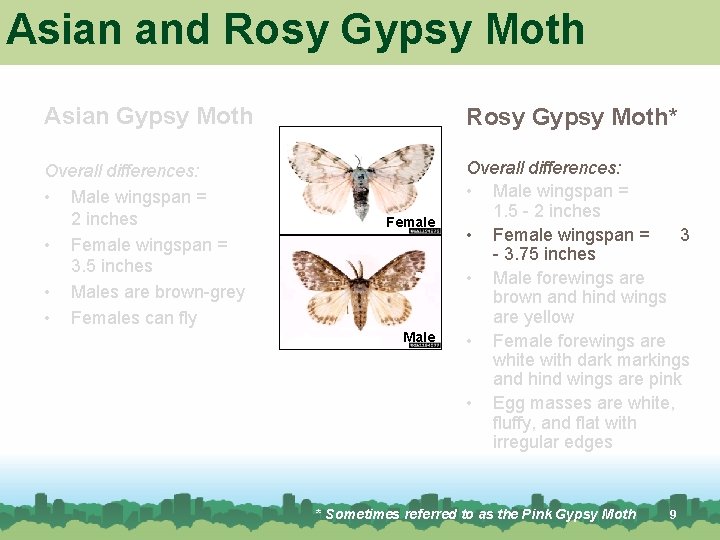
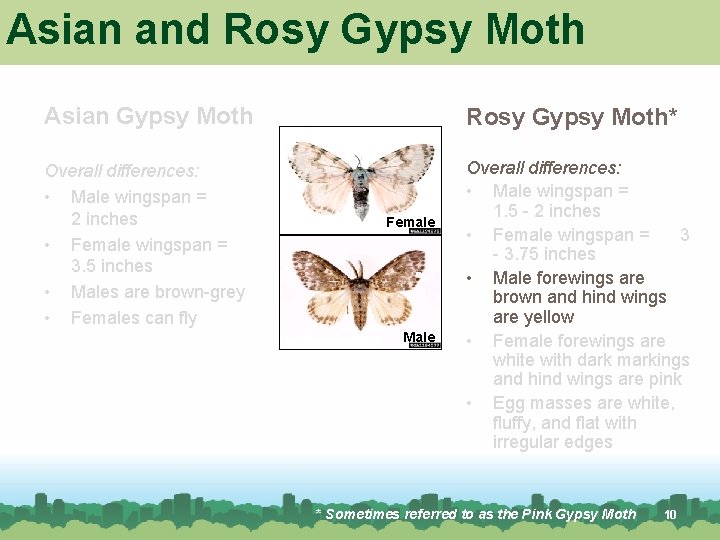
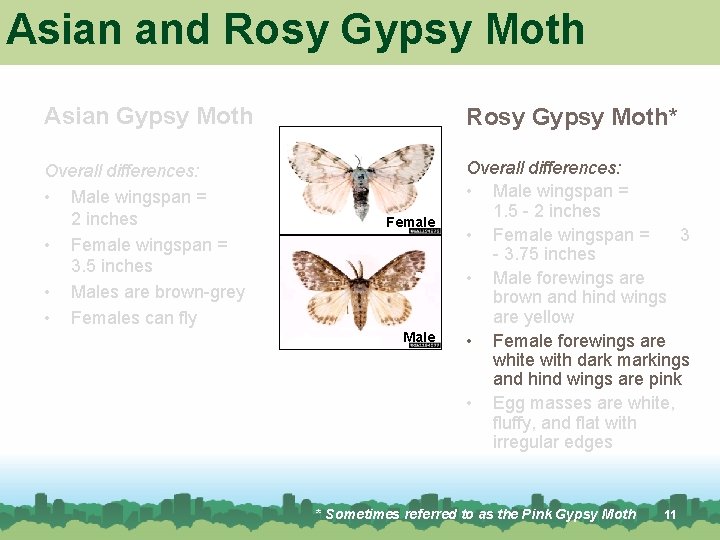
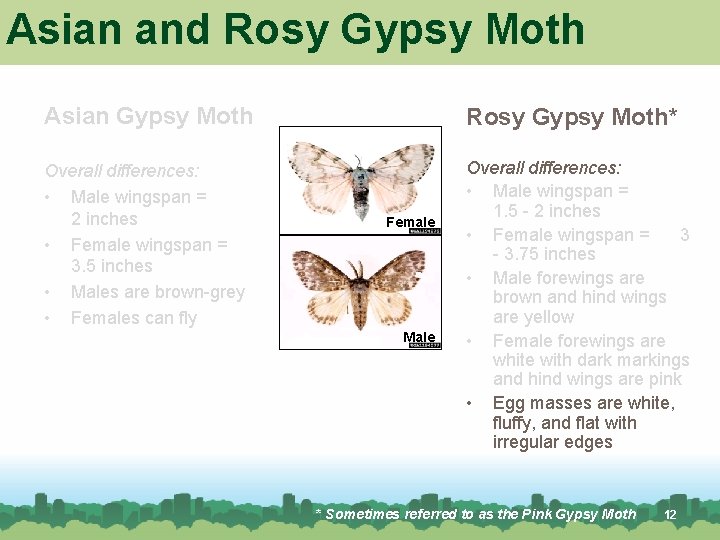
Asian and Rosy Gypsy Moth Asian Gypsy Moth Rosy Gypsy Moth* Overall differences: • Male wingspan = 2 inches • Female wingspan = 3. 5 inches • Males are brown-grey • Females can fly Overall differences: • Male wingspan = 1. 5 - 2 inches • Female wingspan = 3 - 3. 75 inches • Male forewings are brown and hind wings are yellow • Female forewings are white with dark markings and hind wings are pink • Egg masses are white, fluffy, and flat with irregular edges Female Male * Sometimes referred to as the Pink Gypsy Moth 4
Asian and Rosy Gypsy Moth Asian Gypsy Moth Rosy Gypsy Moth* Overall differences: • Male wingspan = 2 inches • Female wingspan = 3. 5 inches • Males are brown-grey • Females can fly Overall differences: • Male wingspan = 1. 5 - 2 inches • Female wingspan = 3 - 3. 75 inches • Male forewings are brown and hind wings are yellow • Female forewings are white with dark markings and hind wings are pink • Egg masses are white, fluffy, and flat with irregular edges Female Male * Sometimes referred to as the Pink Gypsy Moth 5
Asian and Rosy Gypsy Moth Asian Gypsy Moth Rosy Gypsy Moth* Overall differences: • Male wingspan = 2 inches • Female wingspan = 3. 5 inches • Males are brown-grey • Females can fly Overall differences: • Male wingspan = 1. 5 - 2 inches • Female wingspan = 3 - 3. 75 inches • Male forewings are brown and hind wings are yellow • Female forewings are white with dark markings and hind wings are pink • Egg masses are white, fluffy, and flat with irregular edges Female Male * Sometimes referred to as the Pink Gypsy Moth 6
Asian and Rosy Gypsy Moth Asian Gypsy Moth Rosy Gypsy Moth* Overall differences: • Male wingspan = 2 inches • Female wingspan = 3. 5 inches • Males are brown-grey • Females can fly Overall differences: • Male wingspan = 1. 5 - 2 inches • Female wingspan = 3 - 3. 75 inches • Male forewings are brown and hind wings are yellow • Female forewings are white with dark markings and hind wings are pink • Egg masses are white, fluffy, and flat with irregular edges Female Male * Sometimes referred to as the Pink Gypsy Moth 7
Asian and Rosy Gypsy Moth Asian Gypsy Moth Rosy Gypsy Moth* Overall differences: • Male wingspan = 2 inches • Female wingspan = 3. 5 inches • Males are brown-grey • Females can fly Overall differences: • Male wingspan = 1. 5 - 2 inches • Female wingspan = 3 - 3. 75 inches • Male forewings are brown and hind wings are yellow • Female forewings are white with dark markings and hind wings are pink • Egg masses are white, fluffy, and flat with irregular edges Female Male * Sometimes referred to as the Pink Gypsy Moth 8
Asian and Rosy Gypsy Moth Asian Gypsy Moth Rosy Gypsy Moth* Overall differences: • Male wingspan = 2 inches • Female wingspan = 3. 5 inches • Males are brown-grey • Females can fly Overall differences: • Male wingspan = 1. 5 - 2 inches • Female wingspan = 3 - 3. 75 inches • Male forewings are brown and hind wings are yellow • Female forewings are white with dark markings and hind wings are pink • Egg masses are white, fluffy, and flat with irregular edges Female Male * Sometimes referred to as the Pink Gypsy Moth 9
Asian and Rosy Gypsy Moth Asian Gypsy Moth Rosy Gypsy Moth* Overall differences: • Male wingspan = 2 inches • Female wingspan = 3. 5 inches • Males are brown-grey • Females can fly Overall differences: • Male wingspan = 1. 5 - 2 inches • Female wingspan = 3 - 3. 75 inches • Male forewings are brown and hind wings are yellow • Female forewings are white with dark markings and hind wings are pink • Egg masses are white, fluffy, and flat with irregular edges Female Male * Sometimes referred to as the Pink Gypsy Moth 10
Asian and Rosy Gypsy Moth Asian Gypsy Moth Rosy Gypsy Moth* Overall differences: • Male wingspan = 2 inches • Female wingspan = 3. 5 inches • Males are brown-grey • Females can fly Overall differences: • Male wingspan = 1. 5 - 2 inches • Female wingspan = 3 - 3. 75 inches • Male forewings are brown and hind wings are yellow • Female forewings are white with dark markings and hind wings are pink • Egg masses are white, fluffy, and flat with irregular edges Female Male * Sometimes referred to as the Pink Gypsy Moth 11
Asian and Rosy Gypsy Moth Asian Gypsy Moth Rosy Gypsy Moth* Overall differences: • Male wingspan = 2 inches • Female wingspan = 3. 5 inches • Males are brown-grey • Females can fly Overall differences: • Male wingspan = 1. 5 - 2 inches • Female wingspan = 3 - 3. 75 inches • Male forewings are brown and hind wings are yellow • Female forewings are white with dark markings and hind wings are pink • Egg masses are white, fluffy, and flat with irregular edges Female Male * Sometimes referred to as the Pink Gypsy Moth 12
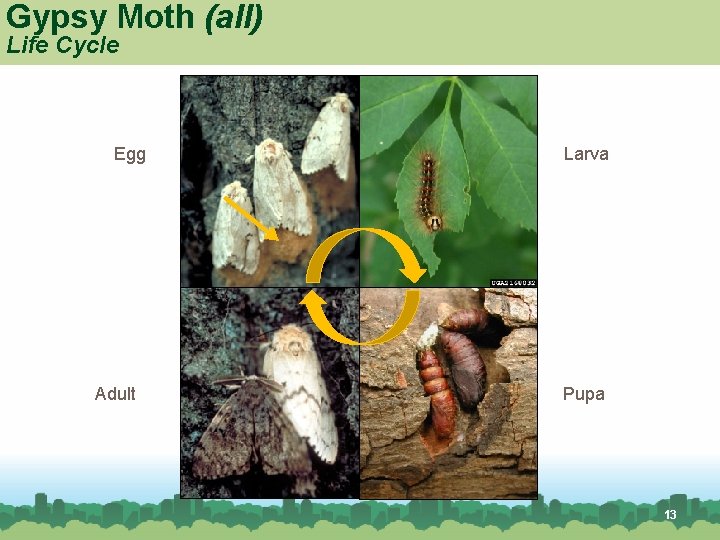
Gypsy Moth (all) Life Cycle Egg Adult Larva Pupa 13
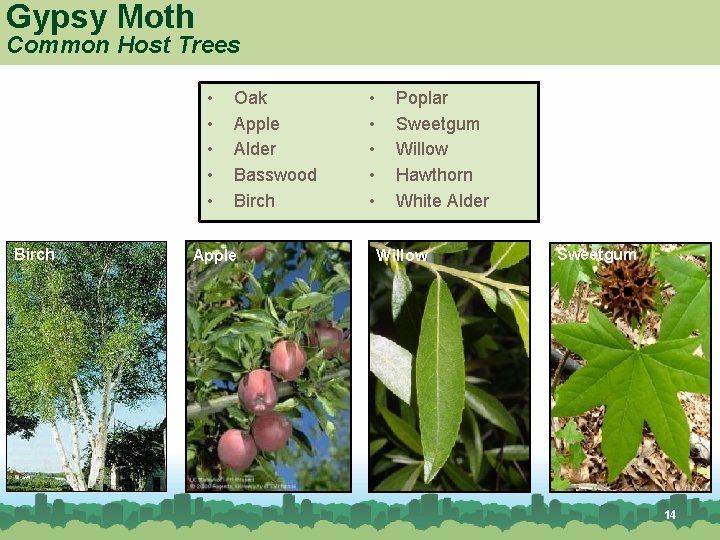
Gypsy Moth Common Host Trees • • • Birch Oak Apple Alder Basswood Birch Apple • • • Poplar Sweetgum Willow Hawthorn White Alder Willow Sweetgum 14
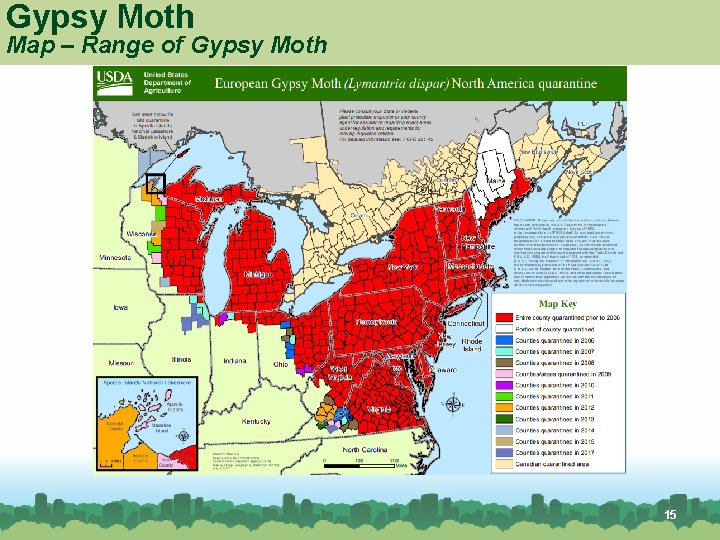
Gypsy Moth Map – Range of Gypsy Moth 15
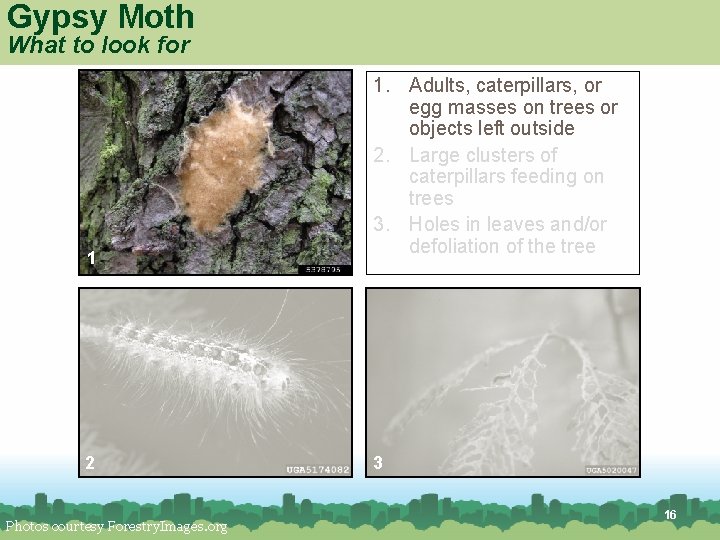
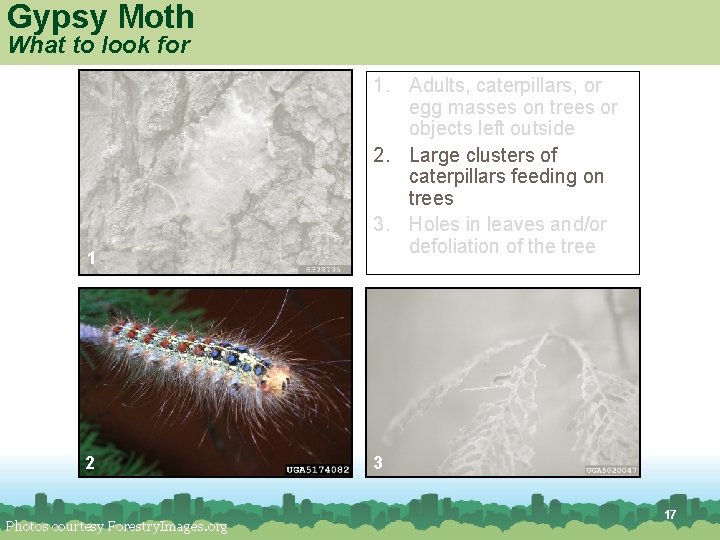
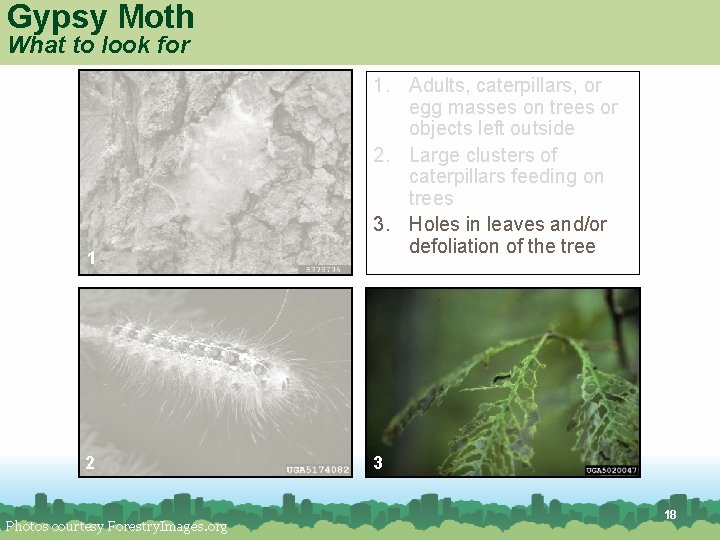
Gypsy Moth What to look for 1 2 Photos courtesy Forestry. Images. org 1. Adults, caterpillars, or egg masses on trees or objects left outside 2. Large clusters of caterpillars feeding on trees 3. Holes in leaves and/or defoliation of the tree 3 16
Gypsy Moth What to look for 1 2 Photos courtesy Forestry. Images. org 1. Adults, caterpillars, or egg masses on trees or objects left outside 2. Large clusters of caterpillars feeding on trees 3. Holes in leaves and/or defoliation of the tree 3 17
Gypsy Moth What to look for 1 2 Photos courtesy Forestry. Images. org 1. Adults, caterpillars, or egg masses on trees or objects left outside 2. Large clusters of caterpillars feeding on trees 3. Holes in leaves and/or defoliation of the tree 3 18
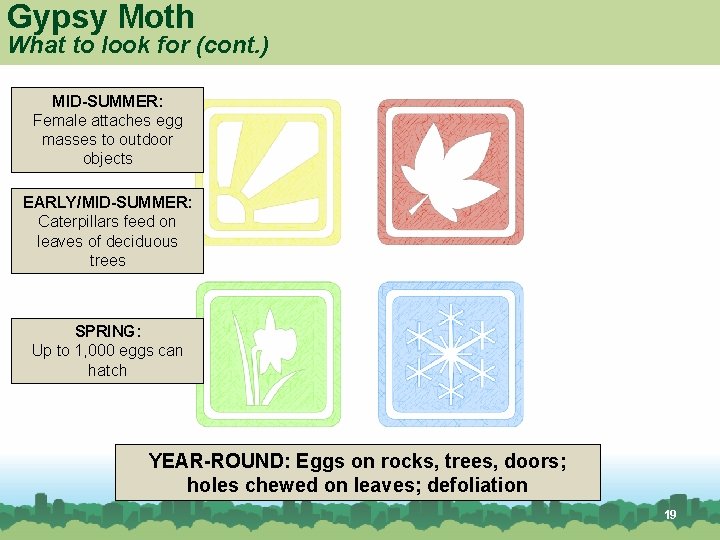
Gypsy Moth What to look for (cont. ) MID-SUMMER: Female attaches egg masses to outdoor objects EARLY/MID-SUMMER: Caterpillars feed on leaves of deciduous trees SPRING: Up to 1, 000 eggs can hatch YEAR-ROUND: Eggs on rocks, trees, doors; holes chewed on leaves; defoliation 19
Gypsy Moth Additional Resources USDA Forest Service http: //www. fs. fed. us/ne/morgantown/4557/gmoth/ Hungry Pests http: //www. hungrypests. com/the-threat/european-gypsy-moth. php Don’t Move Firewood http: //www. dontmovefirewood. org/gallery-of-pests/european-gypsymoth. html Outsmart Invasives Video Clip https: //www. youtube. com/watch? v=E 1 Wp. DS 9 qo. I 0 EDDMaps: Reporting App for Smartphones http: //www. eddmaps. org/ 20