North Dakota Driver Risk Prevention Curriculum Guide Developed



- Slides: 15
North Dakota Driver Risk Prevention Curriculum Guide Developed by North Dakota Driver and Traffic Safety Education Association Funded by The North Dakota Department of Transportation Transition Pegs for Making Turns
Transition Pegs Defined A place on the car that identifies the vehicle’s placement in relationship to the target area while a turn is being made. Used to determine the precise moment at which to make a change (transition) in steering, acceleration or braking actions that will keep the car in balance.
Transition Pegs for Vehicle Balance Left Turns The Left Corner Post intersects with the target Right Turns Inside Rear View Mirror intersects with the target
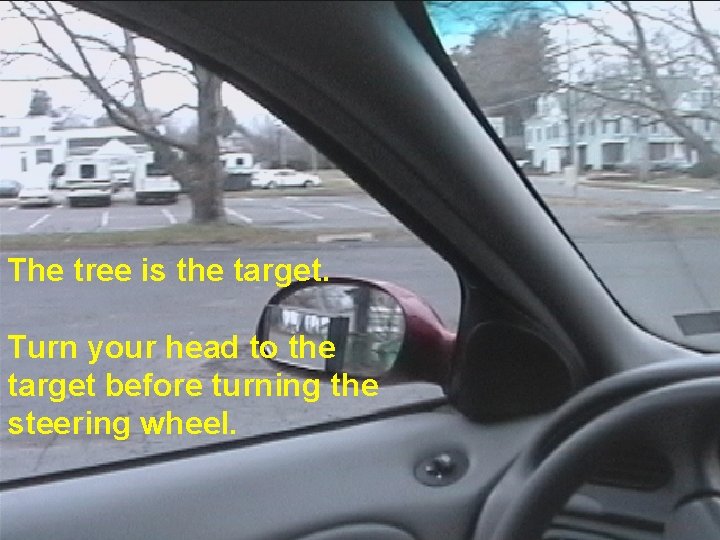
The tree is the target. Turn your head to the target before turning the steering wheel. Copyright NIDB 1996
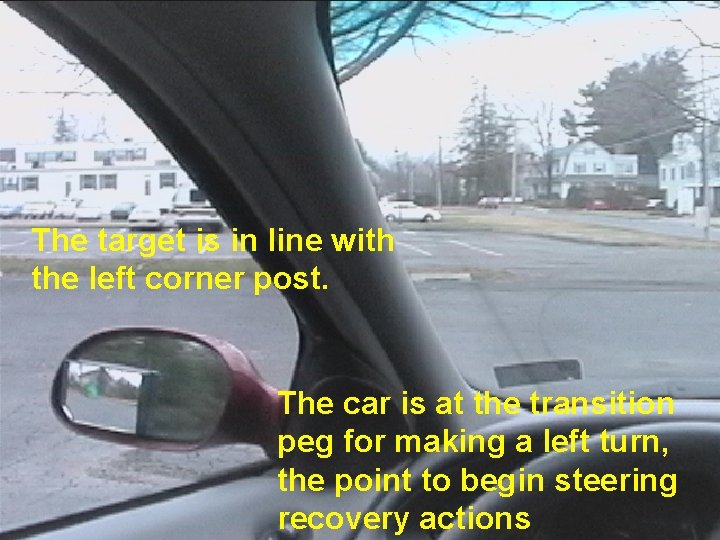
The target is in line with the left corner post. The car is at the transition peg for making a left turn, the point to begin steering recovery actions
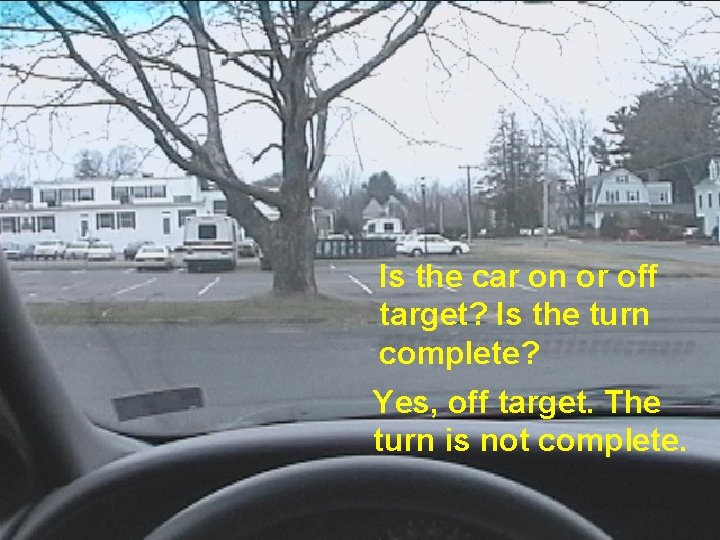
Is the car on or off target? Is the turn complete? Yes, off target. The turn is not complete.
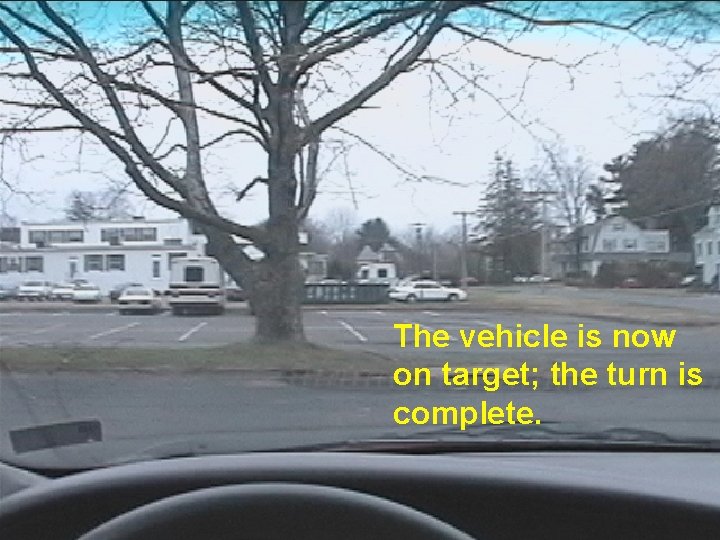
The vehicle is now on target; the turn is complete.
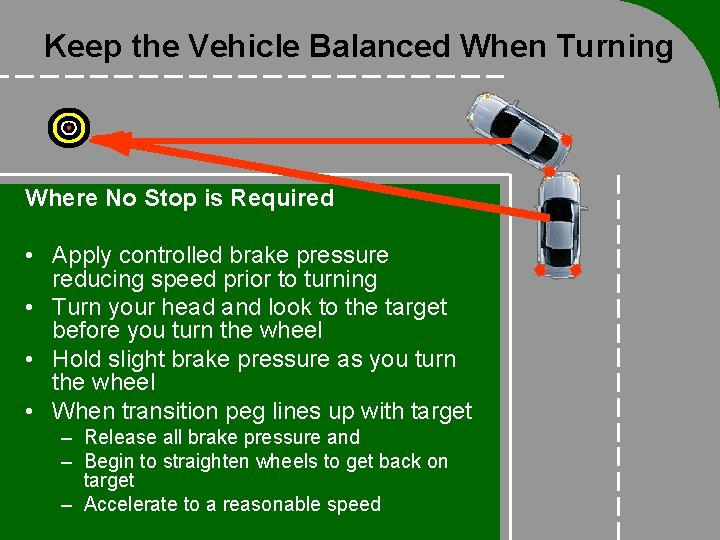
Keep the Vehicle Balanced When Turning Where No Stop is Required • Apply controlled brake pressure reducing speed prior to turning • Turn your head and look to the target before you turn the wheel • Hold slight brake pressure as you turn the wheel • When transition peg lines up with target – Release all brake pressure and – Begin to straighten wheels to get back on target – Accelerate to a reasonable speed
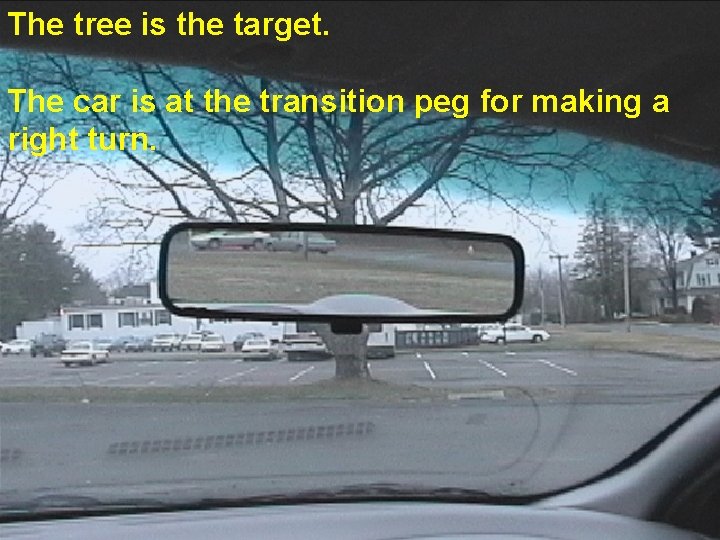
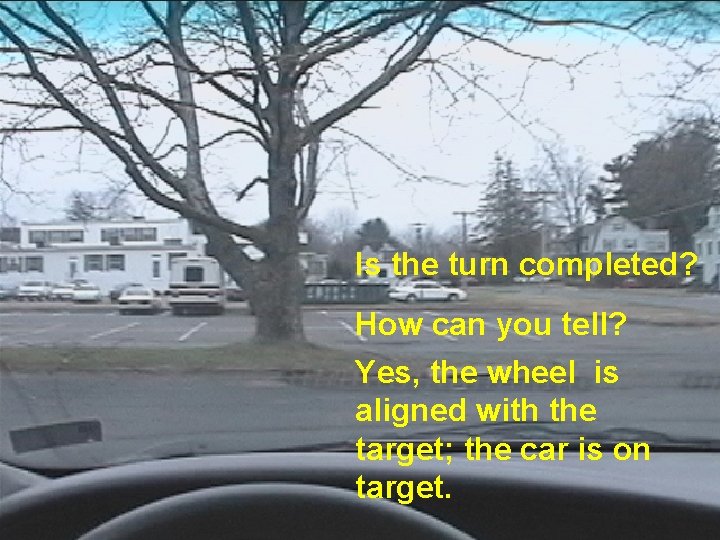
The tree is the target. The car is at the transition peg for making a right turn.
Is the turn completed? How can you tell? Yes, the wheel is aligned with the target; the car is on target.
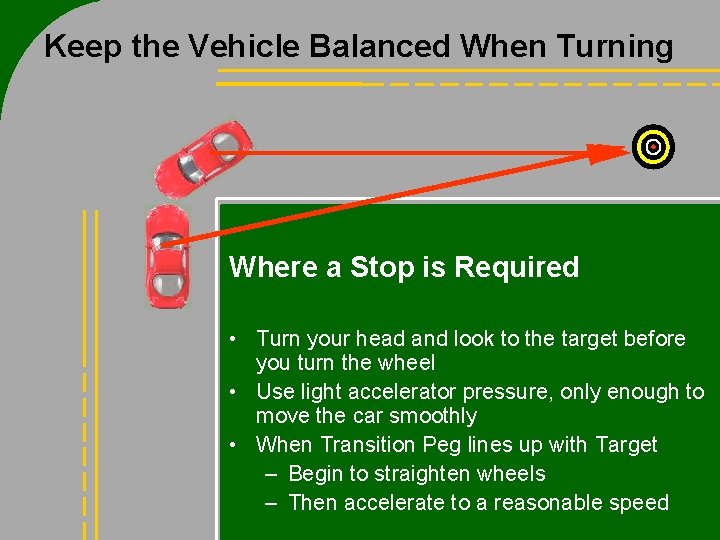
Keep the Vehicle Balanced When Turning Where a Stop is Required • Turn your head and look to the target before you turn the wheel • Use light accelerator pressure, only enough to move the car smoothly • When Transition Peg lines up with Target – Begin to straighten wheels – Then accelerate to a reasonable speed
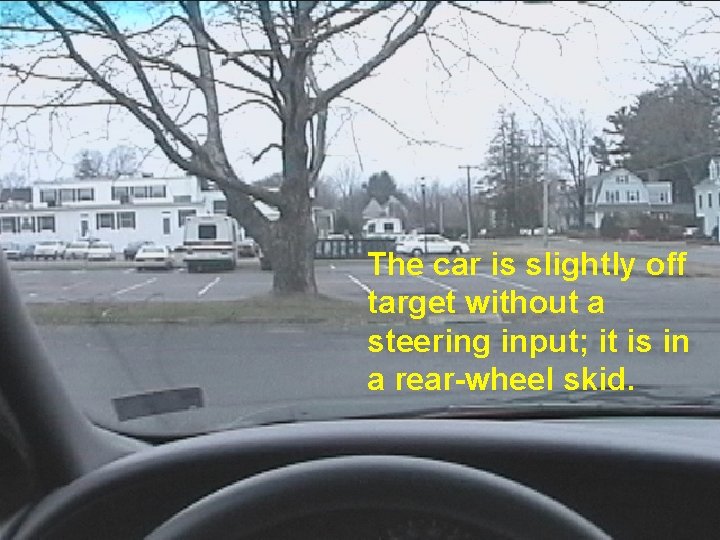
The car is slightly off target without a steering input; it is in a rear-wheel skid.
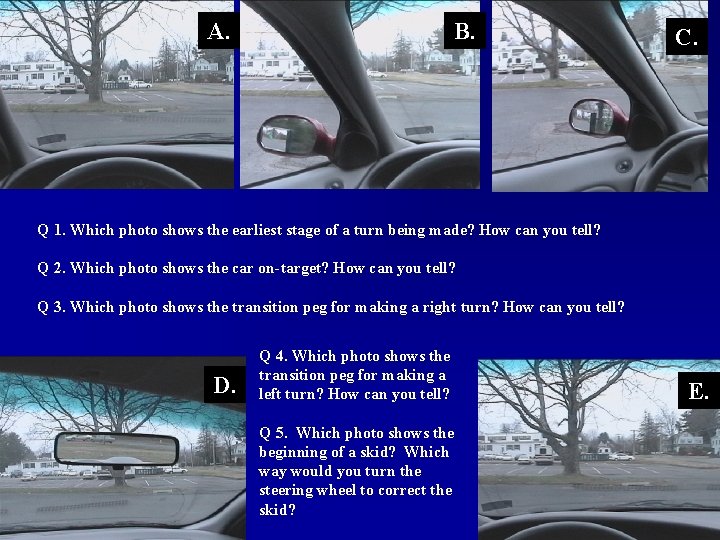
A. B. C. Q 1. Which photo shows the earliest stage of a turn being made? How can you tell? Q 2. Which photo shows the car on-target? How can you tell? Q 3. Which photo shows the transition peg for making a right turn? How can you tell? D. Q 4. Which photo shows the transition peg for making a left turn? How can you tell? Q 5. Which photo shows the beginning of a skid? Which way would you turn the steering wheel to correct the skid? E.
Student Targeting and Transition Peg Practice • • • Target Identification Review Turning Head to Targeting Path 1 st Transition Pegs for Timing Steering Recovery