Nitrogen Fixation Introduction Plants animals and microorganisms can




- Slides: 10
Nitrogen Fixation
Introduction �Plants, animals and microorganisms can die of nitrogen deficiency. �All organisms use the ammonia (NH 3) form of nitrogen �to manufacture amino acids, proteins, nucleic acids �and other nitrogen-containing components �necessary for life.
Introduction �The air we breathe is 78% N 2 and only 21% oxygen �Nitrogen is the most abundant element in our atmosphere. It is a vital element as many classes of compounds essential to living systems are nitrogen-containing compounds. �Nitrogen is a primary nutrient for all green plants, but it must be modified before it can be readily utilized by most living systems.
Nitrogen Fixation
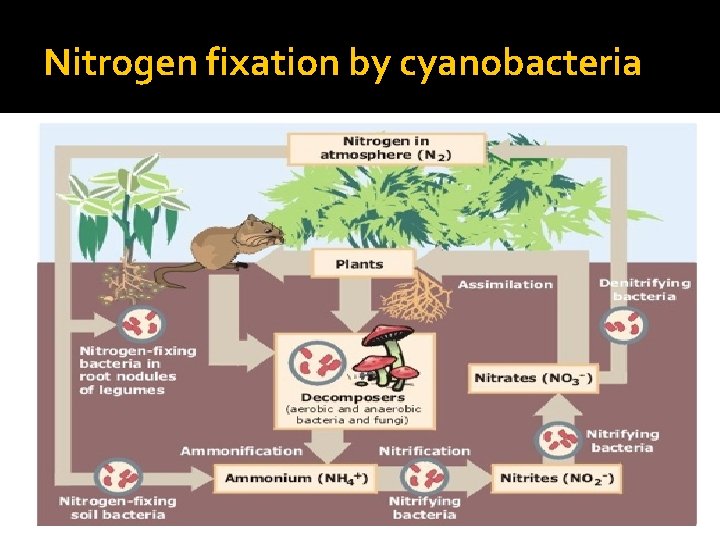
Nitrogen fixation �Nitrogen fixation is one process by which molecular nitrogen is reduced to form ammonia. This complex process is carried out by nitrogen-fixing bacteria present in the soil. Although nitrogen-fixation involves a number of oxidation-reduction reactions that occur sequentially, that reaction which describes its reduction can be written in a simplified way as: N 2 + 6 e- + 8 H+ ---> 2 NH 4+ (ammonium ion)
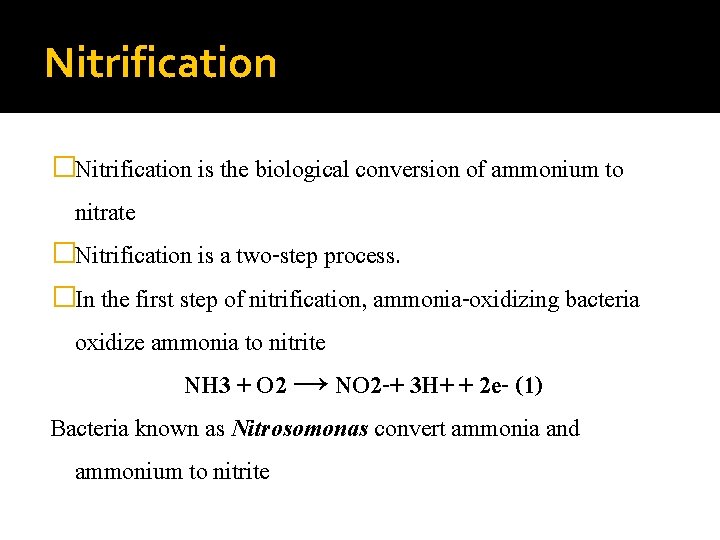
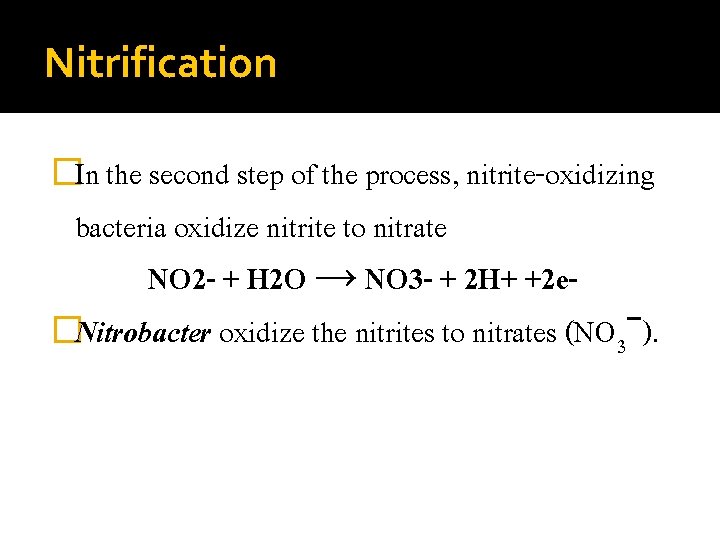
Nitrification �Nitrification is the biological conversion of ammonium to nitrate �Nitrification is a two-step process. �In the first step of nitrification, ammonia-oxidizing bacteria oxidize ammonia to nitrite NH 3 + O 2 → NO 2 -+ 3 H+ + 2 e- (1) Bacteria known as Nitrosomonas convert ammonia and ammonium to nitrite
Nitrification �In the second step of the process, nitrite-oxidizing bacteria oxidize nitrite to nitrate NO 2 - + H 2 O → NO 3 - + 2 H+ +2 e�Nitrobacter oxidize the nitrites to nitrates (NO 3−).
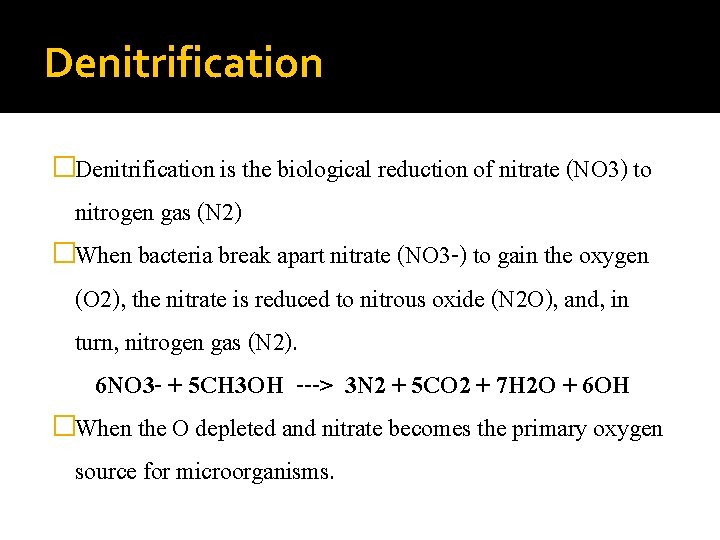
Denitrification �Denitrification is the biological reduction of nitrate (NO 3) to nitrogen gas (N 2) �When bacteria break apart nitrate (NO 3 -) to gain the oxygen (O 2), the nitrate is reduced to nitrous oxide (N 2 O), and, in turn, nitrogen gas (N 2). 6 NO 3 - + 5 CH 3 OH ---> 3 N 2 + 5 CO 2 + 7 H 2 O + 6 OH �When the O depleted and nitrate becomes the primary oxygen source for microorganisms.
Nitrogen fixation by cyanobacteria
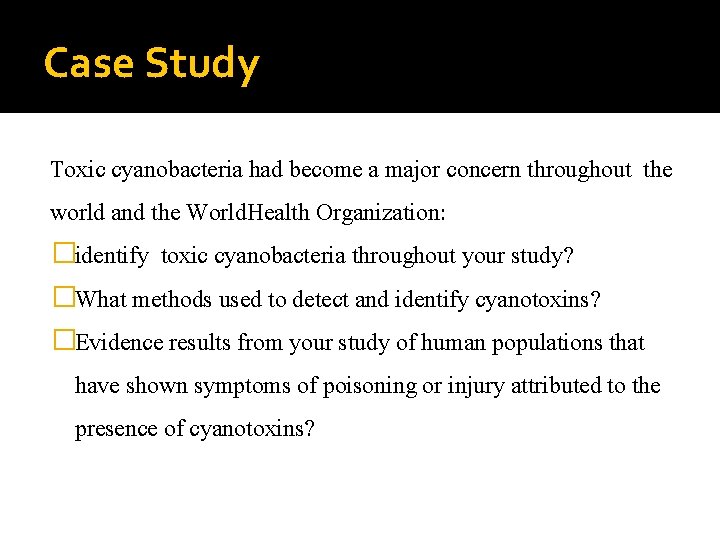
Case Study Toxic cyanobacteria had become a major concern throughout the world and the World. Health Organization: �identify toxic cyanobacteria throughout your study? �What methods used to detect and identify cyanotoxins? �Evidence results from your study of human populations that have shown symptoms of poisoning or injury attributed to the presence of cyanotoxins?