Networks of Exchange c 1200 to c 1450
- Slides: 15
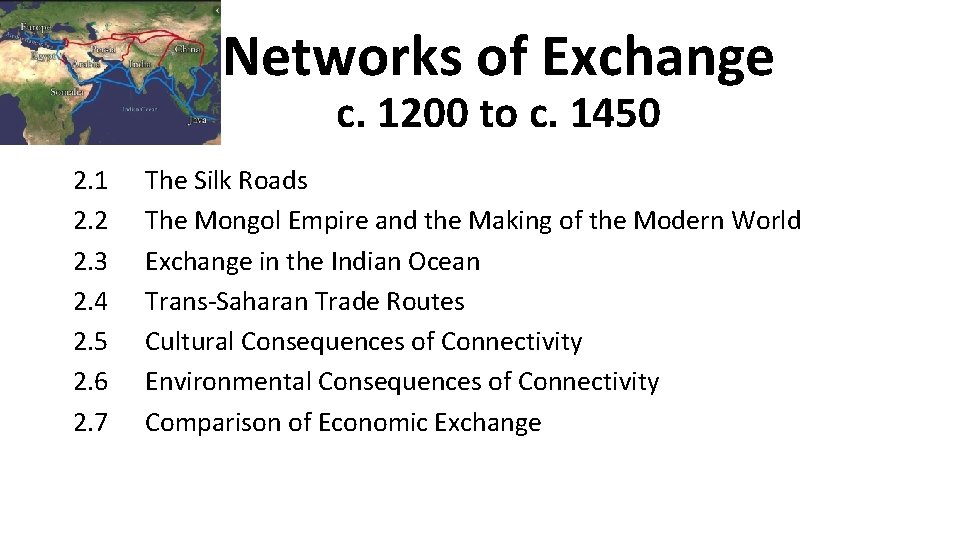
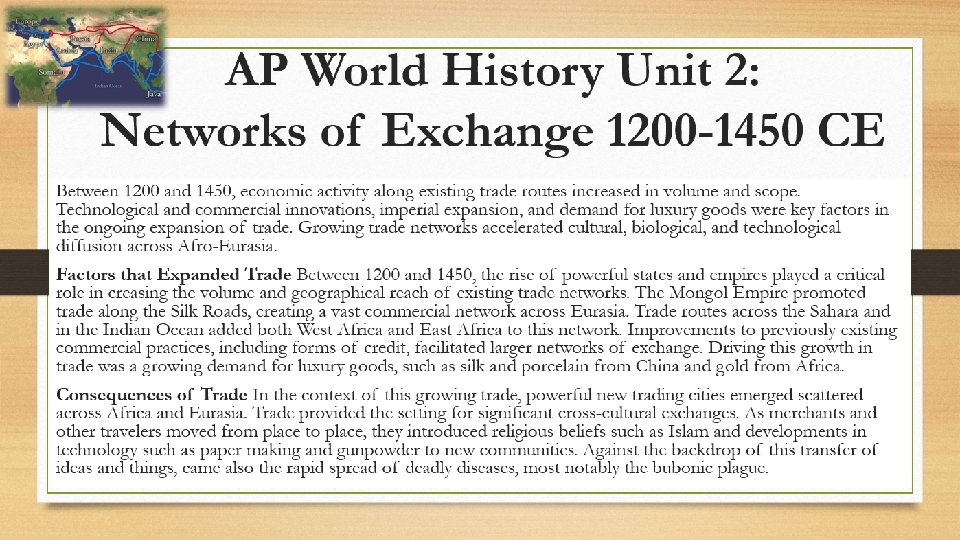
Networks of Exchange c. 1200 to c. 1450 2. 1 2. 2 2. 3 2. 4 2. 5 2. 6 2. 7 The Silk Roads The Mongol Empire and the Making of the Modern World Exchange in the Indian Ocean Trans-Saharan Trade Routes Cultural Consequences of Connectivity Environmental Consequences of Connectivity Comparison of Economic Exchange
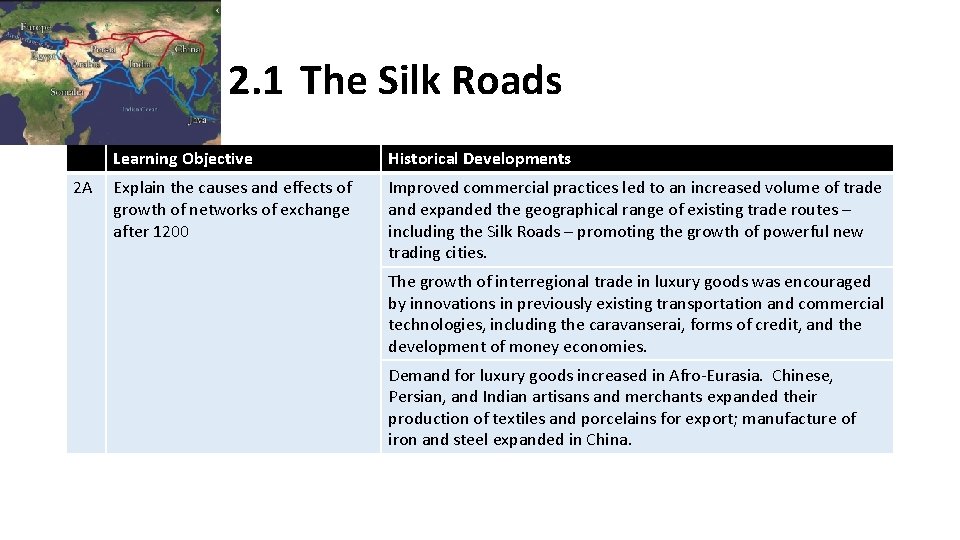
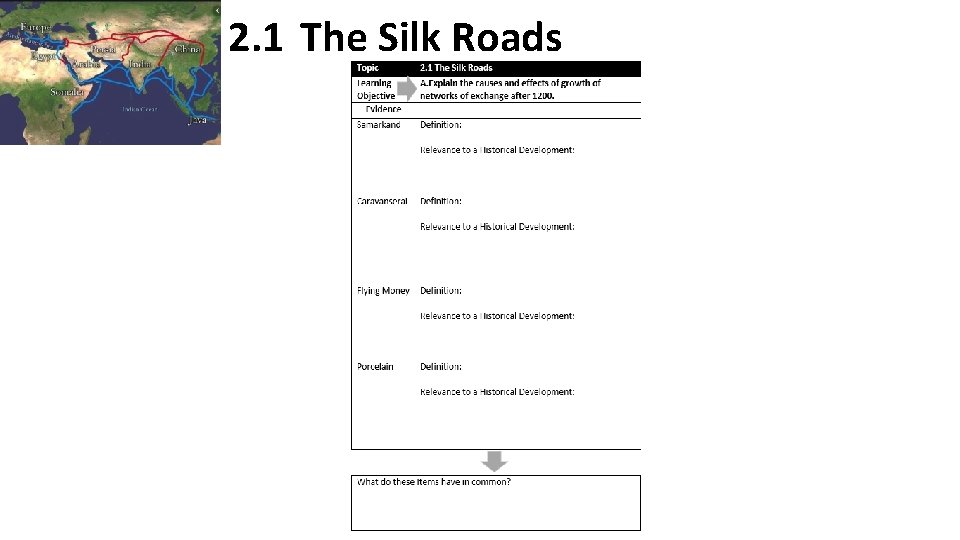
2. 1 The Silk Roads 2 A Learning Objective Historical Developments Explain the causes and effects of growth of networks of exchange after 1200 Improved commercial practices led to an increased volume of trade and expanded the geographical range of existing trade routes – including the Silk Roads – promoting the growth of powerful new trading cities. The growth of interregional trade in luxury goods was encouraged by innovations in previously existing transportation and commercial technologies, including the caravanserai, forms of credit, and the development of money economies. Demand for luxury goods increased in Afro-Eurasia. Chinese, Persian, and Indian artisans and merchants expanded their production of textiles and porcelains for export; manufacture of iron and steel expanded in China.
2. 1 The Silk Roads
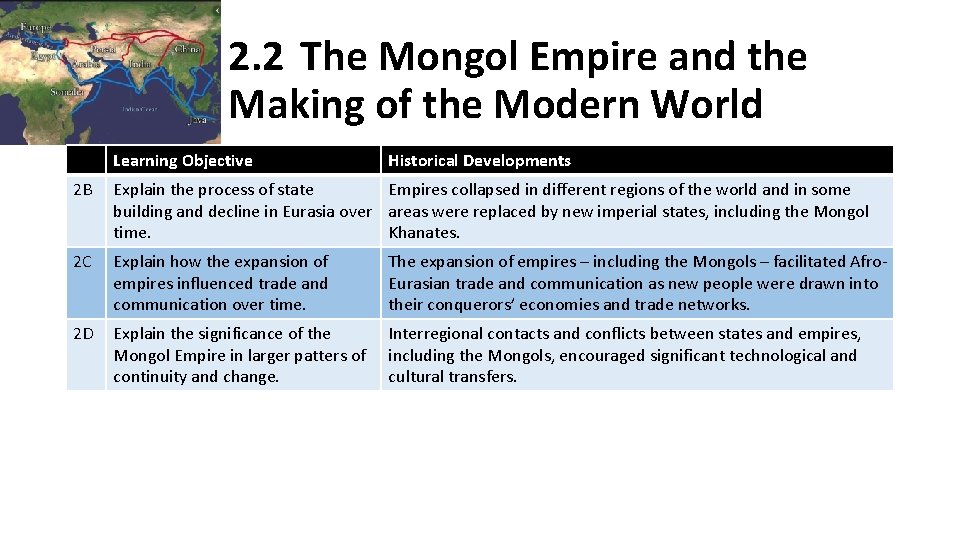
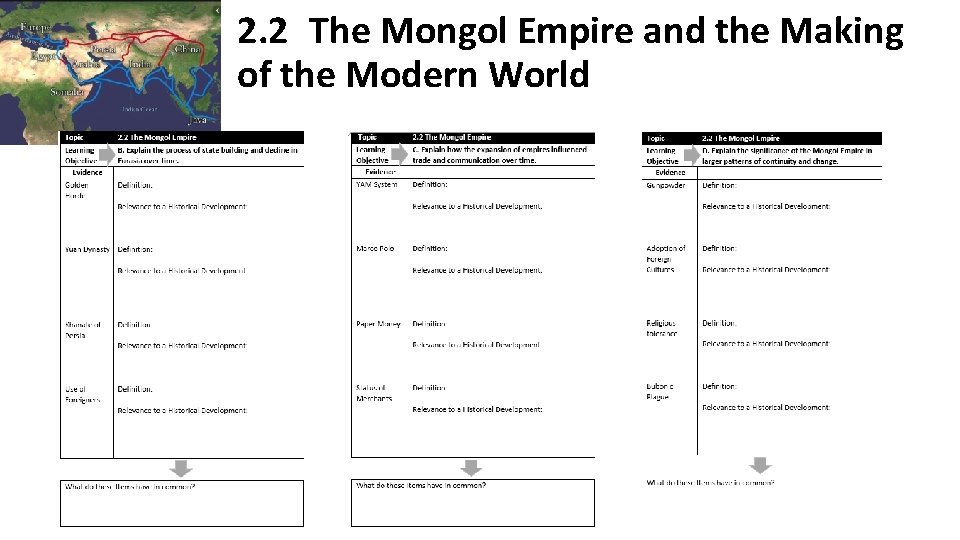
2. 2 The Mongol Empire and the Making of the Modern World Learning Objective Historical Developments 2 B Explain the process of state Empires collapsed in different regions of the world and in some building and decline in Eurasia over areas were replaced by new imperial states, including the Mongol time. Khanates. 2 C Explain how the expansion of empires influenced trade and communication over time. The expansion of empires – including the Mongols – facilitated Afro. Eurasian trade and communication as new people were drawn into their conquerors’ economies and trade networks. 2 D Explain the significance of the Mongol Empire in larger patters of continuity and change. Interregional contacts and conflicts between states and empires, including the Mongols, encouraged significant technological and cultural transfers.
2. 2 The Mongol Empire and the Making of the Modern World
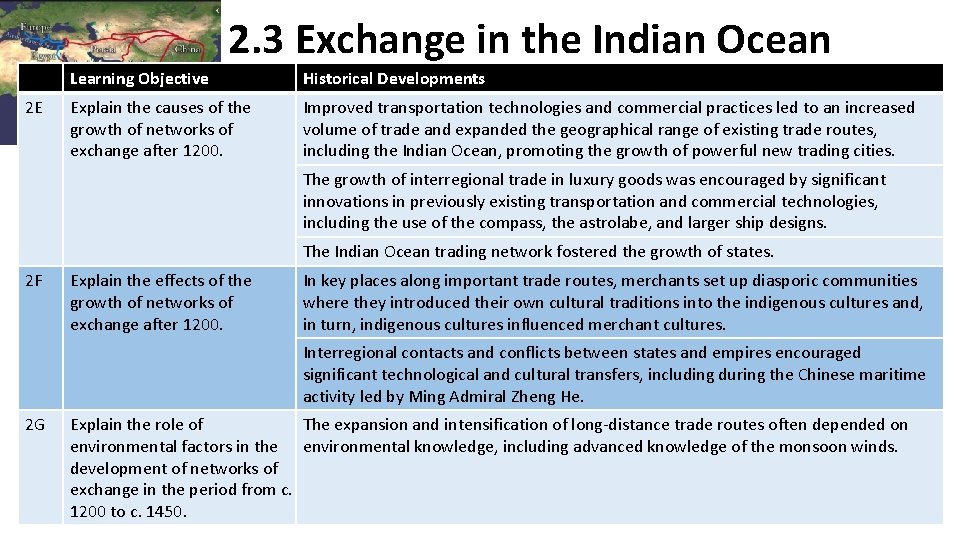
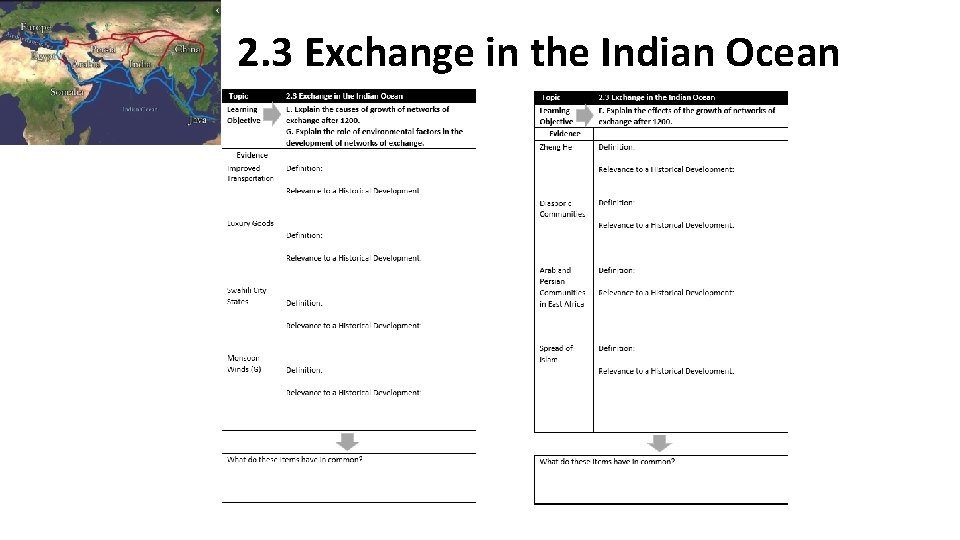
2. 3 Exchange in the Indian Ocean 2 E Learning Objective Historical Developments Explain the causes of the growth of networks of exchange after 1200. Improved transportation technologies and commercial practices led to an increased volume of trade and expanded the geographical range of existing trade routes, including the Indian Ocean, promoting the growth of powerful new trading cities. The growth of interregional trade in luxury goods was encouraged by significant innovations in previously existing transportation and commercial technologies, including the use of the compass, the astrolabe, and larger ship designs. The Indian Ocean trading network fostered the growth of states. 2 F Explain the effects of the growth of networks of exchange after 1200. In key places along important trade routes, merchants set up diasporic communities where they introduced their own cultural traditions into the indigenous cultures and, in turn, indigenous cultures influenced merchant cultures. Interregional contacts and conflicts between states and empires encouraged significant technological and cultural transfers, including during the Chinese maritime activity led by Ming Admiral Zheng He. 2 G Explain the role of The expansion and intensification of long-distance trade routes often depended on environmental factors in the environmental knowledge, including advanced knowledge of the monsoon winds. development of networks of exchange in the period from c. 1200 to c. 1450.
2. 3 Exchange in the Indian Ocean
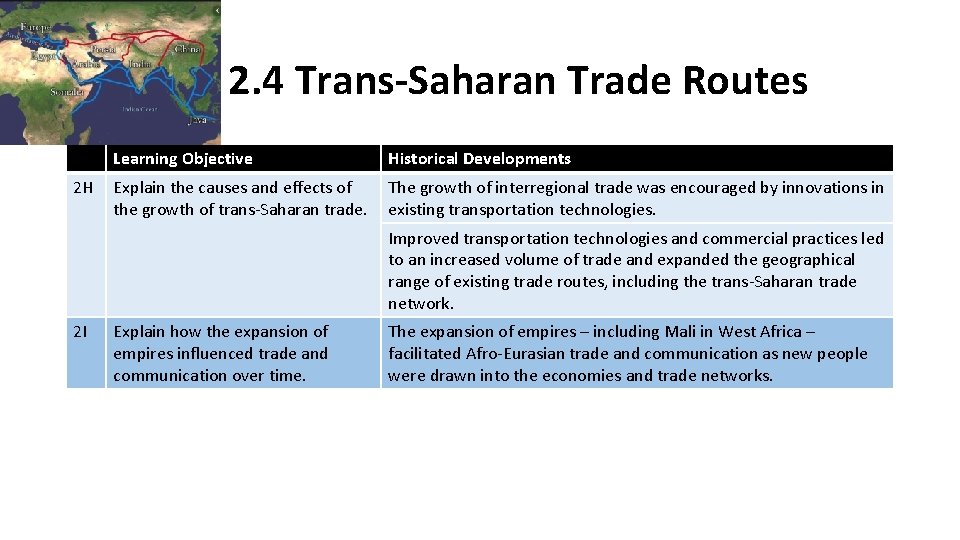
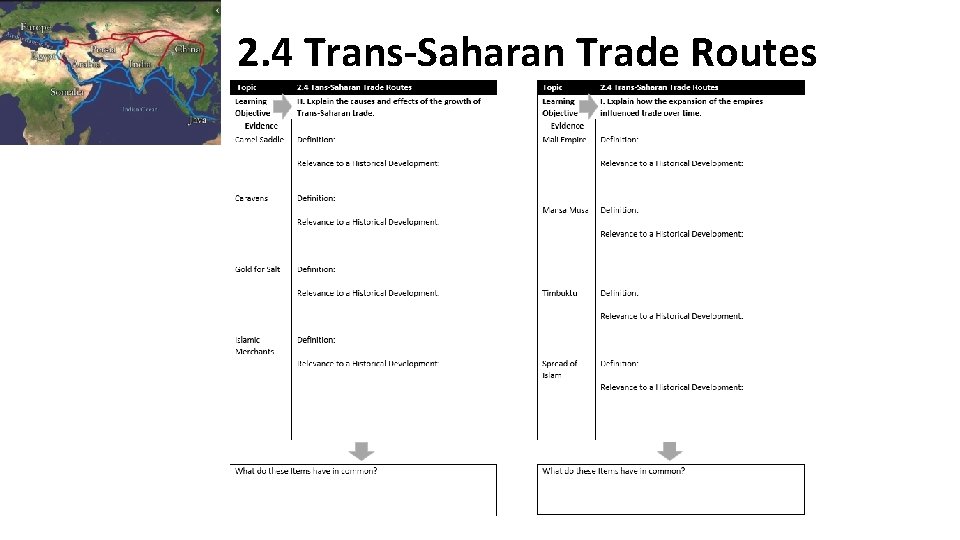
2. 4 Trans-Saharan Trade Routes 2 H Learning Objective Historical Developments Explain the causes and effects of the growth of trans-Saharan trade. The growth of interregional trade was encouraged by innovations in existing transportation technologies. Improved transportation technologies and commercial practices led to an increased volume of trade and expanded the geographical range of existing trade routes, including the trans-Saharan trade network. 2 I Explain how the expansion of empires influenced trade and communication over time. The expansion of empires – including Mali in West Africa – facilitated Afro-Eurasian trade and communication as new people were drawn into the economies and trade networks.
2. 4 Trans-Saharan Trade Routes
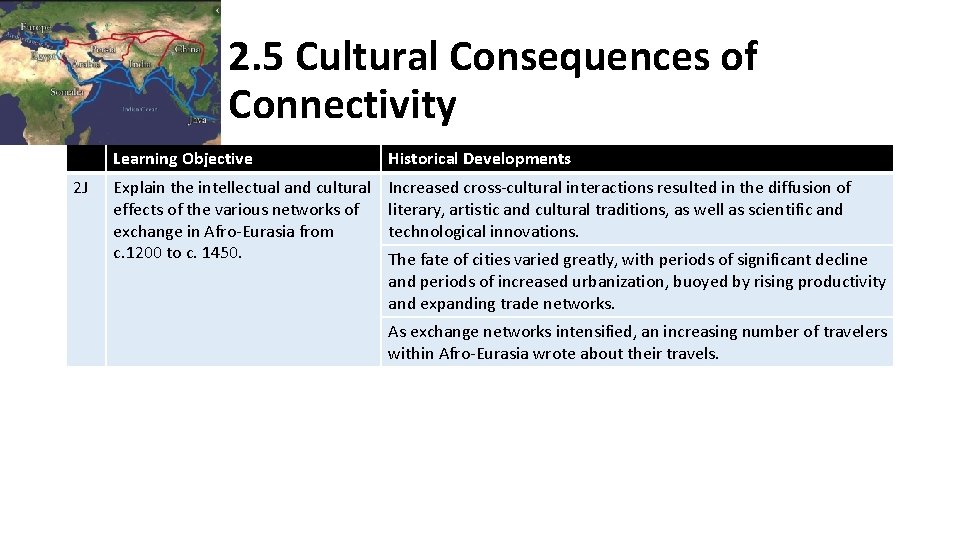
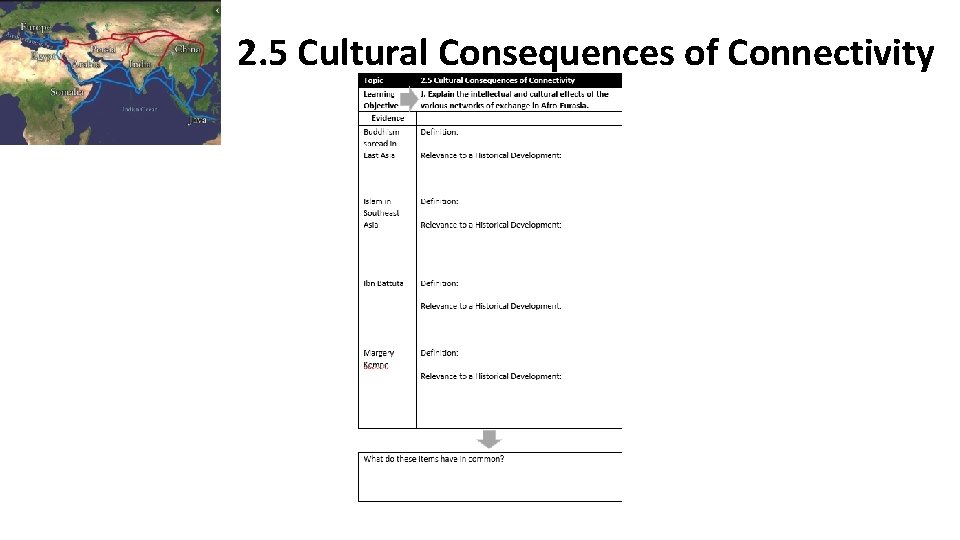
2. 5 Cultural Consequences of Connectivity 2 J Learning Objective Historical Developments Explain the intellectual and cultural effects of the various networks of exchange in Afro-Eurasia from c. 1200 to c. 1450. Increased cross-cultural interactions resulted in the diffusion of literary, artistic and cultural traditions, as well as scientific and technological innovations. The fate of cities varied greatly, with periods of significant decline and periods of increased urbanization, buoyed by rising productivity and expanding trade networks. As exchange networks intensified, an increasing number of travelers within Afro-Eurasia wrote about their travels.
2. 5 Cultural Consequences of Connectivity
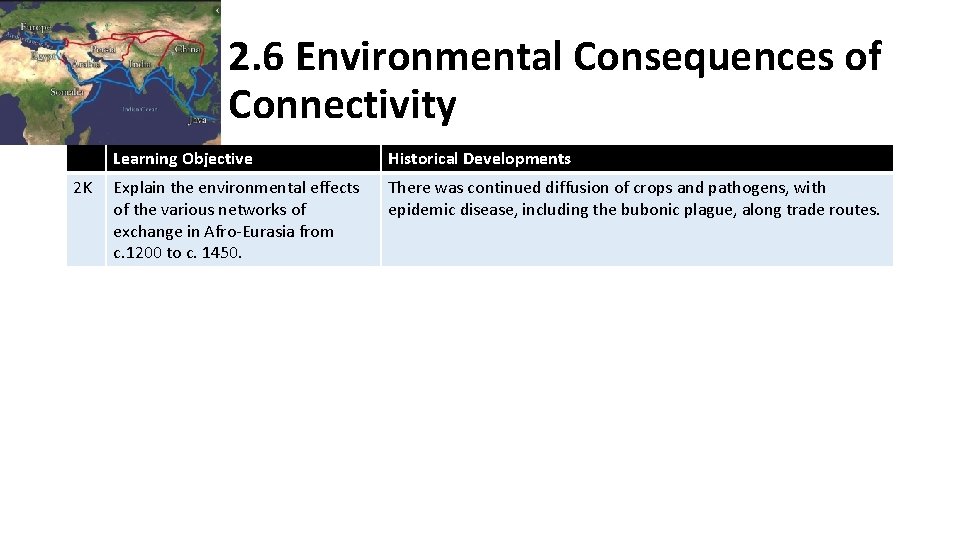
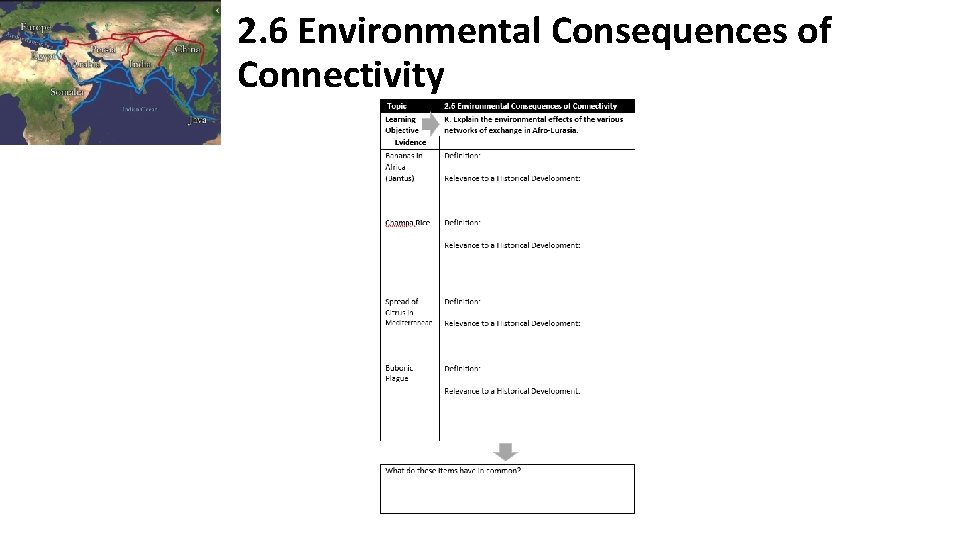
2. 6 Environmental Consequences of Connectivity 2 K Learning Objective Historical Developments Explain the environmental effects of the various networks of exchange in Afro-Eurasia from c. 1200 to c. 1450. There was continued diffusion of crops and pathogens, with epidemic disease, including the bubonic plague, along trade routes.
2. 6 Environmental Consequences of Connectivity
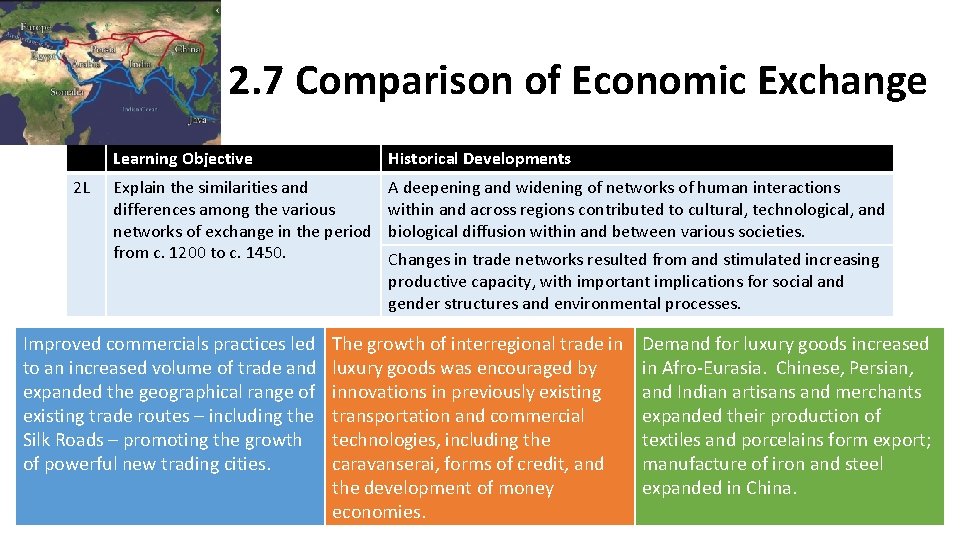
2. 7 Comparison of Economic Exchange 2 L Learning Objective Historical Developments Explain the similarities and differences among the various networks of exchange in the period from c. 1200 to c. 1450. A deepening and widening of networks of human interactions within and across regions contributed to cultural, technological, and biological diffusion within and between various societies. Improved commercials practices led to an increased volume of trade and expanded the geographical range of existing trade routes – including the Silk Roads – promoting the growth of powerful new trading cities. Changes in trade networks resulted from and stimulated increasing productive capacity, with important implications for social and gender structures and environmental processes. The growth of interregional trade in luxury goods was encouraged by innovations in previously existing transportation and commercial technologies, including the caravanserai, forms of credit, and the development of money economies. Demand for luxury goods increased in Afro-Eurasia. Chinese, Persian, and Indian artisans and merchants expanded their production of textiles and porcelains form export; manufacture of iron and steel expanded in China.