
Russian and Chinese EmpireBuilding 1450 1750 Russia and

Russian and Chinese Empire-Building [1450 -1750] Russia and Qing
Making the Russian Empire �Russian state centered on the city of Moscow �Conquered a number of neighboring Russian-speaking cities �Continued to expand south and east of Moscow �Brought together a wide variety of different peoples and cultures
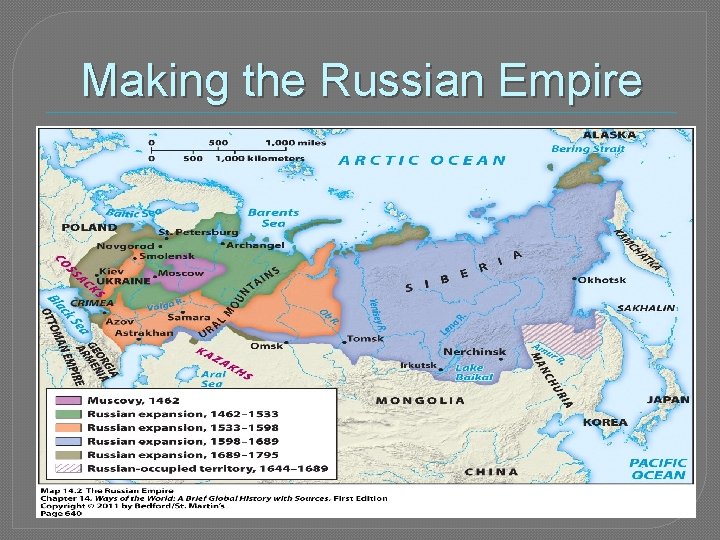
Making the Russian Empire
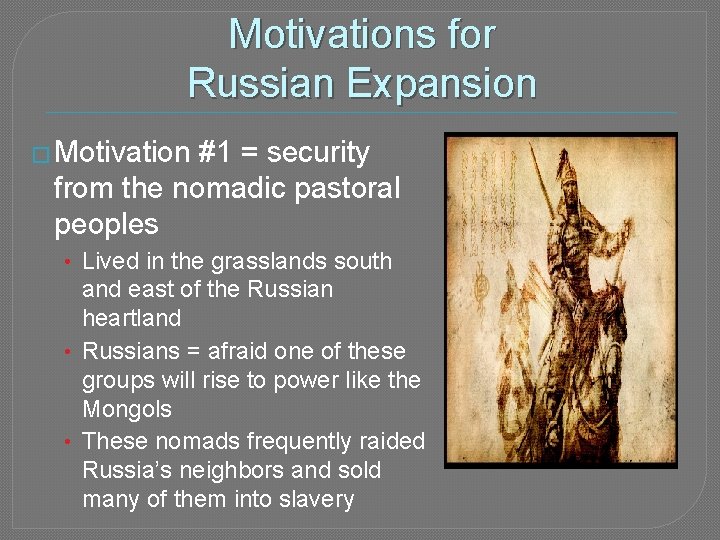
Motivations for Russian Expansion � Motivation #1 = security from the nomadic pastoral peoples • Lived in the grasslands south and east of the Russian heartland • Russians = afraid one of these groups will rise to power like the Mongols • These nomads frequently raided Russia’s neighbors and sold many of them into slavery
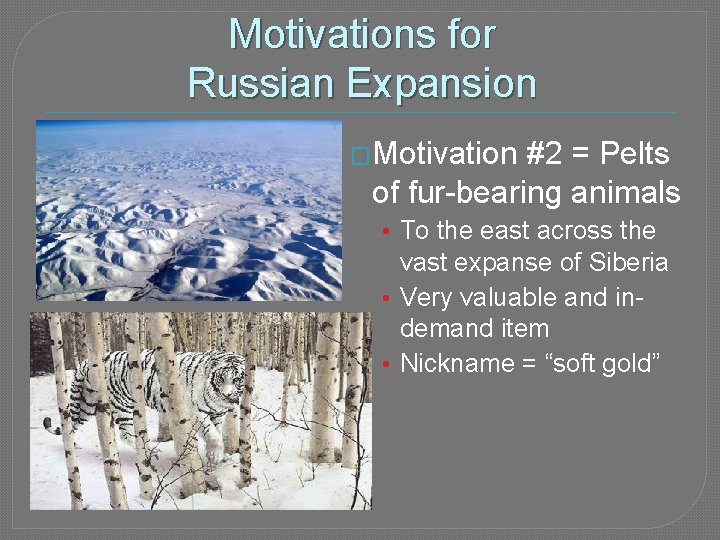
Motivations for Russian Expansion �Motivation #2 = Pelts of fur-bearing animals • To the east across the vast expanse of Siberia • Very valuable and indemand item • Nickname = “soft gold”
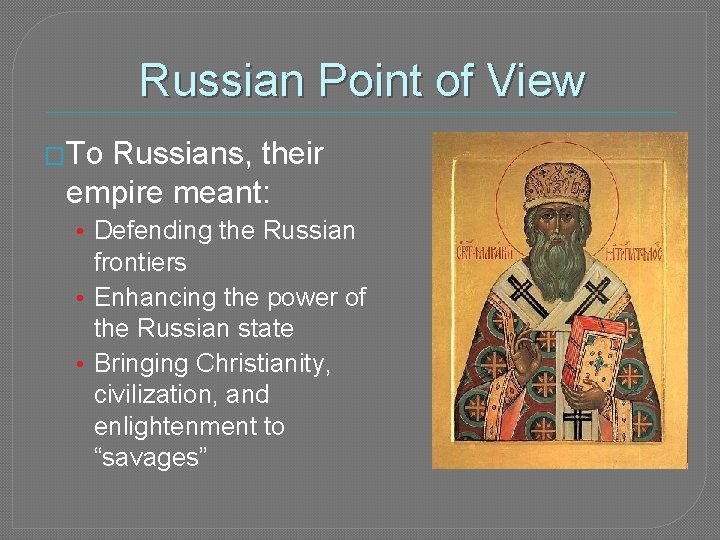
Russian Point of View �To Russians, their empire meant: • Defending the Russian frontiers • Enhancing the power of the Russian state • Bringing Christianity, civilization, and enlightenment to “savages”
Ivan III, the Great (1462 -1505) � In the 15 th C, grand princes of Moscow continued to increase land, population, and wealth � Laid foundations of Russian national state � Fall of Constantinople and emergence of New Rome and seat of Orthodox Christianity � Proclaimed his absolute sovereignty over all Russian princes and nobles � Refused further tribute to Tatars
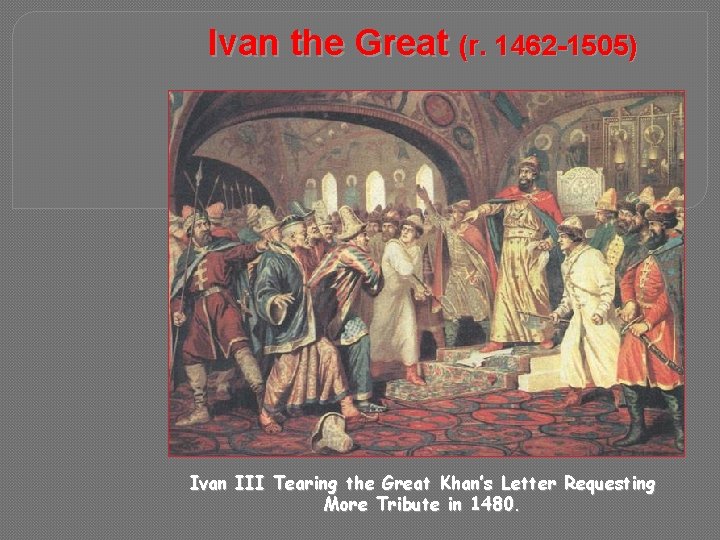
Ivan the Great (r. 1462 -1505) Ivan III Tearing the Great Khan’s Letter Requesting More Tribute in 1480.
Ivan III, The Great � Divided into khanates and hordes � Manor system and creation of expanding military control � Ivan III forced lesser princes to accept him and his successors as unquestioned rulers over military, judicial, and foreign affairs � Gradually, Russian ruler emerged as a powerful, autocratic ruler, a tsar or Ceasar

The Rise of Russia
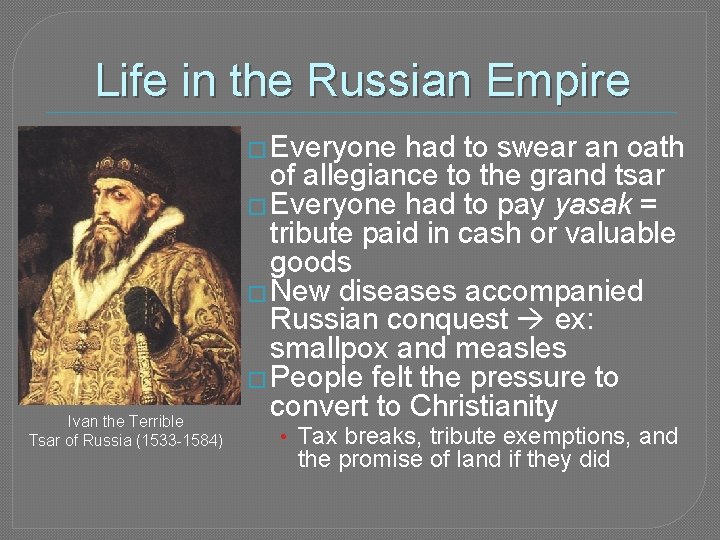
Life in the Russian Empire � Everyone Ivan the Terrible Tsar of Russia (1533 -1584) had to swear an oath of allegiance to the grand tsar � Everyone had to pay yasak = tribute paid in cash or valuable goods � New diseases accompanied Russian conquest ex: smallpox and measles � People felt the pressure to convert to Christianity • Tax breaks, tribute exemptions, and the promise of land if they did
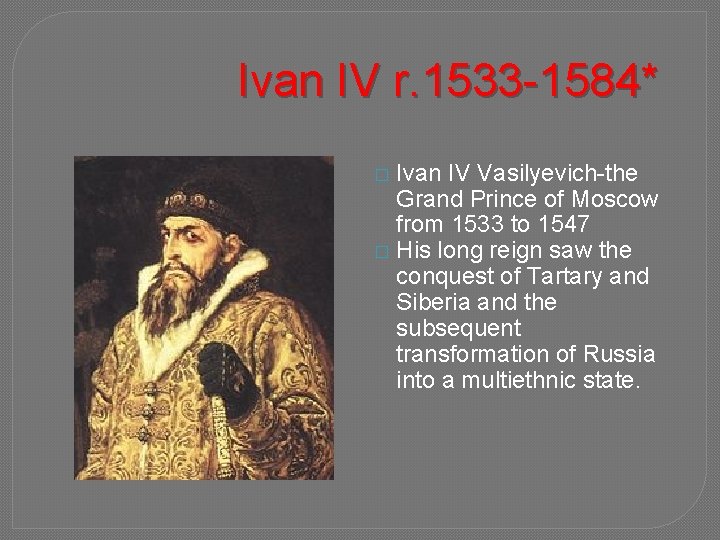
Ivan IV r. 1533 -1584* Ivan IV Vasilyevich-the Grand Prince of Moscow from 1533 to 1547 � His long reign saw the conquest of Tartary and Siberia and the subsequent transformation of Russia into a multiethnic state. �

Tsardom of Russia First Russian ruler to officially crown himself “Tsar” was Ivan IV (The Terrible) � 1547 -1584 -Tzar not Prince � Subordination of nobles, exiling many, and executing many � Enduring legacies both positive and negative �
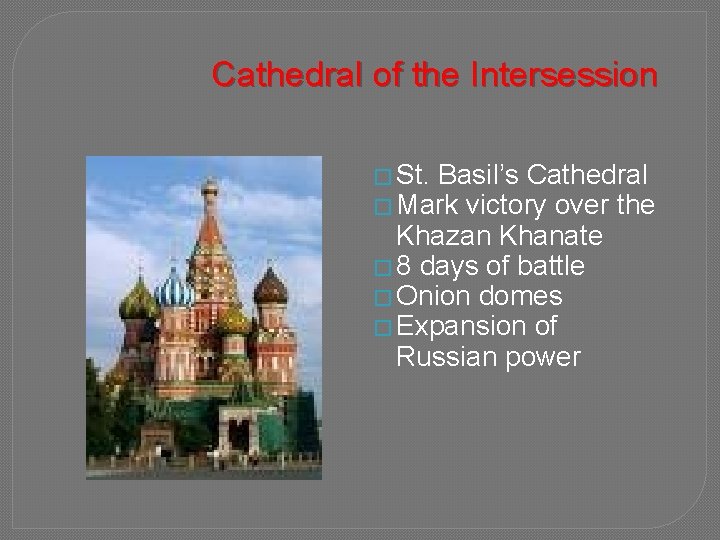
Cathedral of the Intersession � St. Basil’s Cathedral � Mark victory over the Khazan Khanate � 8 days of battle � Onion domes � Expansion of Russian power
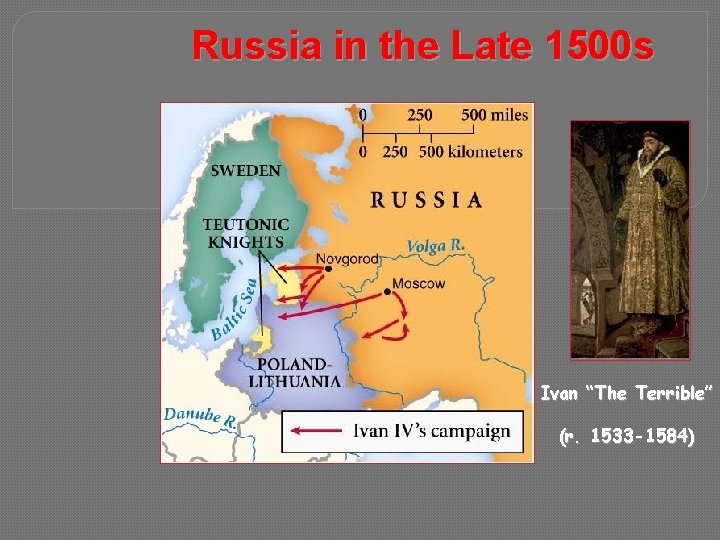
Russia in the Late 1500 s Ivan “The Terrible” (r. 1533 -1584)
Ivan IV r. 1533 -1584 complex personality; described as intelligent and devout, yet given to rages and prone to episodic outbreaks of mental illness. � One notable outburst may have resulted in the death of his groomed and chosen heir Ivanovich, which led to the passing of the Tsardom to the younger son: the weak and possibly intellectually disabled Feodor � Although his name is usually written in English as Ivan the Terrible, its original meaning is closer to "Redoubtable" or "Severe" and carries connotations of might, power and strictness rather than horror or cruelty �
The “Time of Troubles” Russian Inquisition left thousands dead Rampant famine, grass, cannibalism? Ivan IV murdered his son and daughter-in-law who was carrying his grandson � No true successor to crown � Internal chaos attracts Polish-Lithuanian intervention and installment of “tsars” � Between 1598 -1610, Six different “tsars” � Vast lands acquired under Ivan III lost � Who will unit the Lands of the Rus? � � �
The Russian Empire �By the 18 th century = Russia became one of the great powers of Europe �Power stemmed from wealth found in: rich agricultural lands, valuable furs, and mineral deposits �Russia became a highly militarized state as well �Russian Empire stayed intact until the collapse of the Soviet Union in 1991
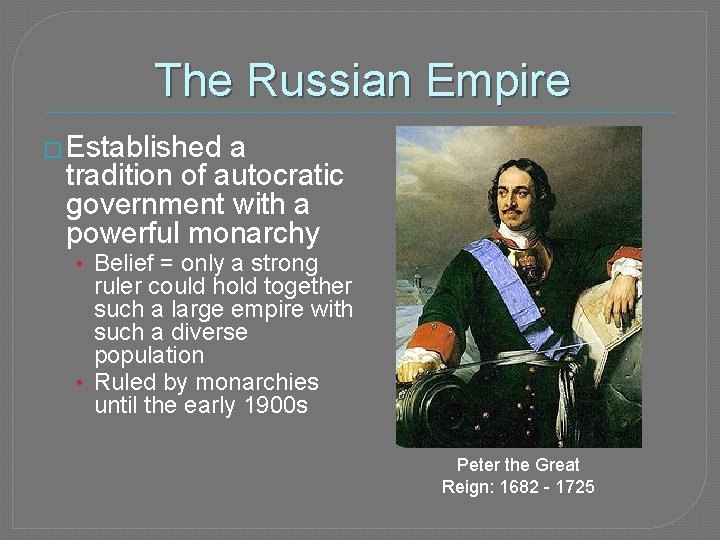
The Russian Empire � Established a tradition of autocratic government with a powerful monarchy • Belief = only a strong ruler could hold together such a large empire with such a diverse population • Ruled by monarchies until the early 1900 s Peter the Great Reign: 1682 - 1725
Peter I, the Great � Consolidated autocracy in Russia and brought country into European state system � Largest state in the world from Baltic to Pacific Ocean � Window to the sea and the Great Northern War � New Capital, St. Petersburg, a window opened to Europe to replace the cultural center of Moscow
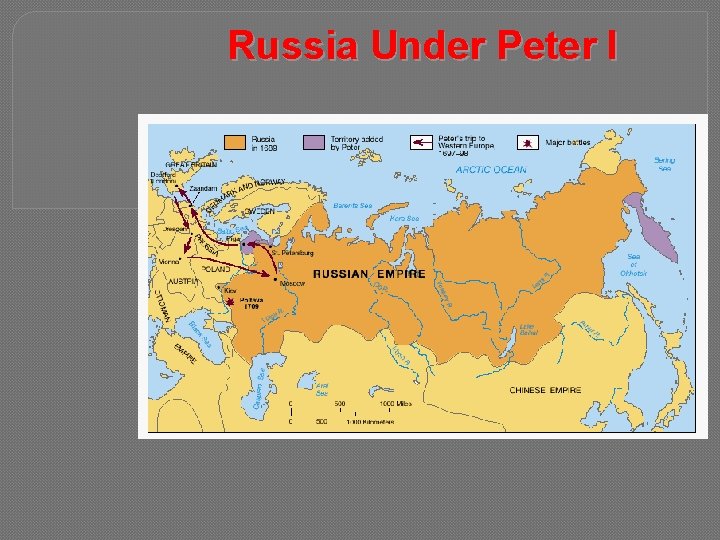
Russia Under Peter I
Russian Empire vs. those of other Western European Countries RUSSIAN EMPIRE � � � Acquired territories next to them that they had been in contact with for a long time Acquired territories at the same time that a Russian state was taking shape “Russia was an empire. ” OTHER EUROPEANS � � � Acquired territories far away from them that they didn’t know about until 1492 Acquired overseas empires AFTER establishing themselves as solid European states “The British had an empire. ”
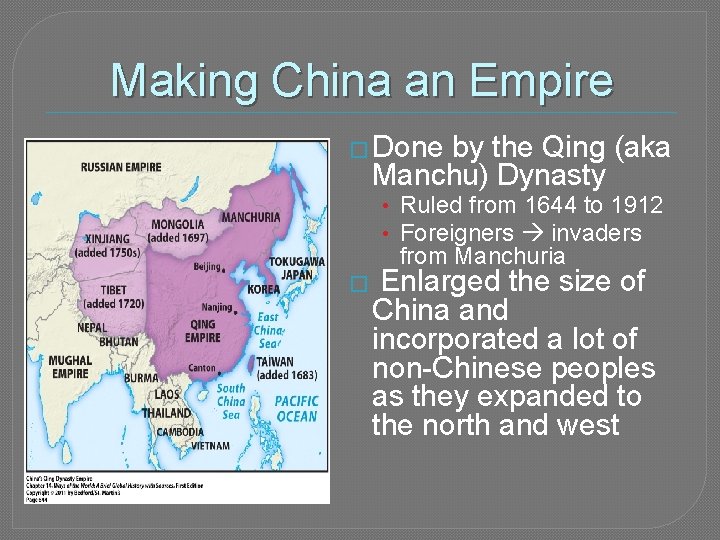
Making China an Empire � Done by the Qing (aka Manchu) Dynasty • Ruled from 1644 to 1912 • Foreigners invaders from Manchuria � Enlarged the size of China and incorporated a lot of non-Chinese peoples as they expanded to the north and west
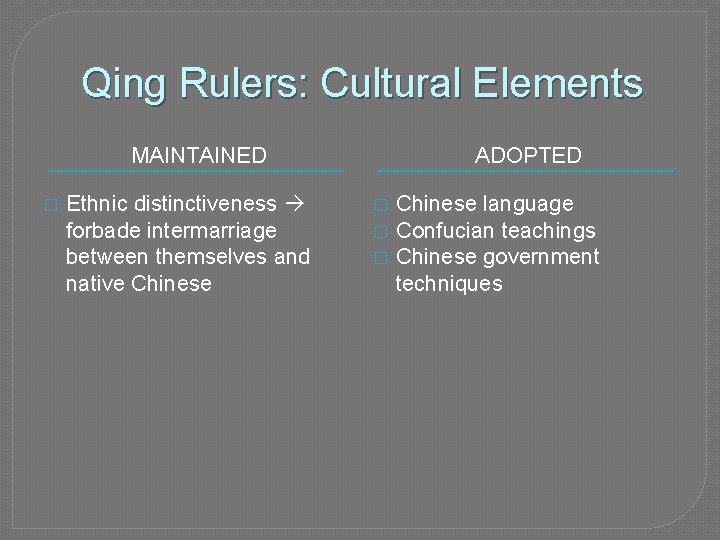
Qing Rulers: Cultural Elements MAINTAINED � Ethnic distinctiveness forbade intermarriage between themselves and native Chinese ADOPTED � � � Chinese language Confucian teachings Chinese government techniques
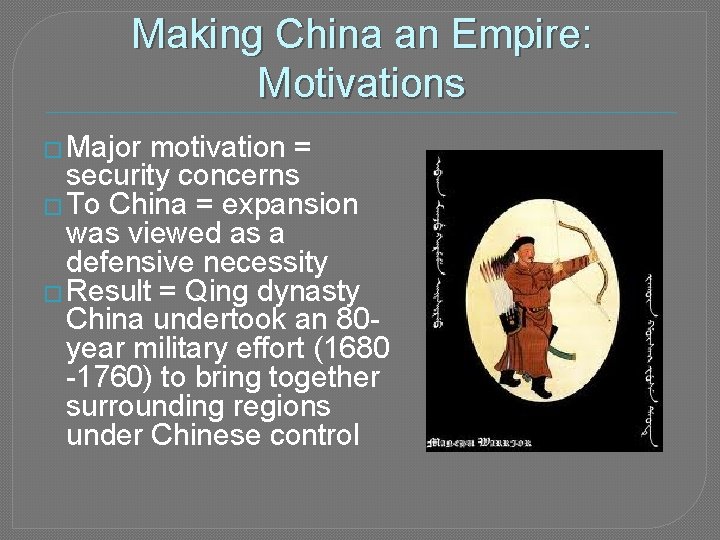
Making China an Empire: Motivations � Major motivation = security concerns � To China = expansion was viewed as a defensive necessity � Result = Qing dynasty China undertook an 80 year military effort (1680 -1760) to bring together surrounding regions under Chinese control
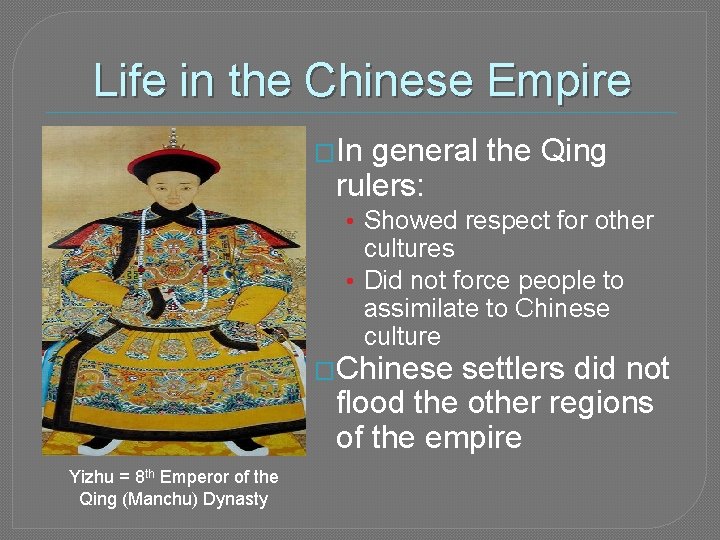
Life in the Chinese Empire �In general the Qing rulers: • Showed respect for other cultures • Did not force people to assimilate to Chinese culture �Chinese settlers did not flood the other regions of the empire Yizhu = 8 th Emperor of the Qing (Manchu) Dynasty
- Slides: 26