Multiculturalism at Work Zsoka Magyarszeky Conductor Contents Why
- Slides: 17
Multiculturalism at Work Zsoka Magyarszeky Conductor
Contents • Why talk about cultural diversity? • Cultural dimensions • Managing cross-cultural communication at work
Why talk about cultural diversity? • Personal experience as a conductor • We tend to minimise cultural differences, leading to misunderstandings and misinterpretations • Promoting cultural sensitivity helps people work together more effectively • Global phenomenon: foreign-born UK population increased from 7 % in 1993 to 11. 4% in 2012
Definitions • Culture: the ideas, customs and social behaviour of a particular people or society (Oxford Dictionary) • Ethnocentrism: the idea that your own group or culture is better or more important than others (Merriam-Webster Dictionary)
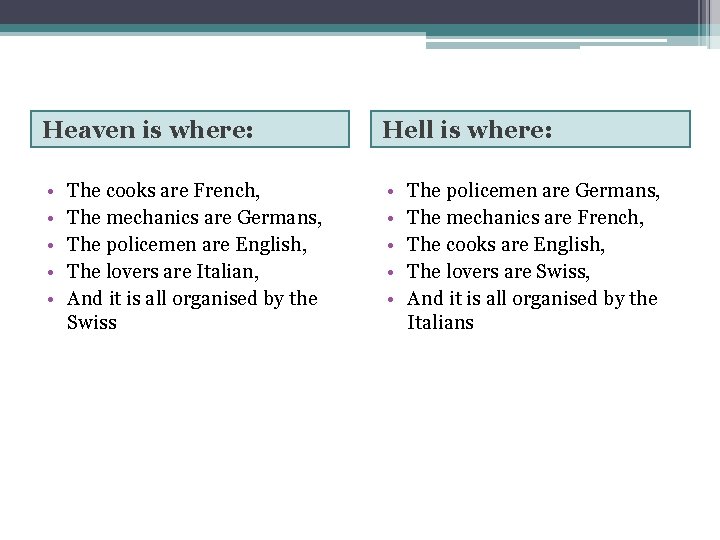
Heaven is where: Hell is where: • • • The cooks are French, The mechanics are Germans, The policemen are English, The lovers are Italian, And it is all organised by the Swiss The policemen are Germans, The mechanics are French, The cooks are English, The lovers are Swiss, And it is all organised by the Italians
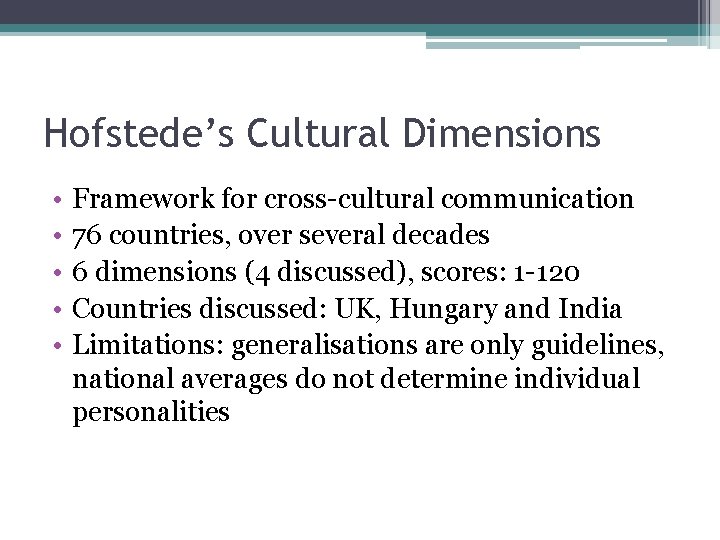
Hofstede’s Cultural Dimensions • • • Framework for cross-cultural communication 76 countries, over several decades 6 dimensions (4 discussed), scores: 1 -120 Countries discussed: UK, Hungary and India Limitations: generalisations are only guidelines, national averages do not determine individual personalities
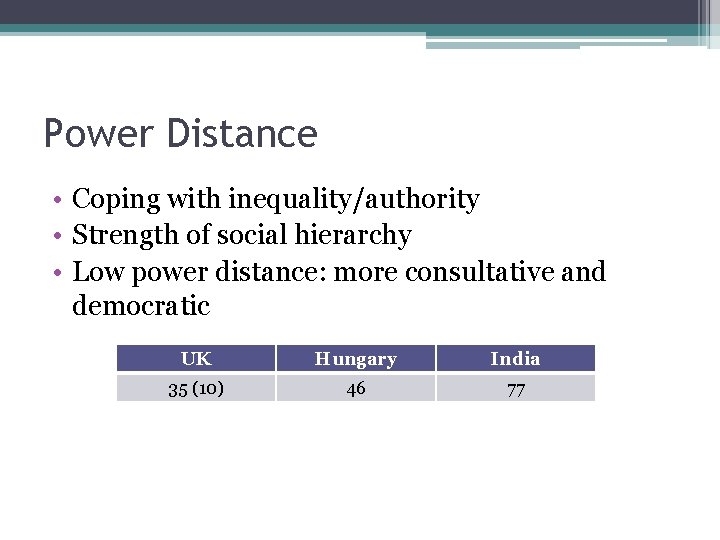
Power Distance • Coping with inequality/authority • Strength of social hierarchy • Low power distance: more consultative and democratic UK Hungary India 35 (10) 46 77
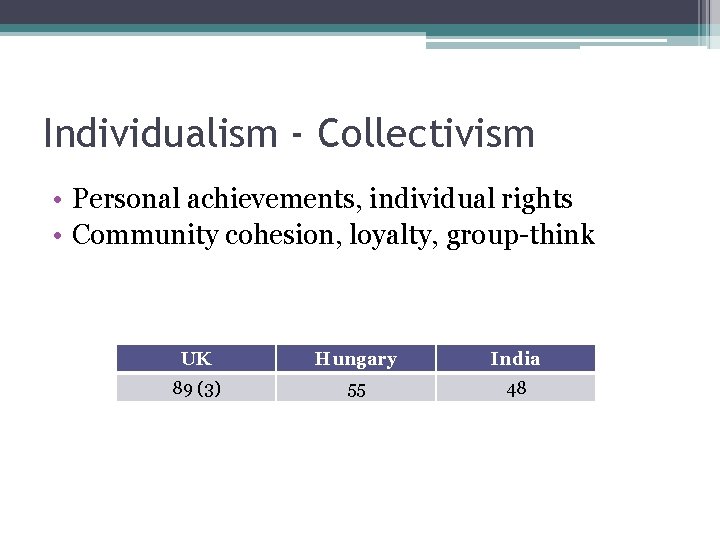
Individualism - Collectivism • Personal achievements, individual rights • Community cohesion, loyalty, group-think UK Hungary India 89 (3) 55 48
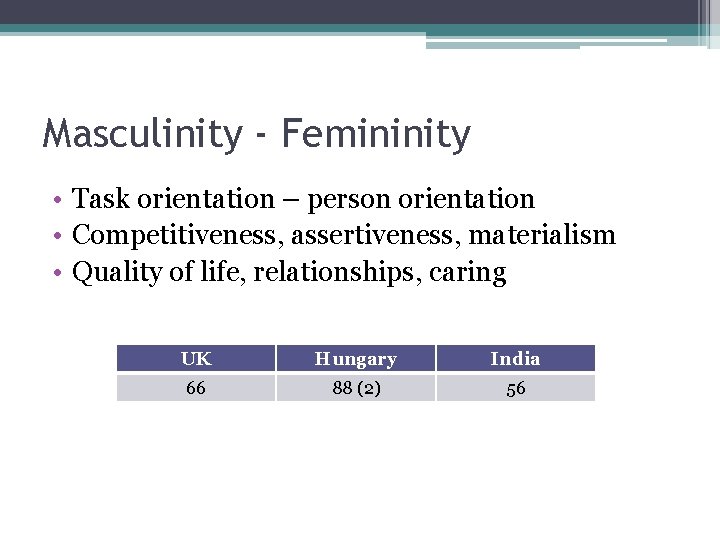
Masculinity - Femininity • Task orientation – person orientation • Competitiveness, assertiveness, materialism • Quality of life, relationships, caring UK Hungary India 66 88 (2) 56
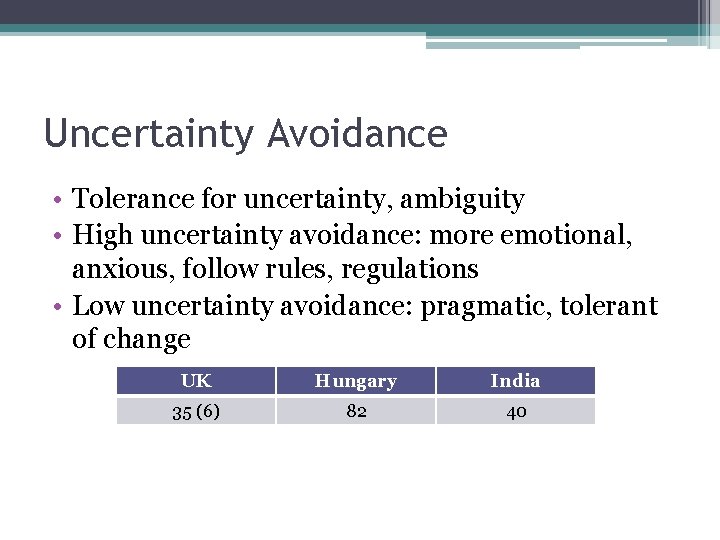
Uncertainty Avoidance • Tolerance for uncertainty, ambiguity • High uncertainty avoidance: more emotional, anxious, follow rules, regulations • Low uncertainty avoidance: pragmatic, tolerant of change UK Hungary India 35 (6) 82 40
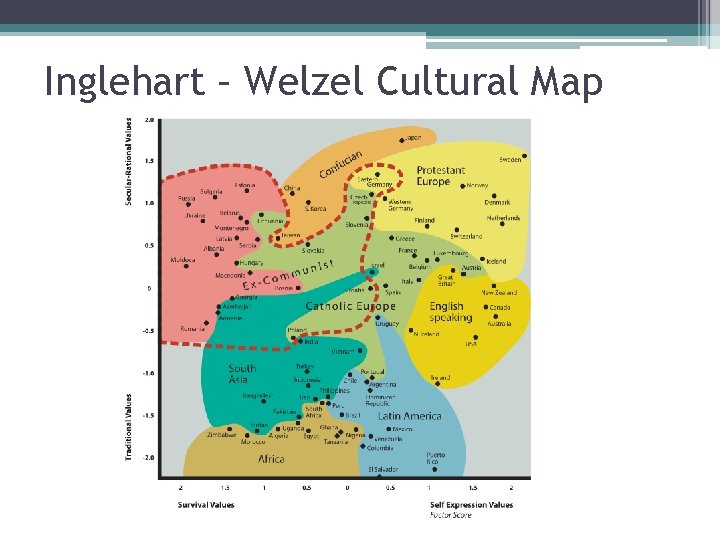
Inglehart – Welzel Cultural Map
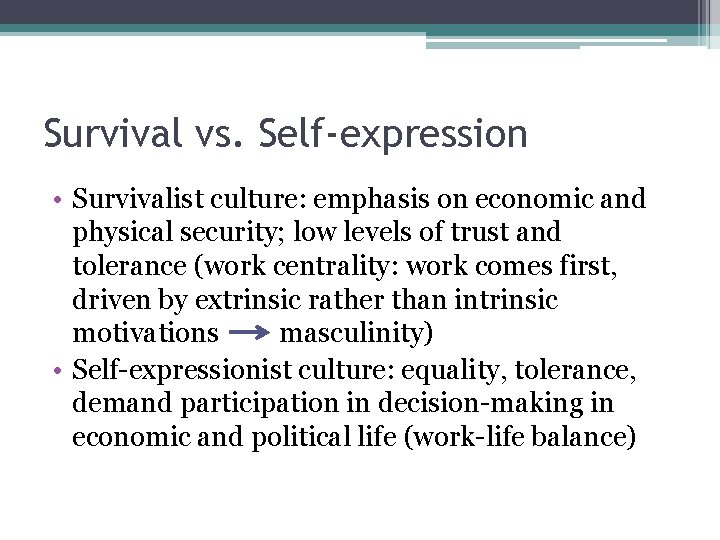
Survival vs. Self-expression • Survivalist culture: emphasis on economic and physical security; low levels of trust and tolerance (work centrality: work comes first, driven by extrinsic rather than intrinsic motivations masculinity) • Self-expressionist culture: equality, tolerance, demand participation in decision-making in economic and political life (work-life balance)
Cultural diversity in the workplace • Globalisation: increased cross-cultural interactions • Cultural diversity viewed as problematic, source of conflict • Organisations should capitalise on workforce diversity to gain competitive advantage
Multicultural teams - challenges • Weak team identity effort-withholding behaviours • High levels of ethnocentrism • High levels of task and/or emotional conflict
Managing cultural diversity • Cultural awareness, tolerance for ambiguity, respecting other values • Conflict resolution • Frank discussions, dialogue • Treating people as individuals • Develop norms of meaningful participation • Develop strong team identity
Multiculturalism – Interculturalism • Group identities – individual differences • Intercultural dialogue between individuals who belong to different cultures • “The intercultural person possesses an intellectual and emotional commitment to the fundamental unity of all humans and, at the same time, accepts and appreciates the differences that lie between people of different cultures" (Gudykunst & Kim, 1984)
The End Thank you for your attention! Any questions?