Module 52 53 Therapies Psychotherapy Types of Therapy


- Slides: 22
Module 52 & 53 Therapies
Psychotherapy Types of Therapy 1) Behavioral Therapy 2) Psychotherapeutic (Talk Therapy) 3) Biomedical Therapy Eclectic Psychotherapy—drawing on techniques from different forms of therapy, depending on the client and the problem. Pragmatic – use what evidence has shown to work. ch 15 2
This chart shows the percentage of psychologists (from among 1, 000 members of the American Psychological Association’s Division of Psychotherapy) who have various primary psychotherapy orientations.
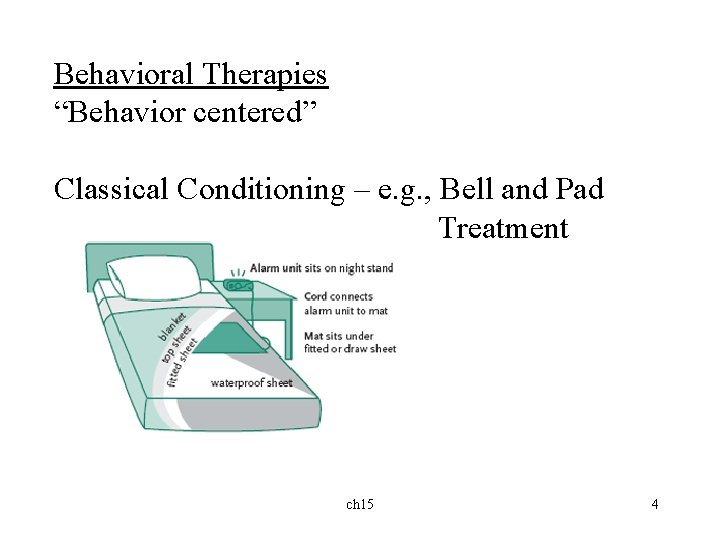
Behavioral Therapies “Behavior centered” Classical Conditioning – e. g. , Bell and Pad Treatment ch 15 4
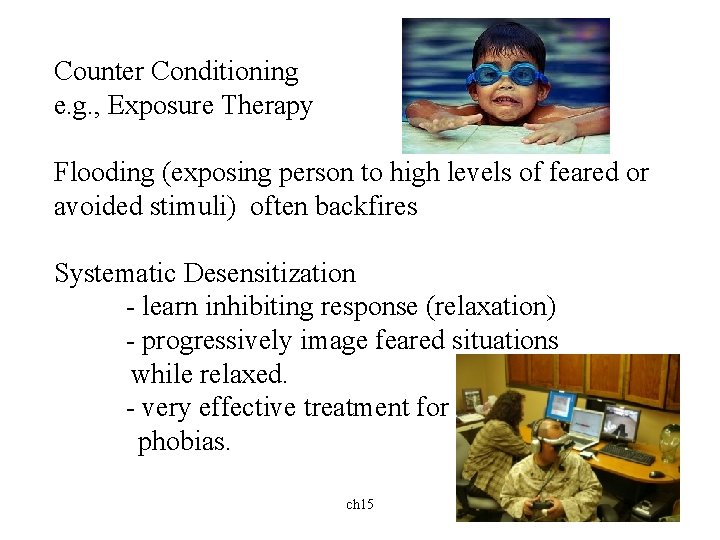
Counter Conditioning e. g. , Exposure Therapy Flooding (exposing person to high levels of feared or avoided stimuli) often backfires Systematic Desensitization - learn inhibiting response (relaxation) - progressively image feared situations while relaxed. - very effective treatment for phobias. ch 15 5
Aversion Conditioning e. g. , antabuse ch 15 6
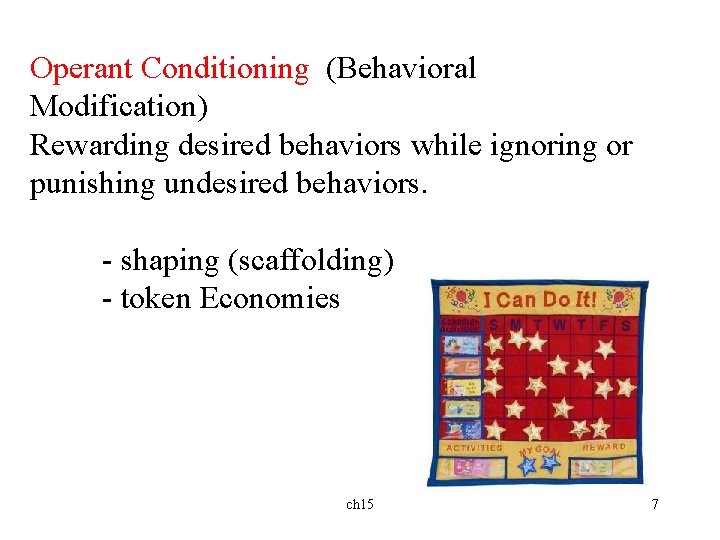
Operant Conditioning (Behavioral Modification) Rewarding desired behaviors while ignoring or punishing undesired behaviors. - shaping (scaffolding) - token Economies ch 15 7
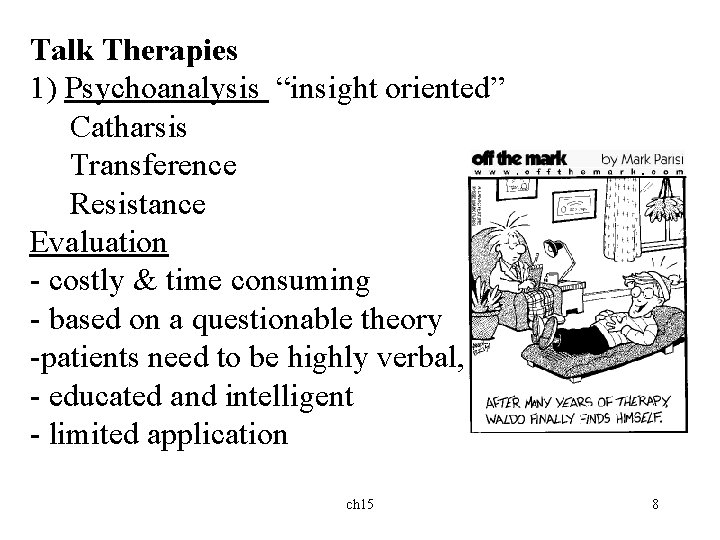
Talk Therapies 1) Psychoanalysis “insight oriented” Catharsis Transference Resistance Evaluation - costly & time consuming - based on a questionable theory -patients need to be highly verbal, - educated and intelligent - limited application ch 15 8
When would false memories be Created? Hypnosis Repetition Authority Explanation of current symptoms ch 15 9
"Loftus (1997) reviewed 30 cases selected at random from 670 claims submitted to the Washington Victims Compensation Program. Twenty-six had 'recovered' a memory of abuse through therapy. All 30 were still in therapy after three years, 18 for more than five years. After treatment 20 were suicidal compared with three before treatment began, 11 were hospitalized (cf. two before treatment), eight engaged in self-mutilation (cf. one before) and marriage break-up occurred in almost all. It appears that in these cases, recovery and abreaction had serious adverse effects. " -- Sydney Brandon, M. D. , et al, "Recovered memories of childhood sexual abuse: implications for clinical practice, " British Journal of ch 15 10 Psychiatry, April 98, p.
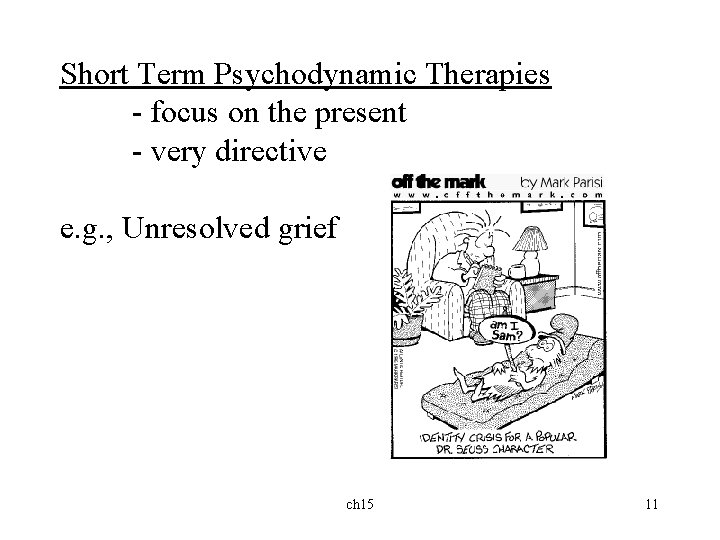
Short Term Psychodynamic Therapies - focus on the present - very directive e. g. , Unresolved grief ch 15 11
2) Humanist Therapies “Client-centered Insight Therapy” Non-directive - Client figures out what is wrong, Therapists Role -acts as a sounding board - genuine - unconditional positive regard (acceptance) - empathetic ch 15 12
Techniques Active Listening and Reflecting back - Therapist restates what the client says. • Paraphrase • invite clarification • reflect feelings Evaluation of Humanist Theories - shorter term and less costly - requires verbal ability ch 15 13
3) Cognitive Learning Therapies Rational-Emotive Behavioral Therapy (Albert Ellis) Help Client identify and deal with irrational thoughts (Stinking Thinking) Musturbation - e. g. , I must get an A in this class. Everyone must like me. Catastrophising - e. g. , If I don’t get an A I will be a failure for life. ch 15 14
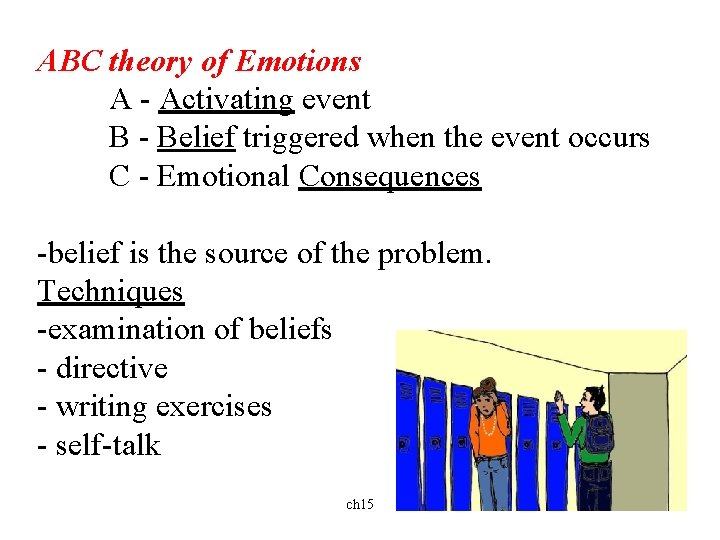
ABC theory of Emotions A - Activating event B - Belief triggered when the event occurs C - Emotional Consequences -belief is the source of the problem. Techniques -examination of beliefs - directive - writing exercises - self-talk ch 15 15
Beck’s Cognitive Therapy (CT) -distorted thinking - unrealistic beliefs Challenge them empirically. e. g. , No one cares about me. Challenge them to call friends and family to see if that is true. ch 15 16
Family Systems Therapy Communication Behavioral Contracts Group Therapy - therapist led Self-Help Groups - peer led ch 15 17
Module 53 Evaluating Psychotherapies ch 15 18
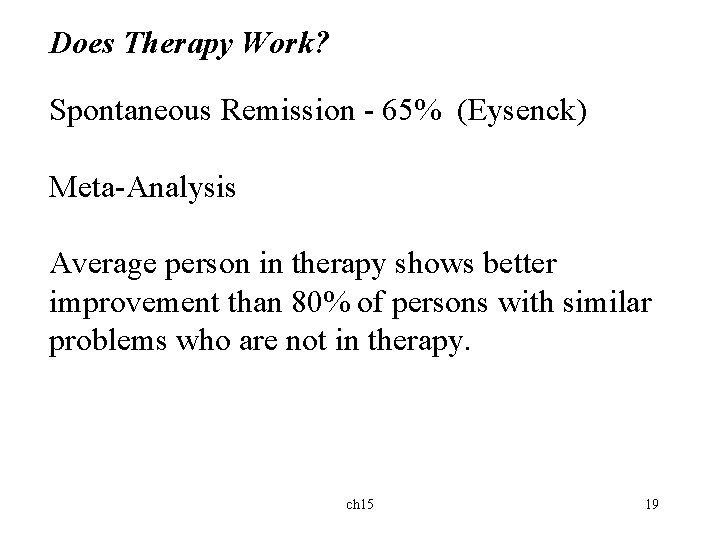
Does Therapy Work? Spontaneous Remission - 65% (Eysenck) Meta-Analysis Average person in therapy shows better improvement than 80% of persons with similar problems who are not in therapy. ch 15 19
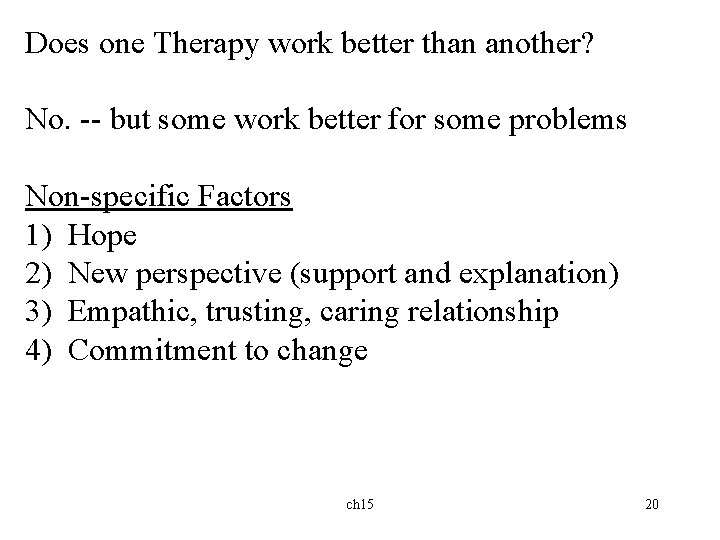
Does one Therapy work better than another? No. -- but some work better for some problems Non-specific Factors 1) Hope 2) New perspective (support and explanation) 3) Empathic, trusting, caring relationship 4) Commitment to change ch 15 20
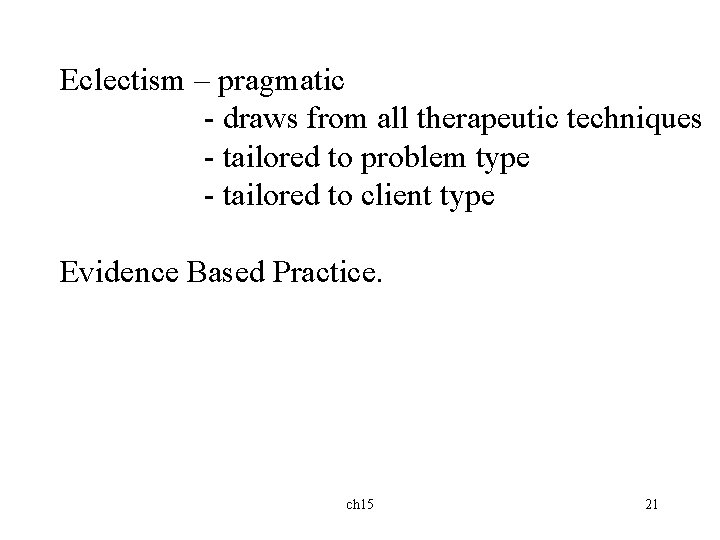
Eclectism – pragmatic - draws from all therapeutic techniques - tailored to problem type - tailored to client type Evidence Based Practice. ch 15 21
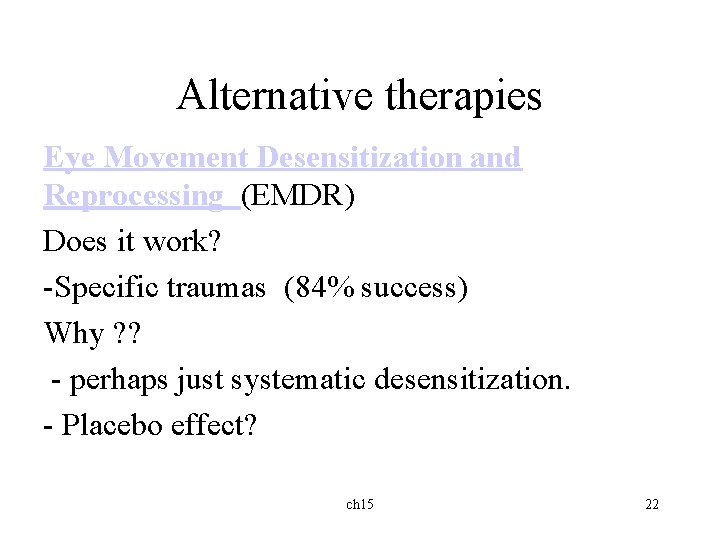
Alternative therapies Eye Movement Desensitization and Reprocessing (EMDR) Does it work? -Specific traumas (84% success) Why ? ? - perhaps just systematic desensitization. - Placebo effect? ch 15 22