Mindset in the Classroom Amanda Gustafson MA Session

- Slides: 6
Mindset in the Classroom Amanda Gustafson, MA
Session outcomes • Articulate the difference between a growth and a fixed mindset • Identify student behaviors associated with growth and fixed mindsets • Recognize the faculty role in influencing student mindset • Begin to develop new strategies to promote deeper learning and a growth mindset.
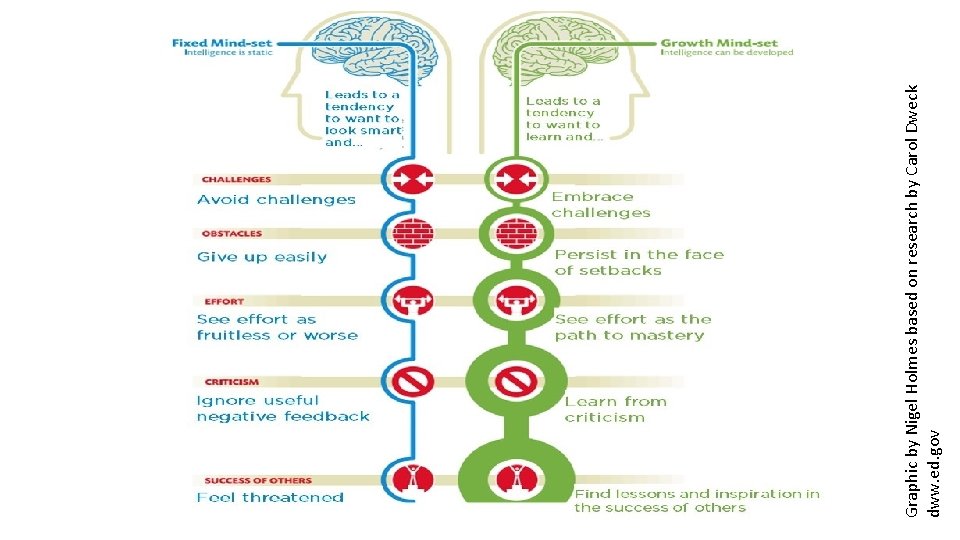
Graphic by Nigel Holmes based on research by Carol Dweck dww. ed. gov
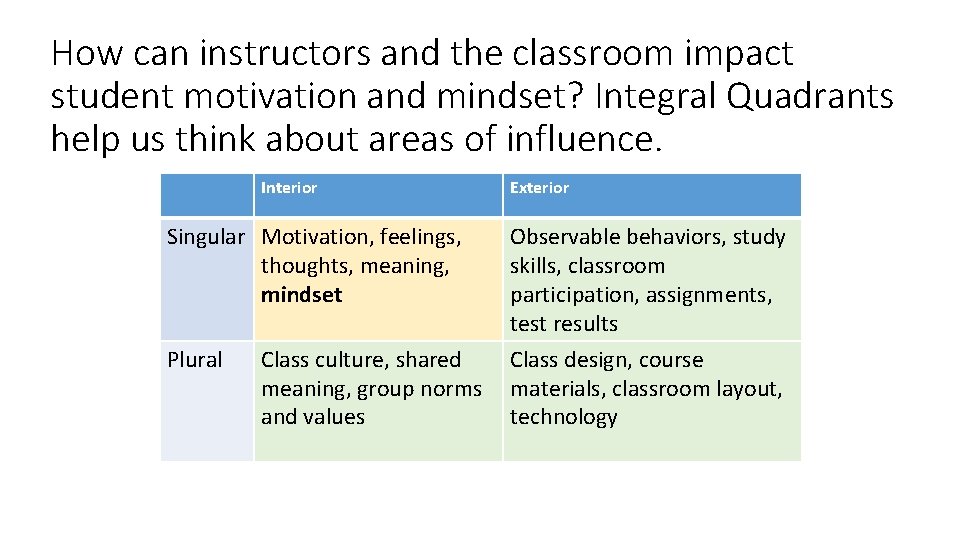
How can instructors and the classroom impact student motivation and mindset? Integral Quadrants help us think about areas of influence. Interior Singular Motivation, feelings, thoughts, meaning, mindset Plural Class culture, shared meaning, group norms and values Exterior Observable behaviors, study skills, classroom participation, assignments, test results Class design, course materials, classroom layout, technology
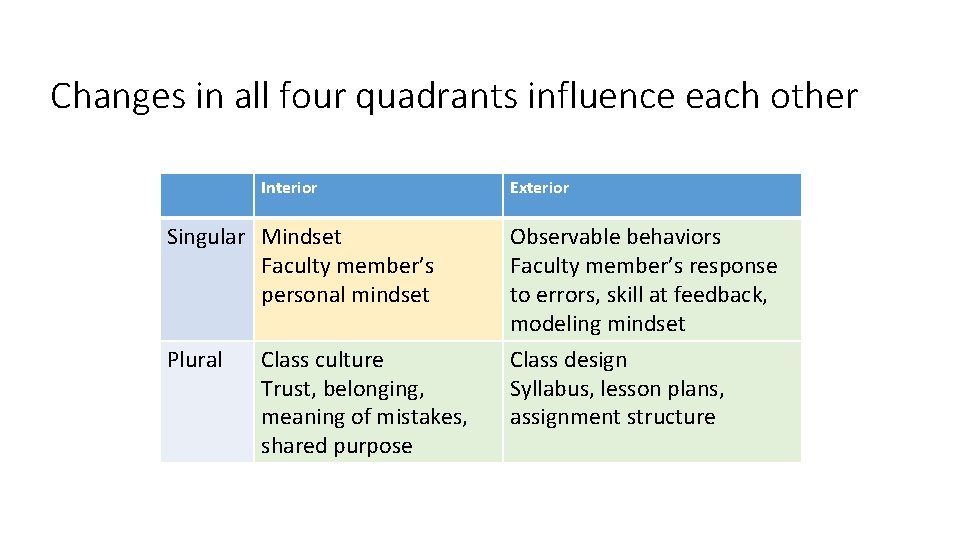
Changes in all four quadrants influence each other Interior Singular Mindset Faculty member’s personal mindset Plural Class culture Trust, belonging, meaning of mistakes, shared purpose Exterior Observable behaviors Faculty member’s response to errors, skill at feedback, modeling mindset Class design Syllabus, lesson plans, assignment structure
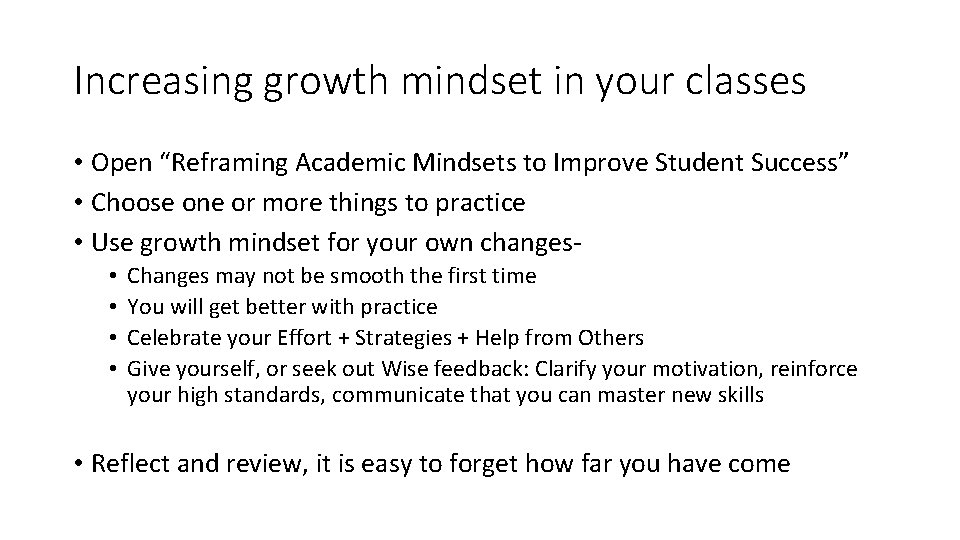
Increasing growth mindset in your classes • Open “Reframing Academic Mindsets to Improve Student Success” • Choose one or more things to practice • Use growth mindset for your own changes • • Changes may not be smooth the first time You will get better with practice Celebrate your Effort + Strategies + Help from Others Give yourself, or seek out Wise feedback: Clarify your motivation, reinforce your high standards, communicate that you can master new skills • Reflect and review, it is easy to forget how far you have come