MAYOCLINIC MAYO Liver Transplantation and Organ Allocation in

- Slides: 23
MAYOCLINIC MAYO Liver Transplantation and Organ Allocation in 2019 Julie Heimbach, MD Professor and Chair, Division of Transplantation Surgery Mayo Clinic, Rochester, MN No disclosures
MAYO CLINIC Objectives • Pro/cons of the MELD allocation system • “Standard” versus “non-standard” MELD exceptions • Changing from a regional to a national review board • Changing from a DSA/Regional system to a broader circle based distribution system
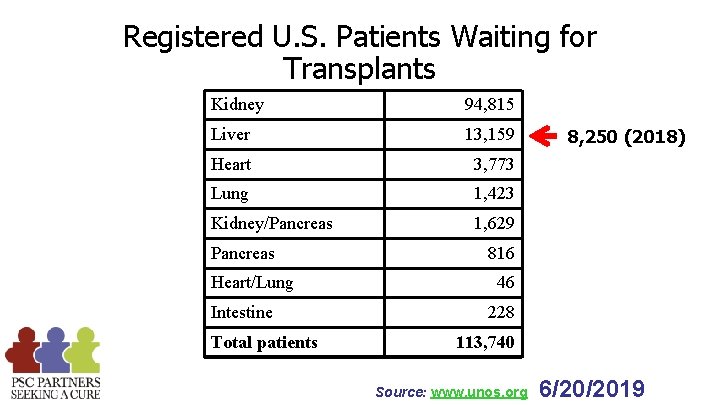
Registered U. S. Patients Waiting for Transplants Kidney 94, 815 Liver 13, 159 Heart 3, 773 Lung 1, 423 Kidney/Pancreas 1, 629 Pancreas Heart/Lung Intestine Total patients 8, 250 (2018) 816 46 228 113, 740 Source: www. unos. org 6/20/2019
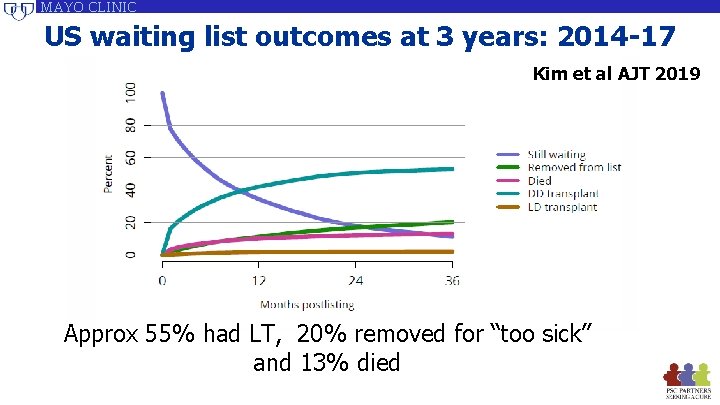
MAYO CLINIC US waiting list outcomes at 3 years: 2014 -17 Kim et al AJT 2019 Approx 55% had LT, 20% removed for “too sick” and 13% died
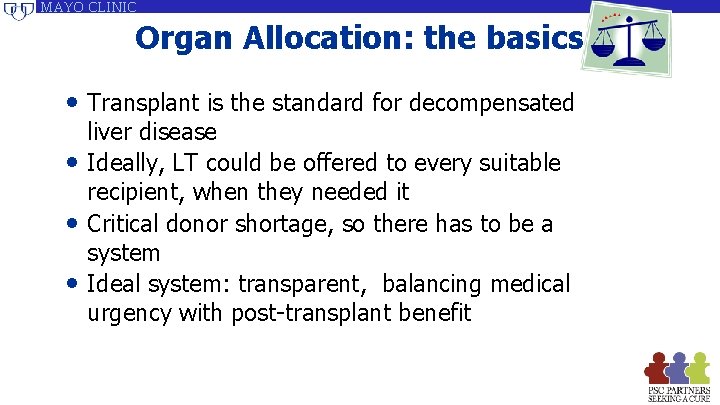
MAYO CLINIC Organ Allocation: the basics • Transplant is the standard for decompensated • • • liver disease Ideally, LT could be offered to every suitable recipient, when they needed it Critical donor shortage, so there has to be a system Ideal system: transparent, balancing medical urgency with post-transplant benefit
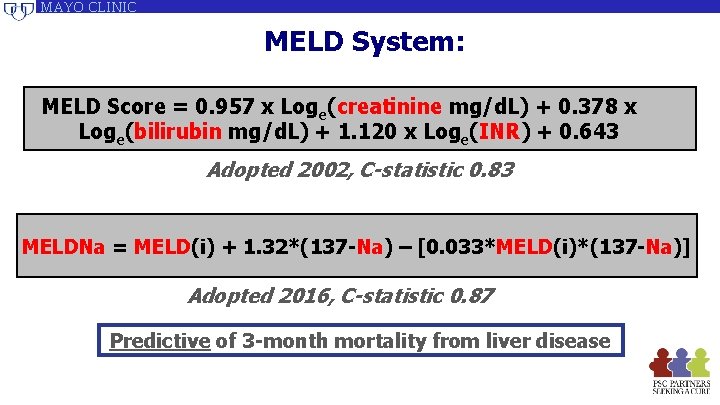
MAYO CLINIC MELD System: MELD Score = 0. 957 x Loge(creatinine mg/d. L) + 0. 378 x Loge(bilirubin mg/d. L) + 1. 120 x Loge(INR) + 0. 643 Adopted 2002, C-statistic 0. 83 MELDNa = MELD(i) + 1. 32*(137 -Na) – [0. 033*MELD(i)*(137 -Na)] Adopted 2016, C-statistic 0. 87 Predictive of 3 -month mortality from liver disease
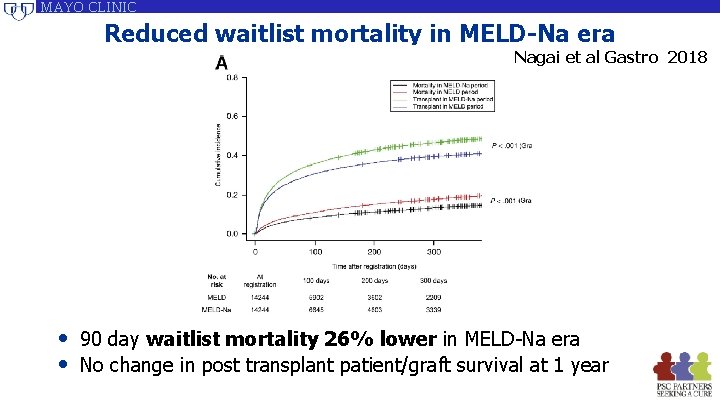
MAYO CLINIC Reduced waitlist mortality in MELD-Na era Nagai et al Gastro 2018 • 90 day waitlist mortality 26% lower in MELD-Na era • No change in post transplant patient/graft survival at 1 year
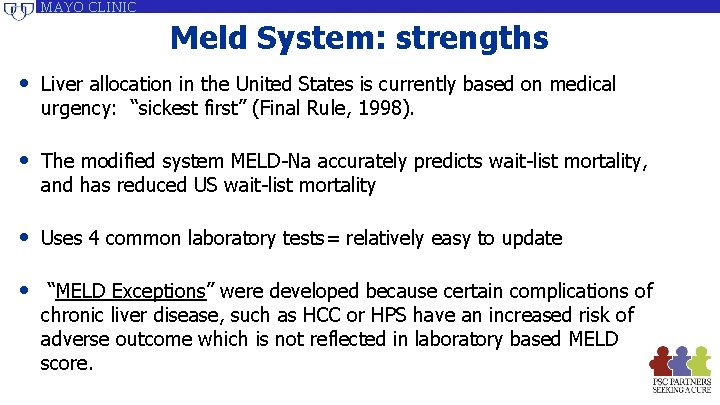
MAYO CLINIC Meld System: strengths • Liver allocation in the United States is currently based on medical urgency: “sickest first” (Final Rule, 1998). • The modified system MELD-Na accurately predicts wait-list mortality, and has reduced US wait-list mortality • Uses 4 common laboratory tests= relatively easy to update • “MELD Exceptions” were developed because certain complications of chronic liver disease, such as HCC or HPS have an increased risk of adverse outcome which is not reflected in laboratory based MELD score.
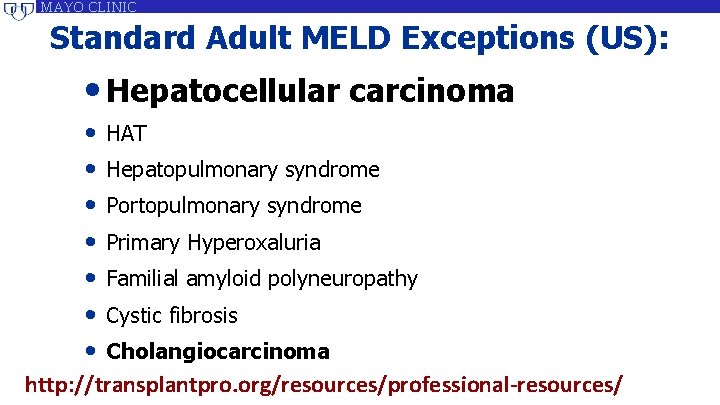
MAYO CLINIC Standard Adult MELD Exceptions (US): • Hepatocellular carcinoma • • HAT Hepatopulmonary syndrome Portopulmonary syndrome Primary Hyperoxaluria Familial amyloid polyneuropathy Cystic fibrosis Cholangiocarcinoma http: //transplantpro. org/resources/professional-resources/
MAYO CLINIC Problems/ Pitfalls
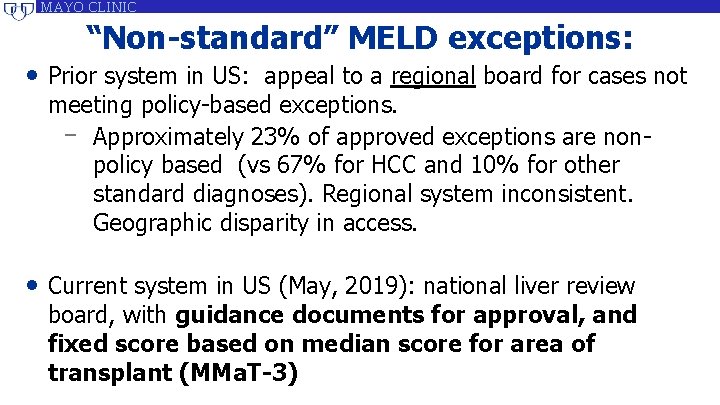
MAYO CLINIC “Non-standard” MELD exceptions: • Prior system in US: appeal to a regional board for cases not meeting policy-based exceptions. Approximately 23% of approved exceptions are nonpolicy based (vs 67% for HCC and 10% for other standard diagnoses). Regional system inconsistent. Geographic disparity in access. • Current system in US (May, 2019): national liver review board, with guidance documents for approval, and fixed score based on median score for area of transplant (MMa. T-3)
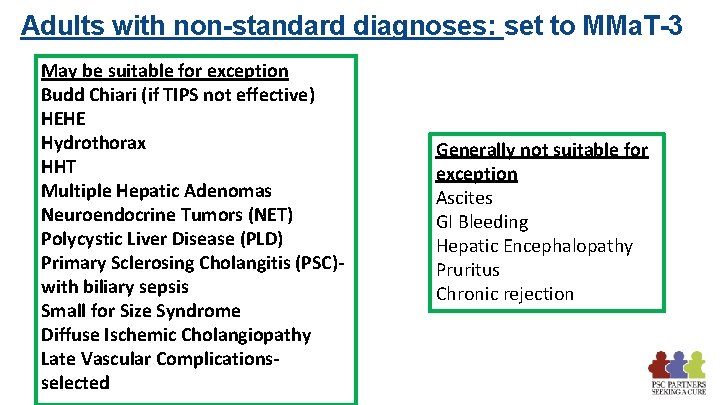
Adults with non-standard diagnoses: set to MMa. T-3 May be suitable for exception Budd Chiari (if TIPS not effective) HEHE Hydrothorax HHT Multiple Hepatic Adenomas Neuroendocrine Tumors (NET) Polycystic Liver Disease (PLD) Primary Sclerosing Cholangitis (PSC)with biliary sepsis Small for Size Syndrome Diffuse Ischemic Cholangiopathy Late Vascular Complicationsselected Generally not suitable for exception Ascites GI Bleeding Hepatic Encephalopathy Pruritus Chronic rejection
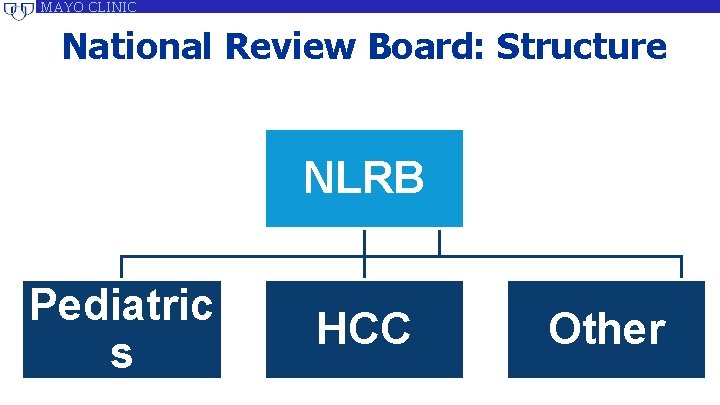
MAYO CLINIC National Review Board: Structure NLRB Pediatric s HCC Other
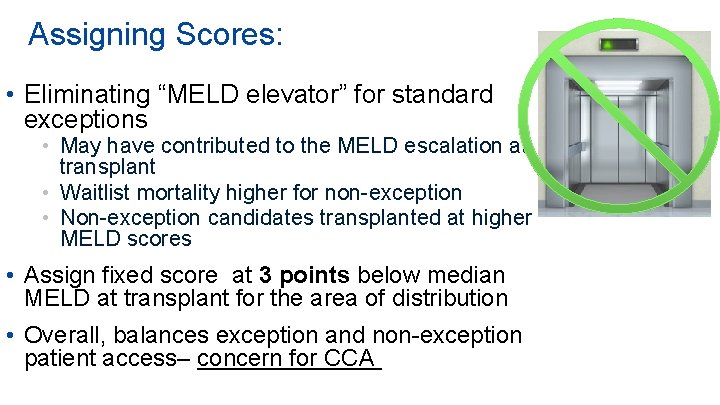
Assigning Scores: • Eliminating “MELD elevator” for standard exceptions • May have contributed to the MELD escalation at transplant • Waitlist mortality higher for non-exception • Non-exception candidates transplanted at higher MELD scores • Assign fixed score at 3 points below median MELD at transplant for the area of distribution • Overall, balances exception and non-exception patient access– concern for CCA
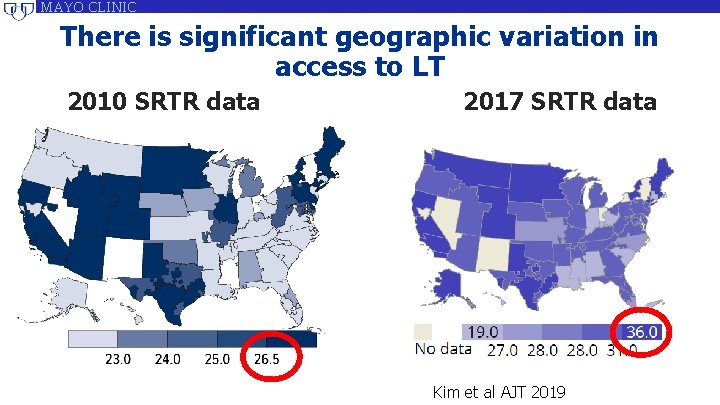
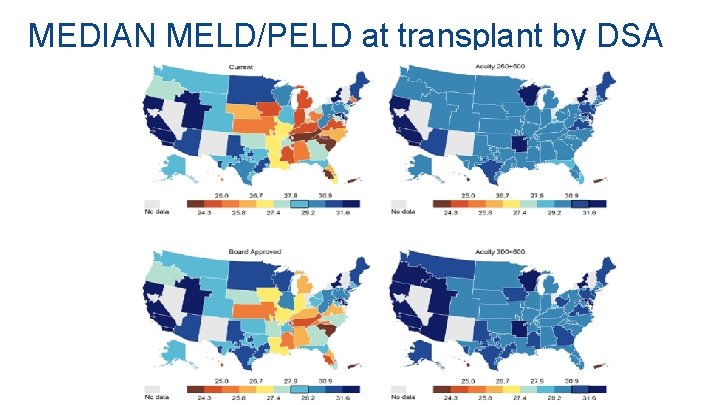
MAYO CLINIC There is significant geographic variation in access to LT 2010 SRTR data 2017 SRTR data Kim et al AJT 2019
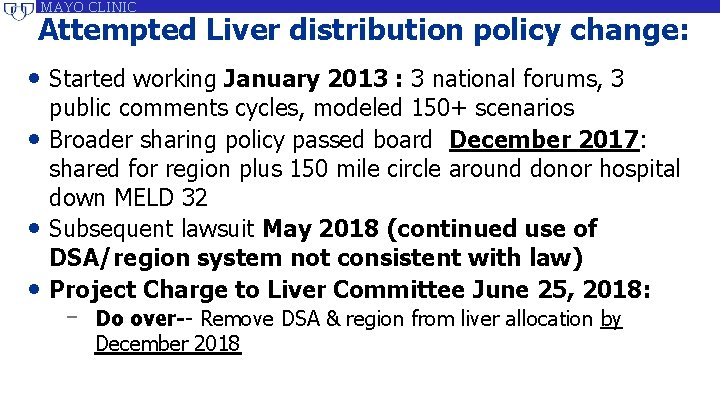
MAYO CLINIC Attempted Liver distribution policy change: • Started working January 2013 : 3 national forums, 3 • • • public comments cycles, modeled 150+ scenarios Broader sharing policy passed board December 2017: shared for region plus 150 mile circle around donor hospital down MELD 32 Subsequent lawsuit May 2018 (continued use of DSA/region system not consistent with law) Project Charge to Liver Committee June 25, 2018: Do over-- Remove DSA & region from liver allocation by December 2018
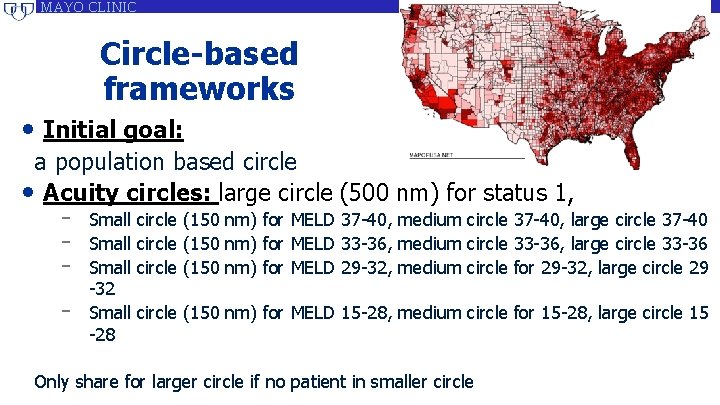
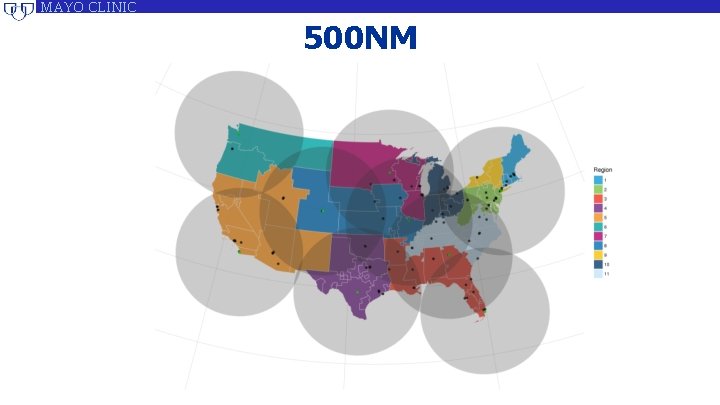
MAYO CLINIC Circle-based frameworks • Initial goal: a population based circle • Acuity circles: large circle (500 nm) for status 1, Small -32 Small -28 circle (150 nm) for MELD 37 -40, medium circle 37 -40, large circle 37 -40 circle (150 nm) for MELD 33 -36, medium circle 33 -36, large circle 33 -36 circle (150 nm) for MELD 29 -32, medium circle for 29 -32, large circle 29 circle (150 nm) for MELD 15 -28, medium circle for 15 -28, large circle 15 Only share for larger circle if no patient in smaller circle
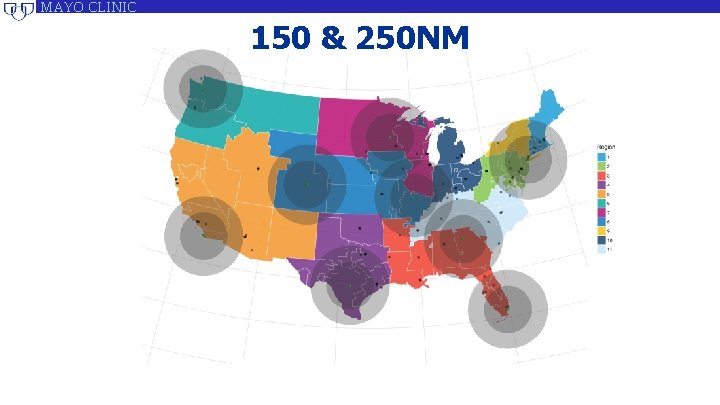
MAYO CLINIC 150 & 250 NM
MAYO CLINIC 500 NM
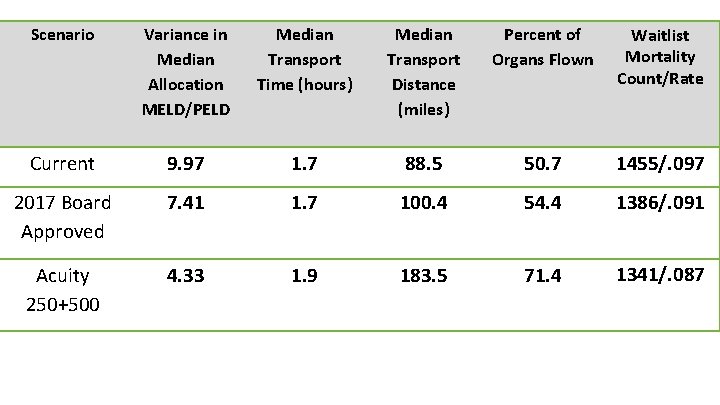
Scenario Variance in Median Allocation MELD/PELD Median Transport Time (hours) Median Transport Distance (miles) Percent of Organs Flown Waitlist Mortality Count/Rate Current 9. 97 1. 7 88. 5 50. 7 1455/. 097 2017 Board Approved 7. 41 1. 7 100. 4 54. 4 1386/. 091 Acuity 250+500 4. 33 1. 9 183. 5 71. 4 1341/. 087
MEDIAN MELD/PELD at transplant by DSA
Attempted Liver distribution policy change, cont: § Acuity circle passed board December, 2018 § Anticipated Implementation April 30, 2019– another lawsuit § NLRB remains active, but broader sharing policy currently on hold.
Summary: § MELD allocation system prioritizes livers to the most urgent candidates §A system of exceptions is needed to account for complications of chronic liver disease that lead to an increased risk of death, that are not captured by MELD score– generally working, but switching to national rather than regional oversight board § Broader sharing to reduce geographic inequity: on-going § Change is difficult, and advocacy is an important part of the process