Maximizing the Relationship with your Mentors Christine Pfund
- Slides: 8
Maximizing the Relationship with your Mentor(s) Christine Pfund, Ph. D Associate Director, Research Education and Career Development Core Institute for Clinical and Translational Research Director, Mentor Training Core, National Research Mentoring Network Department of Medicine Center for Women’s Health Research Wisconsin Center for Education Research University of Wisconsin-Madison
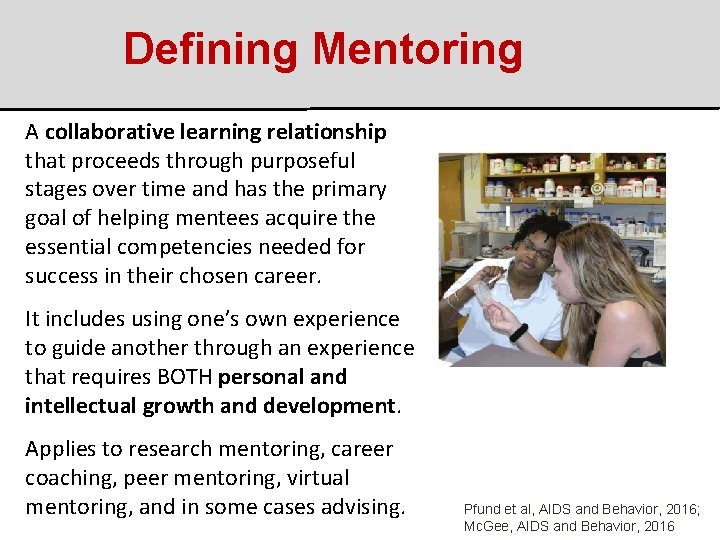
Defining Mentoring A collaborative learning relationship that proceeds through purposeful stages over time and has the primary goal of helping mentees acquire the essential competencies needed for success in their chosen career. It includes using one’s own experience to guide another through an experience that requires BOTH personal and intellectual growth and development. Applies to research mentoring, career coaching, peer mentoring, virtual mentoring, and in some cases advising. Pfund et al, AIDS and Behavior, 2016; Mc. Gee, AIDS and Behavior, 2016
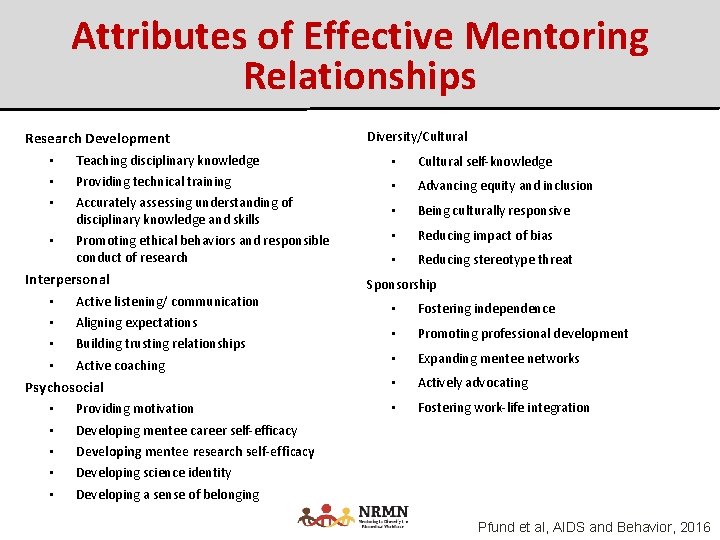
Attributes of Effective Mentoring Relationships Research Development • Teaching disciplinary knowledge • Providing technical training • Accurately assessing understanding of disciplinary knowledge and skills • Promoting ethical behaviors and responsible conduct of research Interpersonal • Active listening/ communication • Aligning expectations • Building trusting relationships • Active coaching Psychosocial • Providing motivation • Developing mentee career self-efficacy • Developing mentee research self-efficacy • Developing science identity • Developing a sense of belonging Diversity/Cultural • Cultural self-knowledge • Advancing equity and inclusion • Being culturally responsive • Reducing impact of bias • Reducing stereotype threat Sponsorship • Fostering independence • Promoting professional development • Expanding mentee networks • Actively advocating • Fostering work-life integration Pfund et al, AIDS and Behavior, 2016
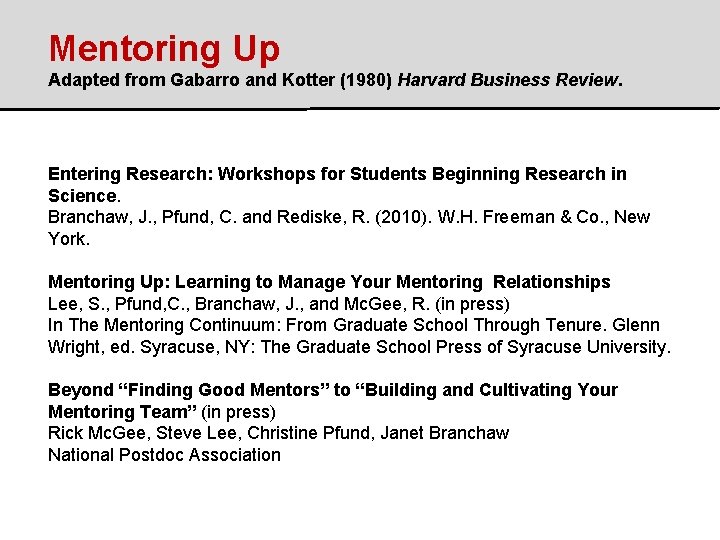
Mentoring Up Adapted from Gabarro and Kotter (1980) Harvard Business Review. Entering Research: Workshops for Students Beginning Research in Science. Branchaw, J. , Pfund, C. and Rediske, R. (2010). W. H. Freeman & Co. , New York. Mentoring Up: Learning to Manage Your Mentoring Relationships Lee, S. , Pfund, C. , Branchaw, J. , and Mc. Gee, R. (in press) In The Mentoring Continuum: From Graduate School Through Tenure. Glenn Wright, ed. Syracuse, NY: The Graduate School Press of Syracuse University. Beyond “Finding Good Mentors” to “Building and Cultivating Your Mentoring Team” (in press) Rick Mc. Gee, Steve Lee, Christine Pfund, Janet Branchaw National Postdoc Association
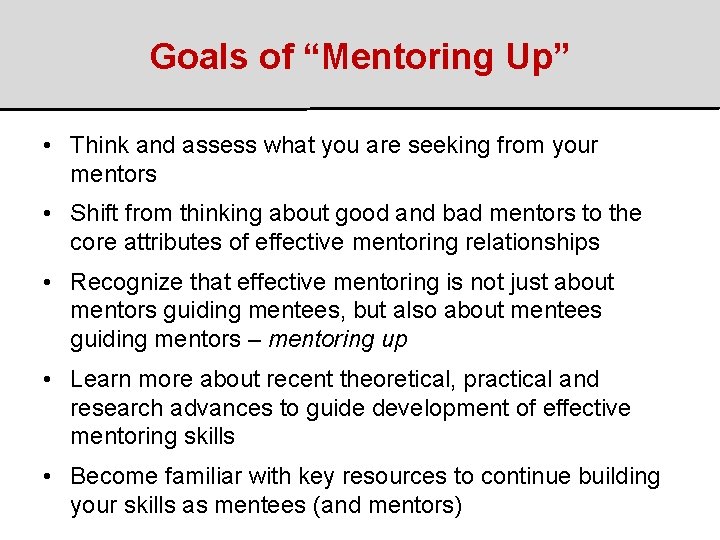
Goals of “Mentoring Up” • Think and assess what you are seeking from your mentors • Shift from thinking about good and bad mentors to the core attributes of effective mentoring relationships • Recognize that effective mentoring is not just about mentors guiding mentees, but also about mentees guiding mentors – mentoring up • Learn more about recent theoretical, practical and research advances to guide development of effective mentoring skills • Become familiar with key resources to continue building your skills as mentees (and mentors)
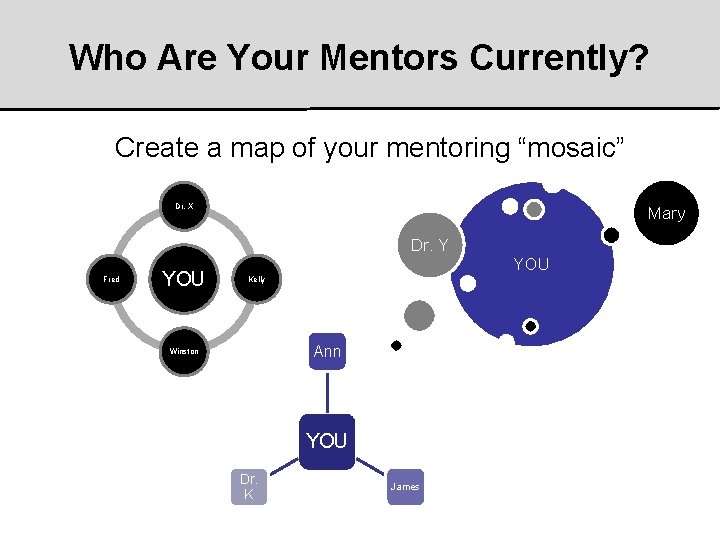
Who Are Your Mentors Currently? Create a map of your mentoring “mosaic” Dr. X Mary Dr. Y Fred YOU Kelly Ann Winston YOU Dr. K James
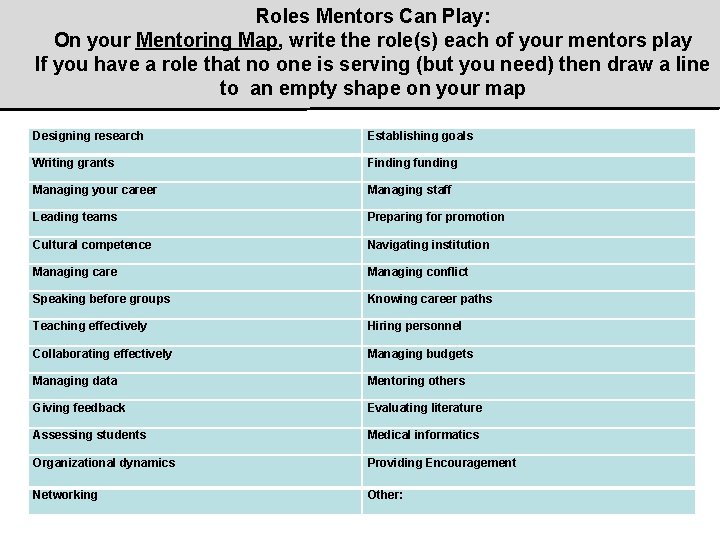
Roles Mentors Can Play: On your Mentoring Map, write the role(s) each of your mentors play If you have a role that no one is serving (but you need) then draw a line to an empty shape on your map Designing research Establishing goals Writing grants Finding funding Managing your career Managing staff Leading teams Preparing for promotion Cultural competence Navigating institution Managing care Managing conflict Speaking before groups Knowing career paths Teaching effectively Hiring personnel Collaborating effectively Managing budgets Managing data Mentoring others Giving feedback Evaluating literature Assessing students Medical informatics Organizational dynamics Providing Encouragement Networking Other:
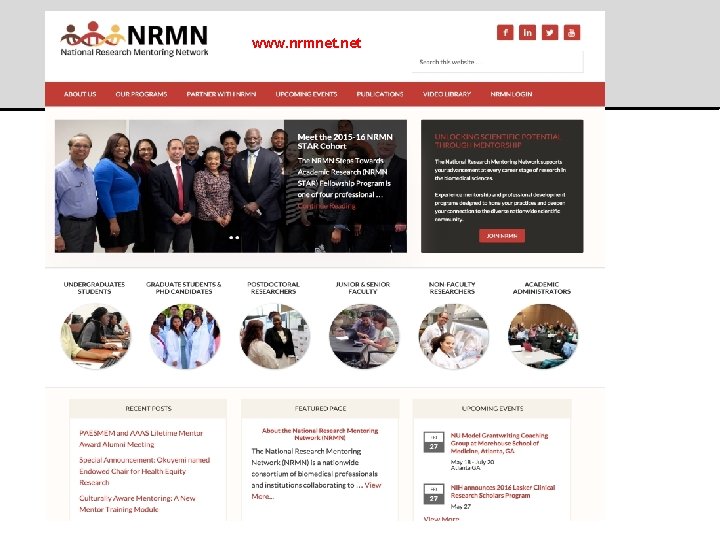
www. nrmnet. net