Markus Sydenham Ph Dstudent The Norwegian University of
- Slides: 8
Markus Sydenham Ph. D-student The Norwegian University of Life Sciences Start-up Workshop Polli. Clim Community ecology and bees Markus Sydenham
Introduction Markus Sydenham Ph. D-student The Norwegian University of Life Sciences • Name: Markus Sydenham • Nationality: Danish/English • Academic background: – 2010 Bsc biology NMBU – 2012 Msc Ecology NMBU – Ph. D-student NMBU • Bee taxonomy • Community ecology of bees
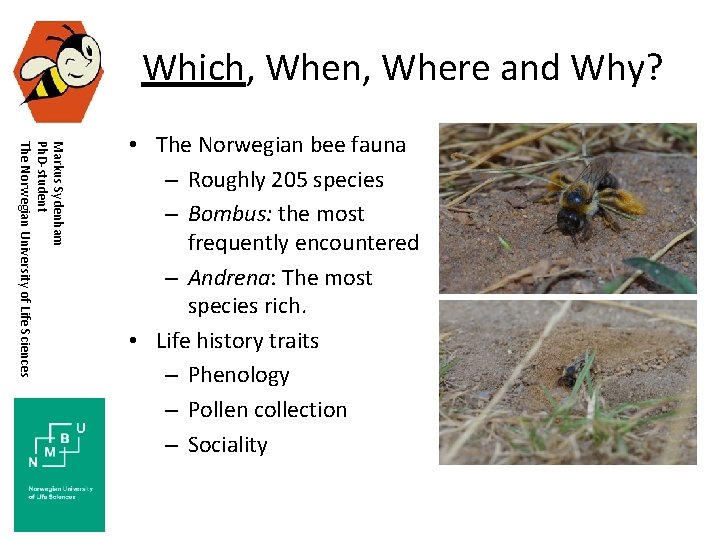
Which, When, Where and Why? Markus Sydenham Ph. D-student The Norwegian University of Life Sciences • The Norwegian bee fauna – Roughly 205 species – Bombus: the most frequently encountered – Andrena: The most species rich. • Life history traits – Phenology – Pollen collection – Sociality
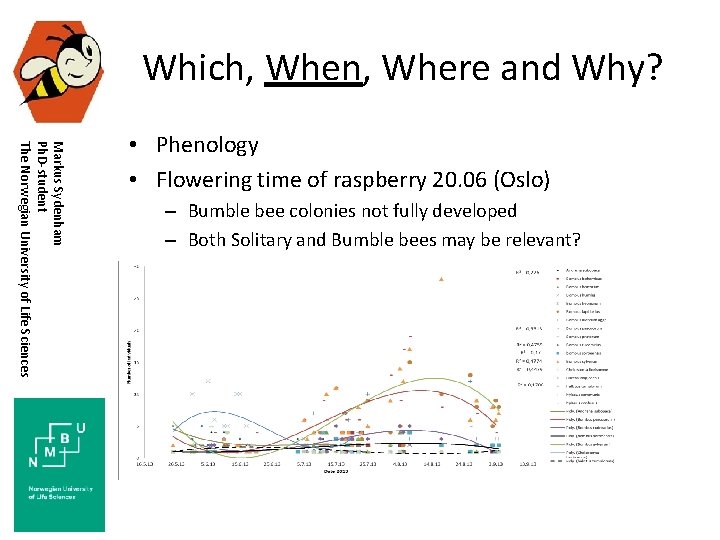
Which, When, Where and Why? Markus Sydenham Ph. D-student The Norwegian University of Life Sciences • Phenology • Flowering time of raspberry 20. 06 (Oslo) – Bumble bee colonies not fully developed – Both Solitary and Bumble bees may be relevant?
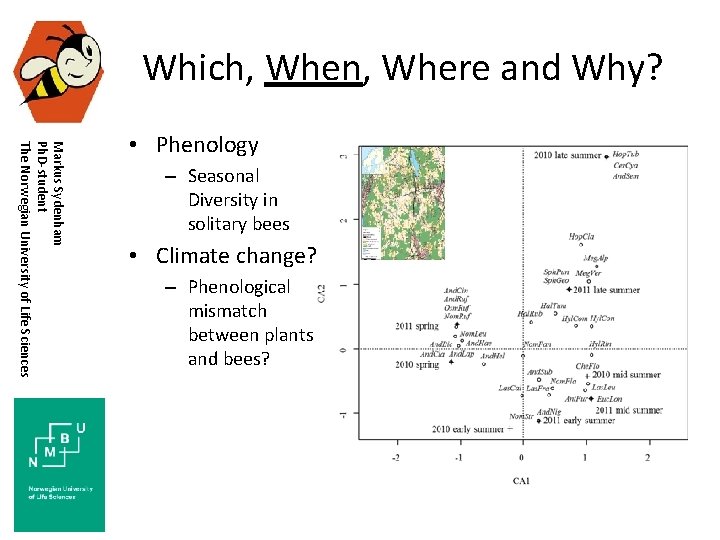
Which, When, Where and Why? Markus Sydenham Ph. D-student The Norwegian University of Life Sciences • Phenology – Seasonal Diversity in solitary bees • Climate change? – Phenological mismatch between plants and bees?
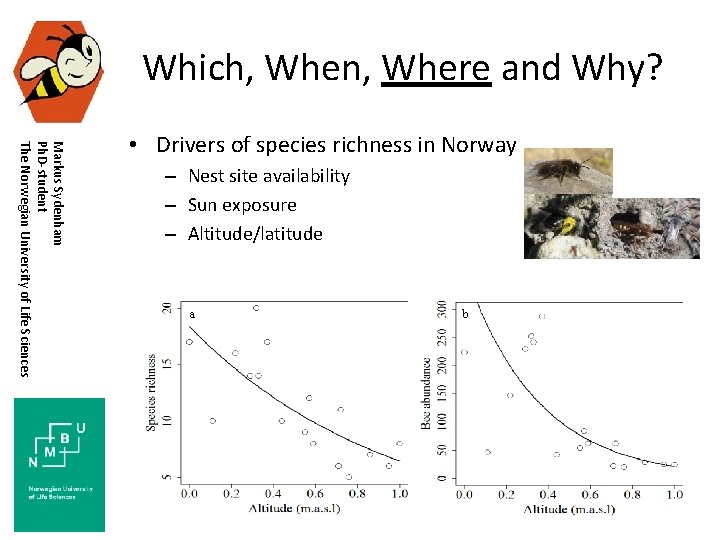
Which, When, Where and Why? Markus Sydenham Ph. D-student The Norwegian University of Life Sciences • Drivers of species richness in Norway – Nest site availability – Sun exposure – Altitude/latitude a b
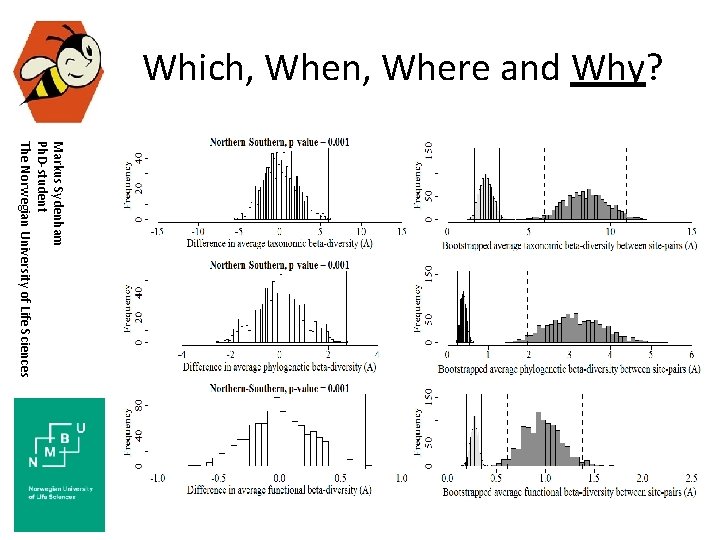
Which, When, Where and Why? Markus Sydenham Ph. D-student The Norwegian University of Life Sciences • Phylogeny – Bumble bees tolerate cold climates • More predictable communities at low latitudes/altitudes
Thank you for listening Markus Sydenham Ph. D-student The Norwegian University of Life Sciences