Malware Repository Overview Wenke Lee David Dagon Georgia
- Slides: 22
Malware Repository Overview Wenke Lee David Dagon Georgia Institute of Technology
Overview • How malware is collected and shared now • Malfease’s service-oriented repository – Support for malware analysis, e. g. , signature generation, and evaluation of intrusion/anomaly detection/prevention systems, etc. – Automated unpacking
Current Practices • Numerous private, semi-public malware collections – Need “trust” to join – “Too much sharing” often seen as competitive disadvantage • Analysis not shared • Incomplete collections: reflect sensor bias – Darknet-based collection – IRC surveillance – Honeypot-based collection
Shortcomings • Malware authors know and exploit weaknesses in data collection • Illuminating sensors – “Mapping Internet Sensors with Probe Response Attacks”, Bethencourt, et al. , Usenix 2005 • Automated victims updates – E. g. , via botnets
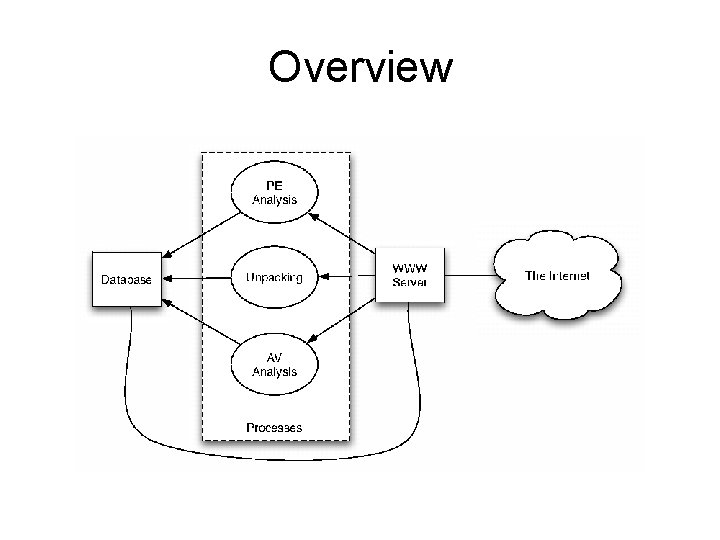
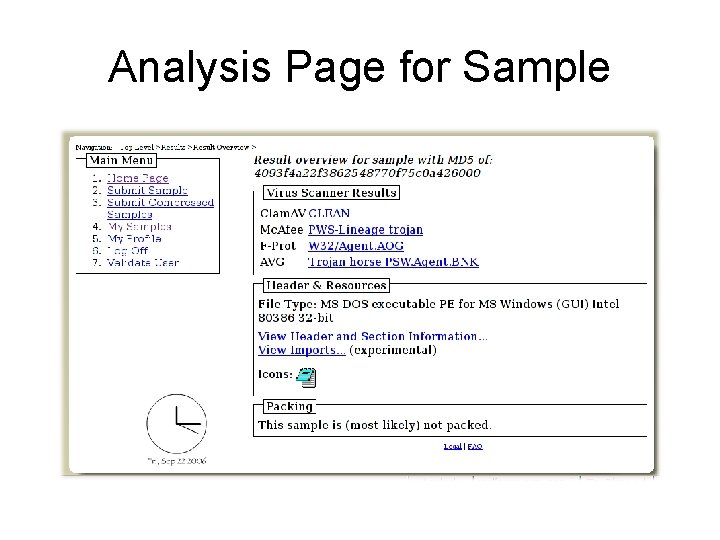
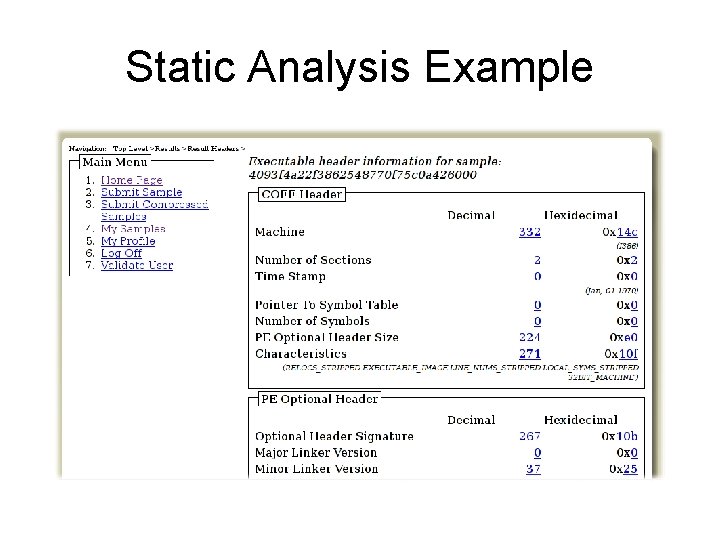
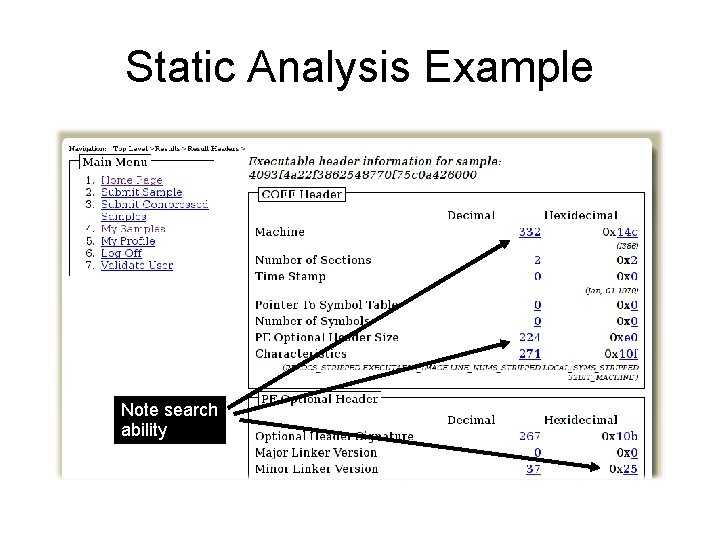
Solution: Service-Oriented Repository • Malfease uses hub-and-spoke model – Hub is central collection of malware – Spokes are analysis partners • Hub: – Malware, indexing, search – Static analysis: header extraction, icons, libraries – Metainfo: longitudinal AV scan results • Spoke: – E. g. , dynamic analysis, unpacking, signatures, etc.
Malware Repo Requirements • Malware repos should not: – Help illuminate sensors – Serve as a malware distribution site • Malware repo should: – Help automate analysis of malware flood – Coordinate different analysts (RE gurus, Snort rule writers, etc. )
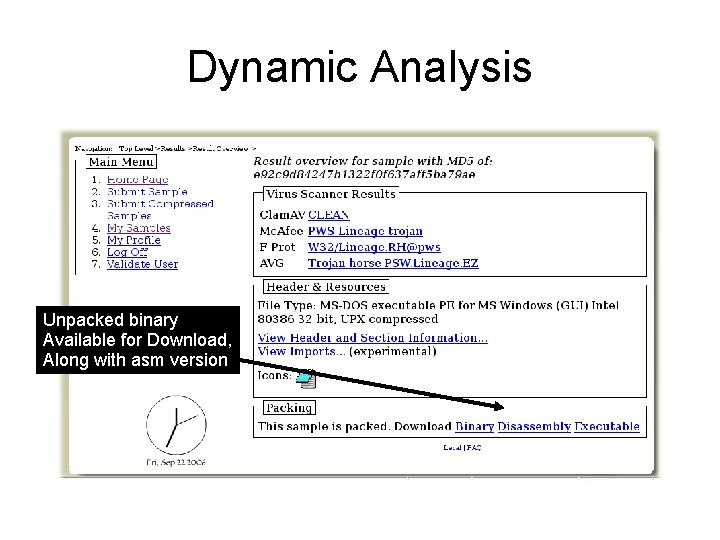
Approaches • Repository allows upload of samples – Downloads restricted to classes of users • Repository provides binaries and analysis – Automated unpacking – Win 32 PE Header analysis – Longitudinal detection data • What did the AV tool know, and when did it know it? – Malware similarity analysis, family tree – Etc.
Overview
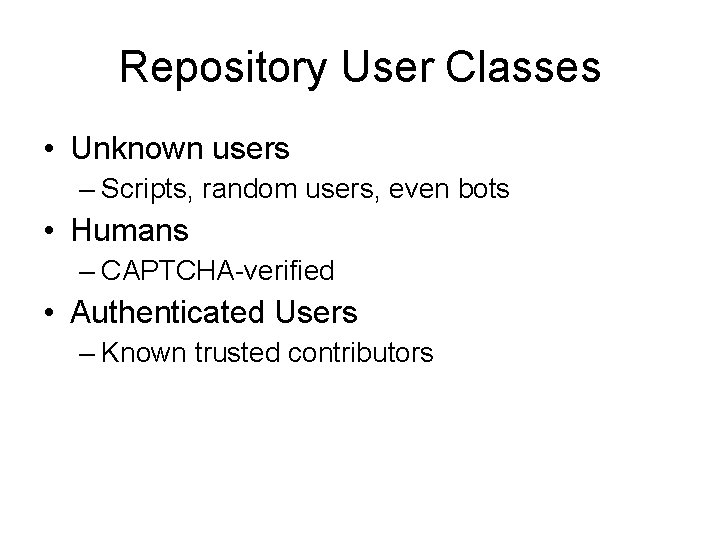
Repository User Classes • Unknown users – Scripts, random users, even bots • Humans – CAPTCHA-verified • Authenticated Users – Known trusted contributors
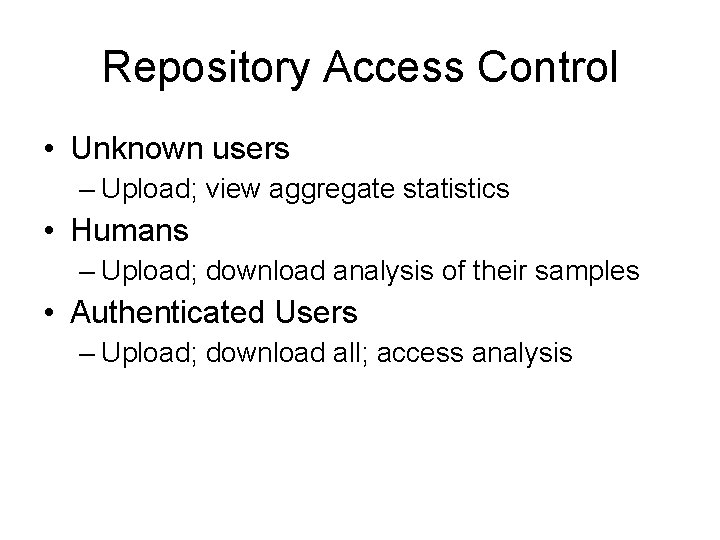
Repository Access Control • Unknown users – Upload; view aggregate statistics • Humans – Upload; download analysis of their samples • Authenticated Users – Upload; download all; access analysis
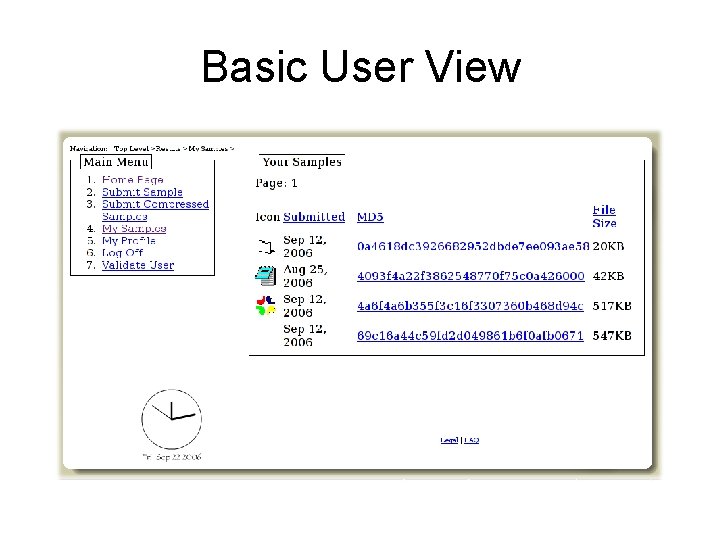
Basic User View
Analysis Page for Sample
Static Analysis Example
Static Analysis Example Note search ability
Dynamic Analysis Unpacked binary Available for Download, Along with asm version
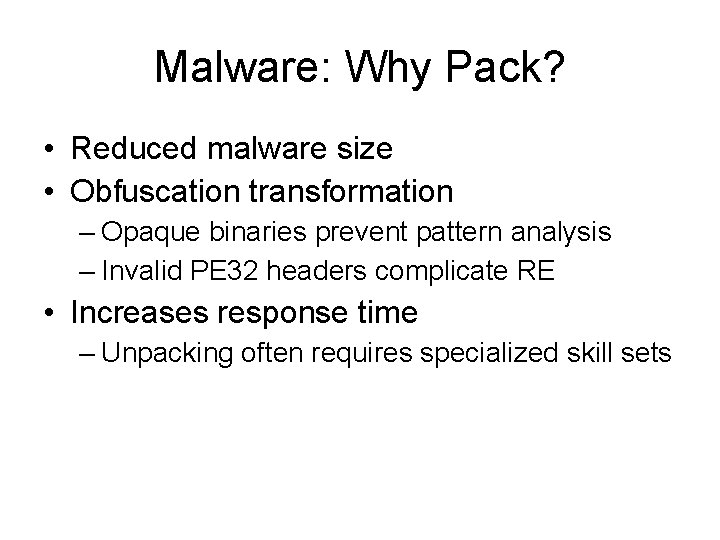
Malware: Why Pack? • Reduced malware size • Obfuscation transformation – Opaque binaries prevent pattern analysis – Invalid PE 32 headers complicate RE • Increases response time – Unpacking often requires specialized skill sets
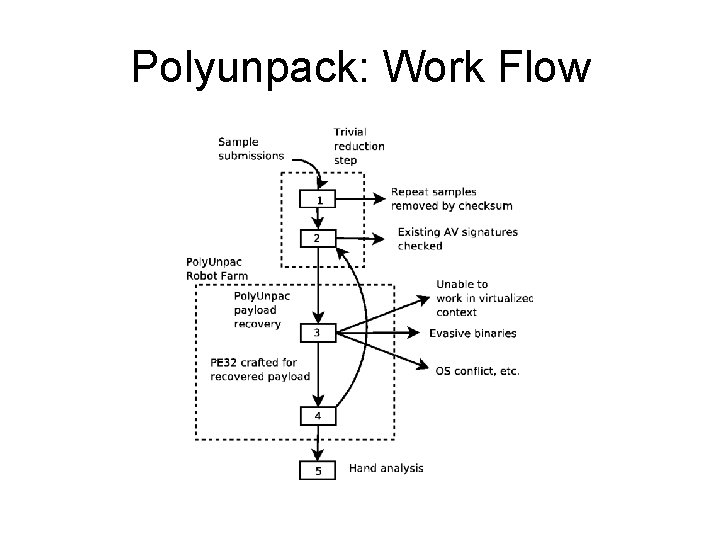
Polyunpack: Work Flow
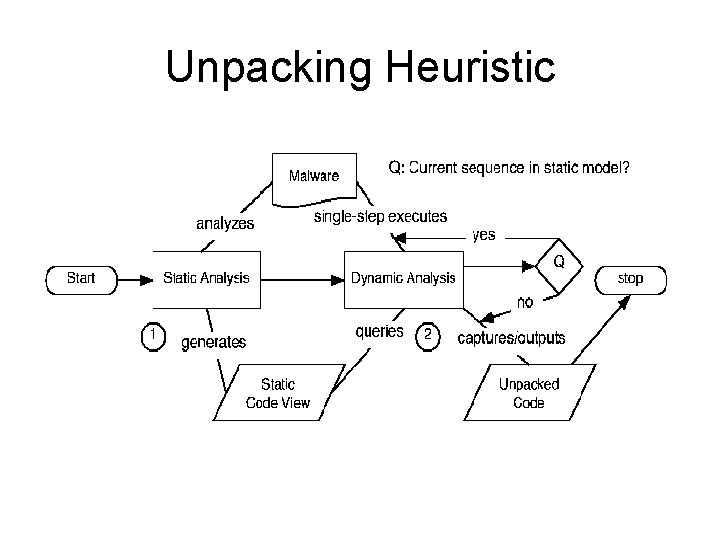
Unpacking Heuristic
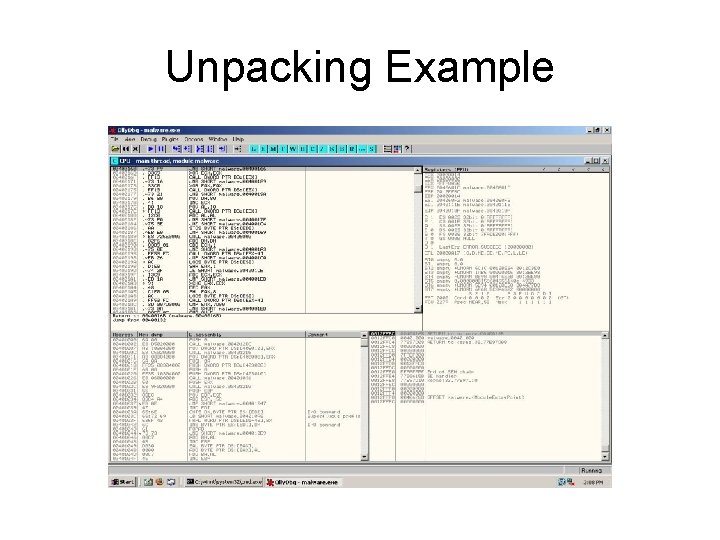
Unpacking Example
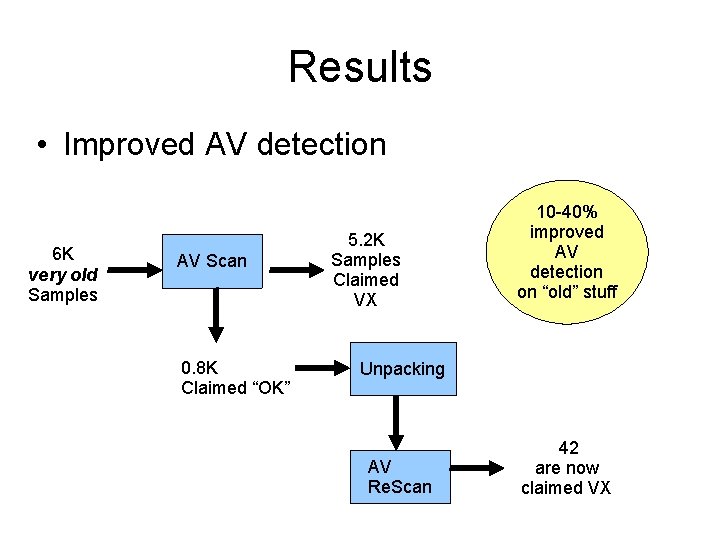
Results • Improved AV detection 6 K very old Samples AV Scan 0. 8 K Claimed “OK” 5. 2 K Samples Claimed VX 10 -40% improved AV detection on “old” stuff Unpacking AV Re. Scan 42 are now claimed VX
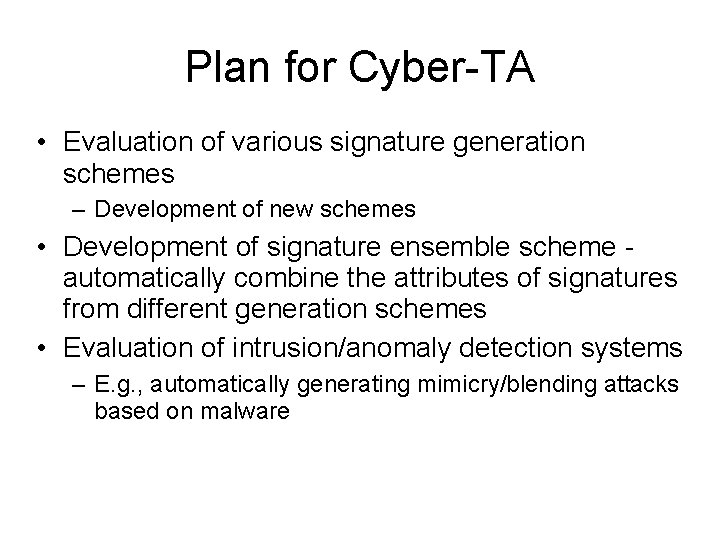
Plan for Cyber-TA • Evaluation of various signature generation schemes – Development of new schemes • Development of signature ensemble scheme automatically combine the attributes of signatures from different generation schemes • Evaluation of intrusion/anomaly detection systems – E. g. , automatically generating mimicry/blending attacks based on malware
Conclusion • Service-oriented repository – Support research in malware analysis and intrusion/anomaly detection/prevention • See malfease. oarci. net for details • Credits – David Dagon – Paul Vixie – Paul Royal – Mitch Halpin