Long QT Syndrome Teresa Menendez Hood M D

- Slides: 22
Long QT Syndrome Teresa Menendez Hood M. D.
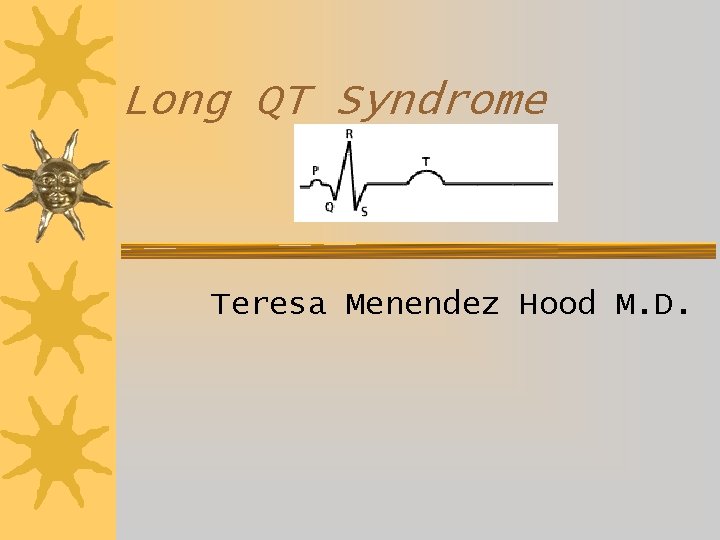
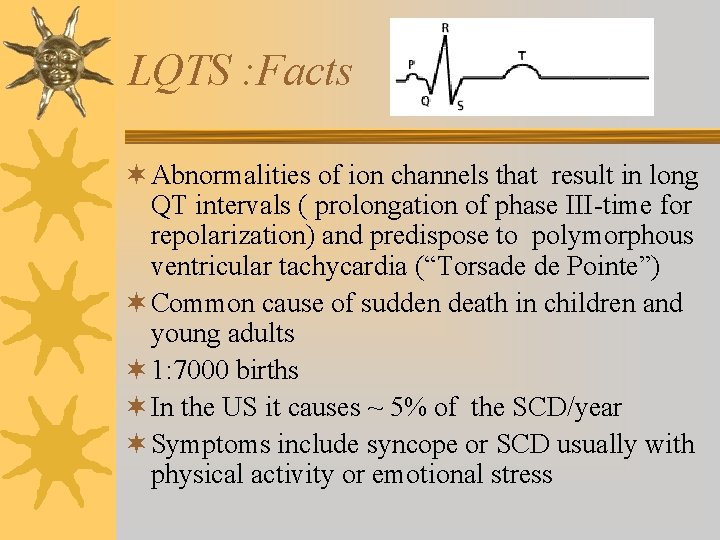
LQTS : Facts ¬ Abnormalities of ion channels that result in long QT intervals ( prolongation of phase III-time for repolarization) and predispose to polymorphous ventricular tachycardia (“Torsade de Pointe”) ¬ Common cause of sudden death in children and young adults ¬ 1: 7000 births ¬ In the US it causes ~ 5% of the SCD/year ¬ Symptoms include syncope or SCD usually with physical activity or emotional stress
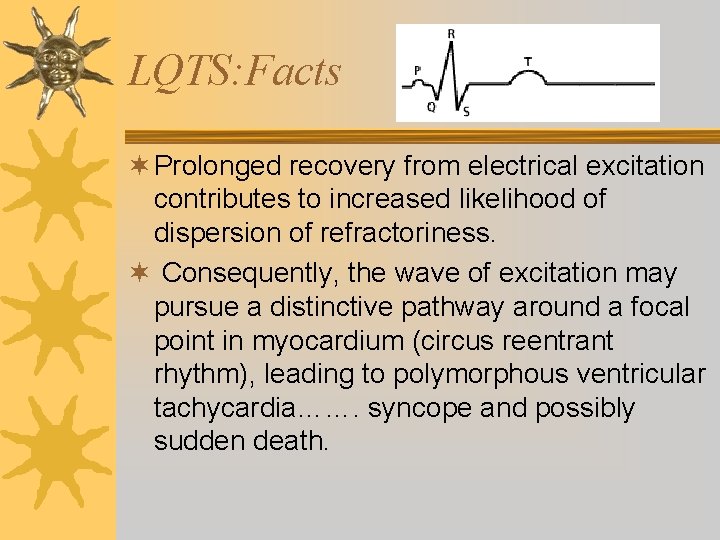
LQTS: Facts ¬ Prolonged recovery from electrical excitation contributes to increased likelihood of dispersion of refractoriness. ¬ Consequently, the wave of excitation may pursue a distinctive pathway around a focal point in myocardium (circus reentrant rhythm), leading to polymorphous ventricular tachycardia……. syncope and possibly sudden death.
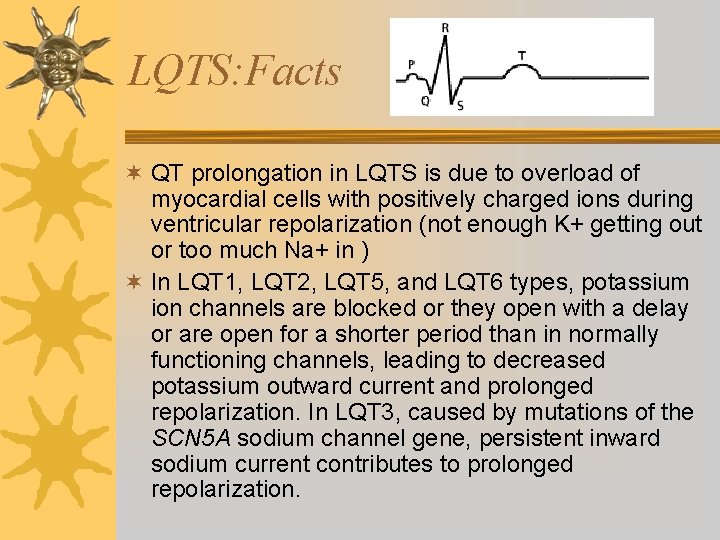
LQTS: Facts ¬ QT prolongation in LQTS is due to overload of myocardial cells with positively charged ions during ventricular repolarization (not enough K+ getting out or too much Na+ in ) ¬ In LQT 1, LQT 2, LQT 5, and LQT 6 types, potassium ion channels are blocked or they open with a delay or are open for a shorter period than in normally functioning channels, leading to decreased potassium outward current and prolonged repolarization. In LQT 3, caused by mutations of the SCN 5 A sodium channel gene, persistent inward sodium current contributes to prolonged repolarization.
LQTS: Facts ¬ Syncope often misdiagnosed as vasovagal or epilepsy ¬ Family history is important-ask about deafness and SCD <30 years of age ¬ 1/3 of patients with LQTS are asymptomatic ¬ 10% of patients will have a normal QT interval ¬ Rule out drug induced LQT and other causes of SCD in young patients(HCM, Brugada, ARVD) ¬ Treatment is BB +/- ICD
LQTS: Facts ¬ Gender differences : SCD- males-higher risk during childhood with mean age 13 of SCD and females have higher risk in adulthood with mean age of 20 of SCD ¬ Women are twice as likely to be symptomatic and develop Td. P than their male counterparts (the estrogen? ) ¬ Competitive sports should be avoided ¬ Most episodes result in syncope with only 5% resulting in SCD ¬ EP studies are not helpful
LQTS: Facts ¬ Inherited/Congenital : first described in 1957 with an autosomal dominant type (Romano Ward) and an autosomal recessive type (Jervell Lange. Nielsen). In the 1990 s the genetic mutations have been linked to at least 6 genes and 2 ion channels. ¬ JLN-deafness, auto R, rare (<1% of all LQTS); needs to be homozygous and involves K consduction in the cilia of the ear ¬ RW-common, hearing is normal, auto D
LQTS: Facts ¬ With treatment, can lower the mortality from 10% at 10 years to <1% ¬ BB prevent symptoms is 70% of patients ¬ ICD’s are indicated for those who have not responded to BB ¬ Td. P: Acutely need to treat with defibrillation, IV magnesium, consider temporary pacing if bradycardic , and remove offending drugs ¬ Need to avoid drugs which can further prolong the QT-www. qtdrugs. org
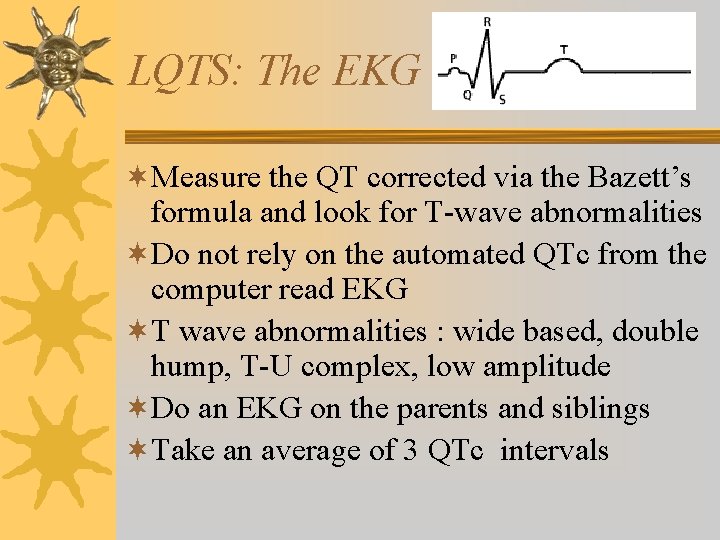
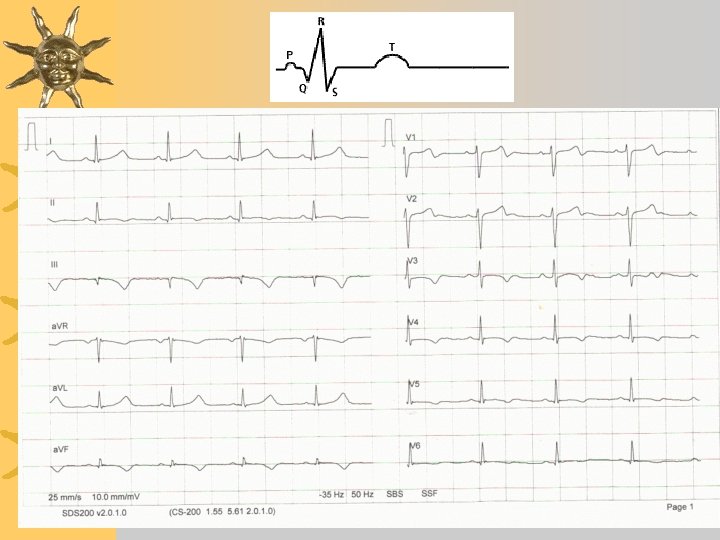
LQTS: The EKG ¬Measure the QT corrected via the Bazett’s formula and look for T-wave abnormalities ¬Do not rely on the automated QTc from the computer read EKG ¬T wave abnormalities : wide based, double hump, T-U complex, low amplitude ¬Do an EKG on the parents and siblings ¬Take an average of 3 QTc intervals
LQTS: Calculating the QTc ¬ Bazett: 1920 QTc=QT/square root of the RR ¬ Corrects QT for the heart rate-there is normally an inverse relation…as one goes up/the other goes down and vice versa ¬ Abnormal if QTc in males >470 ms and females of > 480 ms ¬ Borderline prolonged QTc 450 -470 ms ¬ Average QTc for someone with the LQTS is 490 ms
LQTS: Nomogram ¬
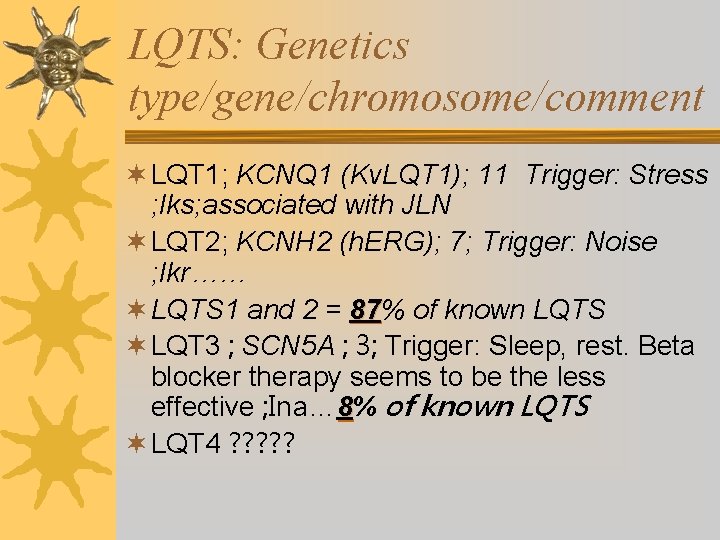
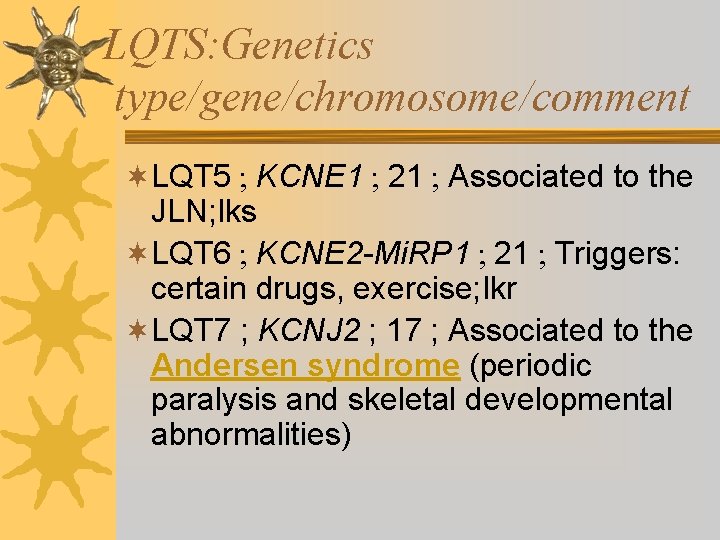
LQTS: Genetics ¬Not all is known… since 40% of families with LQTS have not yet been linked to the known genetic causes ¬LQT 1 -LQT 7 ¬All encode for K channels except LQT 3 which is linked to the Na channel-very good test question….
LQTS: Genetics type/gene/chromosome/comment ¬ LQT 1; KCNQ 1 (Kv. LQT 1); 11 Trigger: Stress ; Iks; associated with JLN ¬ LQT 2; KCNH 2 (h. ERG); 7; Trigger: Noise ; Ikr…… ¬ LQTS 1 and 2 = 87% 87 of known LQTS ¬ LQT 3 ; SCN 5 A ; 3; Trigger: Sleep, rest. Beta blocker therapy seems to be the less effective ; Ina… 8% of known LQTS ¬ LQT 4 ? ? ?
LQTS: Genetics type/gene/chromosome/comment ¬LQT 5 ; KCNE 1 ; 21 ; Associated to the JLN; Iks ¬LQT 6 ; KCNE 2 -Mi. RP 1 ; 21 ; Triggers: certain drugs, exercise; Ikr ¬LQT 7 ; KCNJ 2 ; 17 ; Associated to the Andersen syndrome (periodic paralysis and skeletal developmental abnormalities)
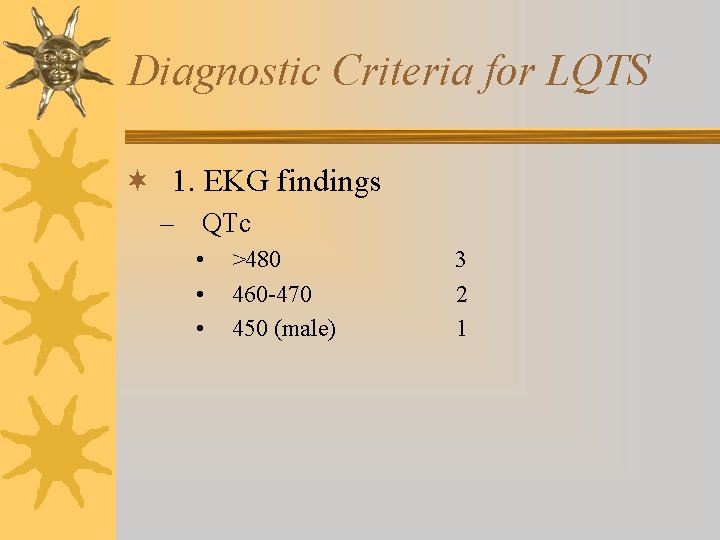
Diagnostic Criteria for LQTS ¬ 1. EKG findings – QTc • • • >480 460 -470 450 (male) 3 2 1
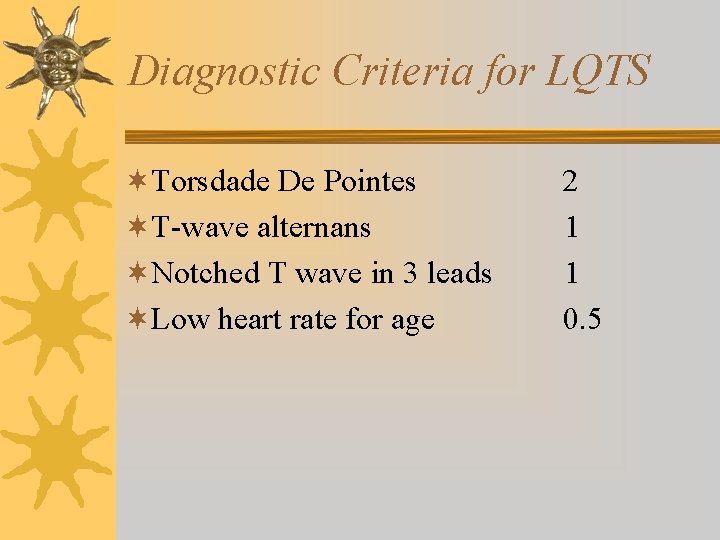
Diagnostic Criteria for LQTS ¬Torsdade De Pointes ¬T-wave alternans ¬Notched T wave in 3 leads ¬Low heart rate for age 2 1 1 0. 5
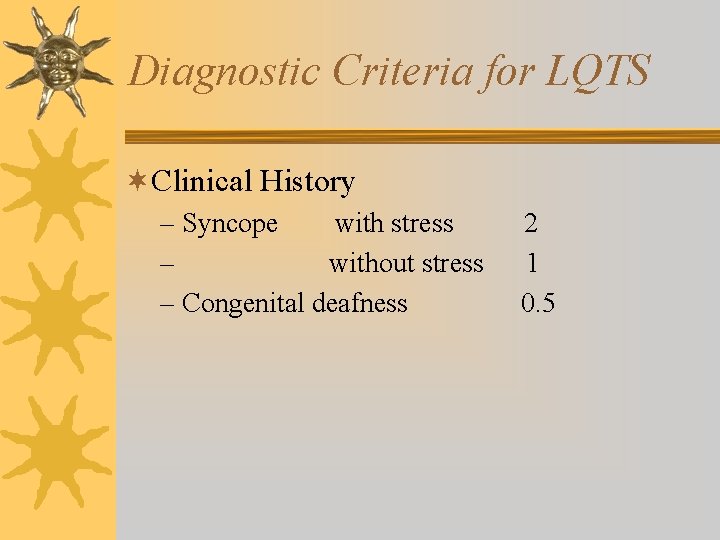
Diagnostic Criteria for LQTS ¬Clinical History – Syncope with stress – without stress – Congenital deafness 2 1 0. 5
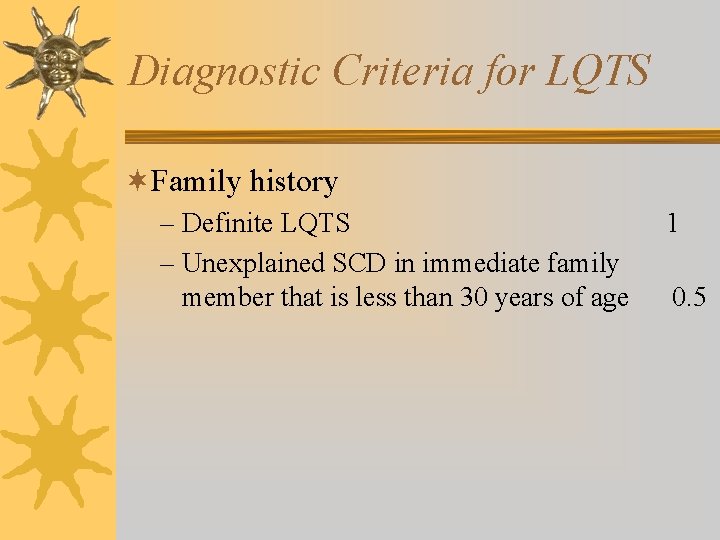
Diagnostic Criteria for LQTS ¬Family history – Definite LQTS – Unexplained SCD in immediate family member that is less than 30 years of age 1 0. 5
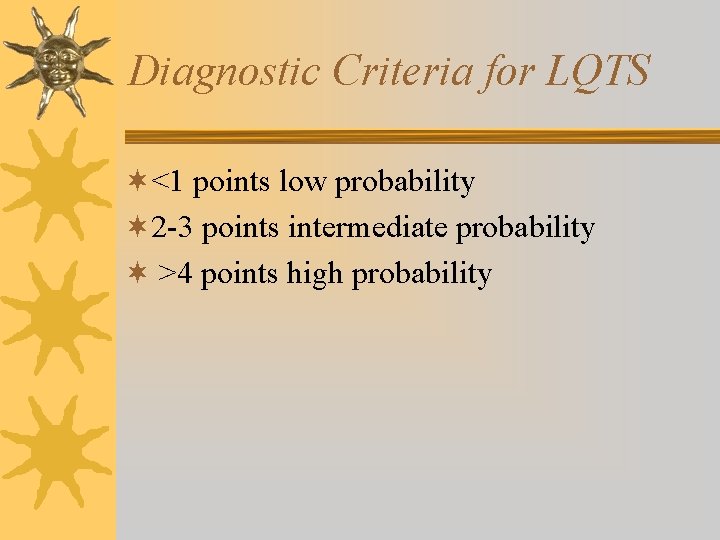
Diagnostic Criteria for LQTS ¬<1 points low probability ¬ 2 -3 points intermediate probability ¬ >4 points high probability
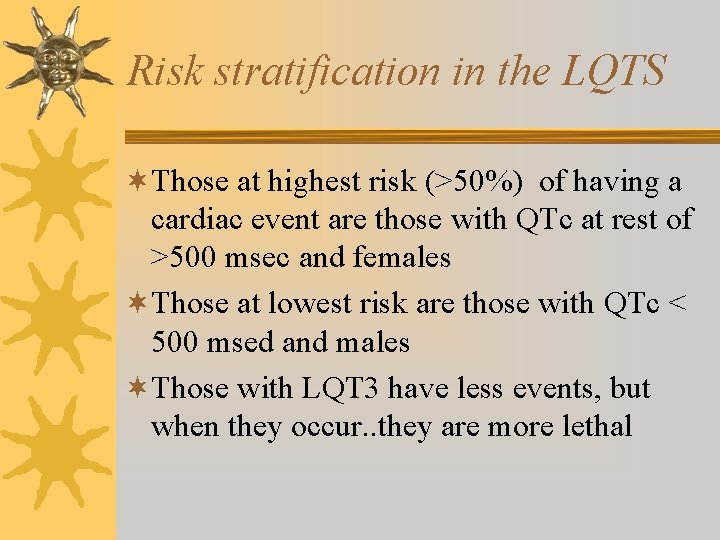
Risk stratification in the LQTS ¬Those at highest risk (>50%) of having a cardiac event are those with QTc at rest of >500 msec and females ¬Those at lowest risk are those with QTc < 500 msed and males ¬Those with LQT 3 have less events, but when they occur. . they are more lethal
¬El FIN