Listening Skills Hardik Sharma Assistant Professor College of



- Slides: 18
Listening Skills Hardik Sharma Assistant Professor College of Agricultural Engineering & Technology Anand Agricultural University Godhra – 389 001
Listening Skills q Listening is Primary Language Ability q. No communication Process is Complete without Listening. q “If you listen carefully, at the end you’ll be someone else. ” -Mahabharata
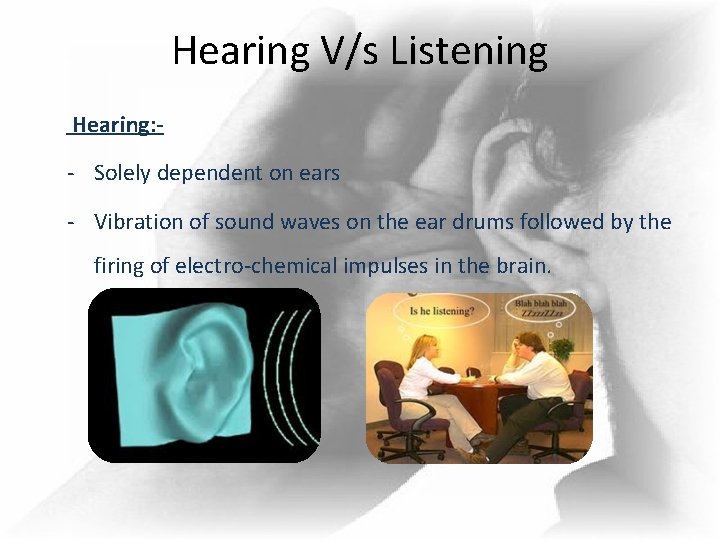
Hearing V/s Listening Hearing: - - Solely dependent on ears - Vibration of sound waves on the ear drums followed by the firing of electro-chemical impulses in the brain.
Hearing V/s Listening: - - Requires attention and making sense of what is heard. - Interpreting the sounds, grasping meaning of words, reacting to the message - Dependence on Previous knowledge, attitude and message
Types of Listening Appreciative Listening: - - For deriving aesthetic pleasure - Listening to a comedian, musician or entertainer
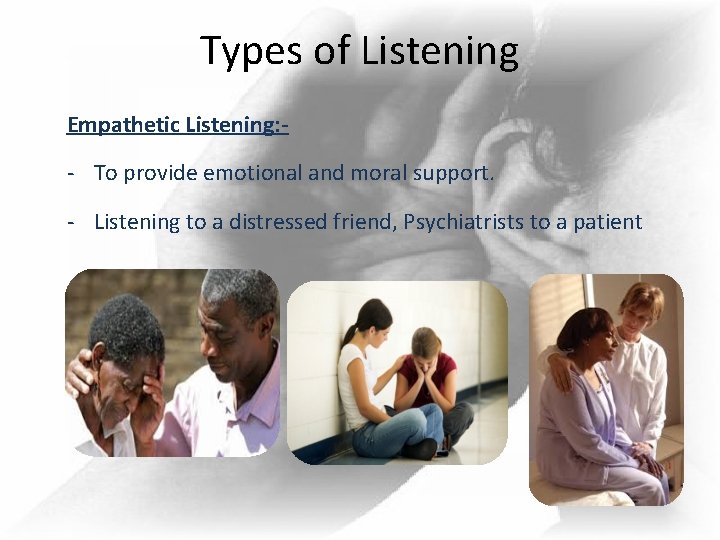
Types of Listening Empathetic Listening: - - To provide emotional and moral support. - Listening to a distressed friend, Psychiatrists to a patient
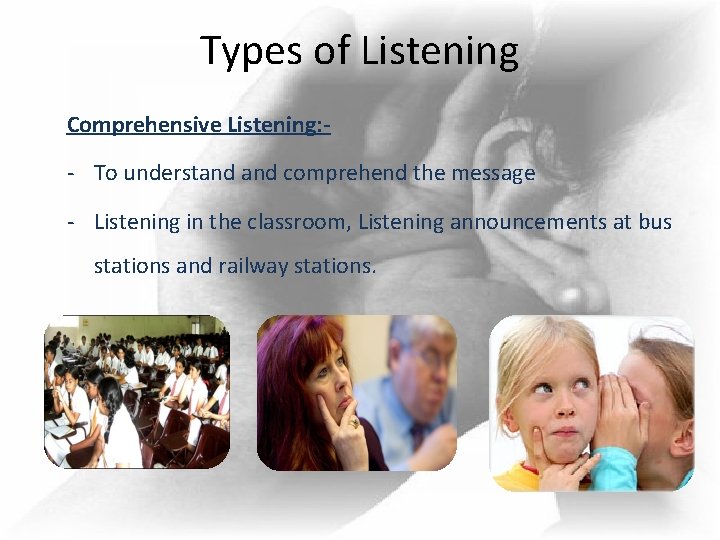
Types of Listening Comprehensive Listening: - - To understand comprehend the message - Listening in the classroom, Listening announcements at bus stations and railway stations.
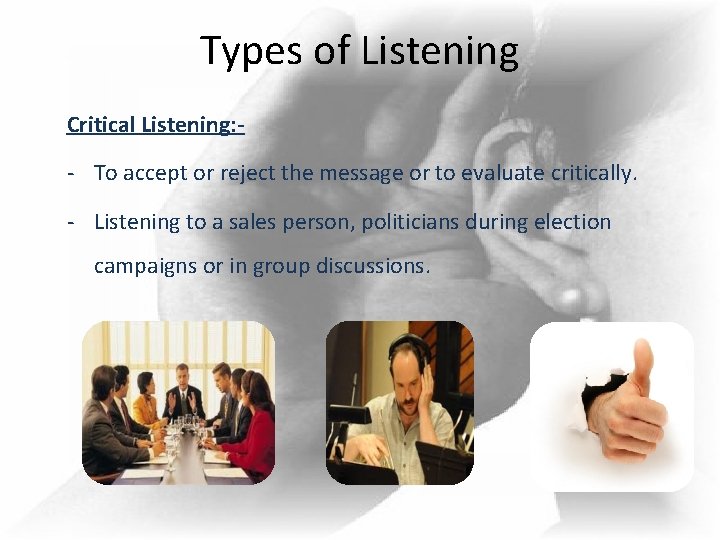
Types of Listening Critical Listening: - - To accept or reject the message or to evaluate critically. - Listening to a sales person, politicians during election campaigns or in group discussions.
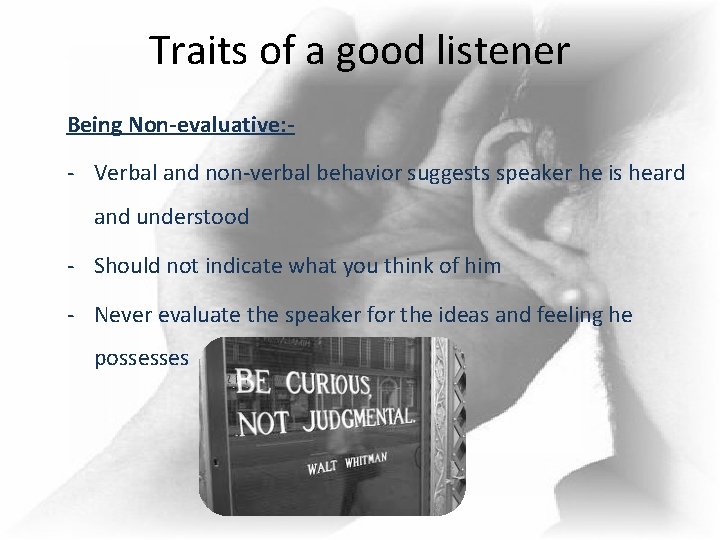
Traits of a good listener Being Non-evaluative: - - Verbal and non-verbal behavior suggests speaker he is heard and understood - Should not indicate what you think of him - Never evaluate the speaker for the ideas and feeling he possesses
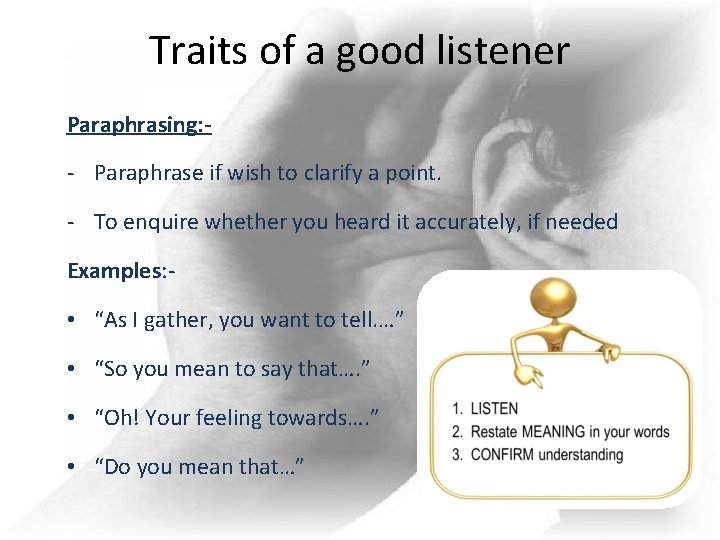
Traits of a good listener Paraphrasing: - - Paraphrase if wish to clarify a point. - To enquire whether you heard it accurately, if needed Examples: - • “As I gather, you want to tell. …” • “So you mean to say that…. ” • “Oh! Your feeling towards…. ” • “Do you mean that…”
Traits of a good listener Reflecting Implications: - - To indicate speaker your appreciation - Listener reflects eagerness or zest Examples: - • “So this might lead to a result which……. . ” • “So you are suggesting that we might…. ” • “will that held up to alleviate the problem of…. ” • nodding head
Traits of a good listener Reflecting hidden feelings: - - sometimes to unravel the underlying feelings, intentions, belief or values that may influence speakers words - To empathize or identify yourself with the speaker Examples: - • “If I were in your place, I would not have handled the situation so well” • “That must have been a satisfying experience”
Traits of a good listener Inviting Further Contribution: - - to get more information or clarification - Be careful asking too many questions - ask open ended question - keep statements short and easy to understand Examples: - • “Can you throw more light on…. ” • “After that, what happened? • “How did you react when…. ? ”
Traits of a good listener Responding non-verbally: - - to show you are active listener - to communicate your interest Examples: - • eye contact • occasional receptive utterances – “yes”, “un-hum”. • “How did you react when…. ? ”
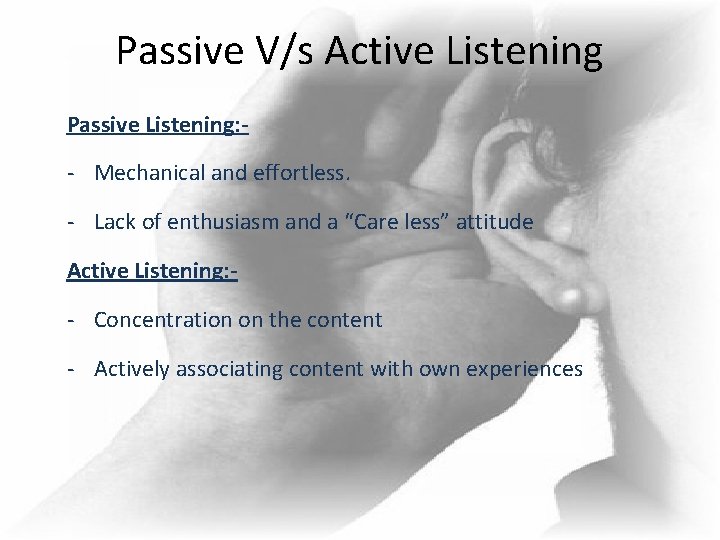
Passive V/s Active Listening Passive Listening: - - Mechanical and effortless. - Lack of enthusiasm and a “Care less” attitude Active Listening: - - Concentration on the content - Actively associating content with own experiences
Thank you
Assignment q. What is the difference between hearing and listening? q. Explain the types of listening. q. Explain the traits of a good listener. q. Explain the difference between ‘Passive Listening’ and ‘Active Listening’.
Audio downloaded from: - www. cambridge. org-us-esl-viewpoint-audio-level 1 -sb-download-Viewpoint_1_SB_U 12 D_ex 1 B