Light Speed 2 0 LS 2 Reflects 12
- Slides: 12
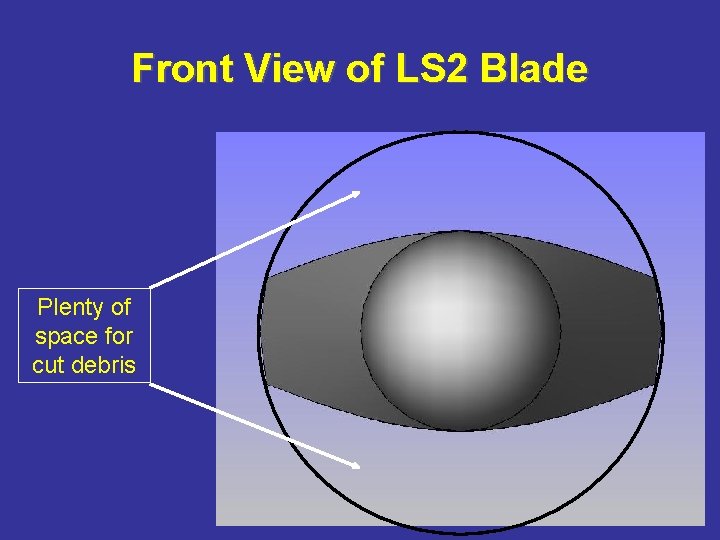
Light. Speed 2. 0 (LS 2) ü Reflects 12 years of experience with LS 1. ü Reduces chance of leaving a separated instrument in the canal. Features a “safe failure mode”. ü No grinding necessary when making instrument thus no surface defects and no cause for premature failure. ü Easier instrument identification. ü Length markings more visible and match those of our K-files. ü “Spade blade” provides more space for debris. No flutes to clog. Its cutting efficiency remains the same.
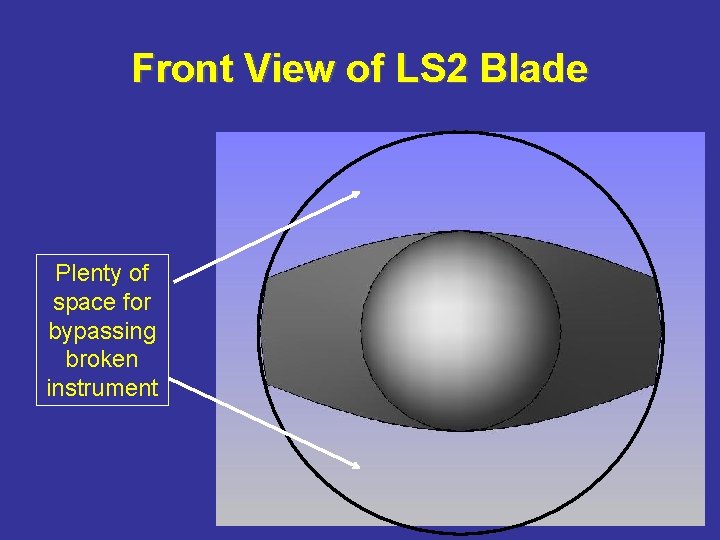
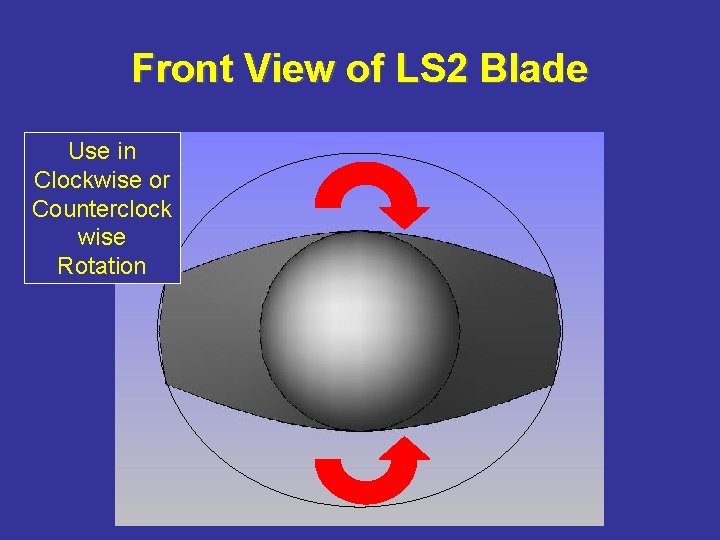
Light. Speed 2. 0 (LS 2) ü Flat blade design provides ample space for bypassing if necessary. ü Better tactile feedback. ü More flexible shaft and shorter cutting blade negotiates the more difficult curves better. ü Symmetrical blade eliminates rotation procedural error; use clockwise OR counterclockwise rotation. ü No significant changes compared to LS 1; technique and equipment pretty much the same.
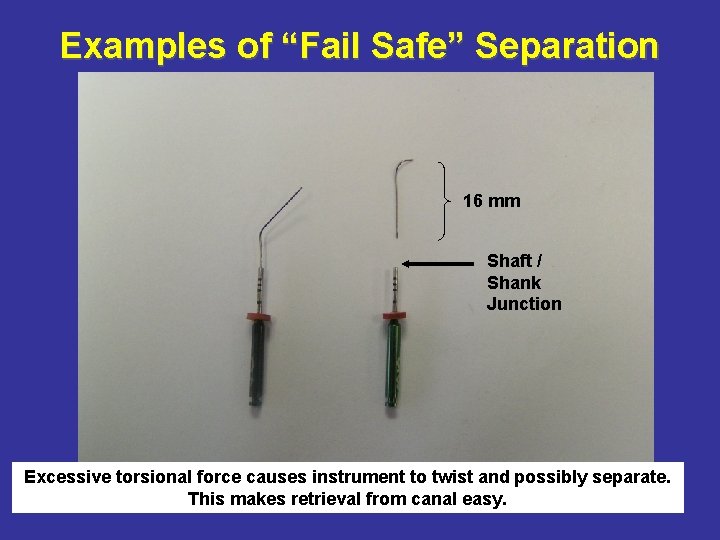
Examples of “Fail Safe” Separation 16 mm Shaft / Shank Junction Excessive torsional force causes instrument to twist and possibly separate. This makes retrieval from canal easy.
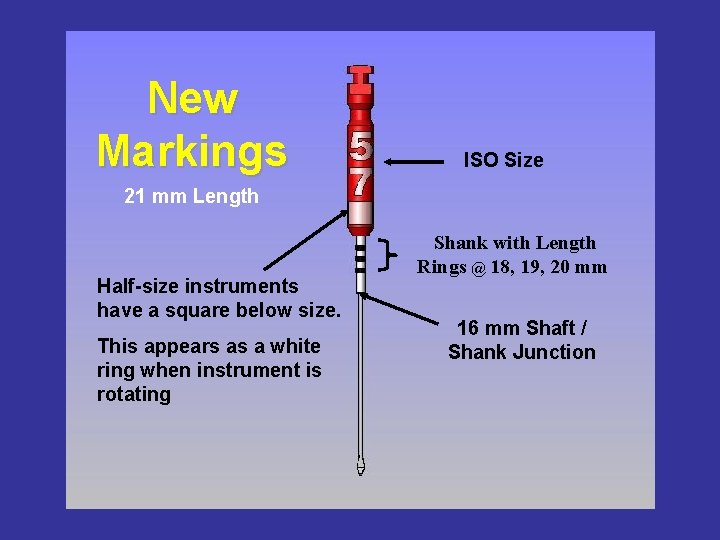
New Markings ISO Size 21 mm Length Half-size instruments have a square below size. This appears as a white ring when instrument is rotating Shank with Length Rings @ 18, 19, 20 mm 16 mm Shaft / Shank Junction
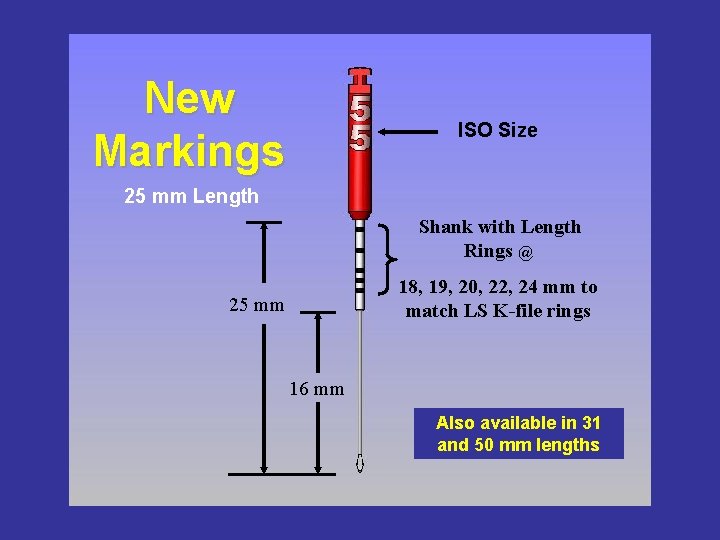
New Markings ISO Size 25 mm Length Shank with Length Rings @ 18, 19, 20, 22, 24 mm to match LS K-file rings 25 mm 16 mm Also available in 31 and 50 mm lengths
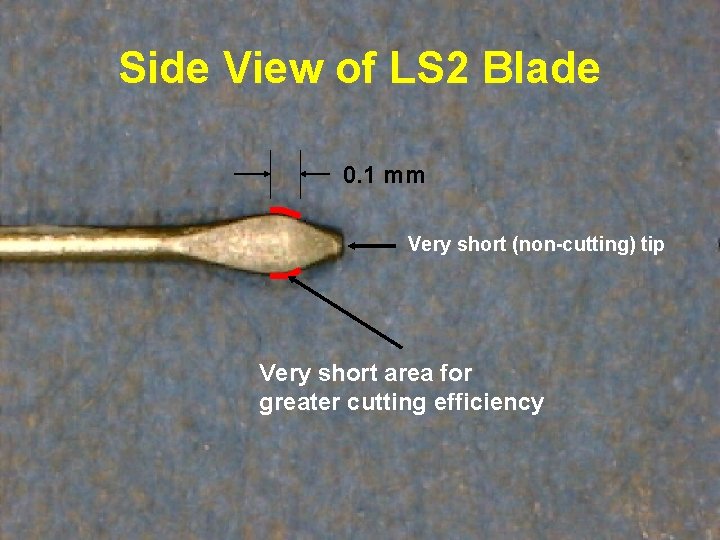
Side View of LS 2 Blade 0. 1 mm Very short (non-cutting) tip Very short area for greater cutting efficiency
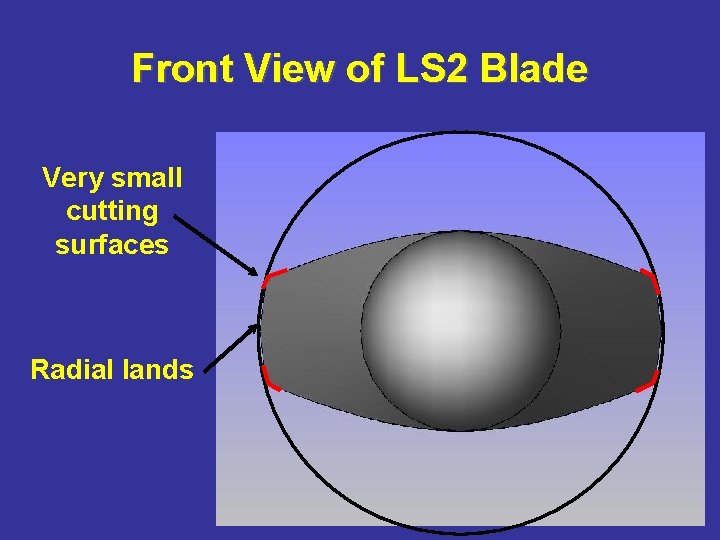
Front View of LS 2 Blade Very small cutting surfaces Radial lands
Front View of LS 2 Blade Plenty of space for cut debris
Front View of LS 2 Blade Plenty of space for bypassing broken instrument
Front View of LS 2 Blade Use in Clockwise or Counterclock wise Rotation
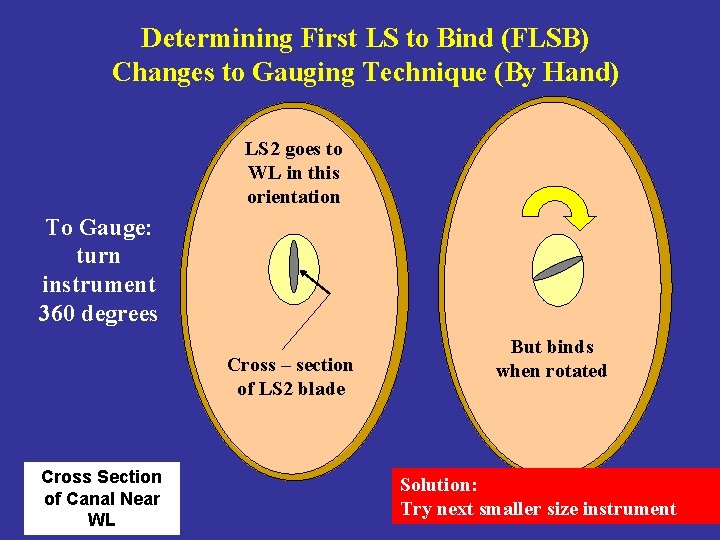
Determining First LS to Bind (FLSB) Changes to Gauging Technique (By Hand) LS 2 goes to WL in this orientation To Gauge: turn instrument 360 degrees Cross – section of LS 2 blade Cross Section of Canal Near WL But binds when rotated Solution: Try next smaller size instrument
Technique Changes Recommended by Evaluators Ø From “very light touch” to “light push” Ø LS 2 instruments perform better at higher speed and with higher torque handpiece. Use speed range no lower than 2000 rpm, 2500 rpm is preferred. Ø Be aware of canal anomalies that could “catch” and twist-up instrument