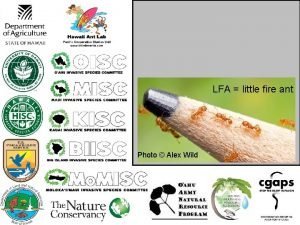
LFA little fire ant Photo Alex Wild If
- Slides: 17
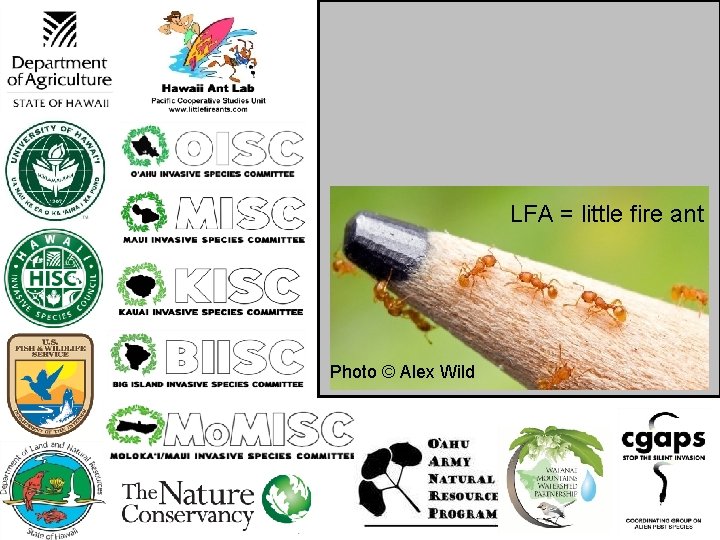
LFA = little fire ant Photo © Alex Wild
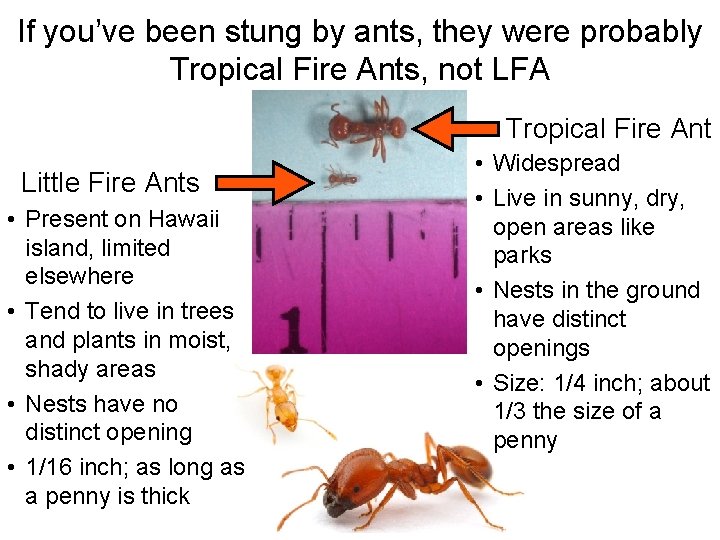
If you’ve been stung by ants, they were probably Tropical Fire Ants, not LFA Tropical Fire Ant Little Fire Ants • Present on Hawaii island, limited elsewhere • Tend to live in trees and plants in moist, shady areas • Nests have no distinct opening • 1/16 inch; as long as a penny is thick • Widespread • Live in sunny, dry, open areas like parks • Nests in the ground have distinct openings • Size: 1/4 inch; about 1/3 the size of a penny
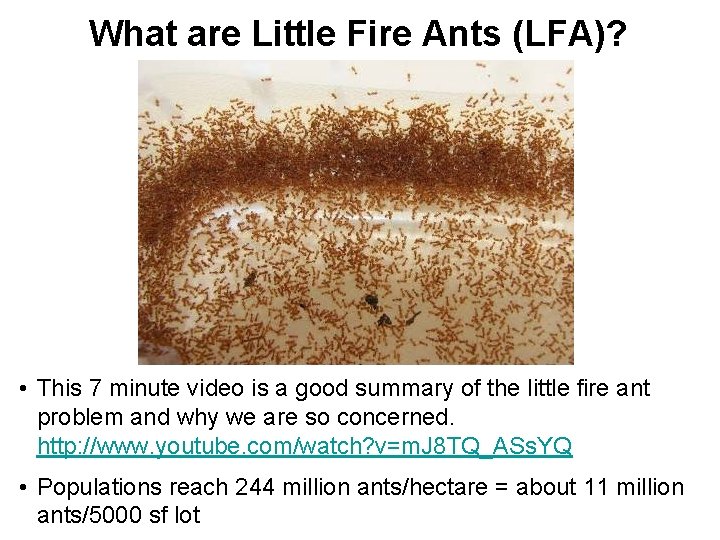
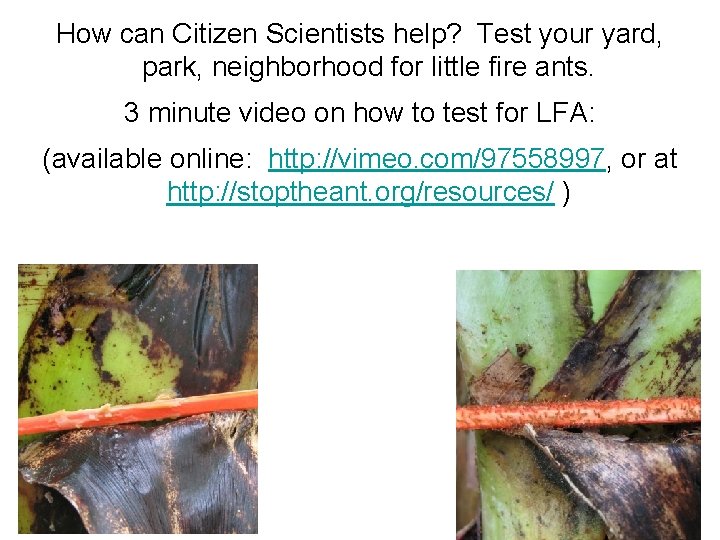
What are Little Fire Ants (LFA)? • This 7 minute video is a good summary of the little fire ant problem and why we are so concerned. http: //www. youtube. com/watch? v=m. J 8 TQ_ASs. YQ • Populations reach 244 million ants/hectare = about 11 million Little fire ants attracted to peanut ants/5000 sf lot butter on half of a chopstick
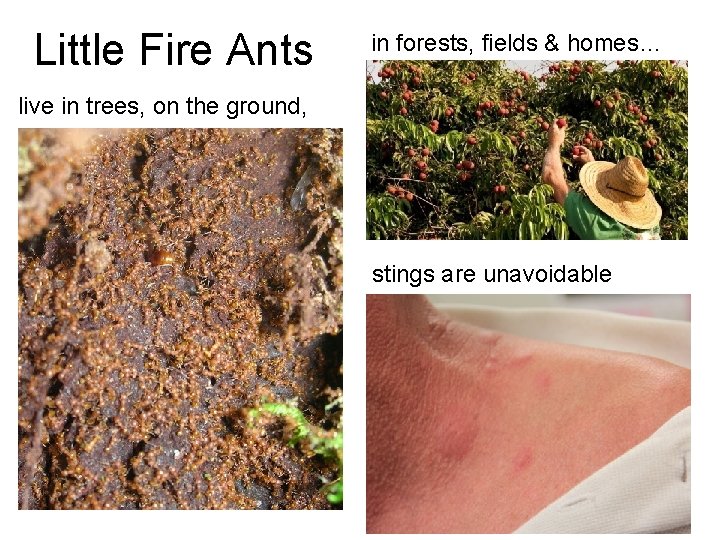
Little Fire Ants in forests, fields & homes… live in trees, on the ground, stings are unavoidable
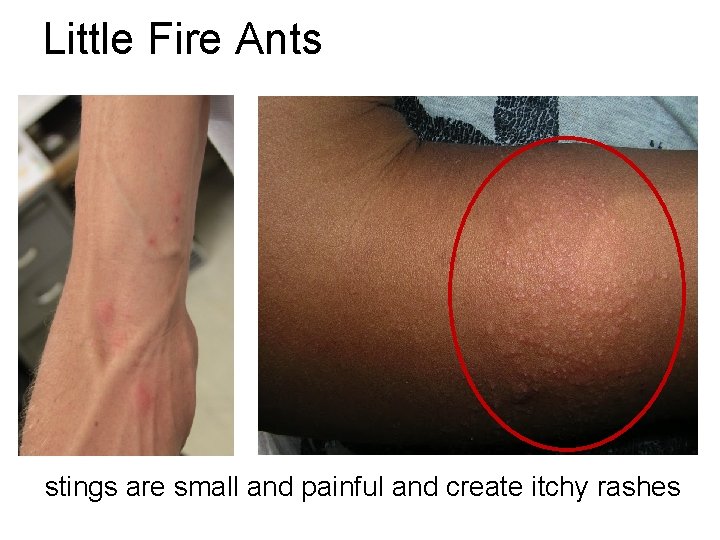
Little Fire Ants stings are small and painful and create itchy rashes
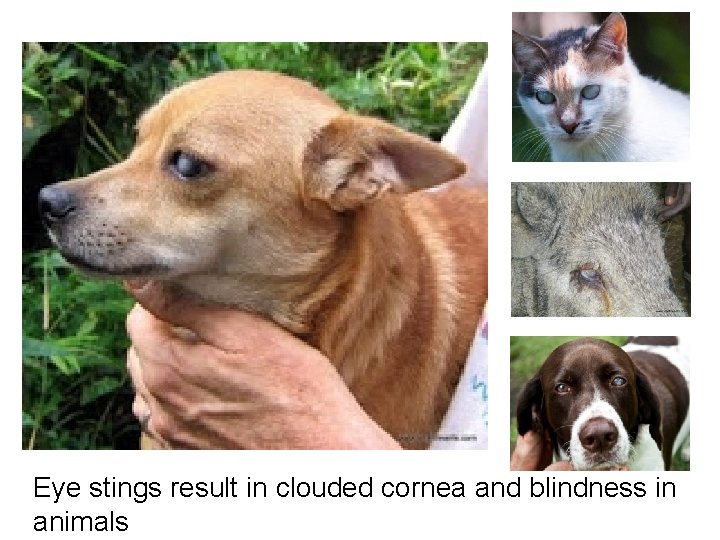
Eye stings result in clouded cornea and blindness in animals
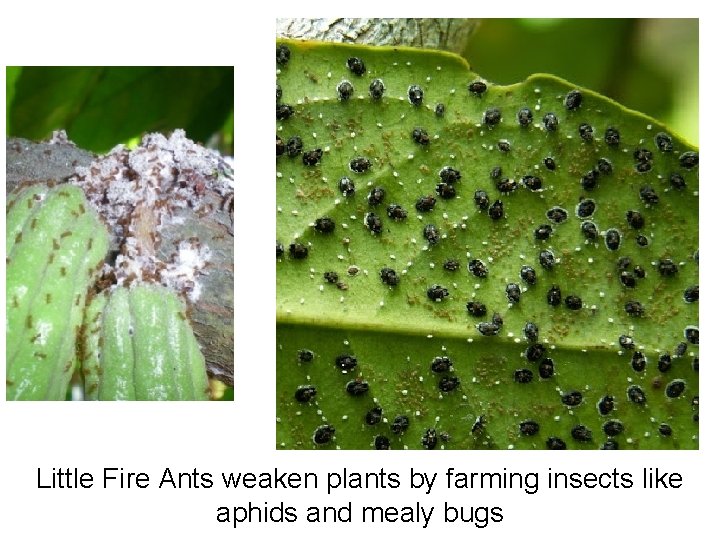
Little Fire Ants weaken plants by farming insects like aphids and mealy bugs
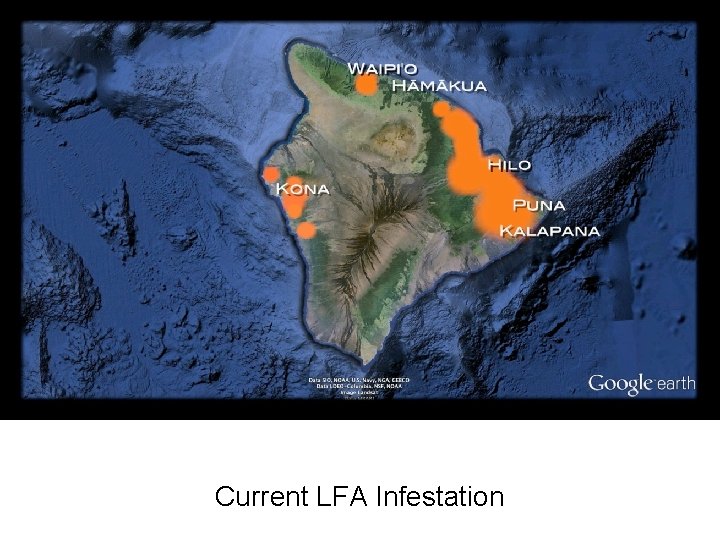
Current LFA Infestation
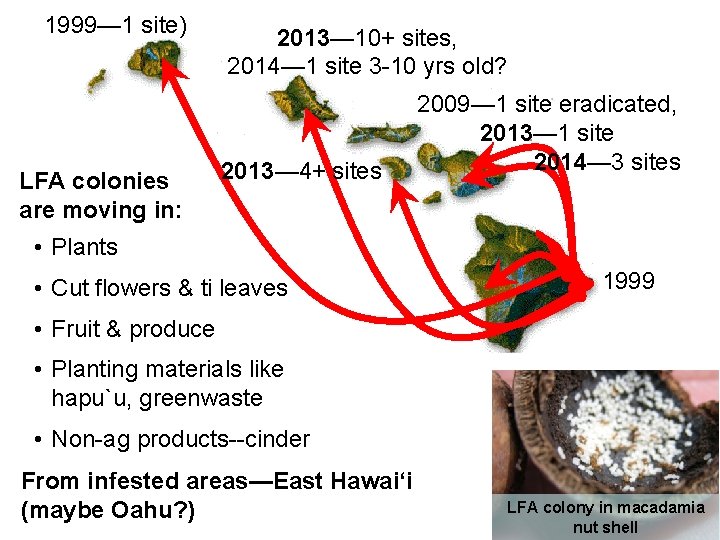
1999— 1 site) LFA colonies are moving in: 2013— 10+ sites, 2014— 1 site 3 -10 yrs old? 2013— 4+ sites • Plants 2009— 1 site eradicated, 2013— 1 site 2014— 3 sites 2013 • Cut flowers & ti leaves 1999 • Fruit & produce • Planting materials like hapu`u, greenwaste • Non-ag products--cinder From infested areas—East Hawaiʻi (maybe Oahu? ) LFA colony in macadamia nut shell
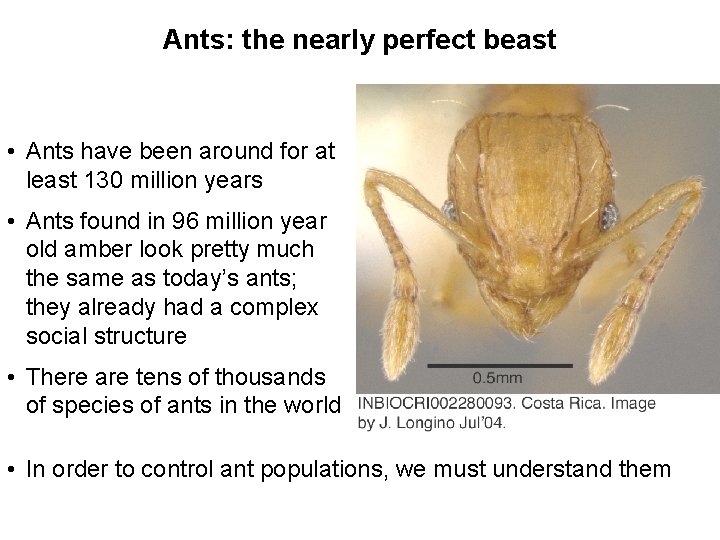
Ants: the nearly perfect beast • Ants have been around for at least 130 million years • Ants found in 96 million year old amber look pretty much the same as today’s ants; they already had a complex social structure • There are tens of thousands of species of ants in the world • In order to control ant populations, we must understand them
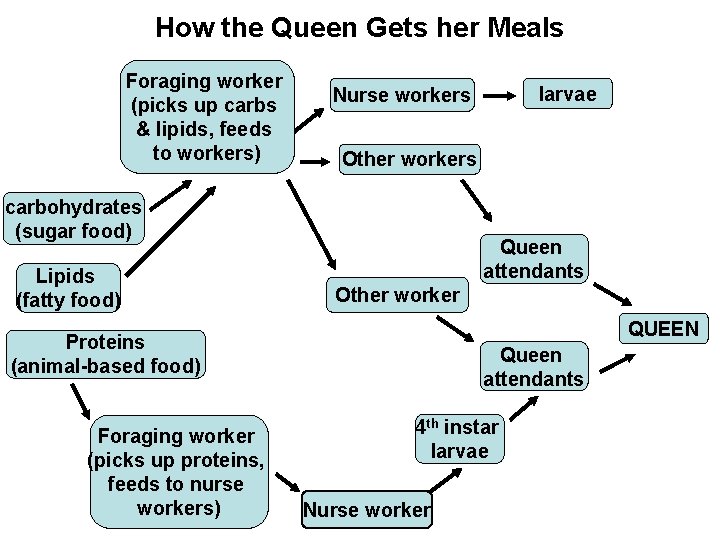
How the Queen Gets her Meals Foraging worker (picks up carbs & lipids, feeds to workers) Other workers carbohydrates (sugar food) Lipids (fatty food) Queen attendants Other worker QUEEN Proteins (animal-based food) Foraging worker (picks up proteins, feeds to nurse workers) larvae Nurse workers Queen attendants 4 th instar larvae Nurse worker
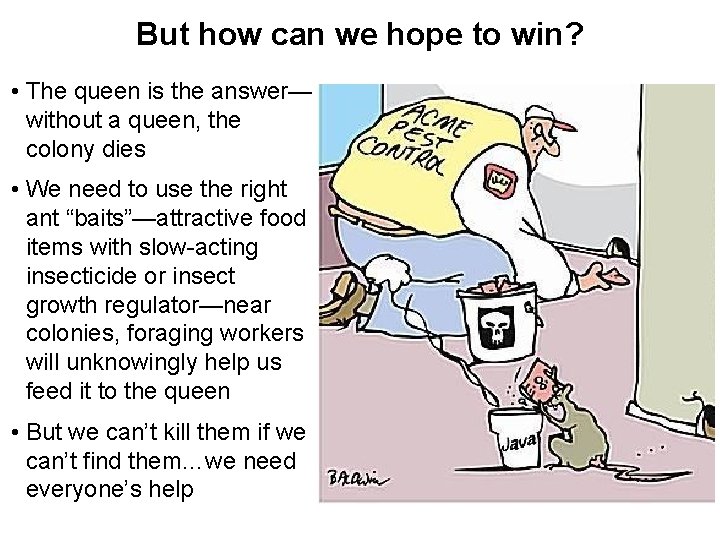
But how can we hope to win? • The queen is the answer— without a queen, the colony dies • We need to use the right ant “baits”—attractive food items with slow-acting insecticide or insect growth regulator—near colonies, foraging workers will unknowingly help us feed it to the queen • But we can’t kill them if we can’t find them…we need everyone’s help
How can Citizen Scientists help? Test your yard, park, neighborhood for little fire ants. 3 minute video on how to test for LFA: (available online: http: //vimeo. com/97558997, or at http: //stoptheant. org/resources/ )
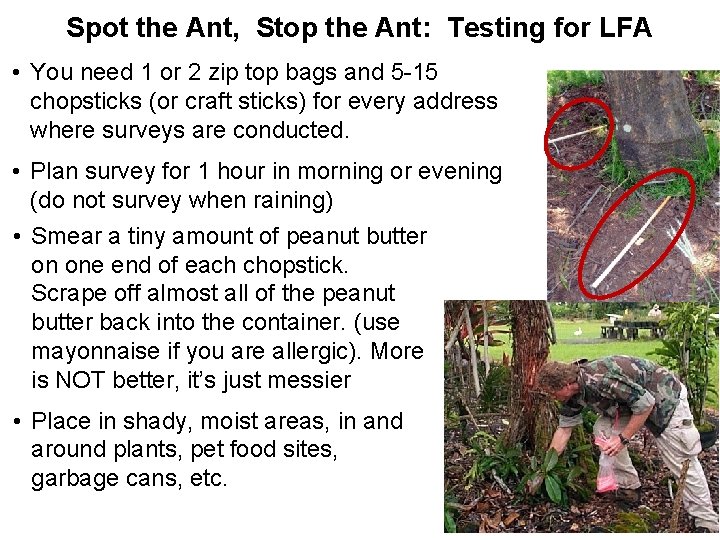
Spot the Ant, Stop the Ant: Testing for LFA • You need 1 or 2 zip top bags and 5 -15 chopsticks (or craft sticks) for every address where surveys are conducted. • Plan survey for 1 hour in morning or evening (do not survey when raining) • Smear a tiny amount of peanut butter on one end of each chopstick. Scrape off almost all of the peanut butter back into the container. (use mayonnaise if you are allergic). More is NOT better, it’s just messier • Place in shady, moist areas, in and around plants, pet food sites, garbage cans, etc.
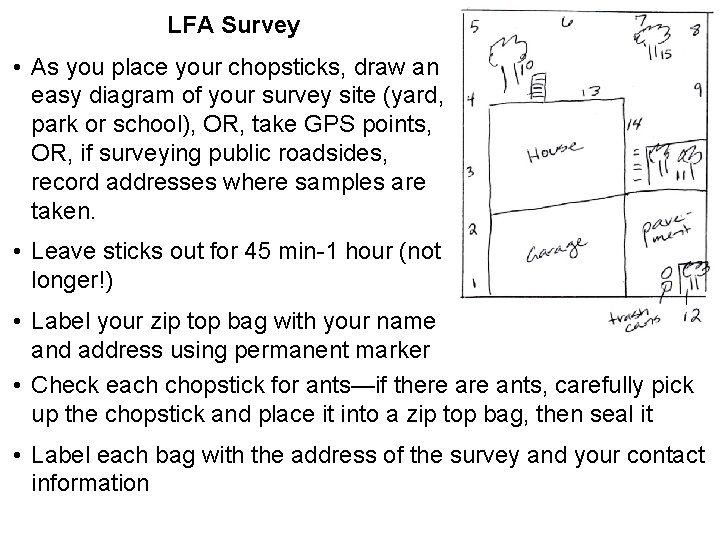
LFA Survey • As you place your chopsticks, draw an easy diagram of your survey site (yard, park or school), OR, take GPS points, OR, if surveying public roadsides, record addresses where samples are taken. • Leave sticks out for 45 min-1 hour (not longer!) • Label your zip top bag with your name and address using permanent marker • Check each chopstick for ants—if there ants, carefully pick up the chopstick and place it into a zip top bag, then seal it • Label each bag with the address of the survey and your contact information
LFA Survey (continued) • Place the bags in the freezer overnight to kill the ants before transporting them! Please make sure all bags are labeled with the survey address and a contact number. • Take your samples to the HI Department of Agriculture or Invasive Species Committee office on your island: Kauaʻi: HDOA 4398 A Pua Loke St; KISC: 821 -1490 Oahu: HDOA 1428 S. King St. ; OISC: 266 -7994 Maui: HDOA 635 Mua St. ; 573 -6472 Molokaʻi: Mo. MISC 23 Pueo Pl, 553 -5236 Big Island: HDOA/Hawaiʻi Ant Lab 16 E. Lanikaula St. ; BIISC 933 -3340 You can also contact the Invasive Species Committees if you would like help with this presentation, or with designing a survey or project tailored for your group. Mahalo!
Like us on Facebook, post to our Instagram page. Mahalo!