Lesson 2 The Human Alimentary Canal The Human





- Slides: 22
Lesson 2: The Human Alimentary Canal
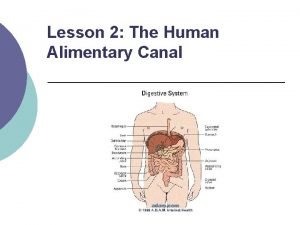
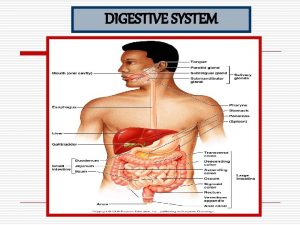
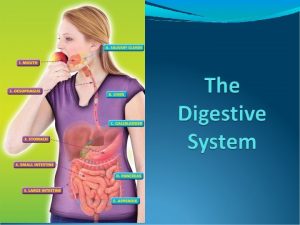
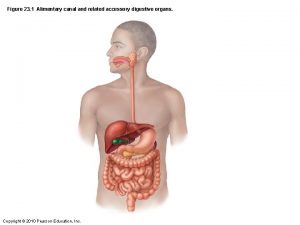
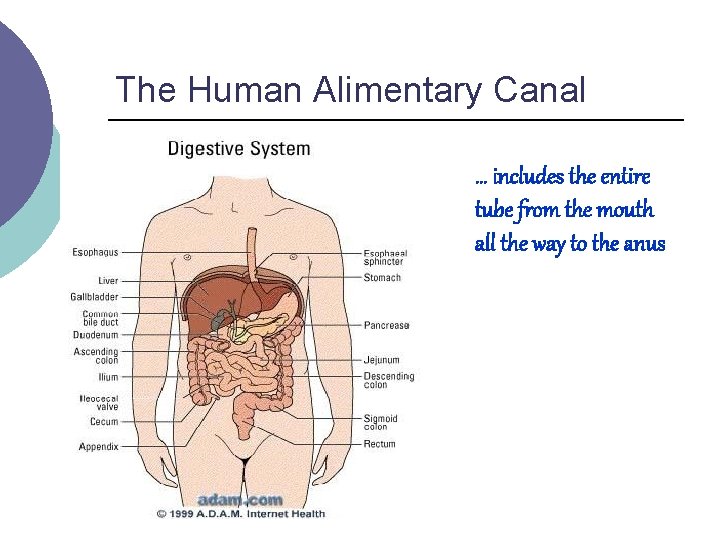
The Human Alimentary Canal … includes the entire tube from the mouth all the way to the anus
Human Alimentary Canal Mouth ¡ Pharynx ¡ Esophagus ¡ Stomach ¡ Small intestine ¡ Large intestine ¡ Rectum ¡ Anus ¡
Accessory Organs ¡ ¡ Salivary glands …Organs that are involved in digestion but that food l Secrete saliva does not pass directly Liver through l Secretes bile Gallbladder l Stores and concentrates bile Pancreas l Secretes digestive enzymes
Types of Digestion ¡ Physical Digestion: l l ¡ Food is physically broken down Example – Teeth chew food Chemical Digestion: l l Food is broken down by acids, bases or enzymes in the human alimentary canal Example – HCl in stomach
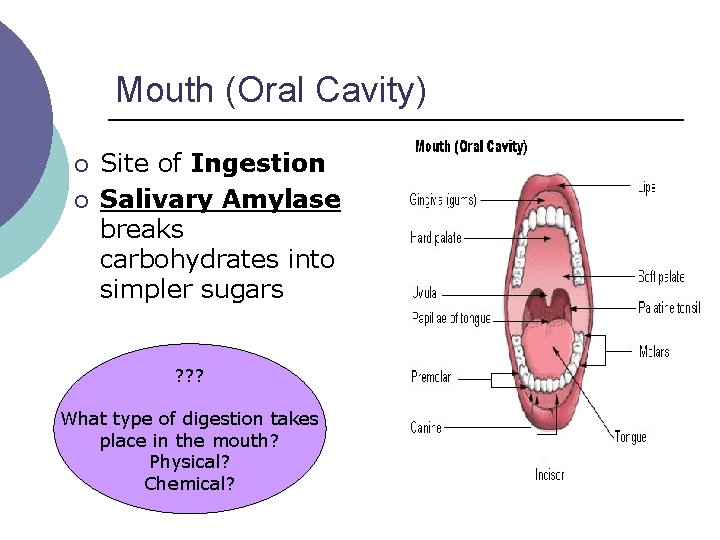
Mouth (Oral Cavity) ¡ ¡ Site of Ingestion Salivary Amylase breaks carbohydrates into simpler sugars ? ? ? What type of digestion takes place in the mouth? Physical? Chemical?
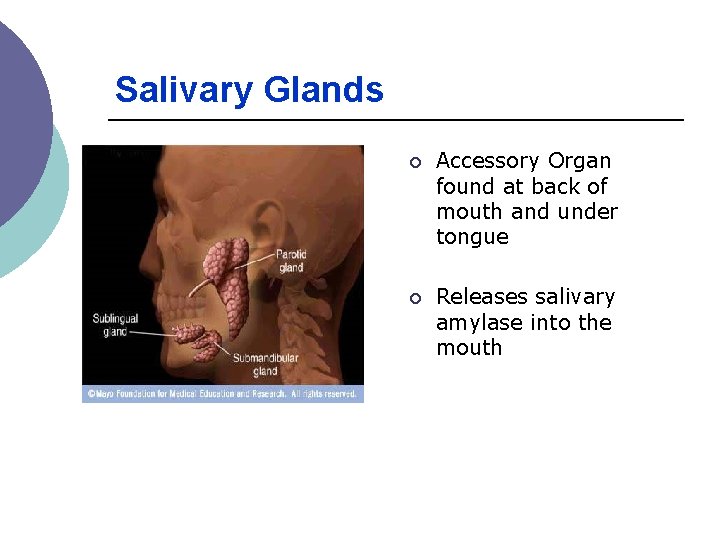
Saliva Produced by salivary glands at back of mouth and under tongue ¡ Saliva includes l Salivary amylase (enzyme) l Bicarbonate (buffer) l Mucins (bind food into bolus) l Water ¡
Salivary Glands ¡ Accessory Organ found at back of mouth and under tongue ¡ Releases salivary amylase into the mouth
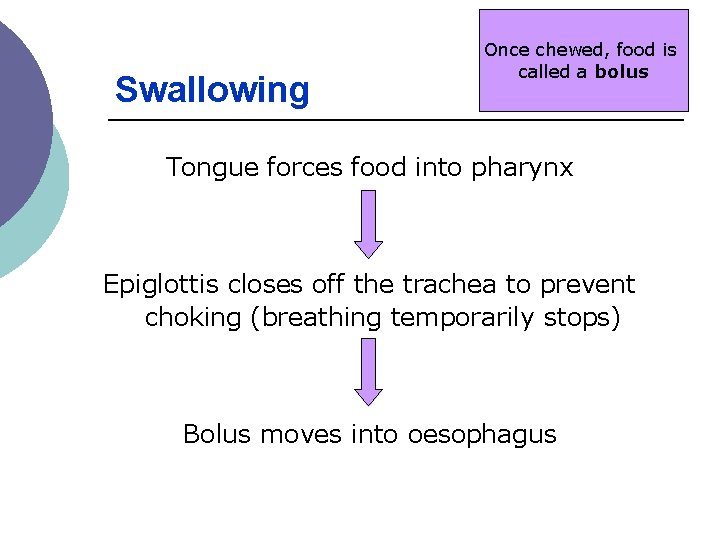
Swallowing Once chewed, food is called a bolus Tongue forces food into pharynx Epiglottis closes off the trachea to prevent choking (breathing temporarily stops) Bolus moves into oesophagus
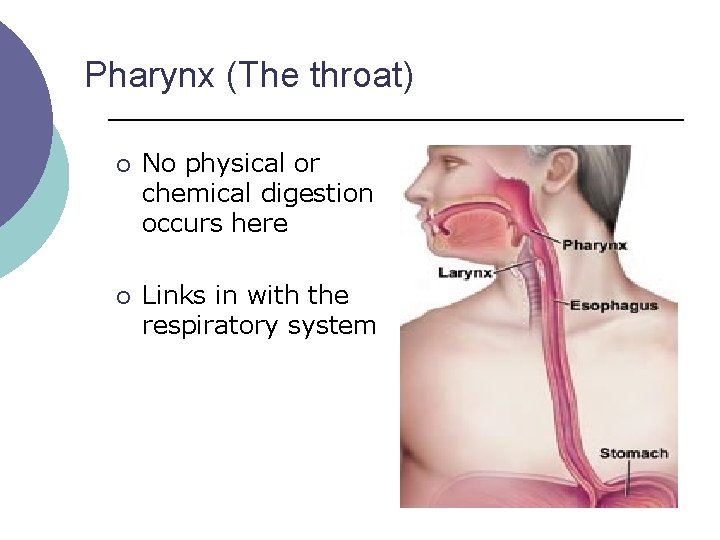
Pharynx (The throat) ¡ No physical or chemical digestion occurs here ¡ Links in with the respiratory system
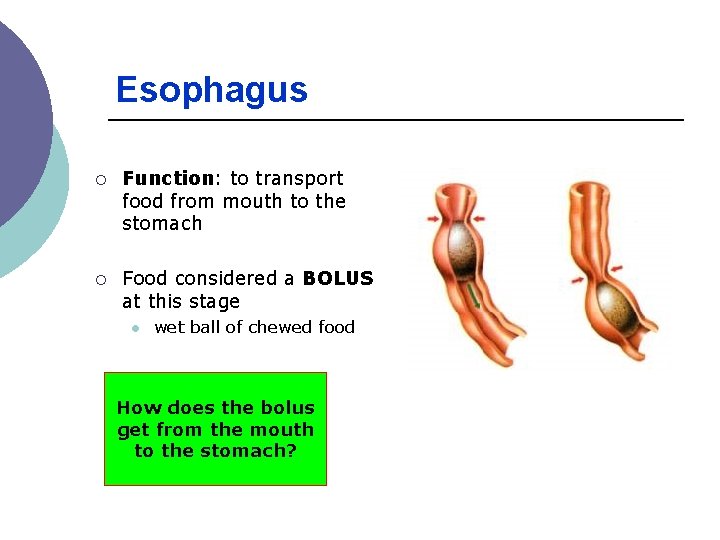
Esophagus ¡ Function: to transport food from mouth to the stomach ¡ Food considered a BOLUS at this stage l wet ball of chewed food How does the bolus get from the mouth to the stomach?
Peristalsis: waves of muscular contraction that move food along the human alimentary canal
Discuss the types of digestion occurring in the stomach… Stomach ¡ Muscular sac-like organ ¡ Lined with a thick protective mucus ¡ The stomach lining secretes Gastric Juices that contain: l l l Hydrochloric Acid Pepsinogen (inactive form of pepsin) Mucus
Chemical Digestion in the Stomach ¡ ¡ Pepsinogen is activated by the acid HCl in the stomach and becomes pepsin Pepsin chemically digests protein into amino acids
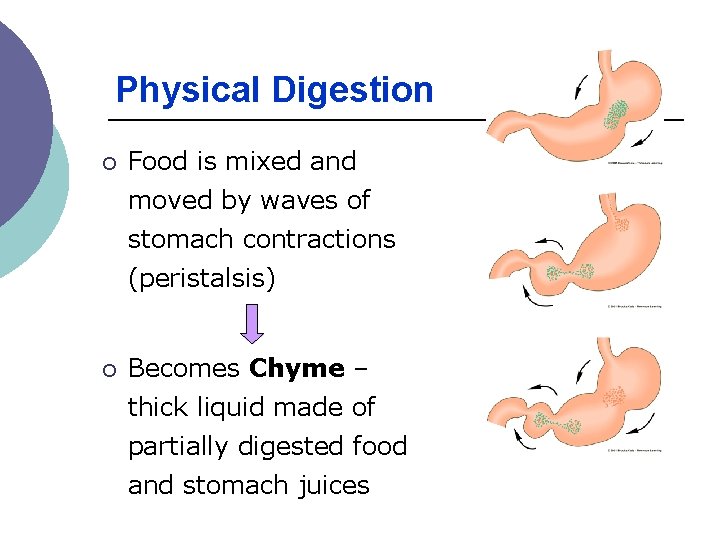
Physical Digestion ¡ Food is mixed and moved by waves of stomach contractions (peristalsis) ¡ Becomes Chyme – thick liquid made of partially digested food and stomach juices
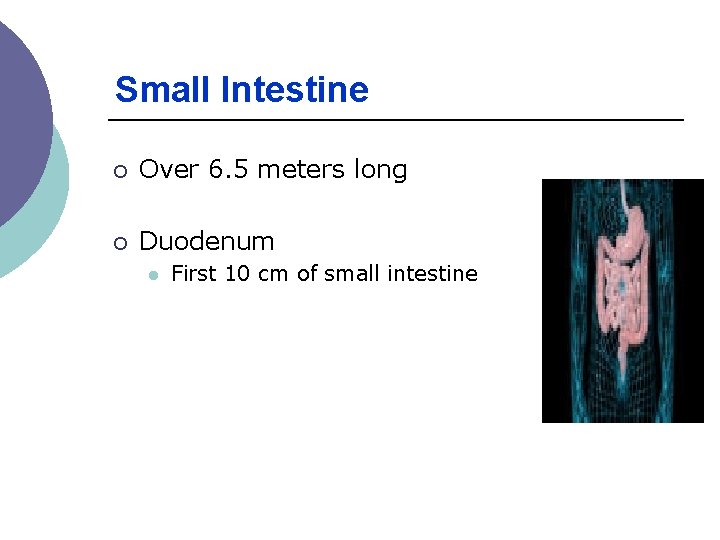
Small Intestine ¡ Over 6. 5 meters long ¡ Duodenum l First 10 cm of small intestine
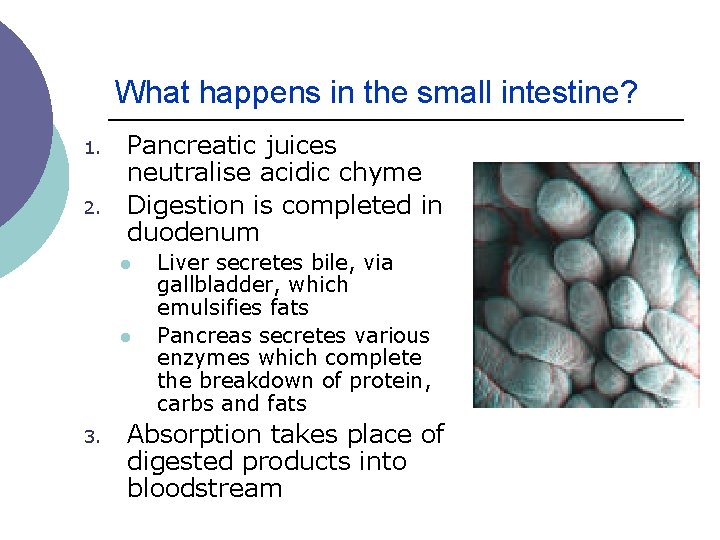
What happens in the small intestine? 1. 2. Pancreatic juices neutralise acidic chyme Digestion is completed in duodenum l l 3. Liver secretes bile, via gallbladder, which emulsifies fats Pancreas secretes various enzymes which complete the breakdown of protein, carbs and fats Absorption takes place of digested products into bloodstream
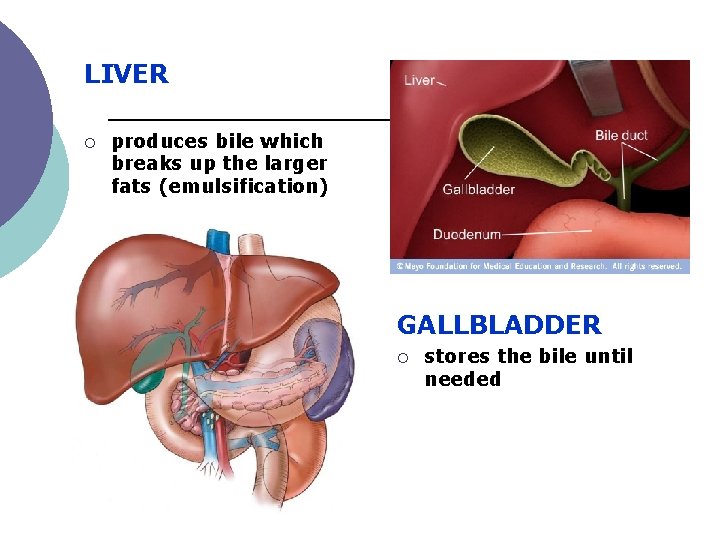
LIVER ¡ produces bile which breaks up the larger fats (emulsification) GALLBLADDER ¡ stores the bile until needed
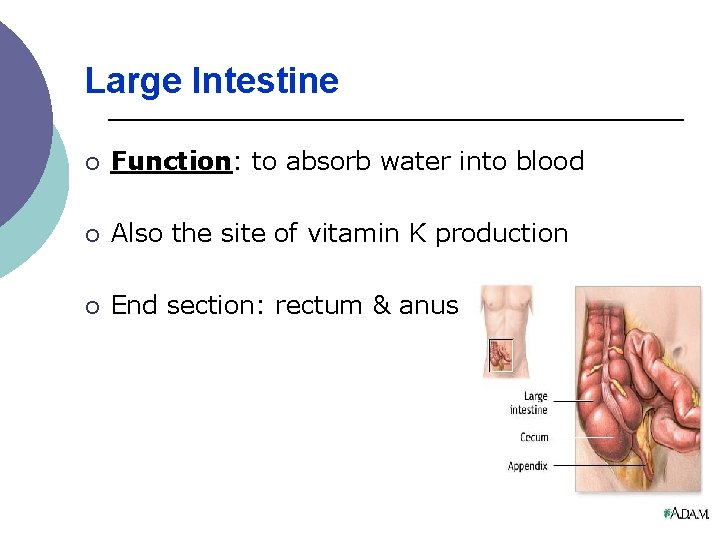
Large Intestine ¡ Function: to absorb water into blood ¡ Also the site of vitamin K production ¡ End section: rectum & anus
Stages of Digestion 1. 2. 3. 4. 5. Ingestion – the process by which YOUthe DECIDE! food is taken into body Look at your diagram of the Digestive System. Digestion - the process of breaking up complex into simpler take Wheresubstances does each stage of digestion place? substances. Absorption the process which Hint: Some– stages take placeby at multiple digested food diffuses into blood locations… Assimilation - the conversion or incorporation of absorbed simple food into the complex substances that are useful in our bodies Egestion - the elimination of undigested food (faeces) from the body
Warning: Do not confuse Egestion with Excretion Egestion – removal of undigested food (faeces) via the anus Excretion – removal of waste products of metabolism (like urine, carbon dioxide, sweat)