
Lecture Notes 2 Prof Dechter ICS 270 A
- Slides: 12
Lecture Notes 2 Prof. Dechter ICS 270 A Winter 2003
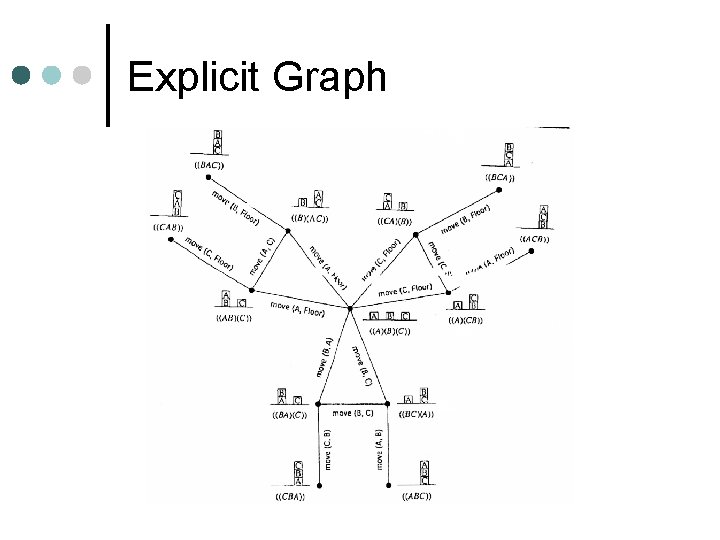
Explicit Graph
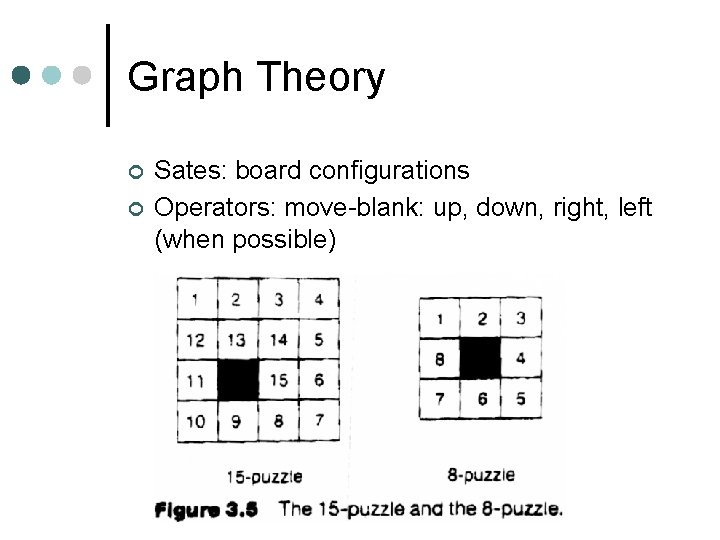
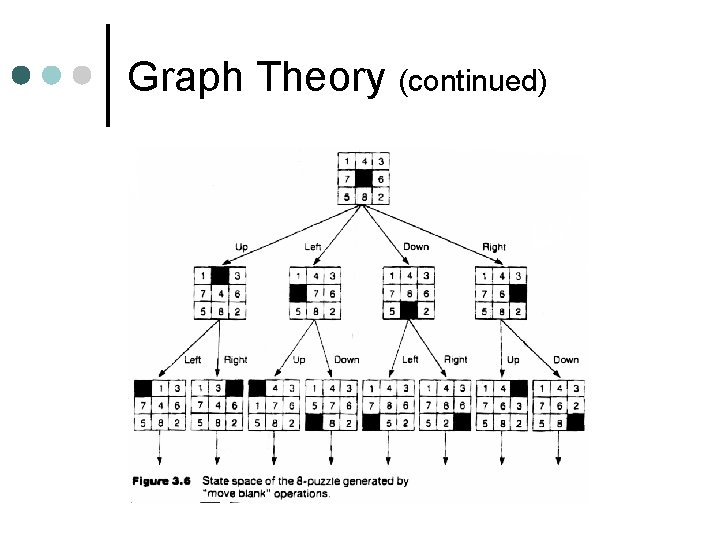
Graph Theory ¢ ¢ Sates: board configurations Operators: move-blank: up, down, right, left (when possible)
Graph Theory (continued)
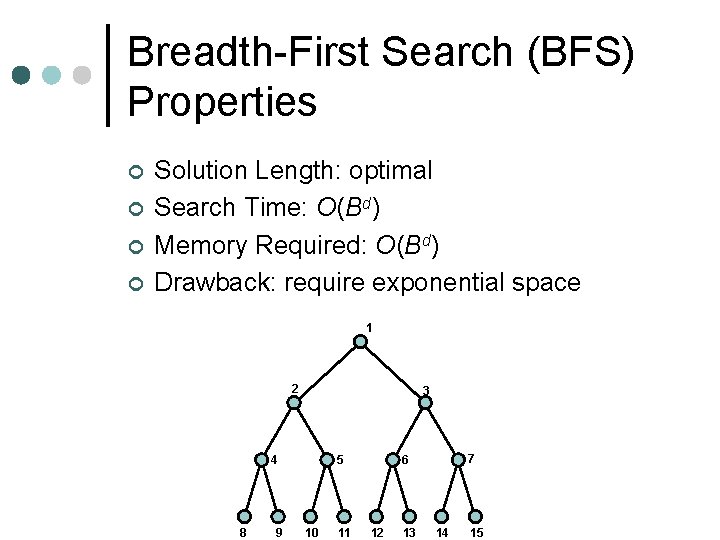
Breadth-First Search (BFS) Properties ¢ ¢ Solution Length: optimal Search Time: O(Bd) Memory Required: O(Bd) Drawback: require exponential space 1 2 3 4 8 9 10 11 7 6 5 12 13 14 15
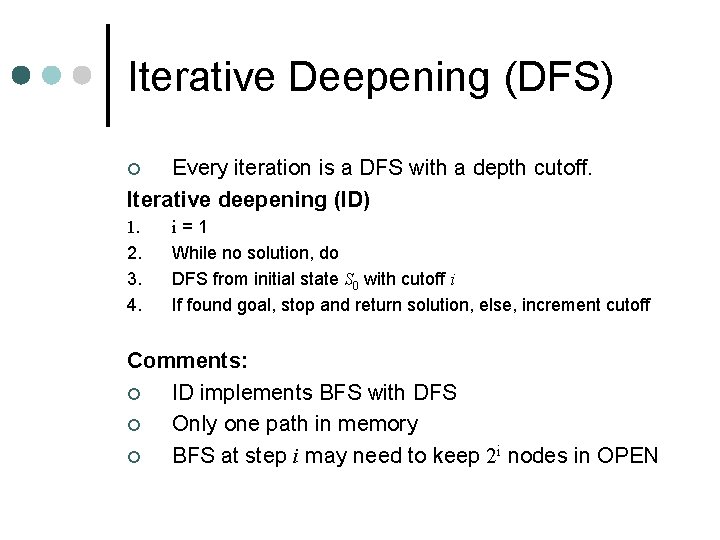
Iterative Deepening (DFS) Every iteration is a DFS with a depth cutoff. Iterative deepening (ID) ¢ 1. 2. 3. 4. i=1 While no solution, do DFS from initial state S 0 with cutoff i If found goal, stop and return solution, else, increment cutoff Comments: ¢ ID implements BFS with DFS ¢ Only one path in memory ¢ BFS at step i may need to keep 2 i nodes in OPEN
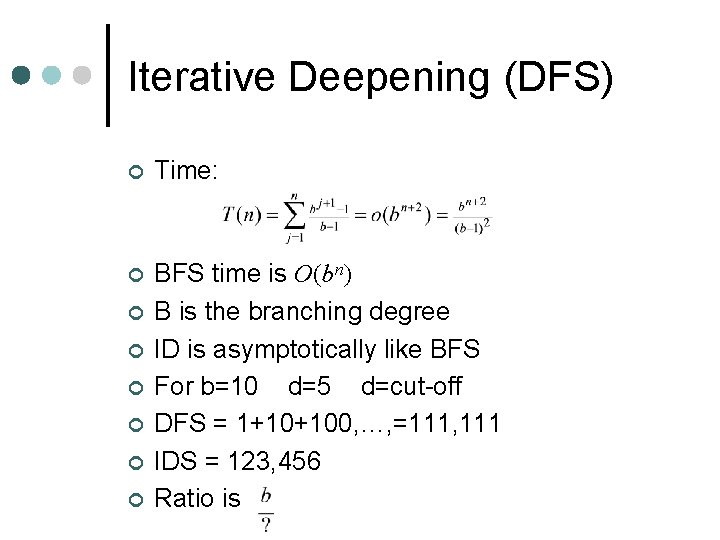
Iterative Deepening (DFS) ¢ Time: ¢ BFS time is O(bn) B is the branching degree ID is asymptotically like BFS For b=10 d=5 d=cut-off DFS = 1+10+100, …, =111, 111 IDS = 123, 456 Ratio is ¢ ¢ ¢
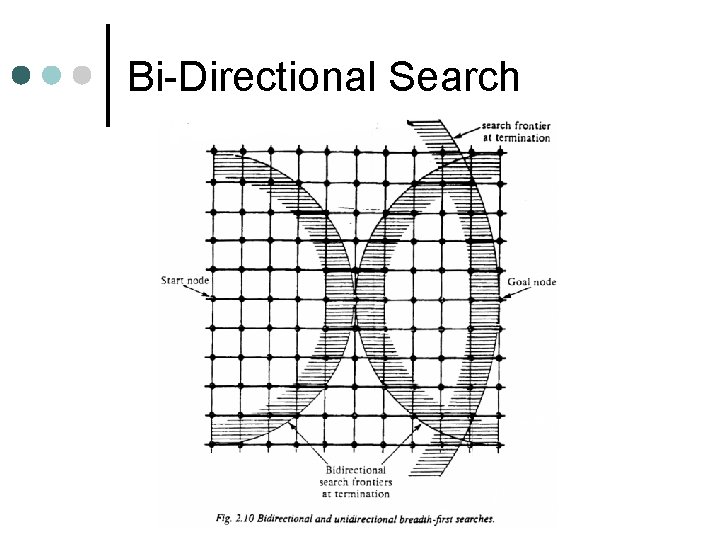
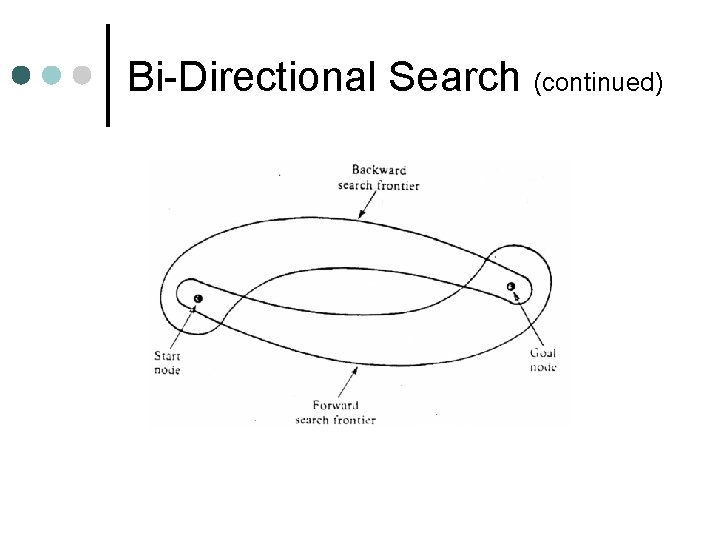
Bi-Directional Search
Bi-Directional Search (continued)
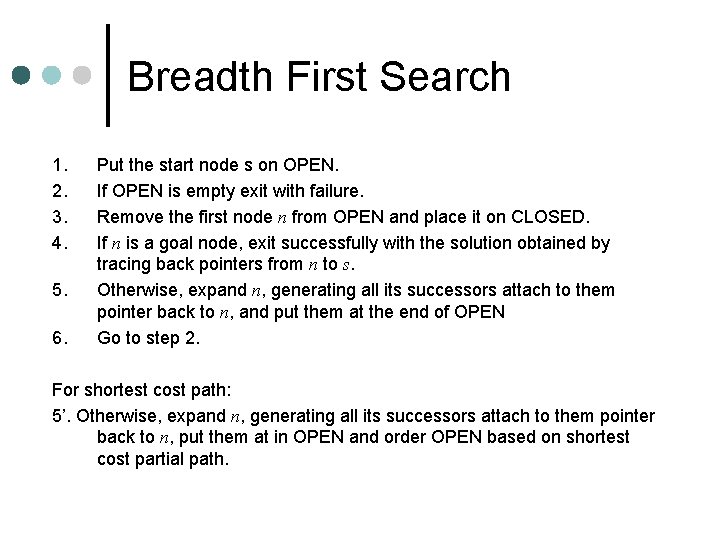
Breadth First Search 1. 2. 3. 4. 5. 6. Put the start node s on OPEN. If OPEN is empty exit with failure. Remove the first node n from OPEN and place it on CLOSED. If n is a goal node, exit successfully with the solution obtained by tracing back pointers from n to s. Otherwise, expand n, generating all its successors attach to them pointer back to n, and put them at the end of OPEN Go to step 2. For shortest cost path: 5’. Otherwise, expand n, generating all its successors attach to them pointer back to n, put them at in OPEN and order OPEN based on shortest cost partial path.
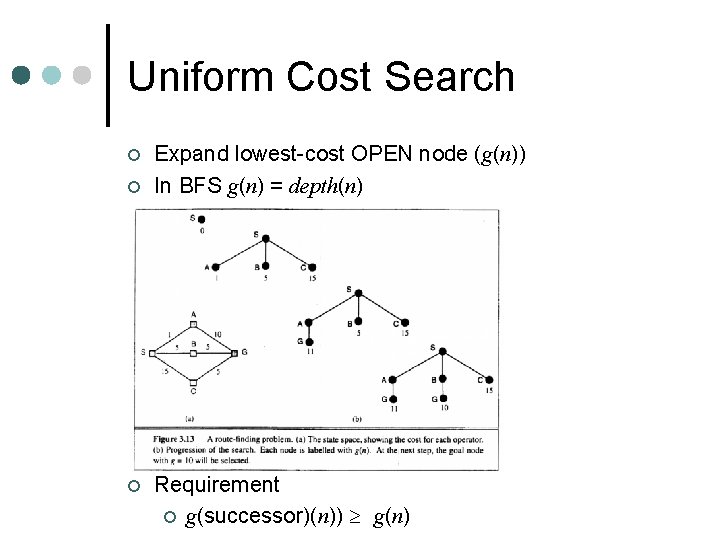
Uniform Cost Search ¢ ¢ ¢ Expand lowest-cost OPEN node (g(n)) In BFS g(n) = depth(n) Requirement ¢ g(successor)(n)) g(n)
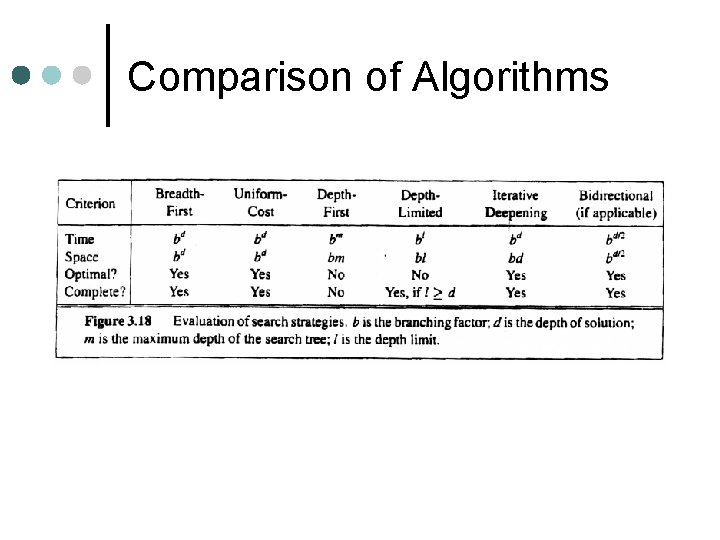
Comparison of Algorithms