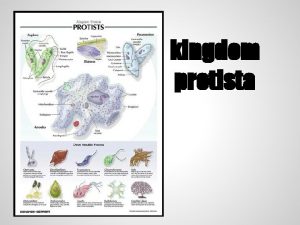
Kingdom Protista General Characteristics 1 Any organism not
- Slides: 11
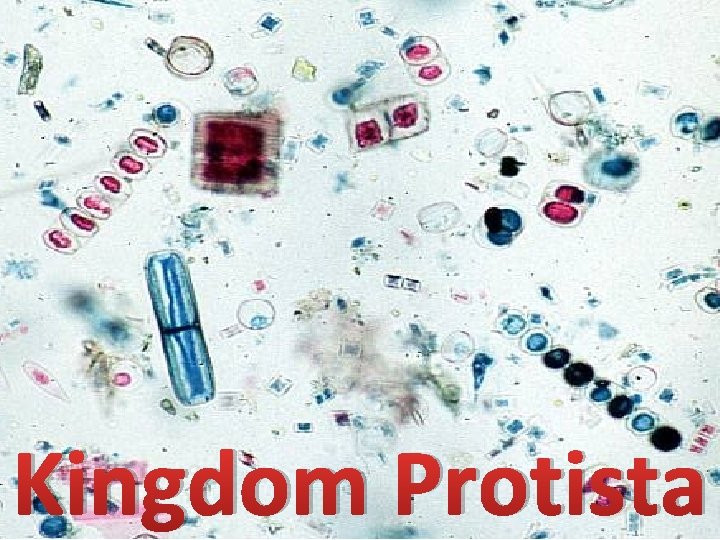
Kingdom Protista
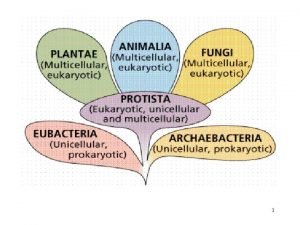
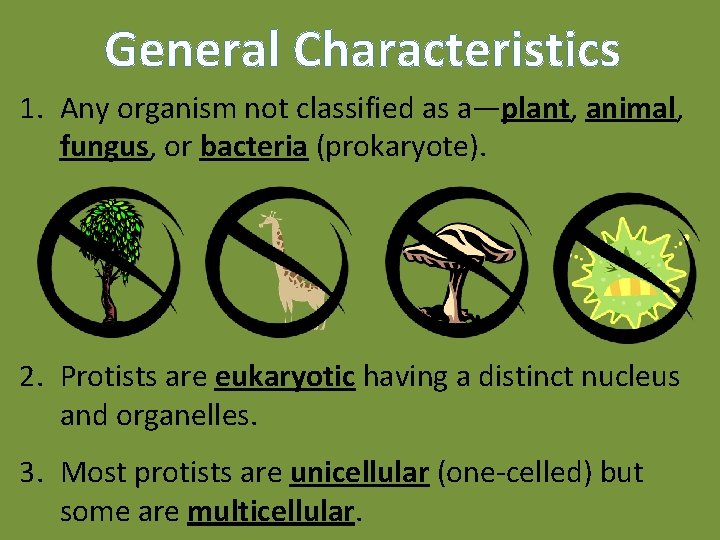
General Characteristics 1. Any organism not classified as a—plant, animal, fungus, or bacteria (prokaryote). 2. Protists are eukaryotic having a distinct nucleus and organelles. 3. Most protists are unicellular (one-celled) but some are multicellular.
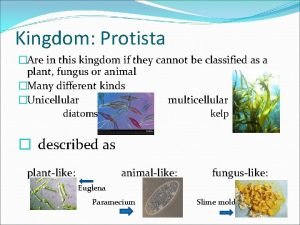
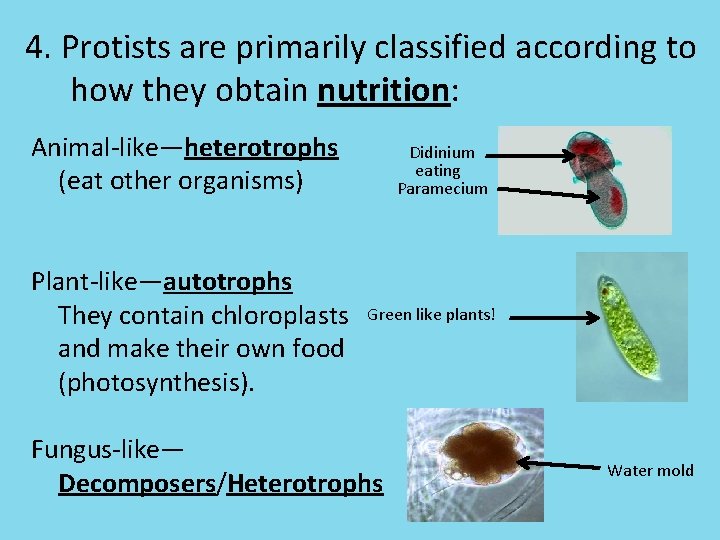
4. Protists are primarily classified according to how they obtain nutrition: Animal-like—heterotrophs (eat other organisms) Plant-like—autotrophs They contain chloroplasts and make their own food (photosynthesis). Didinium eating Paramecium Green like plants! Fungus-like— Decomposers/Heterotrophs Water mold
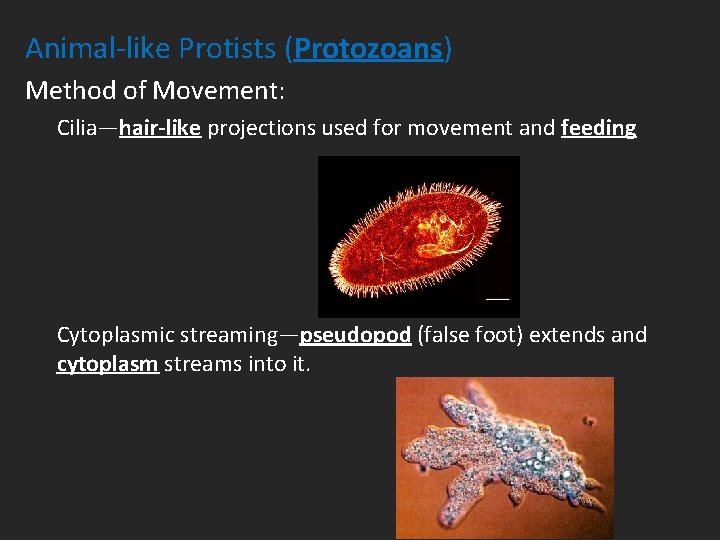
Animal-like Protists (Protozoans) Method of Movement: Cilia—hair-like projections used for movement and feeding Cytoplasmic streaming—pseudopod (false foot) extends and cytoplasm streams into it.
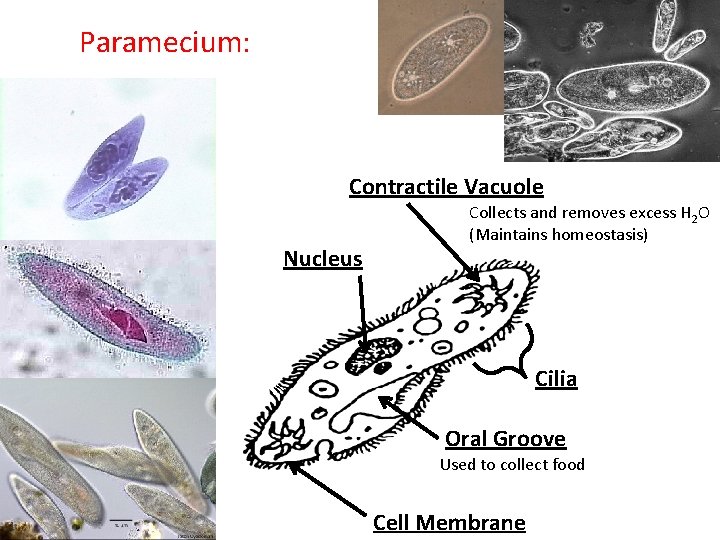
Paramecium: Contractile Vacuole Nucleus Collects and removes excess H 2 O (Maintains homeostasis) Cilia Oral Groove Used to collect food Cell Membrane
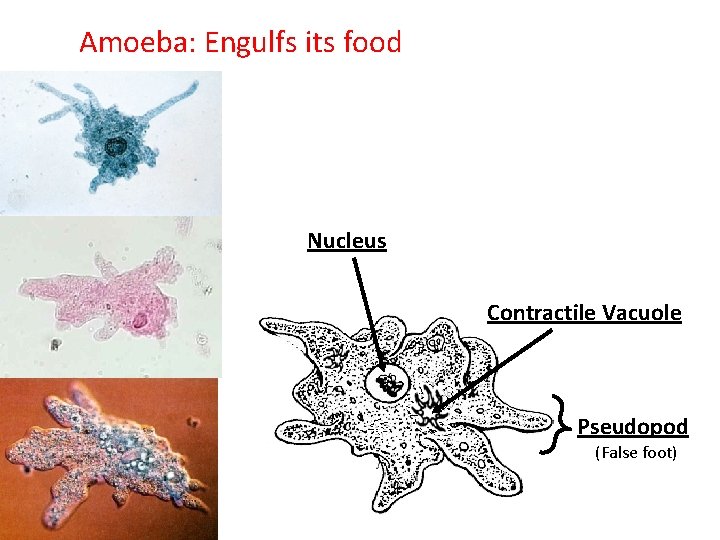
Amoeba: Engulfs its food Nucleus Contractile Vacuole Pseudopod (False foot)
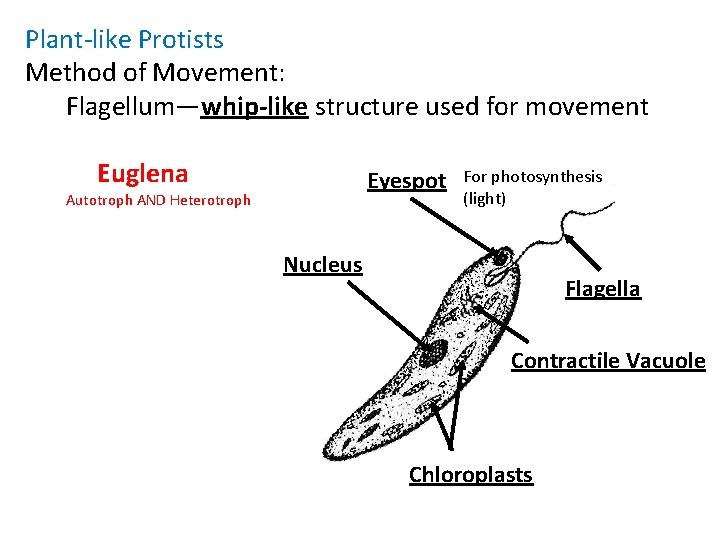
Plant-like Protists Method of Movement: Flagellum—whip-like structure used for movement Euglena Eyespot Autotroph AND Heterotroph For photosynthesis (light) Nucleus Flagella Contractile Vacuole Chloroplasts
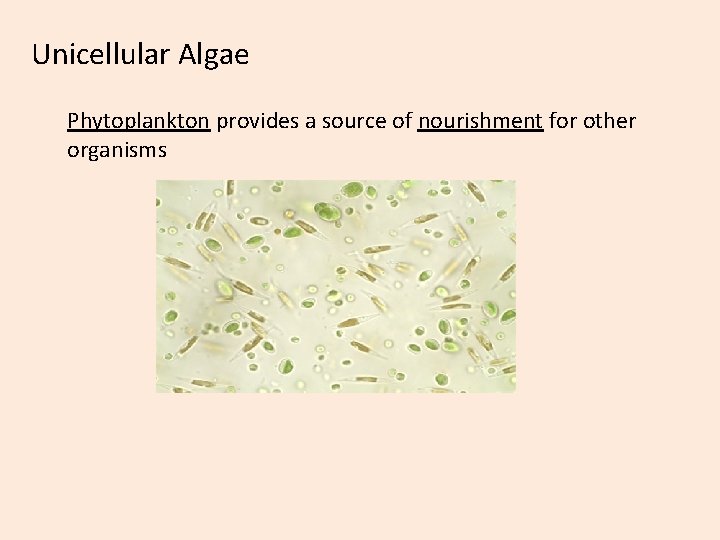
Unicellular Algae Phytoplankton provides a source of nourishment for other organisms
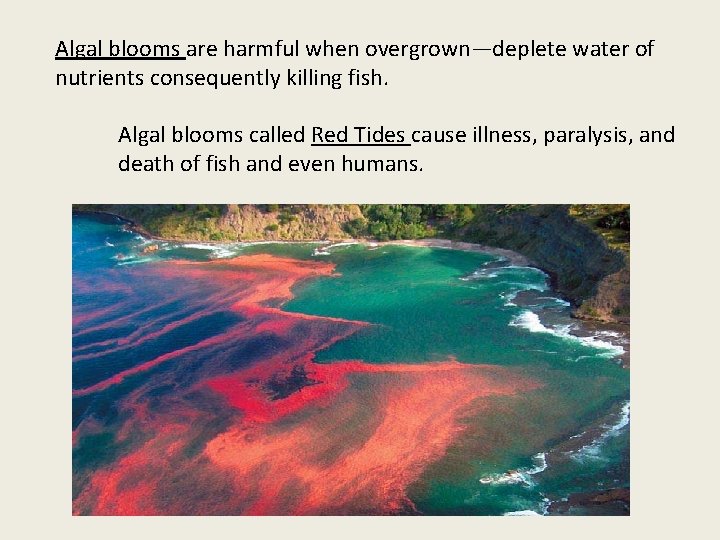
Algal blooms are harmful when overgrown—deplete water of nutrients consequently killing fish. Algal blooms called Red Tides cause illness, paralysis, and death of fish and even humans.
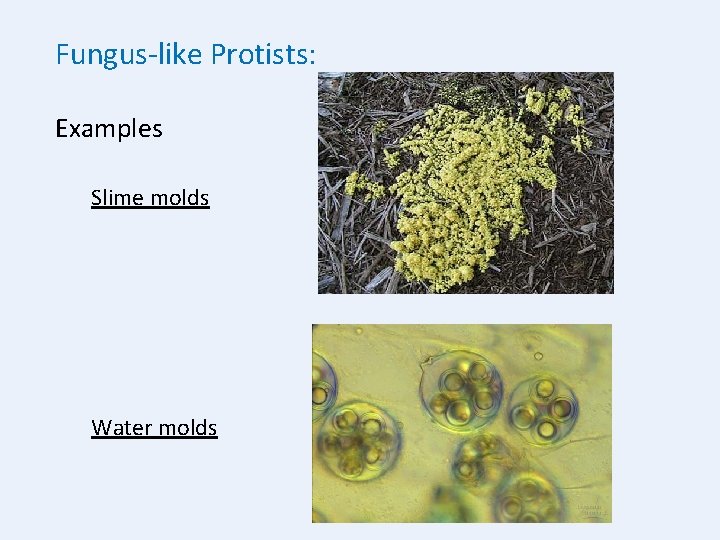
Fungus-like Protists: Examples Slime molds Water molds