ISLAMIC FINANCE INTRODUCTION AND PRACTICAL APPLICATION Overview Introduction


- Slides: 15
ISLAMIC FINANCE INTRODUCTION AND PRACTICAL APPLICATION
Overview Introduction to Shariah Basic Islamic Economic Principles Fundamental Islamic Commercial principles History of Islamic Finance
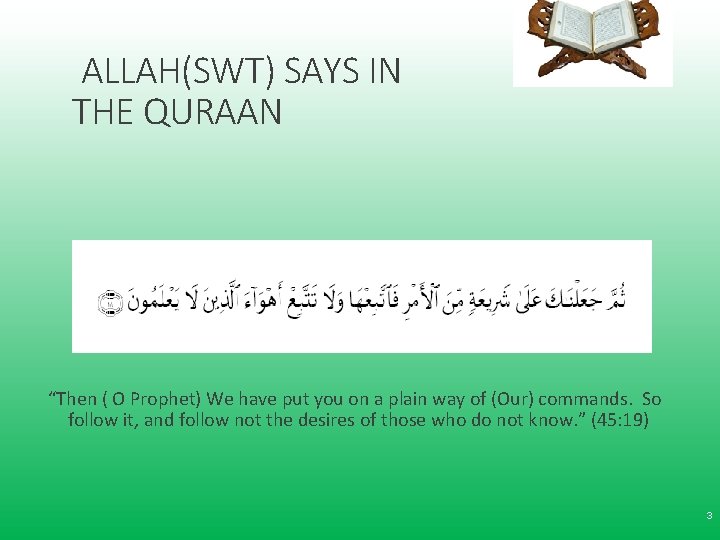
ALLAH(SWT) SAYS IN THE QURAAN “Then ( O Prophet) We have put you on a plain way of (Our) commands. So follow it, and follow not the desires of those who do not know. ” (45: 19) 3
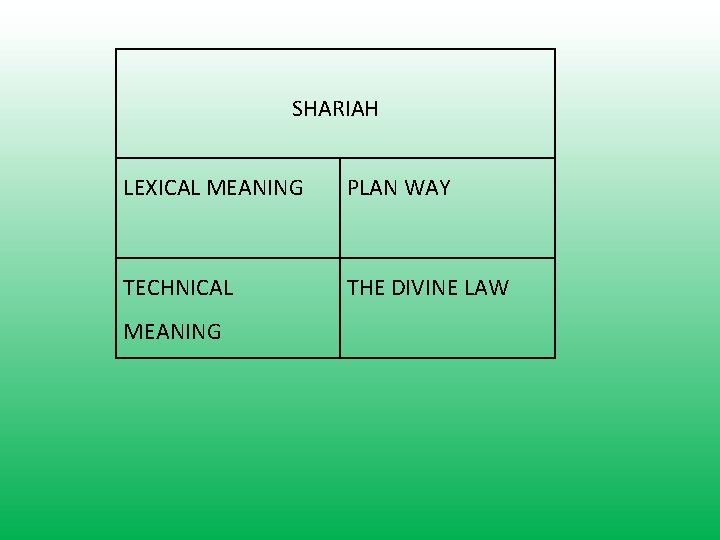
SHARIAH LEXICAL MEANING PLAN WAY TECHNICAL THE DIVINE LAW MEANING
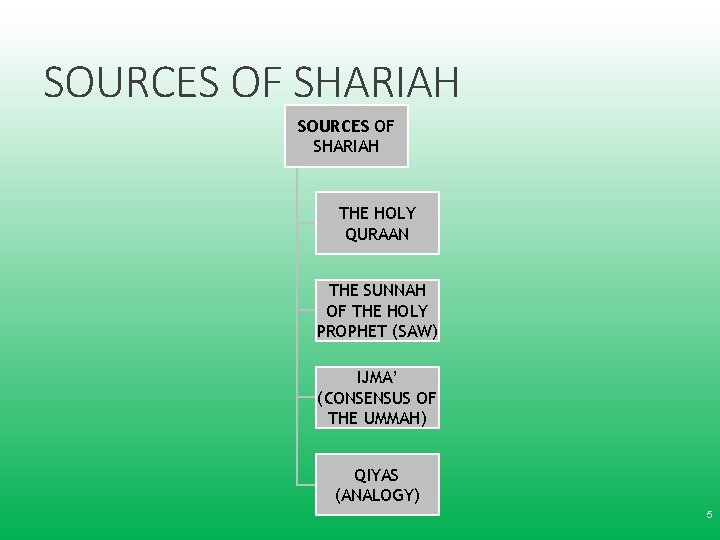
SOURCES OF SHARIAH THE HOLY QURAAN THE SUNNAH OF THE HOLY PROPHET (SAW) IJMA’ (CONSENSUS OF THE UMMAH) QIYAS (ANALOGY) 5
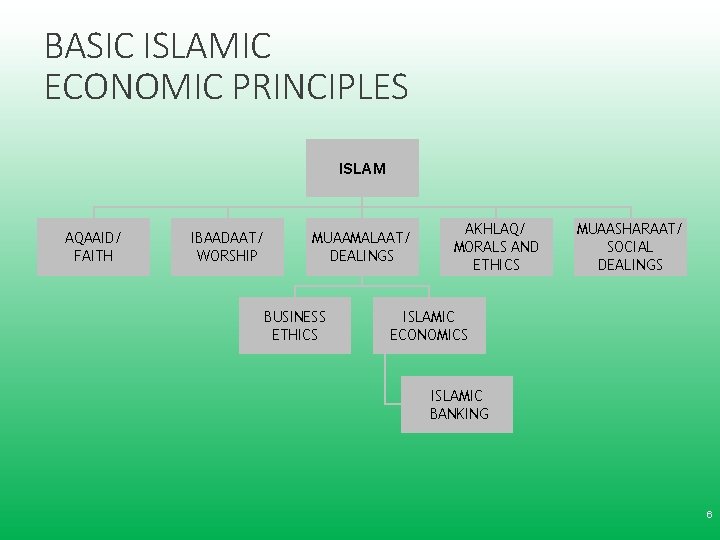
BASIC ISLAMIC ECONOMIC PRINCIPLES ISLAM AQAAID/ FAITH IBAADAAT/ WORSHIP MUAAMALAAT/ DEALINGS BUSINESS ETHICS AKHLAQ/ MORALS AND ETHICS MUAASHARAAT/ SOCIAL DEALINGS ISLAMIC ECONOMICS ISLAMIC BANKING 6
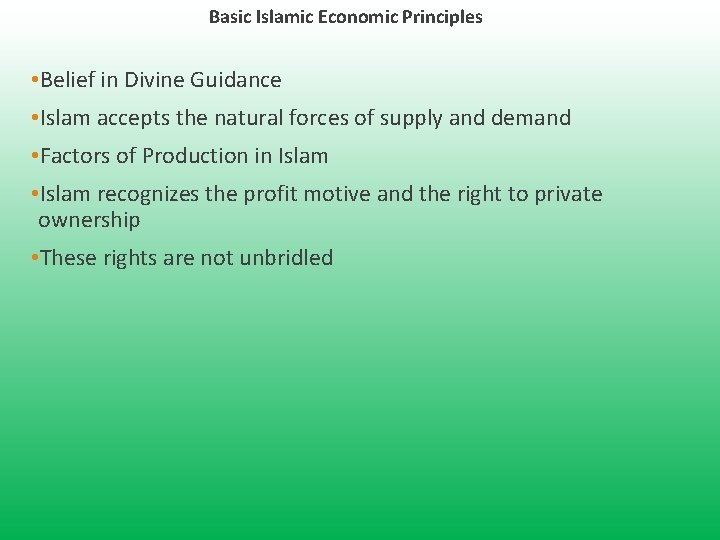
Basic Islamic Economic Principles • Belief in Divine Guidance • Islam accepts the natural forces of supply and demand • Factors of Production in Islam • Islam recognizes the profit motive and the right to private ownership • These rights are not unbridled
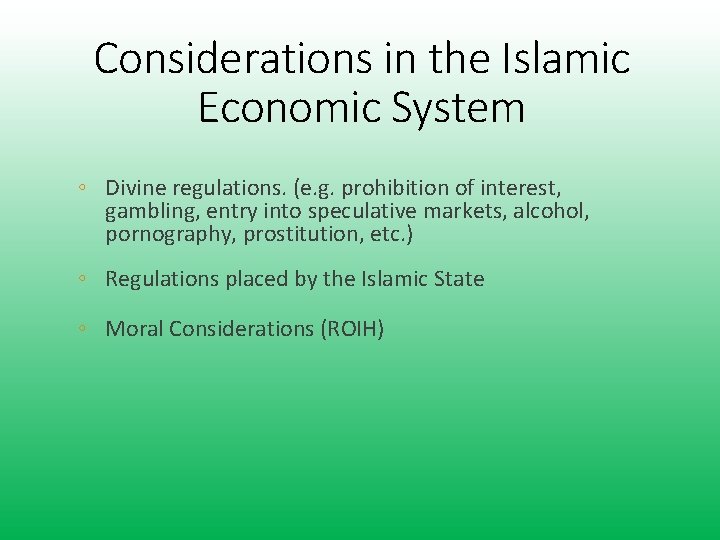
Considerations in the Islamic Economic System ◦ Divine regulations. (e. g. prohibition of interest, gambling, entry into speculative markets, alcohol, pornography, prostitution, etc. ) ◦ Regulations placed by the Islamic State ◦ Moral Considerations (ROIH)
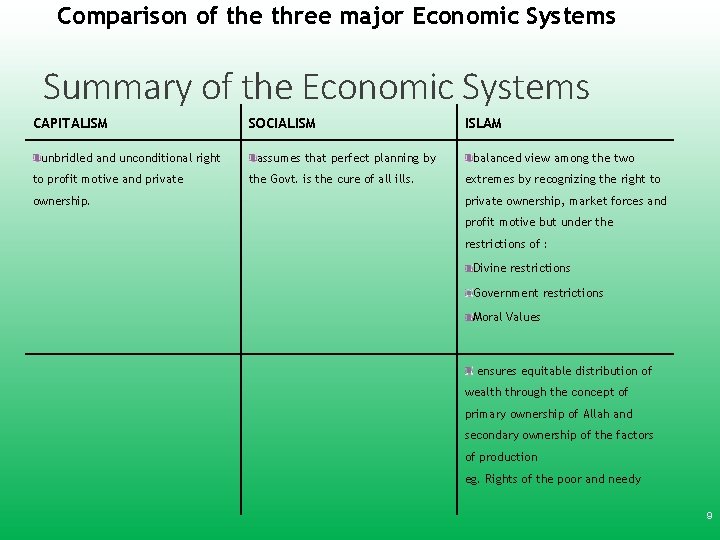
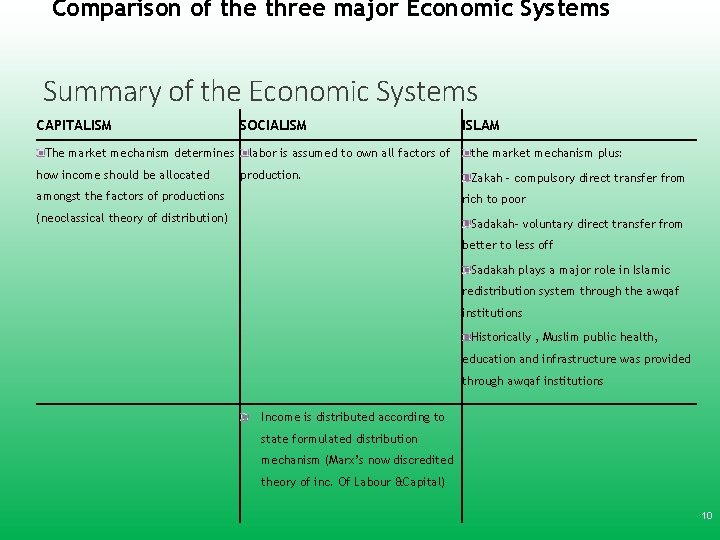
Comparison of the three major Economic Systems Summary of the Economic Systems CAPITALISM unbridled and unconditional right to profit motive and private ownership. SOCIALISM assumes that perfect planning by the Govt. is the cure of all ills. ISLAM balanced view among the two extremes by recognizing the right to private ownership, market forces and profit motive but under the restrictions of : Divine restrictions Government restrictions Moral Values ensures equitable distribution of wealth through the concept of primary ownership of Allah and secondary ownership of the factors of production eg. Rights of the poor and needy 9
Comparison of the three major Economic Systems Summary of the Economic Systems CAPITALISM The market mechanism determines how income should be allocated SOCIALISM labor is assumed to own all factors of production. amongst the factors of productions ISLAM the market mechanism plus: Zakah – compulsory direct transfer from rich to poor (neoclassical theory of distribution) Sadakah- voluntary direct transfer from better to less off Sadakah plays a major role in Islamic redistribution system through the awqaf institutions Historically , Muslim public health, education and infrastructure was provided through awqaf institutions Income is distributed according to state formulated distribution mechanism (Marx’s now discredited theory of inc. Of Labour &Capital) 10
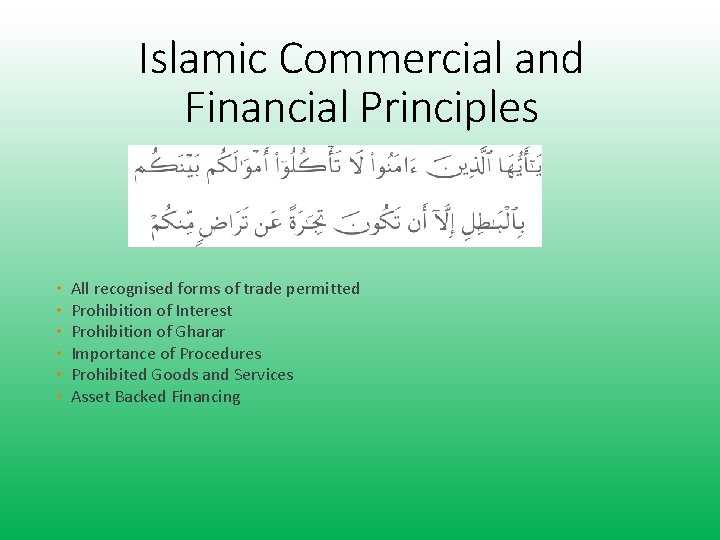
Islamic Commercial and Financial Principles • • • All recognised forms of trade permitted Prohibition of Interest Prohibition of Gharar Importance of Procedures Prohibited Goods and Services Asset Backed Financing
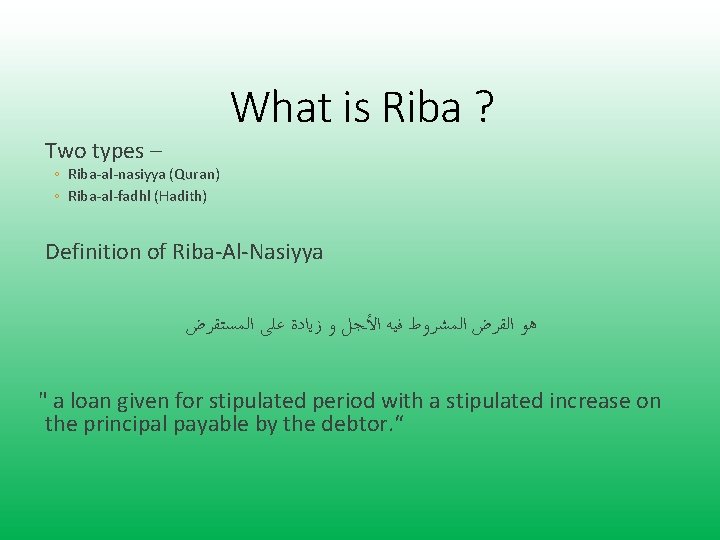
What is Riba ? Two types – ◦ Riba-al-nasiyya (Quran) ◦ Riba-al-fadhl (Hadith) Definition of Riba-Al-Nasiyya ﻫﻮ ﺍﻟﻘﺮﺽ ﺍﻟﻤﺸﺮﻭﻁ ﻓﻴﻪ ﺍﻷﺠﻞ ﻭ ﺯﻳﺎﺩﺓ ﻋﻠﻰ ﺍﻟﻤﺴﺘﻘﺮﺽ " a loan given for stipulated period with a stipulated increase on the principal payable by the debtor. “
What is Gharar Definition : Uncertainty of Outcome Uncertainty in price , contract, delivery of subject matter
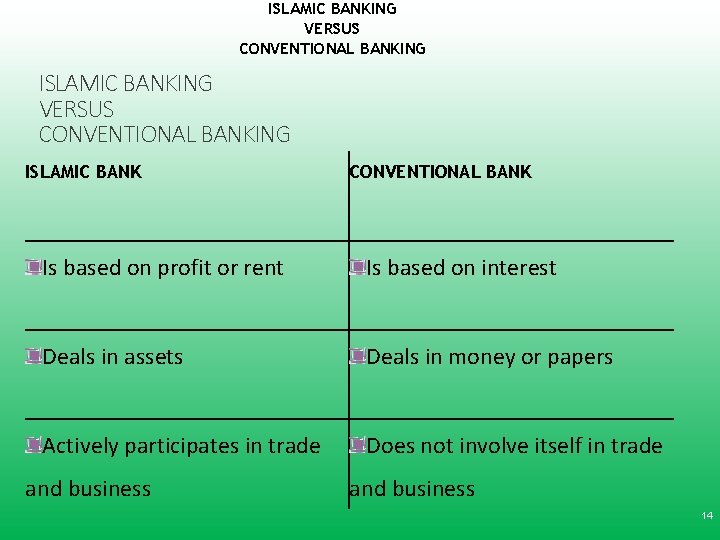
ISLAMIC BANKING VERSUS CONVENTIONAL BANKING ISLAMIC BANK CONVENTIONAL BANK Is based on profit or rent Is based on interest Deals in assets Deals in money or papers Actively participates in trade Does not involve itself in trade and business 14
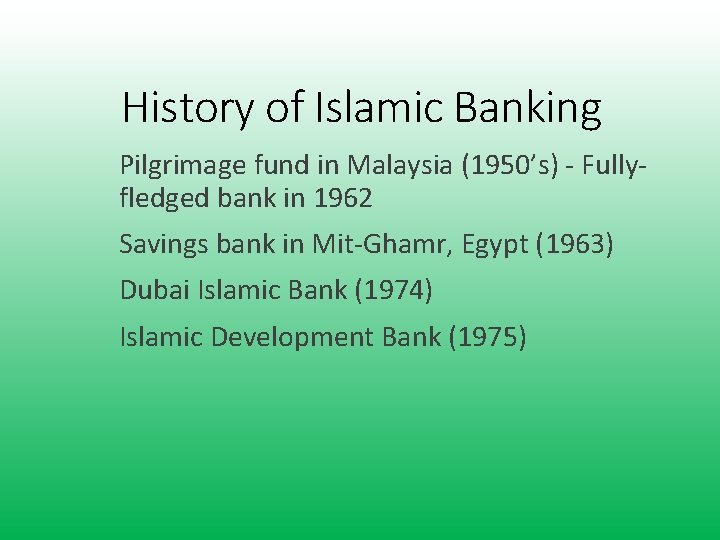
History of Islamic Banking Pilgrimage fund in Malaysia (1950’s) - Fullyfledged bank in 1962 Savings bank in Mit-Ghamr, Egypt (1963) Dubai Islamic Bank (1974) Islamic Development Bank (1975)