Intelligence theory and testing Lecture overview 1 Finish
- Slides: 16
Intelligence theory and testing Lecture overview 1. Finish theories of intelligence 2. History context of intelligence tests 3. Examples of intelligence tests 4. Bias and intelligence testing 5. Summary
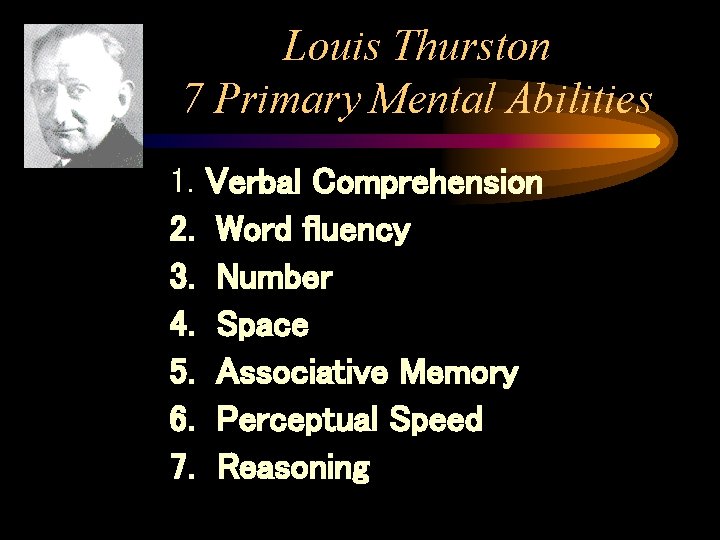
Louis Thurston 7 Primary Mental Abilities 1. 2. 3. 4. 5. 6. 7. Verbal Comprehension Word fluency Number Space Associative Memory Perceptual Speed Reasoning
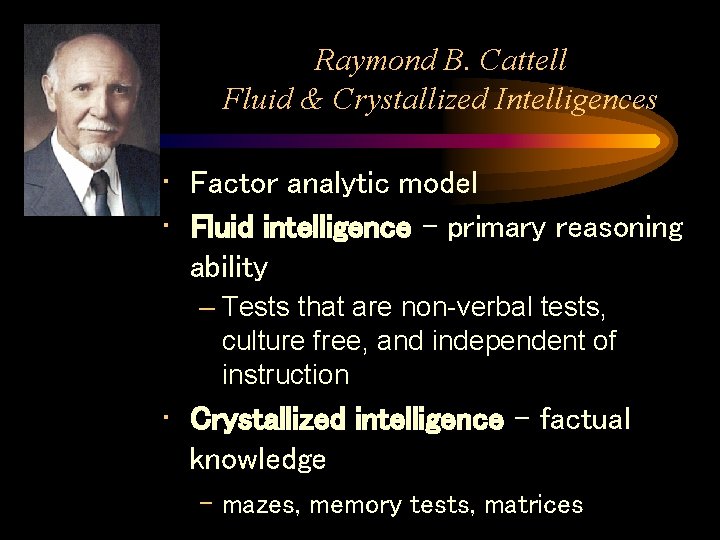
Raymond B. Cattell Fluid & Crystallized Intelligences • Factor analytic model • Fluid intelligence – primary reasoning ability – Tests that are non-verbal tests, culture free, and independent of instruction • Crystallized intelligence – factual knowledge – mazes, memory tests, matrices
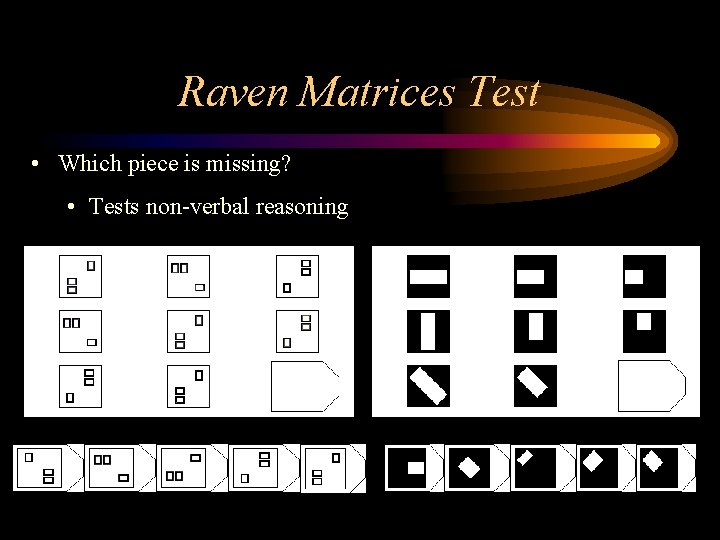
Raven Matrices Test • Which piece is missing? • Tests non-verbal reasoning
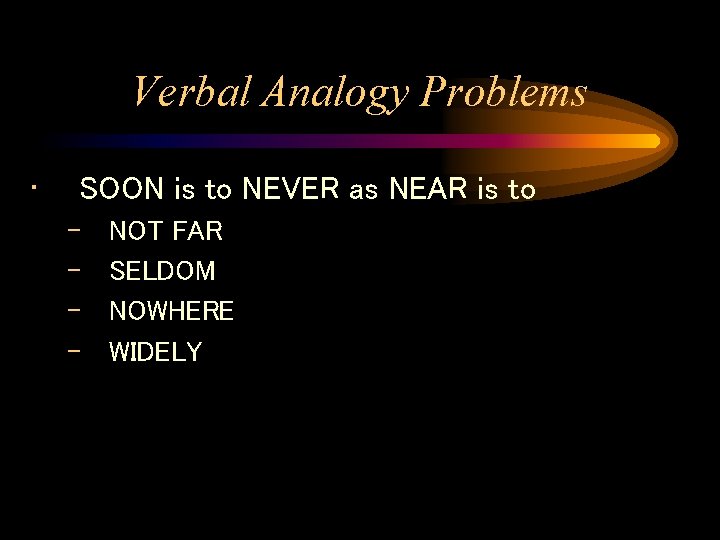
Verbal Analogy Problems • SOON is to NEVER as NEAR is to – – NOT FAR SELDOM NOWHERE WIDELY
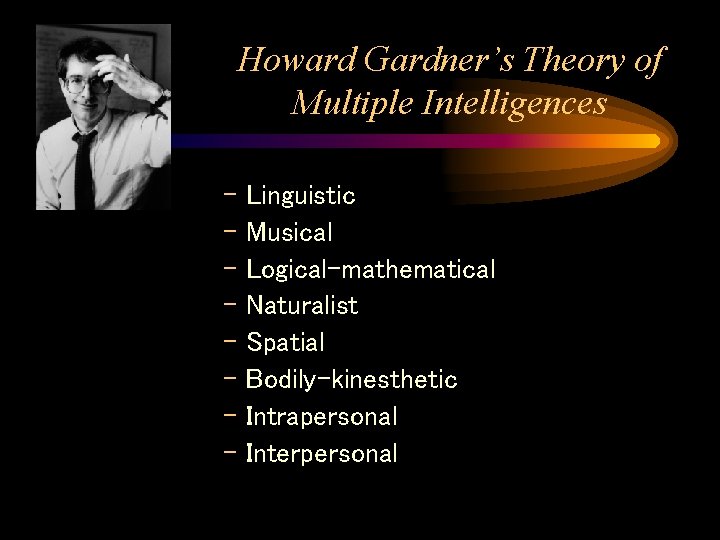
Howard Gardner’s Theory of Multiple Intelligences – Linguistic – Musical – Logical-mathematical – Naturalist – Spatial – Bodily-kinesthetic – Intrapersonal – Interpersonal
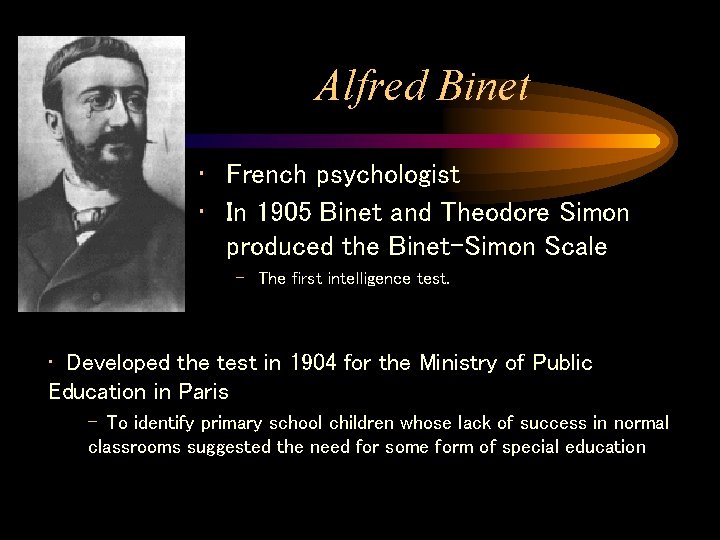
Alfred Binet • French psychologist • In 1905 Binet and Theodore Simon produced the Binet-Simon Scale – The first intelligence test. • Developed the test in 1904 for the Ministry of Public Education in Paris ‒ To identify primary school children whose lack of success in normal classrooms suggested the need for some form of special education
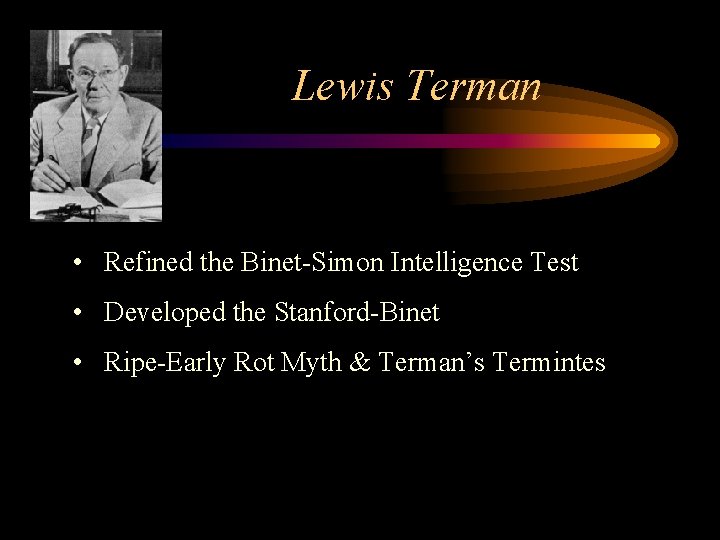
Lewis Terman • Refined the Binet-Simon Intelligence Test • Developed the Stanford-Binet • Ripe-Early Rot Myth & Terman’s Termintes
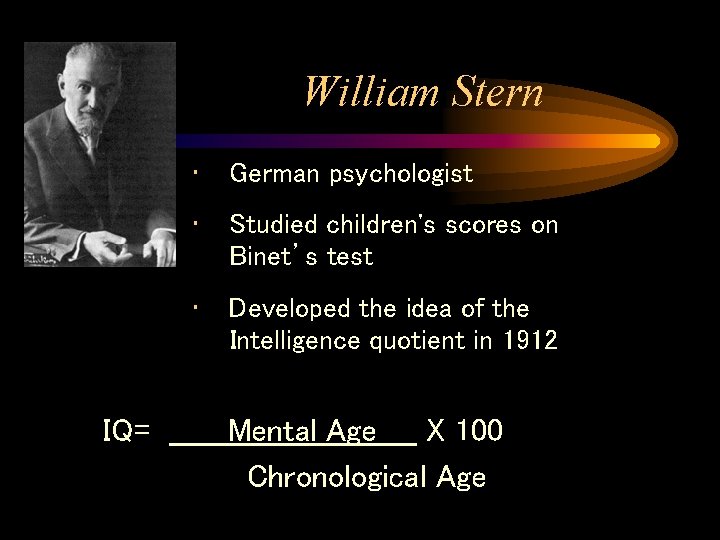
William Stern IQ= • German psychologist • Studied children's scores on Binet’s test • Developed the idea of the Intelligence quotient in 1912 Mental Age X 100 Chronological Age
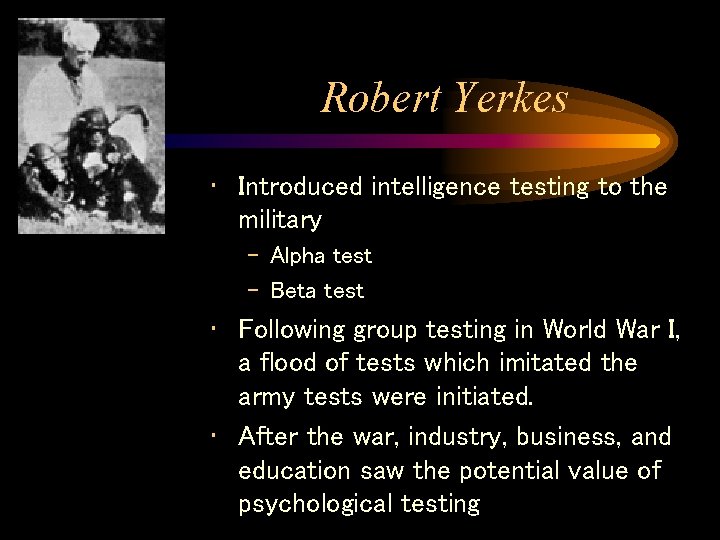
Robert Yerkes • Introduced intelligence testing to the military – Alpha test – Beta test • Following group testing in World War I, a flood of tests which imitated the army tests were initiated. • After the war, industry, business, and education saw the potential value of psychological testing
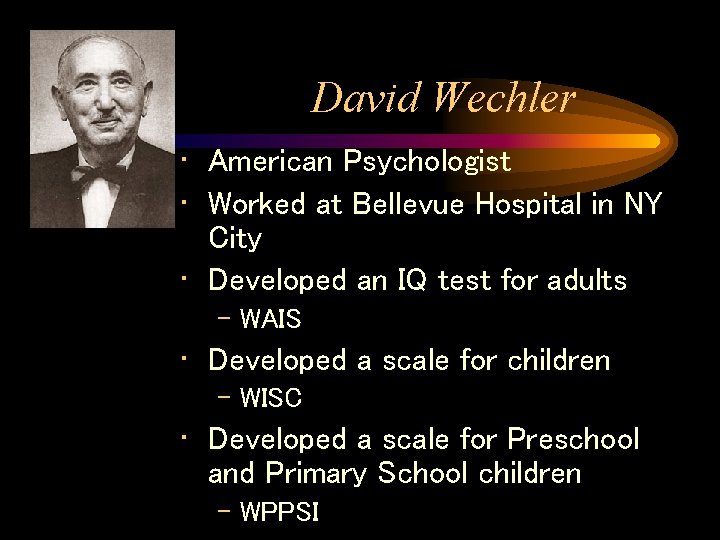
David Wechler • American Psychologist • Worked at Bellevue Hospital in NY City • Developed an IQ test for adults – WAIS • Developed a scale for children – WISC • Developed a scale for Preschool and Primary School children – WPPSI
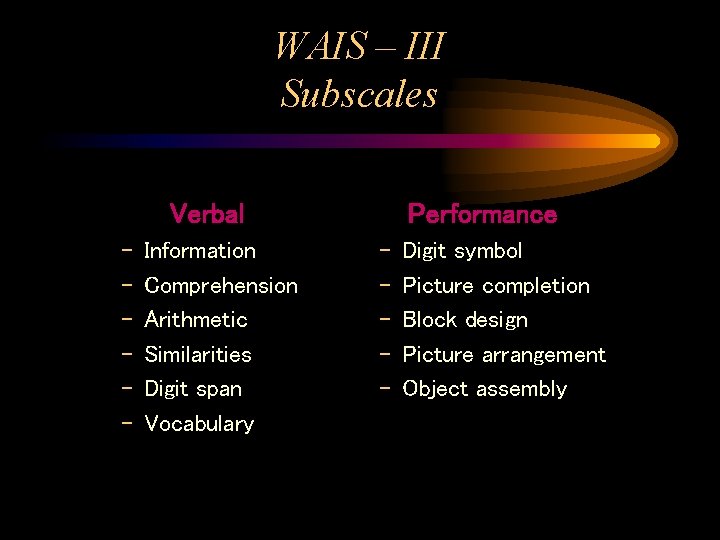
WAIS – III Subscales Verbal – – – Information Comprehension Arithmetic Similarities Digit span Vocabulary Performance – – – Digit symbol Picture completion Block design Picture arrangement Object assembly
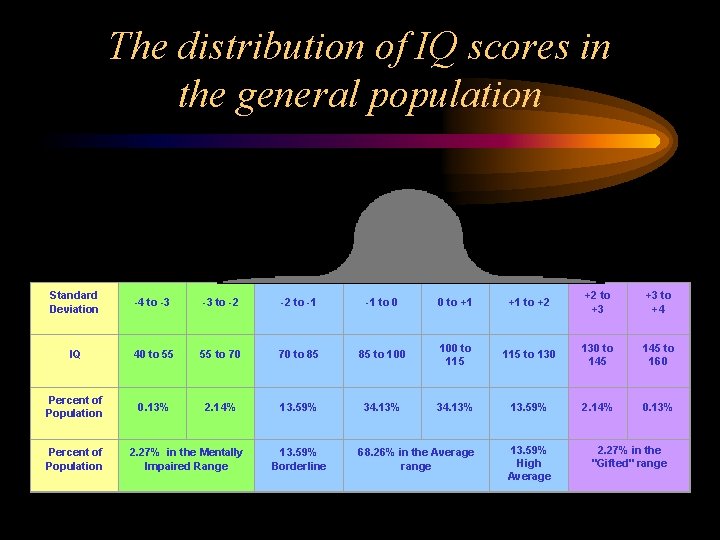
The distribution of IQ scores in the general population Standard Deviation -4 to -3 -3 to -2 -2 to -1 -1 to 0 0 to +1 +1 to +2 +2 to +3 +3 to +4 IQ 40 to 55 55 to 70 70 to 85 85 to 100 to 115 to 130 to 145 to 160 Percent of Population 0. 13% 2. 14% 13. 59% 34. 13% 13. 59% 2. 14% 0. 13% Percent of Population 2. 27% in the Mentally Impaired Range 13. 59% Borderline 68. 26% in the Average range 13. 59% High Average 2. 27% in the "Gifted" range
Bias in intelligence testing
Bias in intelligence testing Potential for: • Cultural biases –Test items –Normative biases –Testing situations
Summary • Individual differences is a cornerstone of modern psychology • Intelligence is an important example of individual differences • The major players in the development of intelligence testing and knowledge used: – Pragmatic need for testing; and – Factor analysis • - The major players can be divided into: – Those who believe in one intelligence – Those who believe in multiple intelligences