Integrated Pest IPM Management of Insect Pests and
- Slides: 21
Integrated Pest IPM Management of Insect Pests and Disease Sustainable Small Farming and Ranching
What is IPM? • Integrated Pest Management is a sustainable approach to controlling insect pest populations that combines PAMS • Prevention • Avoidance • Monitoring • Suppression • Combination of strategies that minimizes economic, health, and environmental risks.
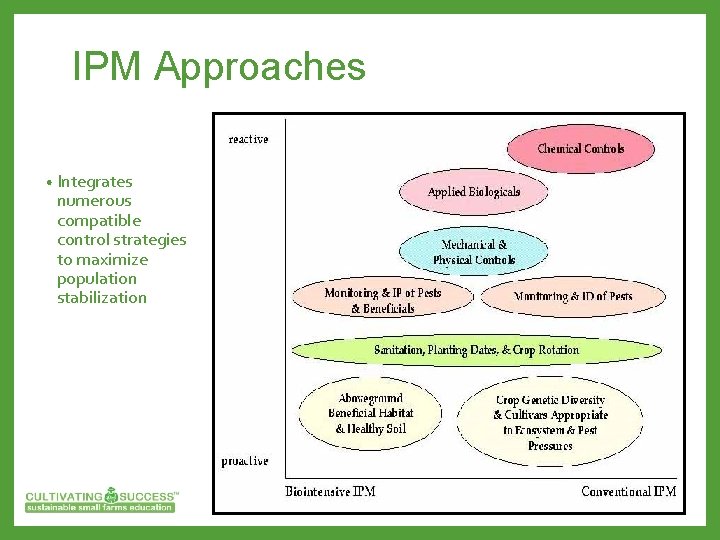
IPM Approaches • Integrates numerous compatible control strategies to maximize population stabilization
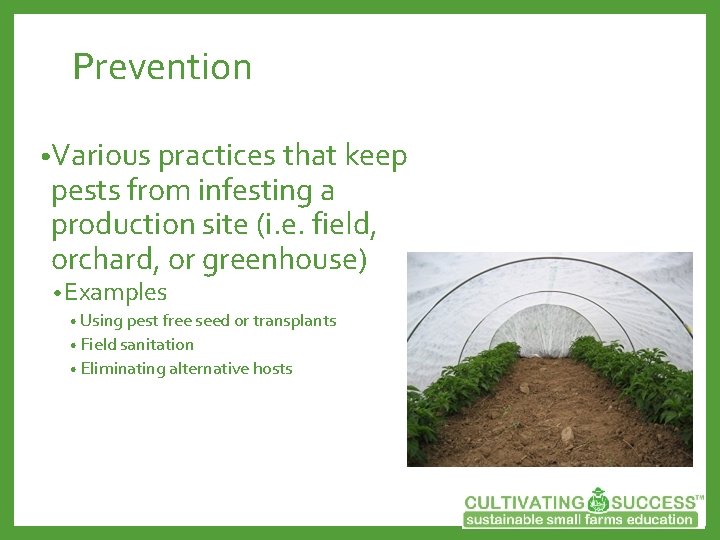
Prevention • Various practices that keep pests from infesting a production site (i. e. field, orchard, or greenhouse) • Examples • Using pest free seed or transplants • Field sanitation • Eliminating alternative hosts
Avoidance • When pests are already present in the general area, but pest impact can be minimized through various cultural practices. • Crop rotation • Crop choices • Trap crops • Adjusting planting schedule • Early planting, late planting, not planting • Resistance traits • Fast maturing varieties
Monitoring • The key component to any IPM program • Proper identification of pest – know your enemy • Monitoring program Traps • Weather monitoring • Soil testing, when appropriate • • Record keeping • Pest incidence and distribution in each field
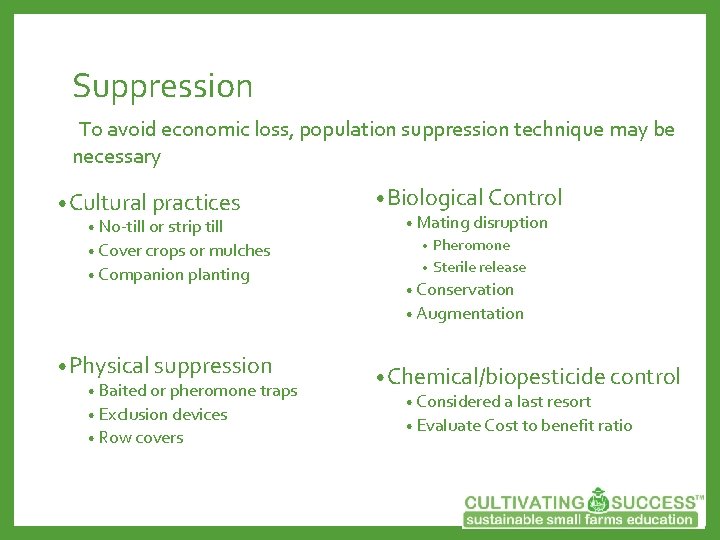
Suppression To avoid economic loss, population suppression technique may be necessary • Cultural practices • No-till or strip till • Cover crops or mulches • Companion planting • Biological Control • Mating disruption Pheromone • Sterile release • • Conservation • Augmentation • Physical suppression • Baited or pheromone traps • Exclusion devices • Row covers • Chemical/biopesticide control • Considered a last resort • Evaluate Cost to benefit ratio
Problems with pesticides: The pesticide treadmill • Resistance • Resurgence • Secondary pests • Residues
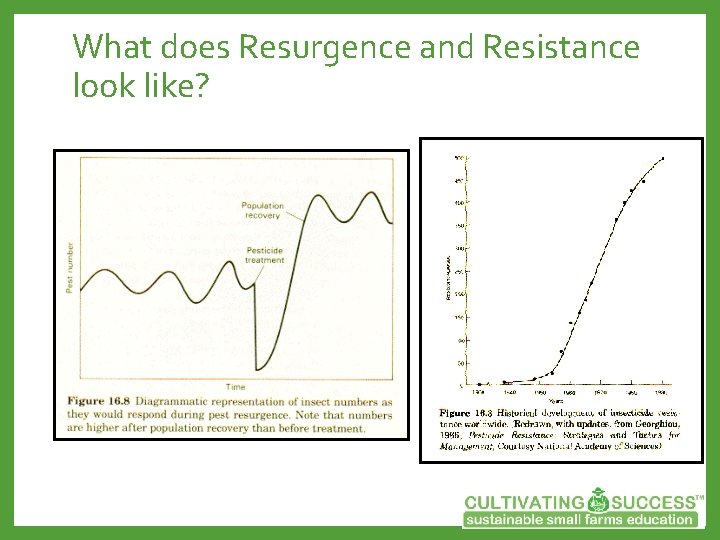
What does Resurgence and Resistance look like?
The Basic Elements of an IPM Program Know crop growth cycle Know the pest Combine methods Attack the weak link Monitor Preserve beneficials
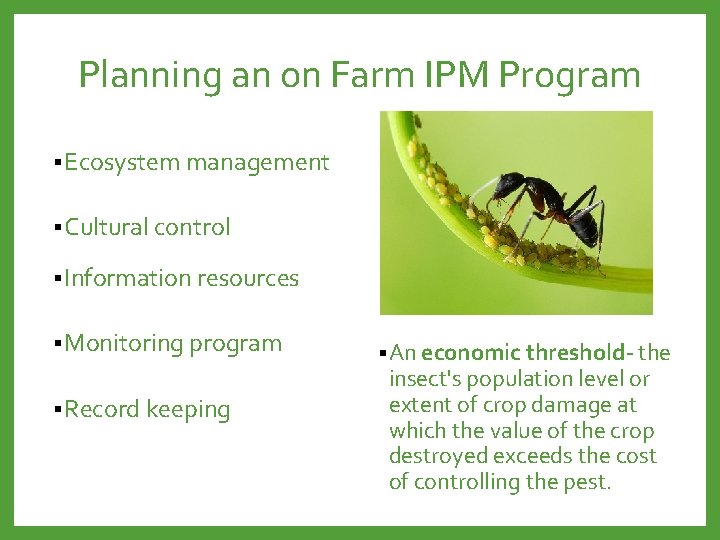
Planning an on Farm IPM Program § Ecosystem management § Cultural control § Information resources § Monitoring program § Record keeping § An economic threshold- the insect's population level or extent of crop damage at which the value of the crop destroyed exceeds the cost of controlling the pest.
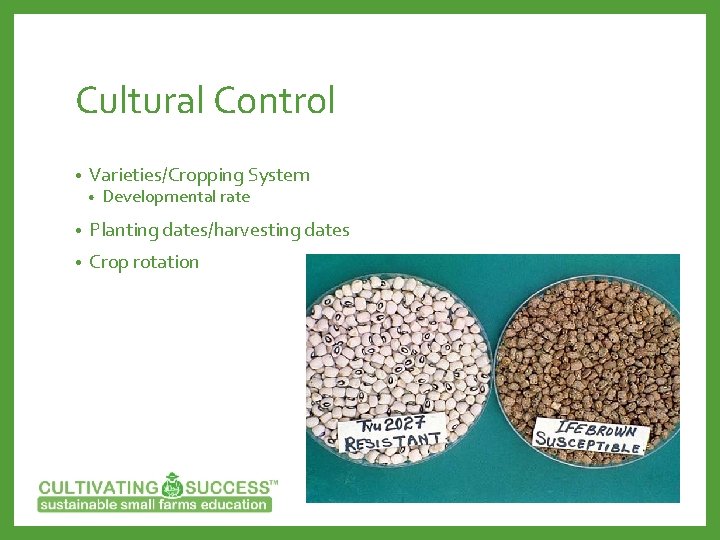
Cultural Control • Varieties/Cropping System • Developmental rate • Planting dates/harvesting dates • Crop rotation
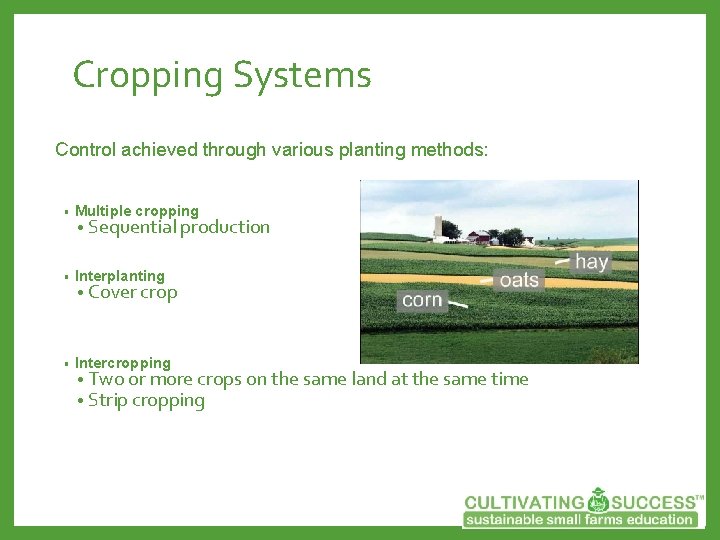
Cropping Systems Control achieved through various planting methods: • Multiple cropping • Interplanting • Intercropping • Sequential production • Cover crop • Two or more crops on the same land at the same time • Strip cropping
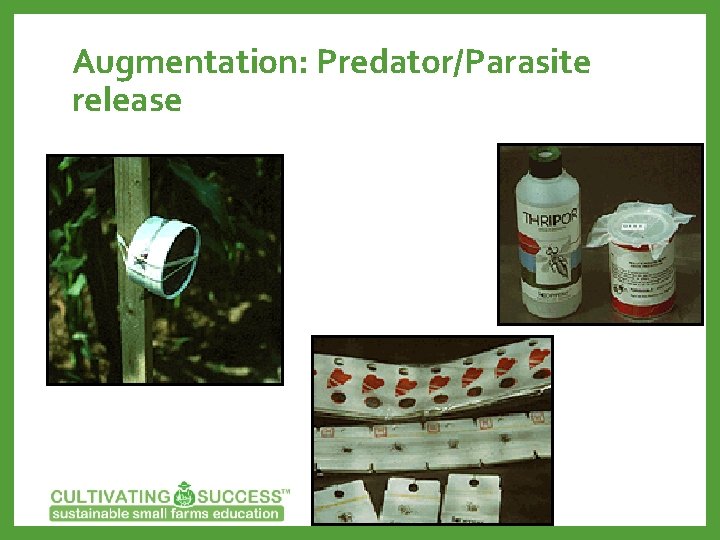
Biological Controls • Conservation of naturally occurring methods of population stabilization • Predators • Parasitoids • Augmentation of organisms that will help to stabilize population of pests • Predators • Parasitoids
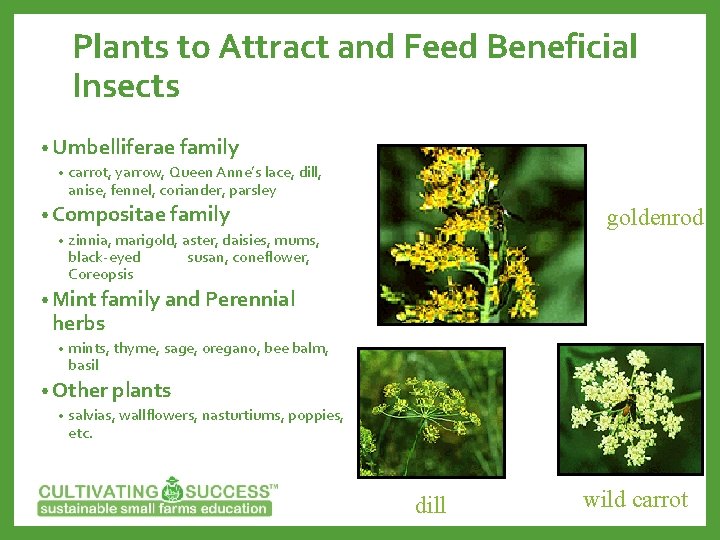
Plants to Attract and Feed Beneficial Insects • Umbelliferae family • carrot, yarrow, Queen Anne’s lace, dill, anise, fennel, coriander, parsley • Compositae family • goldenrod zinnia, marigold, aster, daisies, mums, black-eyed susan, coneflower, Coreopsis • Mint family and Perennial herbs • mints, thyme, sage, oregano, bee balm, basil • Other plants • salvias, wallflowers, nasturtiums, poppies, etc. dill wild carrot
Augmentation: Predator/Parasite release
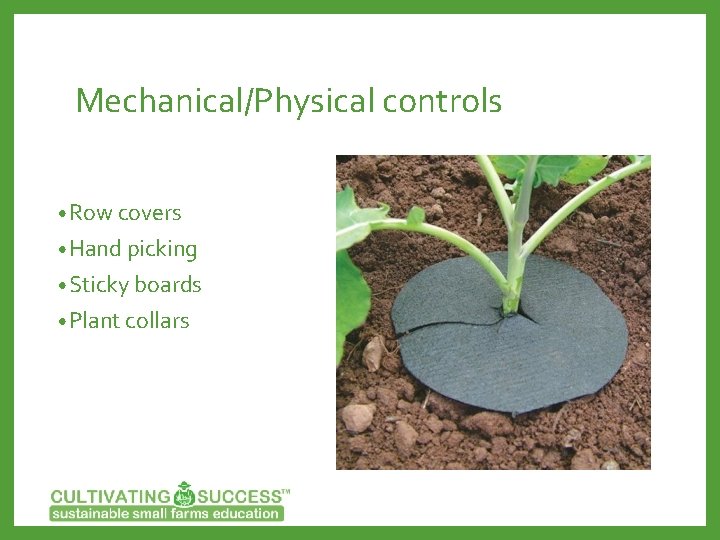
Mechanical/Physical controls • Row covers • Hand picking • Sticky boards • Plant collars
Insecticides • Chemical pesticides • • • Biopesticides • • Biochemicals Synthetic pesticides with properties of natural substance Bacteria Fungi Viruses Many implications for use in organic systems
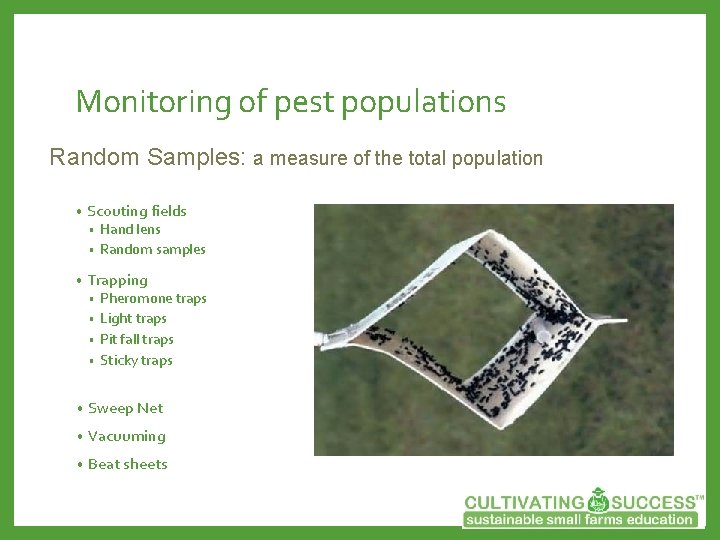
Monitoring of pest populations Random Samples: a measure of the total population • Scouting fields Hand lens • Random samples • • Trapping Pheromone traps • Light traps • Pit fall traps • Sticky traps • • Sweep Net • Vacuuming • Beat sheets
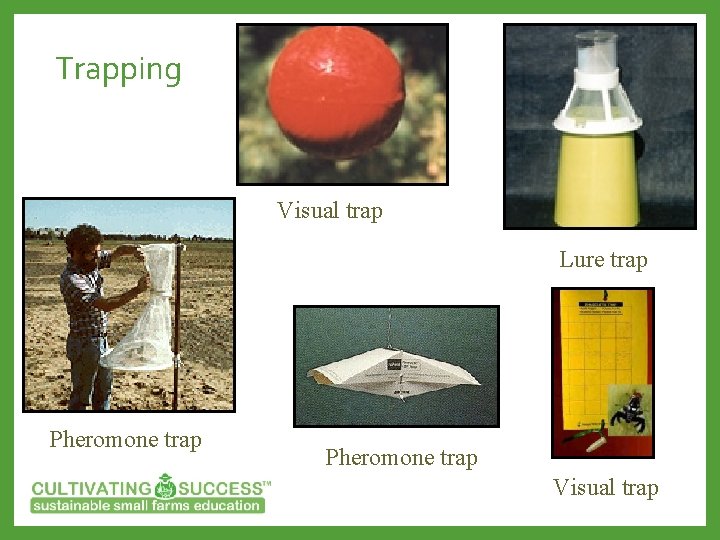
Trapping Visual trap Lure trap Pheromone trap Visual trap
Pests and Beneficials Pair up and review the information sheet on the selected pest or beneficial insect. Present back to the group: If a Pest: • What is the life cycle of the insect? • What plants does it typically impact? • What are some management and control methods If a beneficial: • What is the life cycle of the insect? • What plants or other insects does it typically impact? • What are some methods for attracting or propagating the beneficials?