Information Technology Services Information Security Policy Mike Roch
- Slides: 11
Information Technology Services Information Security Policy Mike Roch - Director of IT Services © University of Reading 2008 www. reading. ac. uk
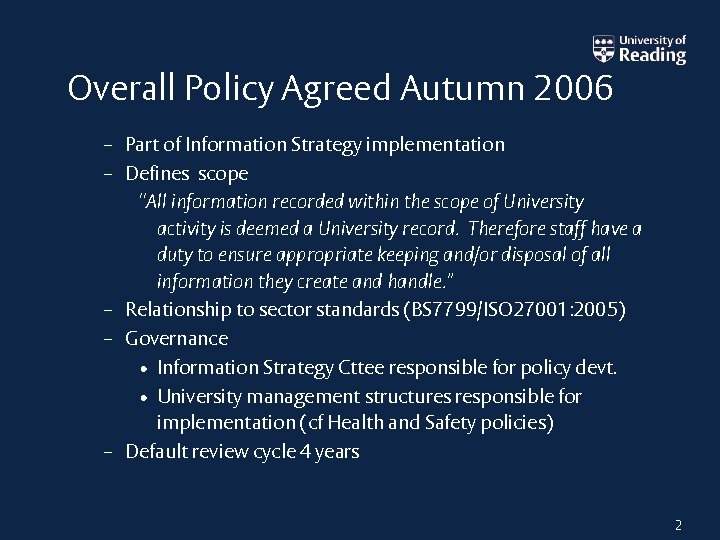
Overall Policy Agreed Autumn 2006 – Part of Information Strategy implementation – Defines scope “All information recorded within the scope of University activity is deemed a University record. Therefore staff have a duty to ensure appropriate keeping and/or disposal of all information they create and handle. ” – Relationship to sector standards (BS 7799/ISO 27001: 2005) – Governance • Information Strategy Cttee responsible for policy devt. • University management structures responsible for implementation (cf Health and Safety policies) – Default review cycle 4 years 2
Sub- Policies Agreed Autumn 2007 • Systems Planning Policy • Systems Management Policy • Systems Operation Policy • Software Management Policy • Communications Networks Management Policy 3
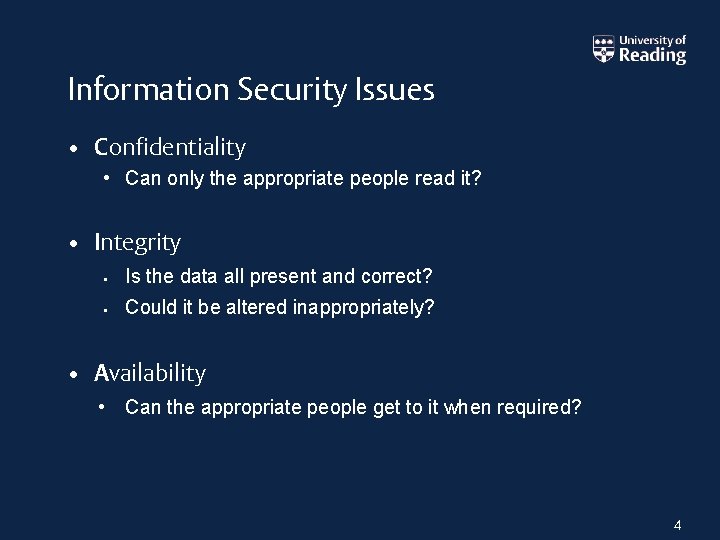
Information Security Issues • Confidentiality • Can only the appropriate people read it? • Integrity § Is the data all present and correct? § Could it be altered inappropriately? • Availability • Can the appropriate people get to it when required? 4
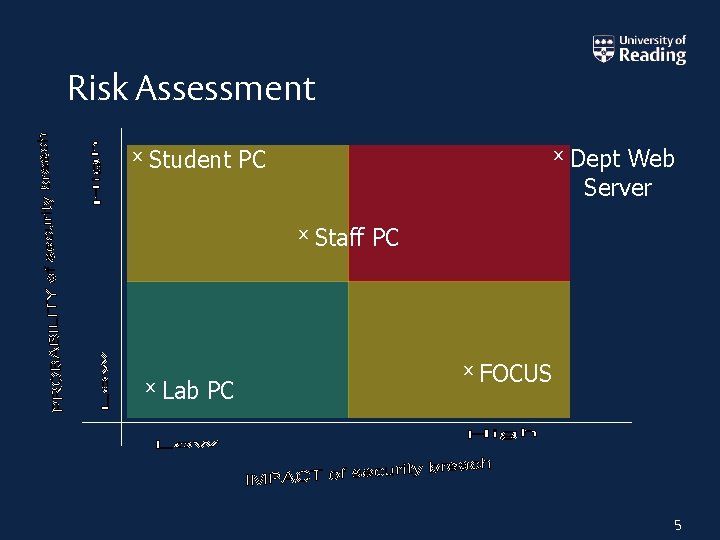
Risk Assessment x x Student PC x x Lab PC Dept Web Server Staff PC x FOCUS 5
Systems Planning Policy • New systems authorised, given competent advice, and information security requirements recognised • Info Security risks assessed for new/upgraded software • Information assets identified, classified and recorded • Adequate capacity, resilience and fault tolerance specfied • Adequate physical and environmental security – FMD • Appropriate access controls overall and to O/S controls • Testing of compliance with all policies before acceptance 6
Systems Management Policy • Systems to be managed by suitably trained and qualified staff. Training to include information security • Appropriate access controls agreed by management and records kept of access granted and revoked • Appropriate log on process, accesses logged, logs secured • Appropriate time-outs, password management, etc • Tight control of who may issue O/S level commands • Change management – sanity checking, stake-holder consultation, audit trails, roll-back • System clocks, anti-malware, patching 7
Systems Operations Policy • Information security risks assessed to inform operations procedures • Appropriate physical security, environmental protection and access controls ensured • Documented operating procedures, developed with information security in mind • Appropriate segregation of duties • Reporting of security incidents and software malfunction • Appropriate separation of development/test systems from live systems 8
Software Management Policy • Applications to be managed by suitably trained and qualified staff • Procurement and implementation of new or upgraded software to follow a formal, documented process • Business case for new or upgraded software shall address information security issues • Appropriate change control procedures shall apply • Interfaces between applications documented and risks identified • All software to be checked and tested independently of live systems before implementation/upgrade • Mobile code to be especially scrutinised 9
Comms Networks Management Policy • • • Single network design authority – currently IT Services University will provide ubiquitous links Managed by suitably trained and qualified staff Designed to provide suitable performance and reliability Access to resources on the network controlled - data network segregated firewalls to protect critical systems • Remote access subject to robust authentication and appropriate encryption • New/upgraded software subject to change control • Suitable protection from physical, environment and technical threats 10
Next steps • Documentation – Model policies for departments • Training – Identification of general needs • • 11